


Artificial Grass vs Natural Grass: cost, durability, and maintenance
Choosing the right lawn surface can influence maintenance requirements, water usage, curb appeal, and long-term ownership costs. For many homeowners, the decision goes beyond appearance and becomes a question of practicality, climate performance, and everyday usability. Artificial turf and natural grass each offer different advantages depending on household priorities and regional conditions.
Some homeowners prioritize lower maintenance and reduced watering, while others value the appearance and natural feel of living grass. Understanding the differences in artificial grass vs natural grass helps homeowners evaluate which option aligns better with lifestyle, budget, and long-term expectations. This guide compares both choices across maintenance, durability, cost, environmental considerations, and homeowner experience to support a more informed landscaping decision.
Comparing Artificial Grass vs Natural Grass for Long-Term Value
Lawn decisions affect more than outdoor appearance. Homeowners often compare lawn options based on maintenance demands, water usage, long-term costs, and how the yard supports everyday living. In many parts of the United States, changing weather patterns, utility costs, and lifestyle preferences have increased interest in alternatives to traditional lawn designs. Some homeowners want to reduce mowing and irrigation, while others prefer maintaining a more natural landscape appearance.
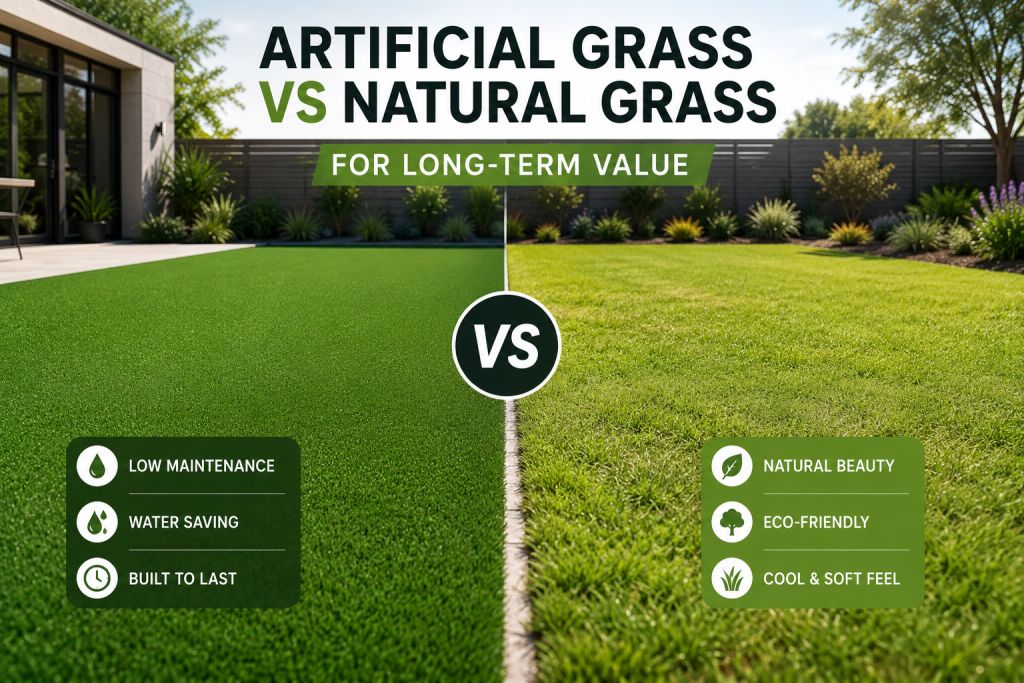
Comparing artificial grass vs natural grass helps homeowners understand how each option performs across different priorities rather than focusing only on aesthetics. Factors such as climate conditions, maintenance expectations, household activity levels, and future property goals often influence which lawn solution makes the most sense.
Appearance and Curb Appeal Differences
Appearance plays a major role when homeowners choose between artificial and natural lawns. The right choice often depends on whether the priority is year-round consistency or the changing look and feel of living landscapes. Artificial turf offers a consistently green appearance with limited seasonal variation, while natural grass changes throughout the year depending on climate, weather, and maintenance habits. Each option creates a different visual experience and may influence overall curb appeal. When evaluating artificial grass vs natural grass, homeowners should consider neighborhood expectations, landscape style, and long-term appearance goals. A well-designed lawn—regardless of material—often contributes more to exterior appeal than choosing one surface type alone.
Maintenance Requirements Compared
Maintenance is one of the biggest factors influencing lawn decisions. While both options require upkeep, the type and frequency of maintenance differ significantly. Natural grass typically involves mowing, watering, fertilizing, edging, and seasonal recovery work. Artificial turf eliminates many recurring lawn tasks but still requires occasional cleaning, surface care, and debris removal to maintain appearance. A practical lawn maintenance comparison helps homeowners evaluate not only time savings but also long-term effort and operating costs.
Artificial Grass vs Natural Grass Installation and Long-Term Costs
Initial installation costs and long-term ownership expenses can vary significantly between lawn types. While upfront pricing matters, homeowners should also evaluate maintenance, water use, replacement cycles, and long-term usability. Natural grass generally has lower initial installation expenses but may involve recurring costs for irrigation, fertilization, seasonal care, and lawn recovery. Artificial turf often requires a larger upfront investment but can reduce certain maintenance expenses over time.
Understanding turf installation cost alongside ongoing ownership factors creates a more realistic comparison. Homeowners evaluating long-term ownership may also consider fake grass benefits, such as reduced watering demands and lower routine maintenance requirements. When evaluating artificial grass vs natural grass, homeowners should focus on total cost over several years rather than making decisions based only on initial installation pricing. Considering long-term ownership factors and potential fake grass benefits, such as reduced routine upkeep and lower watering demands, can support a more balanced decision.
Water Usage and Environmental Considerations
Water usage has become an increasingly important consideration for homeowners evaluating lawn options, especially in regions affected by seasonal heat and irrigation demands. Natural grass generally requires ongoing watering to maintain appearance and healthy growth, while artificial turf can reduce irrigation needs after installation. However, environmental considerations extend beyond water use and may also include maintenance inputs, material lifespan, and long-term landscape planning.
When comparing artificial grass vs natural grass, homeowners should evaluate local climate conditions and long-term household priorities rather than focusing on a single factor. For households interested in more sustainable outdoor spaces, both options may contribute differently to broader eco-friendly lawn options depending on regional conditions and maintenance expectations.
Durability for Pets and Family Use
Households with children, pets, or frequent outdoor activity often evaluate lawns based on durability and everyday performance. The ability to handle regular use can influence maintenance needs and long-term satisfaction. Artificial turf generally provides a more consistent surface under repeated activity and may recover faster from concentrated use, which is one reason some homeowners explore pet-friendly turf solutions for active households.
Natural grass can also perform well but may require additional care to maintain appearance in heavily used areas. When evaluating artificial grass vs natural grass, homeowners should consider usage patterns, comfort preferences, drainage expectations, and maintenance requirements. For active households, selecting a surface designed to support routine use may provide better long-term results and improve overall outdoor functionality.
Climate Performance Across Different Regions
Climate conditions can significantly influence how lawns perform over time. Temperature extremes, humidity levels, rainfall patterns, and seasonal changes all affect maintenance requirements and long-term appearance. In warmer regions such as Texas, Arizona, and Southern California, reduced irrigation demands may influence lawn choices. In cooler or mixed climates, seasonal recovery and weather variation may affect performance differently.
Comparing artificial grass vs natural grass through a regional perspective helps homeowners make decisions that align with local environmental conditions. Instead of selecting based only on appearance, homeowners should consider heat exposure, drainage performance, seasonal upkeep, and long-term usability when evaluating lawn options.
Why Artificial Grass vs Natural Grass Is a Common Homeowner Decision
There is no universal lawn solution because homeowner priorities vary based on lifestyle, climate, maintenance expectations, and long-term goals. Artificial turf may appeal to homeowners who want reduced routine upkeep and a more consistent appearance throughout the year. Natural grass may suit homeowners who prefer traditional landscaping and are comfortable with ongoing lawn care.
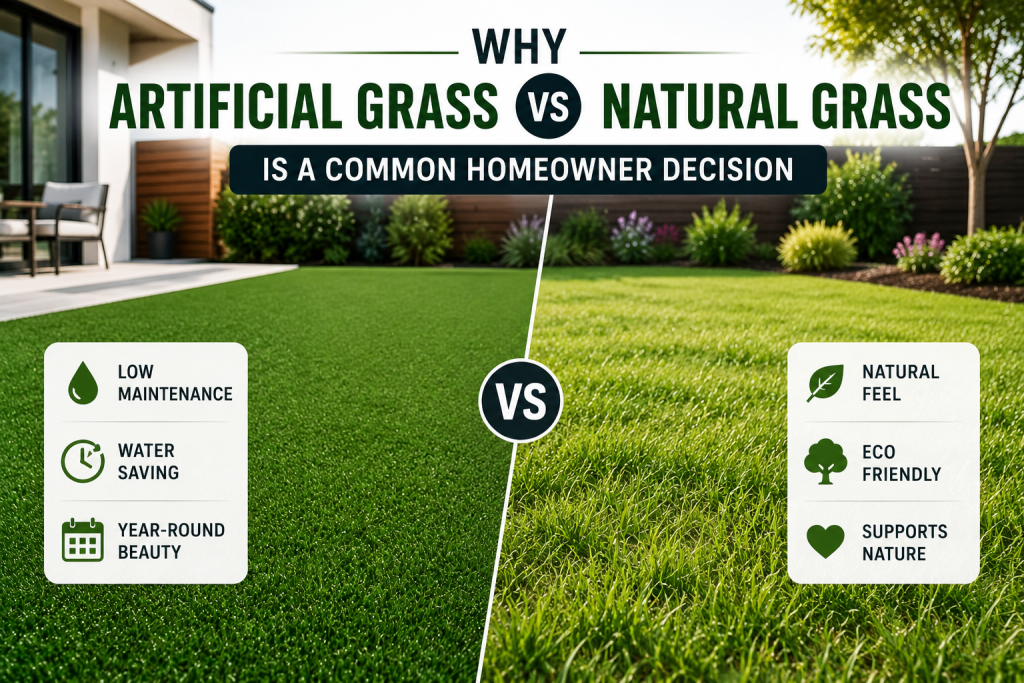
When deciding between artificial grass vs natural grass, the best choice usually comes down to balancing appearance, maintenance commitment, outdoor use, and ownership costs. Homeowners should evaluate how the lawn supports everyday activities, future plans, and overall property expectations before making a long-term investment.
Conclusion
Choosing the right lawn involves more than selecting what looks best on installation day. Long-term maintenance, climate conditions, water use, durability, and homeowner expectations all play a role in determining which option delivers better value. Artificial turf and natural grass each offer advantages depending on how the outdoor space will be used and maintained over time. Some homeowners prioritize lower upkeep, while others prefer the appearance and experience of a living lawn. Understanding the tradeoffs in artificial grass vs natural grass—and evaluating synthetic turf vs real grass from a practical ownership perspective—allows homeowners to make more confident landscaping decisions based on long-term needs rather than short-term trends. The best lawn solution is the one that aligns with household priorities, regional conditions, and long-term outdoor goals.
Frequently Asked Questions
Is artificial grass vs natural grass cheaper over time?
The cost difference in artificial grass vs natural grass depends on installation expenses, maintenance habits, water usage, and long-term ownership expectations. Artificial turf may reduce certain recurring costs over time, while natural grass often has a lower upfront investment but may require continued maintenance and irrigation expenses.
Which lawn option requires less maintenance?
Artificial turf generally reduces routine lawn care requirements, while natural grass usually requires ongoing mowing, watering, and seasonal upkeep.
Is artificial grass safe for pets and families?
Many homeowners choose artificial turf for active outdoor spaces because it offers durability and consistent usability. Individual product quality and maintenance practices can influence long-term performance.
Does artificial grass increase home value?
Property impact varies by location, buyer preferences, neighborhood expectations, and overall landscape quality rather than lawn material alone.
Which is better: artificial grass or natural grass?
There is no universal answer. The right choice depends on climate, maintenance expectations, outdoor use, appearance goals, and long-term ownership priorities.