


Best Bathroom Flooring Options for Water Resistance and Durability
Selecting the right bathroom flooring options is one of the most important decisions in any bathroom renovation because floors must withstand constant moisture, humidity, and daily wear. Unlike other areas of the home, bathrooms require materials that combine durability, water resistance, and safety without compromising design. Homeowners today have more choices than ever, ranging from traditional ceramic and porcelain tile to modern alternatives like luxury vinyl plank and engineered waterproof systems. Each option comes with its own balance of cost, maintenance needs, comfort, and visual appeal.
The challenge is not just choosing a stylish floor, but selecting one that performs well in wet conditions over time. Poor flooring choices can lead to mold growth, warping, or costly repairs, especially in high-moisture environments. This guide breaks down the most popular waterproof bathroom flooring options, compares durability and safety, and helps homeowners choose the best solution based on budget, lifestyle, and long-term performance needs.
What Makes Bathroom Flooring Moisture Resistant?
Understanding what makes moisture-resistant flooring effective is key to selecting the right material for any bathroom. Since bathrooms are constantly exposed to water, steam, and humidity, flooring must be able to resist absorption, swelling, and long-term structural damage. The most important factor is water absorption rate. Materials like ceramic and porcelain tile are highly effective because they are dense and non-porous, making them ideal for waterproof bathroom flooring applications. In contrast, natural wood or untreated materials tend to absorb moisture and deteriorate quickly in wet environments.
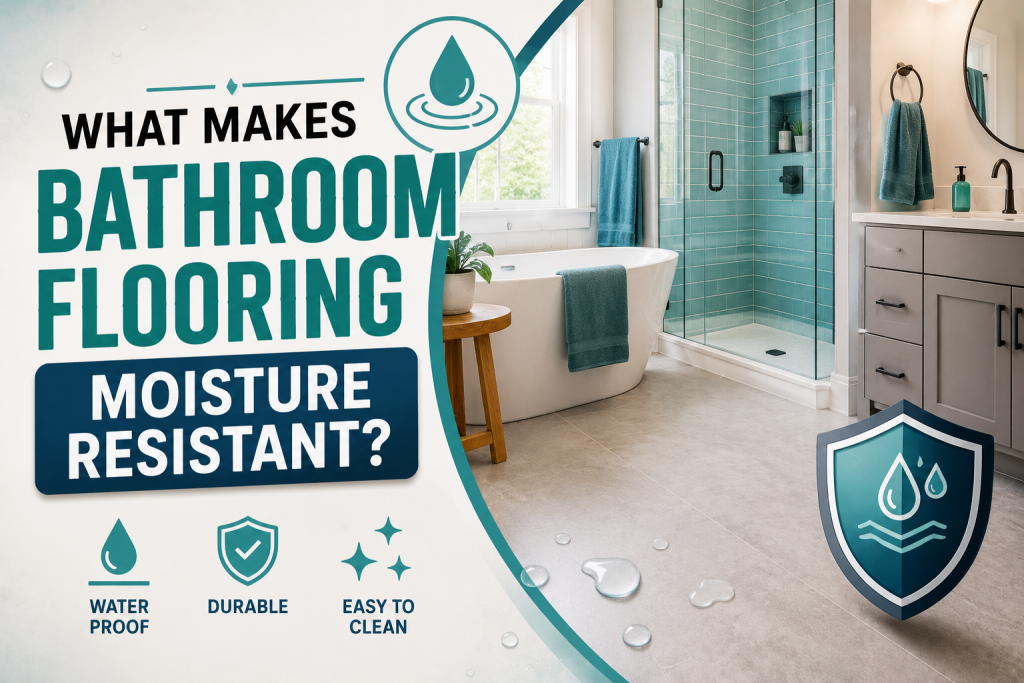
Surface sealing and installation methods also play a major role. Even water-resistant materials can fail if seams, grout lines, or subfloor layers are not properly sealed. This is why professional installation and high-quality waterproof membranes are often recommended in modern bathroom renovations. Another factor is ventilation. Proper airflow reduces humidity buildup, which helps extend the lifespan of any flooring material. When combined with slip-resistant textures and proper sealing, moisture-resistant flooring provides long-term durability, safety, and performance in high-use bathrooms.
Bathroom Tile Flooring – The Classic Waterproof Choice
Bathroom tile flooring remains one of the most trusted and widely used bathroom flooring options due to its excellent water resistance, durability, and long-term performance. Homeowners and contractors continue to rely on tile because it performs well in consistently wet environments and offers a wide range of design possibilities. Ceramic and porcelain tiles are especially popular because they are dense, low-porosity materials that resist moisture absorption. This makes them ideal for waterproof bathroom flooring, particularly in showers, powder rooms, and high-traffic family bathrooms. When properly installed and sealed, tile flooring can last for decades with minimal maintenance.
Another advantage of tile is its design flexibility. Homeowners can choose from large-format tiles, mosaic patterns, stone-look finishes, and modern matte textures to match nearly any bathroom style. Manufacturers like Daltile offer extensive collections that balance durability with aesthetics. However, tile flooring does require professional installation and grout maintenance over time. Despite this, it remains one of the most durable and moisture-resistant flooring solutions available for bathrooms today.
Luxury Vinyl Plank Bathroom Flooring Benefits
Luxury vinyl plank bathroom flooring has become one of the fastest-growing bathroom flooring options due to its strong balance of affordability, water resistance, and realistic wood-like appearance. For homeowners who want the look of hardwood without the moisture risks, luxury vinyl plank (LVP) offers a practical and stylish solution. One of the main advantages of LVP is its waterproof core construction. Unlike traditional hardwood or laminate, high-quality vinyl planks are designed to resist water penetration, making them suitable for full bathrooms, including high-moisture areas. This makes it a strong competitor in the category of waterproof bathroom flooring.
Installation is also simpler compared to tile, often using click-lock systems that reduce labor time and overall project cost. This makes LVP appealing for budget-conscious renovations or quick bathroom upgrades. Manufacturers such as Shaw Floors and Mohawk Industries offer durable, design-forward LVP collections that replicate natural wood and stone textures. While not as long-lasting as ceramic or porcelain tile, LVP provides excellent comfort underfoot and a warmer feel, making it a popular choice for modern bathroom designs.
Slip-Resistant Bathroom Floors for Safety
When evaluating bathroom flooring options, safety is just as important as moisture resistance. Bathrooms are high-risk areas for slips and falls due to water exposure, so selecting slip-resistant bathroom floors is essential for both residential comfort and long-term usability. Slip resistance is determined by surface texture, finish type, and material composition. Matte finishes and textured surfaces provide better grip compared to polished, glossy flooring. This is especially important in households with children, elderly family members, or high daily bathroom usage.
Ceramic and porcelain tiles can be manufactured with anti-slip coatings, while certain luxury vinyl plank products also include textured surfaces designed for improved traction. Proper installation is equally important, as incorrect slope or uneven surfaces can increase slip risk even with high-quality materials. Another important consideration is water drainage around showers and tubs. Even the best moisture-resistant flooring can become hazardous if water is allowed to pool on the surface. Ultimately, combining the right material choice with proper installation and drainage design ensures a safer bathroom environment without sacrificing style or durability.
Durable Bathroom Flooring Compared (Tile vs Vinyl vs Stone)
When comparing durable bathroom flooring options, three materials consistently stand out: ceramic or porcelain tile, luxury vinyl plank, and natural stone. Each offers different strengths in terms of moisture resistance, lifespan, maintenance, and cost, making the right choice dependent on homeowner priorities. Tile is widely considered the most durable of all bathroom flooring options, especially porcelain. It is highly resistant to water, scratches, and wear, making it ideal for long-term performance. However, it can feel cold underfoot and requires grout maintenance over time.
Luxury vinyl plank offers strong water resistance and a softer, warmer feel, making it more comfortable for daily use. While not as long-lasting as tile, it provides excellent performance for mid-range budgets and easier installation. Natural stone delivers a premium aesthetic but requires sealing and more maintenance to protect against moisture damage. It is often used in high-end renovations where design impact is a priority. Choosing between these materials depends on balancing durability, comfort, maintenance needs, and overall bathroom floor ideas that match the home’s design style.
Bathroom Floor Ideas for Modern Homes
Modern bathroom floor ideas focus on combining clean design aesthetics with practical performance, especially in moisture-heavy environments. Today’s homeowners are moving toward minimalist styles that use large-format tiles, neutral color palettes, and seamless finishes to create a more open and spa-like feel. One of the most popular trends is the use of large porcelain tiles with minimal grout lines. This design not only enhances visual continuity but also reduces maintenance, making it a practical choice among bathroom flooring options. Wood-look luxury vinyl plank is another widely used option, offering warmth and texture while maintaining strong water resistance.
Patterned tiles are also making a comeback in accent areas, such as bathroom entry zones or under vanities, adding personality without overwhelming the space. Many modern designs also incorporate matte finishes, which improve both style and slip-resistant bathroom floors performance. Lighting and flooring coordination is another important design element. Lighter flooring can make small bathrooms feel larger, while darker tones create contrast and a more dramatic, high-end appearance. The key is balancing durability, safety, and aesthetic flow.
Cost and Maintenance Comparison
When evaluating bathroom flooring options, cost and long-term maintenance are just as important as style and moisture resistance. Each flooring type comes with different upfront pricing, installation requirements, and upkeep needs that can significantly affect the total cost of ownership over time. Ceramic and porcelain tile typically have a higher installation cost due to labor-intensive setting and grouting. However, they offer excellent longevity and low long-term maintenance when properly installed, making them a strong option for waterproof bathroom flooring.
Luxury vinyl plank is generally more affordable to install and maintain. It requires less labor, is easier to replace if damaged, and resists moisture well. This makes it appealing for homeowners seeking budget-friendly durable bathroom flooring without sacrificing appearance. Natural stone flooring, while visually premium, has the highest maintenance requirements. It must be sealed regularly to prevent moisture damage and staining, which increases long-term upkeep costs. Ultimately, the best choice depends on whether the homeowner prioritizes lower upfront cost, minimal maintenance, or long-term durability in their bathroom renovation.
Best Flooring by Bathroom Type (Small, Master, Guest)
Choosing the right bathroom flooring options often depends on the type and usage of the bathroom. Different spaces have different moisture levels, traffic patterns, and design expectations, which directly influence the best flooring choice. For small bathrooms, waterproof bathroom flooring like luxury vinyl plank or large-format porcelain tile works best. Light-colored flooring can also help make compact spaces feel larger and more open. In these areas, minimizing grout lines or seams is especially helpful for reducing maintenance.
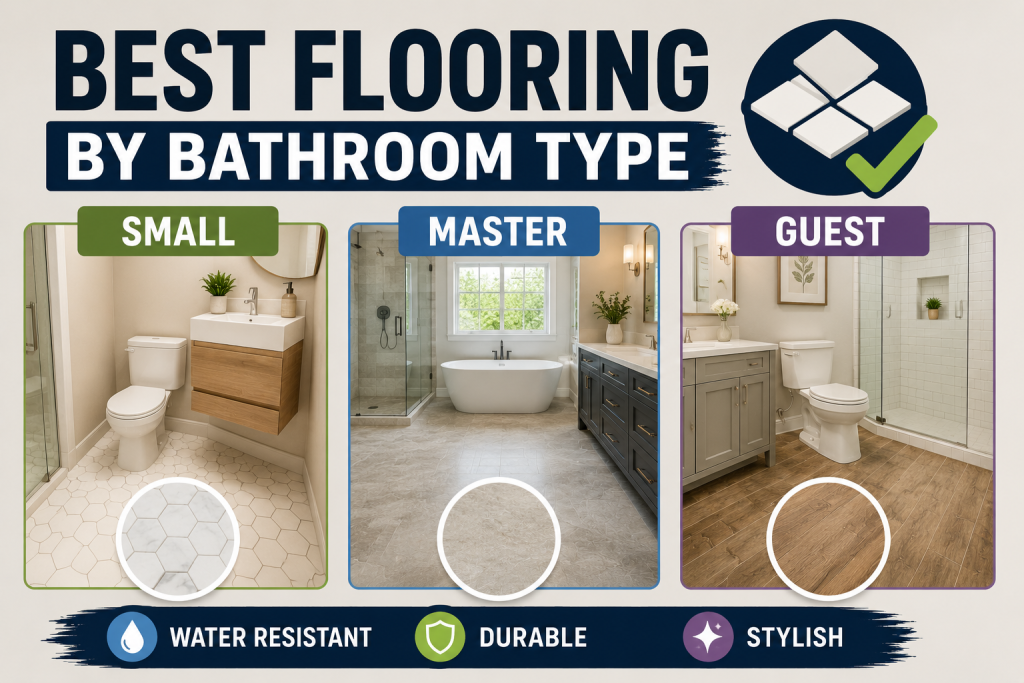
Master bathrooms typically allow for more design flexibility and are ideal for premium materials such as porcelain tile or natural stone. Homeowners often prioritize comfort, aesthetics, and long-term durability, making these spaces suitable for high-end durable bathroom flooring solutions. Guest bathrooms, which see moderate use, are often a balance between cost and design. Mid-range tile or vinyl flooring provides a practical and visually appealing option without requiring heavy maintenance. Matching flooring choice to bathroom type ensures better performance, improved comfort, and more efficient long-term upkeep across the home.
Final Recommendation
Selecting the best bathroom flooring options ultimately comes down to balancing moisture resistance, durability, comfort, and budget. No single material is perfect for every home, but some clearly perform better depending on the bathroom’s function and design goals. For maximum long-term durability and water resistance, porcelain and ceramic tile remain the top choice. They are highly effective as waterproof bathroom flooring and perform well in both small and large bathrooms when properly installed and sealed.
For homeowners prioritizing comfort, affordability, and easier installation, luxury vinyl plank is a strong alternative. It provides reliable moisture resistance and works well in family bathrooms or quick renovation projects. Natural stone delivers a premium look but requires more maintenance, making it best suited for high-end master bathrooms where aesthetics are the primary focus. Ultimately, the best flooring choice should align with usage patterns, maintenance expectations, and overall bathroom design. A well-selected floor enhances both performance and style for years to come.
FAQs
What are the best bathroom flooring options for moisture resistance?
The best bathroom flooring options for moisture resistance include porcelain tile, ceramic tile, and luxury vinyl plank, as they are designed to withstand water exposure and humidity.
Is luxury vinyl plank good for bathrooms?
Yes, luxury vinyl plank bathroom flooring is a popular choice because it offers strong water resistance, comfort underfoot, and easier installation compared to tile.
What is the most waterproof bathroom flooring?
A tiled shower installation is generally more expensive than prefab options due to higher labor requirements and detailed waterproofing processes.
Are slip-resistant bathroom floors necessary?
Yes, slip-resistant bathroom floors are important for safety, especially in homes with children, elderly individuals, or high moisture exposure.
What is the most durable bathroom flooring?
Durable bathroom flooring options include porcelain tile and high-quality luxury vinyl plank, both of which perform well in wet environments.