


Most Common Bathroom Moisture Problems and Solutions
Bathrooms experience more moisture than almost any other room in the home. Daily showers, baths, and poor airflow create the perfect environment for excess humidity to build up. When left untreated, bathroom moisture problems can lead to mold growth, peeling paint, damaged drywall, warped flooring, and even structural issues. These problems not only affect your home’s appearance but can also reduce indoor air quality and increase repair costs over time.
Fortunately, most moisture-related issues are preventable with the right maintenance and ventilation strategies. Whether you live in a humid Southern state or a colder northern climate where condensation is common, understanding what causes excess moisture is the first step toward protecting your bathroom. This guide explores the most common bathroom moisture problems, practical solutions, and expert tips to keep your bathroom dry, healthy, and damage-free for years to come.
What Causes Bathroom Moisture Problems?
Understanding the root causes of bathroom moisture problems makes it easier to prevent costly damage. The most common source is steam from hot showers and baths, which raises indoor humidity levels within minutes. Without proper airflow, that moisture settles on walls, mirrors, ceilings, and fixtures instead of escaping outdoors.
Another major contributor is bathroom ventilation issues. An undersized or poorly maintained exhaust fan cannot remove humid air efficiently, allowing moisture to linger. Hidden plumbing leaks around sinks, toilets, or shower valves can also introduce constant dampness that often goes unnoticed until stains or mold appear. In humid regions like Florida or Louisiana, outdoor moisture can further increase indoor humidity, while colder climates frequently experience condensation in bathrooms as warm indoor air meets cool surfaces. Identifying these causes early helps homeowners choose the most effective long-term solution.
Common Signs of Excess Moisture in Your Bathroom
Recognizing the early warning signs of bathroom moisture problems can help you avoid expensive repairs and protect your home’s value. One of the most noticeable indicators is black or green mold growing around grout lines, ceilings, or window frames. Persistent mildew problems often appear in damp corners or behind the toilet, producing a musty odor that doesn’t disappear after cleaning.
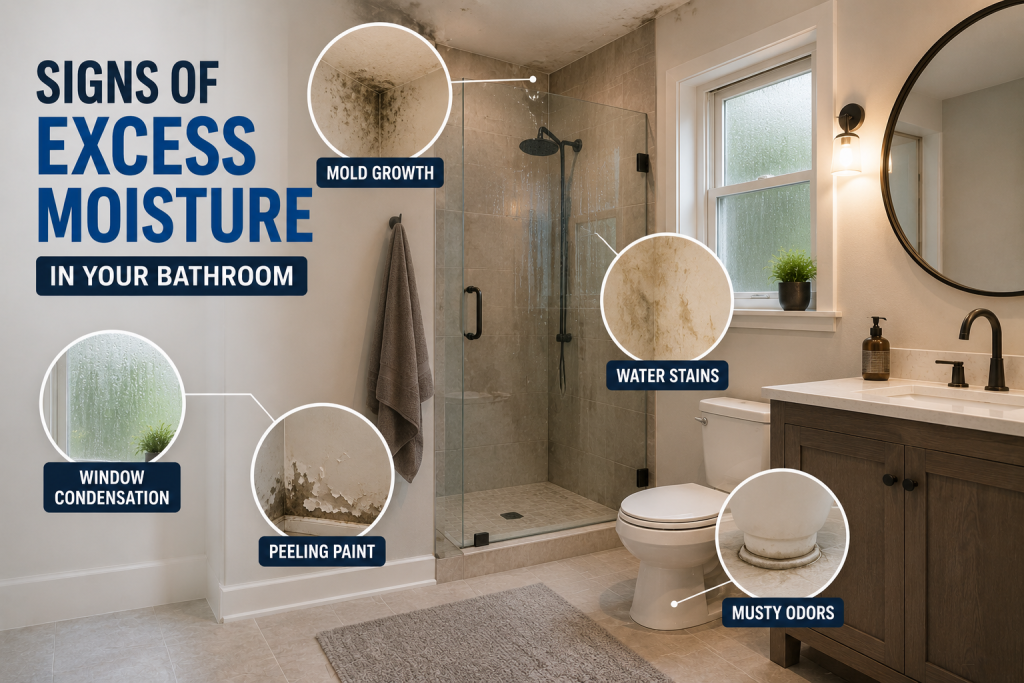
Other common signs include peeling paint, bubbling wallpaper, stained ceilings, warped trim, and soft drywall caused by prolonged exposure to moisture. You may also notice excessive condensation in bathrooms, with water collecting on mirrors, windows, and even walls after every shower. If these symptoms continue despite regular cleaning, excess humidity or poor ventilation is likely the underlying issue. Addressing these warning signs early can prevent structural damage, improve indoor air quality, and reduce long-term maintenance costs.
Why Bathroom Moisture Can Damage Your Home
Ignoring bathroom moisture problems can lead to far more than cosmetic damage. Excess moisture gradually weakens drywall, rots wood framing, damages subfloors, and causes paint or caulk to fail prematurely. As water penetrates building materials, repairs become more extensive and expensive, especially if hidden damage develops behind walls or beneath flooring.
High humidity also creates ideal conditions for mold and mildew, which can affect indoor air quality and spread to other parts of the home. Practicing bathroom mold prevention through regular inspections and proper maintenance helps reduce these risks before they become serious. In addition, persistent moisture can lower your home’s curb appeal and even affect resale value, as buyers often view water damage as a sign of larger structural issues. Taking action early protects both your investment and your family’s comfort while avoiding unnecessary renovation costs.
Practical Solutions for Bathroom Moisture Problems
The best way to tackle bathroom moisture problems is to combine proper ventilation, routine maintenance, and moisture-resistant materials. Start by addressing bathroom ventilation issues with a properly sized exhaust fan that vents directly outside rather than into an attic. Running the fan during showers and for at least 20 minutes afterward helps remove humid air before it settles on surfaces. If your bathroom has a window, open it whenever weather permits to improve natural airflow.
Regular maintenance is equally important. Repair plumbing leaks promptly, reseal cracked grout and worn caulk, and dry wet surfaces after use. Following waterproof bathroom tips, such as applying waterproof paint and installing moisture-resistant flooring, adds another layer of protection. For homes with consistently high humidity, bathroom humidity control can be improved with a dehumidifier or humidity-sensing ventilation system, helping prevent long-term water damage and mold growth.
Bathroom Moisture Prevention Checklist
Preventing bathroom moisture problems is much easier and more affordable than repairing water damage later. A simple maintenance routine can keep humidity under control and extend the life of your bathroom finishes. Regularly inspect areas around the shower, bathtub, toilet, and sink for signs of leaks or deteriorating caulk. Clean grout lines frequently to discourage mold and mildew, and wipe down wet surfaces after each shower to reduce lingering moisture.
Investing in exhaust fan solutions, such as upgrading to an ENERGY STAR®-certified fan or installing a humidity-sensing model, can significantly improve airflow. As part of effective bathroom mold prevention, replace air filters where applicable and ensure the exhaust vent remains free of dust and debris. Scheduling seasonal inspections for plumbing and ventilation systems also helps identify hidden issues before they develop into costly repairs.
| Problem | Likely Cause | Recommended Solution |
| Mold growth | Excess humidity | Improve ventilation and clean surfaces regularly |
| Peeling paint | Trapped moisture | Repaint with moisture-resistant paint after drying the area |
| Condensation | Poor airflow | Use an exhaust fan and open windows when possible |
| Musty odors | Hidden moisture | Inspect for leaks and dry damp areas promptly |
| Water stains | Plumbing leaks | Repair leaks and replace damaged materials if needed |
Tips for Different U.S. Climate Regions
Climate plays a significant role in how homeowners manage bathroom moisture problems. In humid states such as Florida, Louisiana, and Texas, high outdoor humidity makes bathroom humidity control especially important. Running exhaust fans consistently, using a dehumidifier, and sealing gaps around windows can help reduce excess moisture indoors.

In colder regions like Minnesota, Michigan, and Maine, warm indoor air often meets cold windows and exterior walls, increasing the risk of condensation during winter. Homeowners should insulate exterior walls where possible and keep bathrooms well-ventilated after showers. Coastal areas benefit from corrosion-resistant ventilation equipment because of salty air, while homes in dry Southwestern states may experience fewer moisture issues but should still maintain proper airflow. Applying waterproof bathroom tips, such as using moisture-resistant paint, quality grout sealers, and durable caulk, provides added protection regardless of your climate and helps prevent long-term water damage.
When to Call a Professional
While many bathroom moisture problems can be resolved with routine maintenance, some situations require professional expertise. If mold continues to return after cleaning, water stains keep spreading, or you notice soft drywall, warped flooring, or a persistent musty smell, there may be hidden moisture behind walls or beneath the floor. These issues often indicate plumbing leaks or inadequate ventilation that require specialized equipment to diagnose and repair.
Homeowners should also seek professional help when replacing an outdated exhaust fan, correcting ventilation ductwork, or repairing structural water damage. Experienced contractors can recommend effective exhaust fan solutions based on your bathroom’s size and ensure the system complies with local building codes. Prompt repairs not only stop further damage but also improve energy efficiency, indoor air quality, and the overall lifespan of your bathroom, making professional assistance a worthwhile investment when moisture issues become persistent.
Conclusion
Bathroom moisture problems are common, but they don’t have to become costly repairs. By improving ventilation, fixing leaks quickly, maintaining proper humidity levels, and using moisture-resistant materials, homeowners can protect their bathrooms from mold, mildew, and water damage. Regular inspections and preventive maintenance go a long way toward preserving your home’s value and ensuring a healthier indoor environment. Whether you’re updating an older bathroom or maintaining a newly remodeled one, taking proactive steps today can save significant time and money in the future.
Frequently Asked Questions
What are the most common bathroom moisture problems?
The most common bathroom moisture problems include mold growth, peeling paint, condensation on mirrors and windows, mildew, water stains, musty odors, and damaged drywall. Most of these issues result from excessive humidity, poor ventilation, or hidden plumbing leaks.
How can I reduce humidity in my bathroom?
Improve airflow by using an exhaust fan during and after showers, opening windows when possible, repairing leaks promptly, and using a dehumidifier if your bathroom remains humid. Consistent bathroom humidity control helps prevent long-term moisture damage.
Does an exhaust fan prevent mold?
Yes. A properly sized and maintained exhaust fan removes humid air before it condenses on surfaces. Good ventilation is one of the most effective strategies for reducing moisture and supporting bathroom mold prevention.
Can bathroom moisture damage drywall?
Absolutely. Prolonged exposure to moisture can soften drywall, cause paint to peel, and eventually lead to mold growth and structural deterioration if left untreated.
What is the ideal humidity level for a bathroom?
Most experts recommend maintaining indoor relative humidity between 30% and 50%. Keeping humidity within this range helps minimize moisture buildup, protects building materials, and creates a healthier indoor environment.