


Energy-Efficient Roofing: A Homeowner’s Guide to Lower Energy Bills and Better Comfort
Heating and cooling costs account for a significant portion of household energy expenses across the United States. In hot regions such as Texas, Florida, and Arizona, the roof can absorb intense solar heat throughout the day, making it harder for air conditioning systems to maintain comfortable indoor temperatures. During colder months in northern states, poor roofing performance can also contribute to unwanted heat loss. This is where energy-efficient roofing becomes an important investment for homeowners.
Modern roofing technologies are designed to reduce heat transfer, improve indoor comfort, and help lower monthly utility bills. Whether you’re planning a roof replacement or building a new home, selecting the right roofing system can have a lasting impact on your property’s energy performance. From advanced reflective materials to improved insulation strategies, today’s roofing options offer solutions for different climates, budgets, and home styles. Understanding how these systems work can help you make a smarter decision that improves comfort, boosts curb appeal, and supports long-term savings.
What Is Energy-Efficient Roofing?
Energy-efficient roofing refers to roofing systems designed to minimize heat transfer between the exterior environment and the interior of a home. Unlike traditional roofs that can absorb and retain large amounts of solar heat, modern roofing products use specialized materials and technologies to reflect sunlight, improve thermal performance, and reduce the workload on HVAC systems.
For many American homeowners, roofing efficiency directly affects indoor comfort and annual energy costs. Homes located in warm climates often experience excessive attic temperatures during summer, while homes in colder regions must prevent heat from escaping through the roof assembly. An efficient roofing system addresses both concerns by helping maintain more stable indoor temperatures throughout the year. When combined with proper attic insulation and ventilation, an efficient roof can contribute to lower utility bills, improved comfort, and better overall home performance.
How Energy-Efficient Roofing Reduces Heat Gain
One of the primary goals of energy-efficient roofing is reducing solar heat gain. Roofing materials with high solar reflectance can bounce a larger percentage of sunlight away from the home rather than absorbing it. This helps keep roof surfaces cooler, especially during peak summer months. Many modern roofing products are engineered to limit heat buildup in attics, which can otherwise reach temperatures exceeding 150°F in some southern states. By reducing the amount of heat entering the home, homeowners may experience lower cooling demands and less strain on air conditioning equipment.
Why Roof Efficiency Matters in Different U.S. Climate Zones
The performance of energy-efficient roofing can vary depending on regional weather conditions. In hot and humid states such as Florida and Louisiana, reducing solar heat gain is often the top priority. In desert climates like Arizona and Nevada, highly reflective roofing materials can significantly improve indoor comfort during extreme summer temperatures.
Meanwhile, homeowners in northern states such as Minnesota and Michigan often focus on minimizing heat loss during winter. In these regions, roofing systems work alongside insulation and ventilation strategies to improve overall energy efficiency. Selecting roofing materials based on local climate conditions can maximize both comfort and long-term value.
Top Energy-Efficient Roofing Materials for American Homes
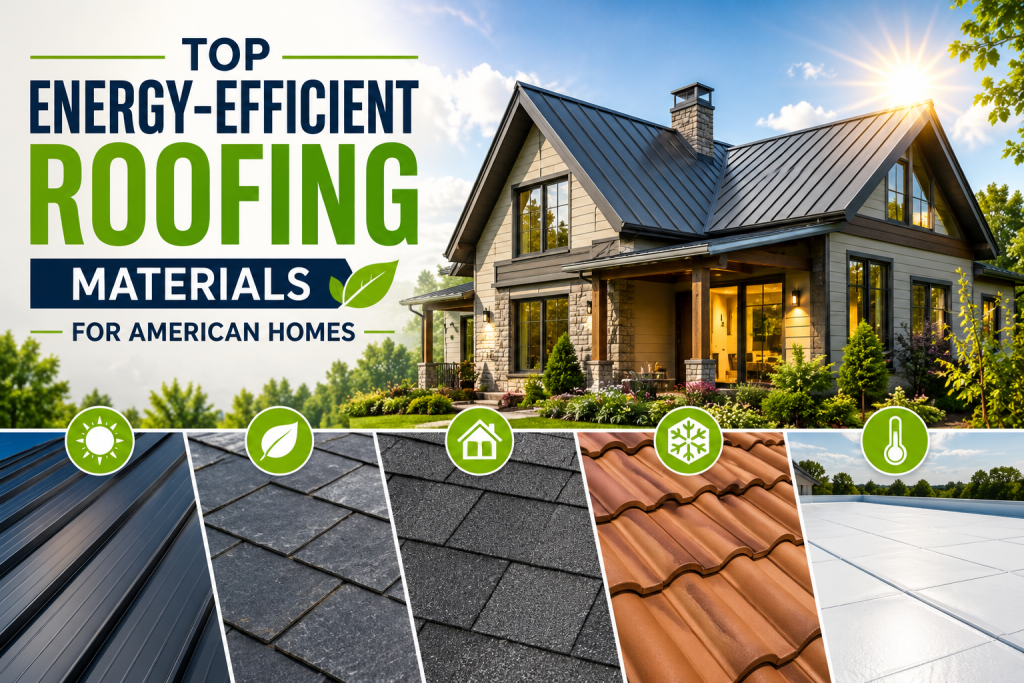
Choosing the right roofing material is one of the most important decisions homeowners can make when improving a home’s energy performance. Different materials offer varying levels of solar reflectance, durability, and insulation benefits. The best option often depends on your local climate, budget, and long-term goals. While no single product is ideal for every home, several roofing materials consistently stand out for their ability to improve efficiency and reduce cooling demands.
Metal Roofing Systems
Metal roofing has become increasingly popular in states such as Texas, Arizona, and Colorado due to its excellent reflective properties and long lifespan. Many metal roofing products are manufactured with specialized coatings that reflect a significant portion of solar radiation, helping reduce heat buildup during hot summer months. In addition to energy benefits, metal roofs are known for durability, weather resistance, and low maintenance requirements.
Reflective Asphalt Shingles
Traditional asphalt shingles can absorb substantial amounts of heat, but modern reflective roof shingles are engineered to improve solar reflectance without dramatically changing the appearance of the roof. These products are available in various colors and styles, making them a practical option for homeowners who want better energy performance while maintaining a familiar residential look.
Tile Roofing Options
Clay and concrete tiles are commonly used in warm regions such as California, Florida, and the Southwest. Their natural thermal properties and air gaps beneath the tiles help reduce heat transfer into the home. Tile roofing can provide excellent long-term performance, especially in areas with intense sun exposure and high temperatures.
Synthetic and Composite Roofing Products
Modern synthetic roofing materials are designed to replicate the appearance of slate, wood shake, or tile while offering improved durability and lighter weight. Many premium composite products incorporate advanced technologies that enhance thermal performance and weather resistance. These materials can be a strong choice for homeowners seeking energy savings, curb appeal, and long-term reliability in a single roofing solution.
Understanding Cool Roof Systems and Reflective Technologies
Modern roofing technology has evolved far beyond basic weather protection. Today, many homeowners are exploring cool roof systems that are specifically designed to reduce heat absorption and improve overall building efficiency. These roofing solutions use advanced surface materials and coatings to reflect more sunlight and release absorbed heat more effectively than conventional roofing products. As a result, homes can stay cooler during periods of intense sun exposure, particularly in southern and western regions of the United States.
How Solar Reflectance Works
Solar reflectance measures a roof’s ability to reflect incoming sunlight away from the surface. Products with higher reflectance values absorb less heat, which helps lower roof temperatures during the hottest parts of the day. Many forms of solar reflective roofing are engineered with specialized pigments or coatings that improve reflectivity without limiting color options. This allows homeowners to balance energy performance with architectural style and neighborhood aesthetics.
The Role of Thermal Emittance
Thermal emittance refers to a material’s ability to release absorbed heat back into the atmosphere. Even when some solar energy is absorbed, roofing materials with high thermal emittance can cool down more quickly. When solar reflectance and thermal emittance work together, energy-efficient roofing systems remain significantly cooler than conventional roofing surfaces. This combination can help reduce attic temperatures, improve indoor comfort, and contribute to lower cooling costs during warm weather seasons.
ENERGY STAR Roofing Requirements Explained
Homeowners looking for proven energy-saving products often turn to ENERGY STAR roofing as a trusted benchmark. The ENERGY STAR program helps consumers identify roofing products that meet specific performance standards for solar reflectance and energy efficiency. Choosing certified roofing materials can simplify the selection process and provide greater confidence that a product has been independently evaluated for its ability to reduce heat gain.
How Roofing Products Earn ENERGY STAR Certification
To qualify for certification, roofing products must meet established reflectance requirements that vary by roof type and slope. Manufacturers submit products for testing to verify their performance under recognized standards. These evaluations focus on how effectively a roofing material reflects sunlight and maintains its reflective properties over time. Certification allows homeowners to compare products more easily when researching energy-efficient roofing solutions for their property.
Benefits of Choosing Certified Roofing Products
Certified roofing products can help improve indoor comfort, particularly in regions that experience long periods of hot weather. By reducing roof surface temperatures, these materials may lower cooling demands and contribute to energy savings throughout the year. In addition to performance benefits, many homeowners appreciate the added credibility that comes with a nationally recognized certification program. For those planning a roof replacement, certified products can be a practical way to support long-term energy goals while enhancing the performance of an energy-efficient roofing system and maintaining strong resale appeal.
Insulated Roofing Systems and Whole-Home Energy Performance
While roofing materials play a major role in thermal performance, the overall efficiency of a home also depends on insulation and ventilation. Many homeowners focus solely on exterior roofing products, but a comprehensive approach often delivers the best results. Insulated roofing systems are designed to work as part of a larger building envelope strategy, helping reduce unwanted heat transfer while improving year-round comfort.
Roof Insulation vs Roofing Materials
Roofing materials primarily influence how much solar heat reaches the roof surface, while insulation helps slow the movement of heat into living spaces. Even highly reflective roofing products can lose effectiveness if attic insulation is inadequate. Proper insulation creates a thermal barrier that helps maintain stable indoor temperatures during both summer and winter. When combined with high-performance roofing materials, insulation can significantly improve the effectiveness of an energy-efficient roofing system and enhance a home’s overall energy efficiency.
Ventilation and Attic Efficiency
Attic ventilation is another critical factor in roof performance. Without adequate airflow, heat and moisture can accumulate inside the attic, potentially affecting comfort, energy consumption, and roof longevity. Balanced intake and exhaust ventilation systems help regulate attic temperatures and reduce moisture-related issues. Homeowners who combine quality roofing materials, effective insulation, and proper ventilation often achieve the best long-term results from an energy-efficient roofing system in terms of comfort, durability, and energy savings.
Sustainable Roofing Materials for Long-Term Value
Homeowners are increasingly considering environmental impact alongside performance and cost when selecting a new roof. Many of today’s sustainable roofing materials are designed to reduce resource consumption, extend service life, and support better energy performance. These products can provide long-term value by lowering maintenance requirements and reducing the frequency of roof replacements over the life of a home.
Recycled Roofing Products
Several modern roofing products incorporate recycled content, including rubber, plastic, and reclaimed industrial materials. These options help divert waste from landfills while providing durability and weather resistance comparable to traditional roofing products. Many recycled roofing systems are manufactured to withstand harsh weather conditions, making them suitable for a variety of U.S. climate regions. As part of a well-designed energy-efficient roofing strategy, recycled roofing materials can also contribute to improved long-term performance and sustainability goals.
Durability and Environmental Benefits
Durability is one of the most important factors in sustainable roofing. A roof that lasts 40 to 50 years generally has a lower environmental impact than one requiring replacement every 15 to 20 years. Long-lasting roofing materials can reduce material waste, transportation demands, and installation-related costs over time. For homeowners focused on long-term property value, durable roofing products often deliver a balance of environmental responsibility, resilience, and financial savings while supporting the long-term benefits of energy-efficient roofing.
Choosing the Best Energy-Saving Roof Options for Your Region
Climate plays a major role in determining which roofing solution will deliver the greatest return on investment. Roofing products that perform exceptionally well in Arizona may not provide the same benefits in Minnesota. When evaluating energy-saving roof options, homeowners should consider local temperatures, humidity levels, seasonal weather patterns, and long-term energy goals. Matching roofing materials to regional conditions can improve efficiency, comfort, and overall home performance.
Hot Southern States
In states such as Florida, Texas, Louisiana, and Arizona, reducing solar heat gain is often the primary objective. Roofing materials with high solar reflectance can help keep roof surfaces cooler and reduce cooling demands during extended periods of hot weather. Light-colored roofing products, reflective coatings, and advanced metal roofing systems are frequently recommended for these climates because of their ability to manage intense sun exposure. These features make them popular choices for homeowners investing in energy-efficient roofing solutions designed for hot and sunny environments.
Northern and Mixed Climate Regions
Homeowners in colder regions such as Michigan, Minnesota, and Wisconsin often focus on balancing winter heat retention with summer cooling performance. Roofing systems in these areas benefit from proper insulation, attic ventilation, and durable materials that can withstand snow loads and freeze-thaw cycles. In mixed climates, selecting an energy-efficient roofing solution that performs effectively across multiple seasons can help maximize comfort, improve year-round performance, and reduce annual energy costs.
Cost, ROI, and Potential Energy Savings
The cost of an energy-focused roofing upgrade can vary significantly depending on the material selected, roof size, labor rates, and regional market conditions. While some high-performance roofing products require a larger upfront investment, many homeowners find that the long-term benefits justify the initial expense. Reduced cooling costs, improved indoor comfort, and extended roof lifespan can all contribute to a stronger return on investment over time for an energy-efficient roofing system. In warm climates where air conditioning systems operate for much of the year, roofing improvements may generate noticeable utility savings. Reflective roofing products can help reduce heat transfer into the home, allowing HVAC equipment to run more efficiently during peak summer months.
Over several years, these savings can offset a portion of the installation cost, making energy-efficient roofing a practical long-term investment for many homeowners. Beyond monthly utility bills, homeowners should also consider property value. Buyers increasingly recognize the benefits of efficient home upgrades, particularly in regions with high energy costs. A well-designed roofing system may enhance curb appeal, support resale value, and demonstrate a commitment to long-term home performance. When evaluated over the full lifespan of the roof, efficiency-focused upgrades often provide benefits that extend well beyond immediate energy savings.
Conclusion
Choosing the right roof is about more than protecting your home from the elements. A well-designed energy-efficient roofing system can help improve indoor comfort, reduce cooling demands, and support long-term savings on utility costs. From reflective materials and advanced roofing technologies to proper insulation and ventilation, multiple factors contribute to overall roof performance. The best solution depends on your home’s location, climate conditions, budget, and long-term goals. Homeowners in hot southern states may prioritize heat-reflective materials, while those in colder regions often benefit from a balanced approach that combines insulation, ventilation, and durable roofing products.
Evaluating roofing options through the lens of energy performance can help you make a more informed investment. Whether you’re planning a complete roof replacement or exploring ways to improve an existing system, selecting high-quality materials and working with experienced professionals can maximize the value of your project. With the right approach, energy-efficient roofing can deliver benefits that extend far beyond lower energy bills, including improved comfort, stronger resale appeal, and enhanced home performance for years to come.
Frequently Asked Questions
Does Energy-Efficient Roofing Really Save Money?
Yes, the amount of savings depends on factors such as climate, roofing material, insulation quality, and local energy rates. Homes located in warmer regions often experience greater reductions in cooling costs because efficient roofing products help limit heat transfer into the attic and living spaces.
What Roofing Material Reflects the Most Heat?
Metal roofing with reflective coatings is widely recognized for its ability to reflect solar radiation. Certain tile roofing products and specially engineered asphalt shingles can also provide strong reflective performance. The best choice depends on local climate conditions, budget, and aesthetic preferences.
Is Metal Roofing More Energy Efficient Than Shingles?
In many cases, metal roofing offers higher solar reflectance than traditional asphalt shingles. However, some modern roofing products are specifically designed to improve reflectivity and thermal performance. Homeowners should compare certified product ratings rather than relying solely on material type.
Can an Existing Roof Be Upgraded for Better Efficiency?
Yes. Depending on the condition of the roof, homeowners may be able to improve performance through reflective roof coatings, upgraded attic insulation, enhanced ventilation, or a complete roof replacement using modern energy-focused materials. A professional roofing inspection can help determine the most cost-effective upgrade strategy for a specific property.