


Best Garage Flooring Options: What Works Best for Durability, Cost, and Appearance
Choosing the best garage flooring is no longer just about making a garage look cleaner. For many American homeowners, the garage has become a multifunctional space used for vehicle storage, home workshops, gyms, seasonal storage, and even additional living utility. That means the floor must withstand far more than occasional tire traffic. Standard concrete surfaces eventually develop stains, moisture issues, cracks, and surface wear—especially in regions with freeze–thaw cycles, road salt exposure, high humidity, or extreme summer heat. A flooring upgrade can improve durability, simplify maintenance, and create a more finished appearance that supports long-term property value.
Today’s most popular options include professional floor coating solutions, modular flooring systems, sealed concrete surface solutions, and budget-friendly floor finish solutions. Each comes with different costs, performance expectations, installation requirements, and climate advantages. The right choice depends on how you use your garage, your maintenance expectations, and whether long-term performance or lower upfront cost matters most.
What Makes the Best Garage Flooring?
The best garage flooring is not always the most expensive option—it is the one that matches your garage’s daily demands, local climate, and long-term maintenance expectations. Before choosing a finish or coating, homeowners should evaluate performance factors that affect durability and overall value.
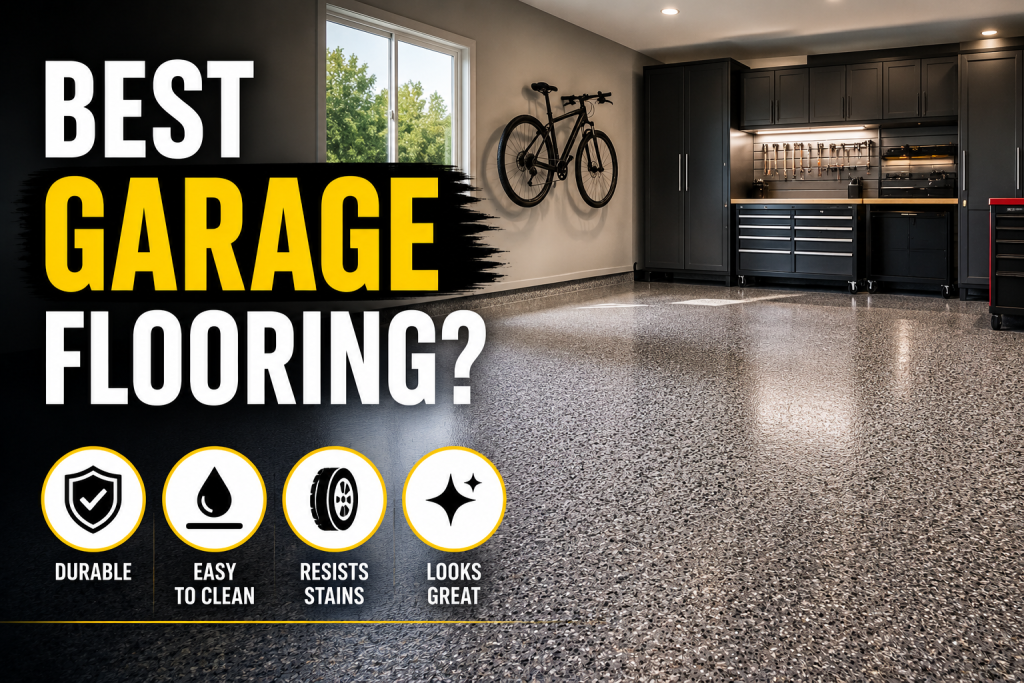
Durability and Impact Resistance
Garage floors handle vehicle weight, dropped tools, foot traffic, and occasional heavy equipment. Durable floor protection systems create a protective layer that reduces abrasion, surface wear, and long-term concrete deterioration.
Moisture and Chemical Protection
Moisture is one of the biggest causes of garage floor failure. In humid Southern climates like Florida or freeze–thaw regions across the Midwest, water intrusion can weaken coatings and accelerate cracking. Oil, road salt, gasoline, and household chemicals also require surfaces with strong resistance properties.
Installation and Long-Term Maintenance
Surface preparation often determines results more than the flooring product itself. Crack repair, cleaning, and moisture testing help coatings bond correctly. Homeowners should also consider maintenance requirements, expected lifespan, and whether the installation will be DIY-friendly or professionally installed. A well-selected garage floor improves functionality, appearance, and long-term homeowner satisfaction—not just short-term aesthetics.
Protective Floor Coatings — Best Overall for Value
For most homeowners, professional protective floor coating systems remain one of the strongest overall choices because they balance durability, appearance, and long-term cost. These solutions create a hardened protective surface over concrete that helps resist stains, tire marks, abrasion, and everyday garage wear while improving the overall functionality of the space. Many coating systems use resin and hardener components that chemically bond to prepared concrete. When installed correctly, the result is a smooth, dense finish that can maintain performance for many years under normal residential use.
One reason epoxy continues to rank among the best garage flooring options is versatility. Homeowners can choose solid colors, decorative flakes, textured finishes, or high-gloss surfaces that make garages feel more finished and increase perceived home value. Epoxy performs especially well in attached garages, workshop spaces, and moderate climates. However, installation quality matters. Poor surface preparation or excess moisture can shorten lifespan and lead to peeling. For homeowners looking for strong performance without moving into premium coating costs, epoxy remains one of the most practical upgrades available.
Modular Flooring Systems — Best for DIY Homeowners
If easy installation is the priority, modular flooring systems are one of the most homeowner-friendly upgrades available. Unlike liquid-applied coatings, these systems typically use interlocking panels that sit directly over existing concrete, reducing prep work and shortening installation time. Modular flooring solutions appeal to homeowners who want a cleaner, more finished appearance without committing to permanent coatings. They are especially popular in garages that serve multiple purposes, such as home gyms, hobby spaces, workshops, or organized storage areas.
One major advantage is flexibility. Damaged sections can often be replaced individually instead of refinishing the entire floor. Textured surfaces can also improve traction and help hide minor imperfections in older slabs. However, tiles are not always ideal for every environment. Moisture trapped beneath the surface may become an issue in humid regions or garages with poor drainage. Heavy rolling loads and frequent vehicle movement can also affect long-term performance depending on tile quality. For homeowners who want a fast transformation with minimal disruption, garage tiles remain one of the easiest paths to achieving best garage flooring results without professional installation.
Concrete Garage Flooring and Sealers: Is It One of the Best Garage Flooring Options?
For homeowners who prefer simplicity and lower upfront costs, sealed and finished concrete surfaces remain one of the best garage flooring choices for practicality and everyday performance. Instead of covering the slab with decorative systems, this approach focuses on strengthening and protecting the existing concrete surface while maintaining a clean, functional appearance. Common upgrades include polished concrete finishes and penetrating sealers designed to reduce moisture absorption, minimize surface dust, and resist staining. Polished concrete creates a cleaner, more finished look, while sealers help preserve the natural concrete appearance with less ongoing maintenance than decorative coatings. For homeowners seeking durability, straightforward upkeep, and long-term value, sealed concrete continues to stand out among the best garage flooring solutions.
Concrete-based solutions work particularly well in garages used primarily for parking and storage rather than workshops or heavy utility spaces. They also perform well in areas where homeowners want a durable floor without introducing additional coating layers. Climate matters here as well. In colder Northern states, sealing exposed concrete can help reduce damage from moisture intrusion and freeze–thaw movement. In humid regions, properly sealed concrete may also lower long-term maintenance requirements. For homeowners seeking reliability, straightforward maintenance, and industrial-style durability, sealed concrete continues to be a dependable durable garage flooring solution.
Garage Floor Paint — Lowest Cost Option
For homeowners focused on affordability, budget-friendly floor finishes offer one of the lowest-cost ways to refresh an aging concrete surface. While these finishes can improve appearance and provide light surface protection, they perform differently from professionally installed protective floor systems and should be selected with realistic expectations. Most budget-friendly floor finishes use acrylic or latex-based formulas that apply similarly to standard paint products. Installation is generally simpler than premium surface solutions, making this option appealing for cost-conscious DIY projects.
The biggest advantage is affordability. These finishes can quickly brighten a stained or worn garage and create a cleaner overall look with limited investment. However, durability is usually lower than professionally installed protective floor systems, which are designed for stronger long-term performance and better surface protection. Finished surfaces may wear faster under vehicle traffic, hot tires, chemical exposure, and repeated cleaning. Recoating is also more common over time. For garages used mainly for storage, occasional parking, or short-term cosmetic improvement, this approach can still deliver noticeable results without major renovation costs.
Comparison Table — Best Garage Flooring by Category
Choosing the best garage flooring becomes easier when comparing performance factors side by side. While no single option works for every homeowner, understanding the tradeoffs helps narrow the decision based on budget, maintenance expectations, and garage usage.
| Flooring Type | Durability | Cost | DIY Difficulty | Typical Lifespan | Maintenance |
| Epoxy Garage Floor | High | Moderate | Moderate | Long-term with proper prep | Low |
| Polyaspartic Flooring | Very High | Premium | Professional recommended | Long-term | Very Low |
| Garage Floor Tiles | Moderate to High | Moderate to Premium | Easy | Moderate to Long | Low |
| Concrete Garage Flooring + Sealer | Moderate | Budget to Moderate | Easy to Moderate | Moderate | Low |
| Garage Floor Paint | Low to Moderate | Lowest | Easy | Shorter-term | Moderate |
For most homeowners, professionally installed protective floor systems provide the strongest balance of performance and value. Premium buyers often choose advanced surface solutions, while DIY users frequently prefer modular flooring options for easier installation and convenience. If budget is the deciding factor, sealed concrete and lower-cost floor finish solutions remain accessible starting points. The right choice ultimately depends on climate, garage usage, and how long you expect the flooring upgrade to last.
How to Choose the Right Garage Flooring for Your Climate
Climate has a major impact on how long a garage floor lasts. Temperature swings, humidity, sunlight exposure, and moisture levels all influence performance, which is why selecting the best garage flooring should account for regional conditions—not just appearance or price.
Hot Southern States
In places such as Texas, Arizona, and parts of the Southeast, garages often experience prolonged heat and direct sun exposure. UV-resistant systems like polyaspartic flooring tend to maintain appearance better and resist long-term discoloration.
Cold Northern Regions
Homeowners in states with snow, road salt, and freeze–thaw cycles should prioritize surfaces that protect concrete from moisture penetration. Professionally installed protective floor systems and sealed concrete surface solutions can help reduce surface deterioration and extend floor lifespan when installed correctly.
Humid Coastal Areas
High humidity increases the risk of moisture-related coating issues. Proper surface preparation becomes critical in coastal and humid environments. Breathable sealers and professionally installed coating systems often perform more reliably over time. Matching flooring performance to local weather conditions can improve lifespan, reduce maintenance, and protect long-term home value.
Professional Installation vs DIY
One of the biggest decisions homeowners face is whether to install garage flooring themselves or hire a professional. The answer usually depends on the flooring system, garage condition, budget, and expected lifespan. DIY projects are most practical for budget-friendly floor finishes, basic sealers, and modular flooring systems. These options typically require fewer specialized tools and shorter preparation time. For homeowners comfortable with home improvement projects, DIY installation can help reduce upfront costs while still improving the overall appearance and usability of the garage.
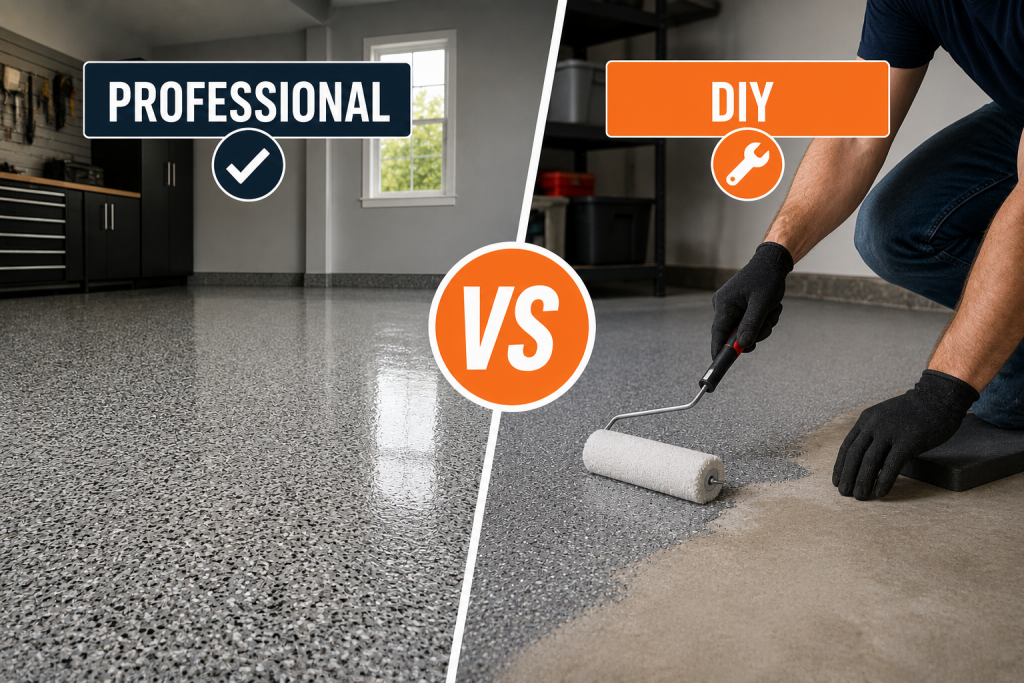
Professional installation becomes more valuable for advanced surface protection solutions, where surface preparation directly affects long-term performance. Contractors often use mechanical grinding, crack repair methods, moisture testing, and industrial-grade application equipment that improve adhesion and overall durability. Another factor is warranty protection. Professionally installed systems may include workmanship guarantees that help reduce future repair expenses and improve homeowner confidence. If long-term durability and lower maintenance matter most, professional installation often delivers better overall value. If affordability and flexibility are higher priorities, DIY-friendly flooring options can still produce strong results when installed correctly.
Final Verdict — Which Garage Flooring Is Best?
The best garage flooring ultimately depends on how your garage functions, your local climate, and how much maintenance you are willing to accept over time. There is no universal solution—but there are clear leaders for different homeowner priorities. For the best overall balance of durability, appearance, and value, an epoxy garage floor remains the strongest choice for most residential garages. It delivers reliable protection, improves appearance, and performs well across a wide range of everyday conditions. Homeowners seeking premium performance and faster installation should consider polyaspartic flooring, especially in hot or high-UV environments where long-term appearance matters. If ease of installation is the priority, garage floor tiles offer flexibility and quick transformation with minimal disruption. For lower budgets, sealed concrete garage flooring and garage floor paint can still improve function and appearance while keeping renovation costs manageable. The best investment is the one that matches your garage’s real-world use—not simply the option with the highest price tag.
Frequently Asked Questions
Is Professional Garage Floor Coating the Best Garage Flooring Compared to Floor Paint?
In most cases, yes. Professional garage floor coating systems are considered among the best garage flooring options because they provide greater durability, stronger resistance to stains and chemicals, and a longer lifespan than standard floor paint. Paint is generally better suited for cosmetic upgrades and lighter garage use, while professional coatings perform better under vehicle traffic, daily wear, and long-term maintenance expectations.
Does polyaspartic flooring crack?
Properly installed polyaspartic flooring is designed to remain more flexible than some traditional coatings, which helps reduce the likelihood of cracking under temperature changes. However, existing concrete movement or poor surface preparation can still create performance issues over time.
Are garage floor tiles worth it?
Garage floor tiles are often worth considering for homeowners who want quick installation and minimal surface preparation. They work especially well for workshops, storage spaces, and garages used for multiple purposes. Long-term performance depends on tile quality and garage conditions.
How Long Do Protective Garage Floor Systems Last?
The lifespan of protective garage floor systems varies based on material quality, garage usage, climate conditions, and installation quality. Premium surface solutions can maintain performance for many years with routine cleaning and proper maintenance, while lower-cost alternatives generally require more frequent touch-ups and upkeep over time.
What is the most durable garage flooring?
Among the most durable residential options, professionally installed protective floor systems typically deliver the strongest long-term performance. For homeowners prioritizing longevity, surface preparation and moisture control matter just as much as the surface solution itself.
Can you install garage flooring over damaged concrete?
Minor cracks and surface imperfections can often be repaired before installation. However, severely damaged slabs may require concrete repair before applying coatings, sealers, or tile systems to ensure long-term adhesion and durability.
Does garage flooring improve home value?
A finished garage can improve perceived home quality, support curb appeal, and make the space more functional. While returns vary by market, durable flooring upgrades are often viewed as a practical improvement by prospective homeowners.