


Best Paint Types for Every Room in the House: Complete Guide
Choosing the best paint for every room in a house is not just about color; it’s about matching the right paint type to how each space is actually used. Every room has different levels of moisture, traffic, lighting, and cleaning needs, which directly affect how paint performs over time. For example, kitchens and bathrooms deal with steam, splashes, and frequent wiping, so they require more durable and protective coatings. Bedrooms, on the other hand, prioritize comfort and relaxation, meaning softer finishes often work better. Living rooms fall somewhere in between, needing a balance of durability and visual appeal for daily use and entertaining.
This is why a proper step-by-step paint guide is essential for homeowners planning a full interior update. Using the same paint everywhere may seem simpler, but it often leads to faster wear in high-use areas or an overly uniform look that doesn’t match each room’s purpose. Understanding these differences helps create a more functional, longer-lasting, and visually balanced home interior.
Understanding Interior Paint Kinds and Finishes
To choose the best paint for every room, homeowners first need to understand the main interior paint kinds and how their finishes perform in different conditions. Each finish has a different level of shine, durability, and cleanability, which directly affects where it should be used. Flat and matte paints have little to no sheen and are best for low-traffic areas. They help hide wall imperfections, making them a common choice for ceilings and bedrooms, but they are less resistant to stains and moisture. Eggshell offers a slight sheen and is one of the most versatile finishes in a step-by-step paint guide. It balances appearance with moderate durability, making it suitable for living rooms and dining areas.
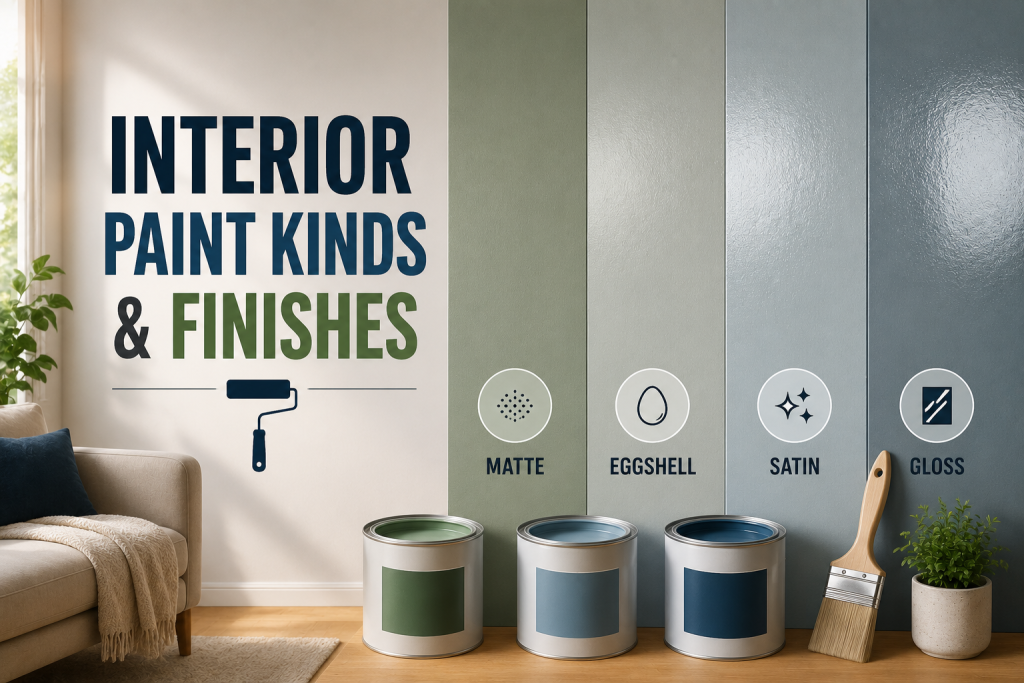
Satin provides a smoother, more durable surface that handles cleaning well, which is why it is often recommended for kitchens, hallways, and family rooms. Semi-gloss and gloss finishes are the most durable and moisture-resistant options. They are commonly used for trim, doors, and bathrooms, where frequent cleaning is required. Understanding these interior paint kinds helps homeowners match the right finish to each room’s function for better long-term performance.
Kitchen Walls Paint: What Works Best
When selecting the best paint for every room, the kitchen requires special attention because it is one of the most active and mess-prone areas in the home. Heat, grease, food splatters, and frequent cleaning all influence how paint performs over time. The most commonly recommended kitchen wall paint options are satin and semi-gloss finishes. Satin provides a smooth, modern look while still offering strong durability and easy cleaning. Semi-gloss adds even more protection, making it ideal for areas near sinks, stoves, and high-contact surfaces.
These finishes are better suited for kitchens than flat or matte paints, which can absorb stains and are harder to clean. A durable, washable surface helps maintain a fresh appearance even in high-use cooking spaces. Color also plays a role, but performance matters more in kitchens than in decorative rooms. Light neutrals, warm whites, and soft greiges are often used to enhance brightness and create a clean, open feel. Choosing the right kitchen’s wall paint ensures the space stays functional, easy to maintain, and visually appealing over time.
Bedroom Paint Polishes for Comfort and Style
Bedrooms are designed for rest, which makes finish selection an important part of choosing the best paint for every room. Unlike kitchens or bathrooms, bedrooms do not face heavy moisture or frequent scrubbing, so the focus is more on comfort and visual softness. Most bedroom paint finishes fall into matte or eggshell categories. Matte paint creates a smooth, non-reflective surface that helps reduce visual distractions and adds a calming effect. It is often preferred for primary bedrooms where a soft, cozy atmosphere is the goal.
Eggshell is another popular choice because it offers a slight sheen while still maintaining a relaxed look. It is also more durable than matte, making it suitable for guest rooms or children’s bedrooms where walls may need occasional cleaning. Color selection works closely with finish choice. Soft neutrals, muted greens, and warm tones often pair best with these finishes to create a restful environment. In a complete step-by-step paint guide, bedrooms consistently prioritize comfort, subtlety, and ease of maintenance over high durability or heavy sheen.
Bathroom Waterproof Paint
Bathrooms require some of the most durable coatings in the home because they are constantly exposed to steam, humidity, and water splashes. This is why bathroom waterproof paint is essential when selecting the best paint for every room. Unlike standard interior paint, moisture-resistant formulas are designed to handle high-humidity environments without breaking down. They create a protective surface that helps reduce issues like peeling, bubbling, and staining over time.
Many of these products also include mildew-inhibiting properties, making them more reliable in enclosed or poorly ventilated bathrooms. This added protection is especially important in shower areas, ceilings, and corners where moisture tends to collect. Finish also matters in bathrooms. Satin and semi-gloss are commonly recommended because they provide better resistance to water and are easier to clean than flat or matte paints. In a complete step-by-step paint guide, bathrooms consistently require higher-performance coatings due to their constant exposure to moisture and daily temperature changes.
Long-Lasting Living Room Paint for High-Use Areas
Living rooms sit at the center of daily home activity, which makes durability an important factor when choosing the best paint for every room. Unlike bedrooms, living rooms experience more foot traffic, furniture contact, and exposure to guests, pets, and everyday wear. A durable living room paint typically falls within the eggshell or satin finish range. Eggshell offers a soft, low-sheen appearance that works well in most traditional living spaces, while satin provides added durability and easier cleaning for busier households. These finishes help resist scuffs, fingerprints, and minor stains without making the walls overly shiny. This balance is especially important in open-concept homes where the living room connects to kitchens or dining areas.
Color choice also plays a role in durability perception. Warm neutrals, soft greiges, and layered earth tones remain popular because they hide wear better than stark whites or highly saturated colors. In a well-planned step-by-step paint guide, living rooms are designed to balance visual appeal with long-term durability and everyday functionality.
Ceiling Room Paint Types and the best paint for every room
Ceilings are often overlooked in a step-by-step paint guide, but choosing the right product is essential for a clean, finished look throughout the home. Unlike walls, ceilings are not exposed to frequent touching or cleaning, but they do play a major role in how light is distributed in a room. The most commonly recommended ceiling paint types are flat or matte finishes. These low-sheen options help minimize glare from natural and artificial lighting while also hiding imperfections such as seams, patches, or uneven textures.
Flat white paint is especially popular because it reflects light evenly and helps rooms feel brighter and more open. This is particularly important in spaces with lower ceilings or limited natural light. Durability is less of a concern for ceilings compared to walls, so performance is focused more on coverage and visual consistency than washability. In most cases, using a dedicated ceiling paint rather than standard wall paint ensures a smoother finish and a more professional appearance across the entire interior.
Choosing the Best Paint for Every Room
Selecting the best paint for each room is not only about function, but it also depends on the overall interior design style of the home. Different architectural styles and décor themes influence which finishes and tones feel most natural and cohesive.
Best paint for every room: Modern Homes
Modern interiors typically favor clean lines and minimal contrast. Satin finishes are often used in shared spaces, while matte finishes work well in bedrooms. A structured step-by-step paint guide in modern homes often relies on neutral palettes like white, greige, and soft earth tones.
Farmhouse Style Homes
Farmhouse designs lean toward warmth and comfort. Bedrooms often use soft matte finishes, while kitchens and living rooms benefit from slightly more durable eggshell or satin paints. This style prioritizes a relaxed and welcoming feel across all rooms.
Traditional Homes
Traditional interiors often use more variation in sheen and color depth. Living rooms may feature richer tones with eggshell finishes, while bedrooms maintain softer, calming bedroom paint polishes. Bathrooms typically still require bathroom moisture-resistant paint for durability.
Coastal and Light-Filled Homes
Coastal styles emphasize airy, bright environments. Light blues, soft whites, and sandy neutrals are common. Finishes are usually low to medium sheen to enhance brightness without overwhelming natural light.
Urban or Contemporary Apartments
Smaller or urban homes often rely on cohesive interior paint types to create flow between compact spaces. Durable, washable finishes are prioritized in multi-use living areas to handle higher daily activity.
Step-by-Step Paint Guide: Summary Table
A quick way to understand the best paint for every room is to compare how each space functions and match it with the right finish and performance level. A structured room-by-room paint guide helps homeowners avoid mistakes and choose coatings that last longer in real-world conditions. Kitchens typically require satin or semi-gloss finishes because they need strong cleanability and resistance to grease and moisture. Bathrooms demand even higher protection, making bathroom waterproof paint essential for preventing humidity-related damage.
Bedrooms, by contrast, benefit from softer finishes like matte or eggshell, which create a calm and comfortable environment. Living rooms fall in the middle, where a durable living room paint, such as eggshell or satin, offers a balance between appearance and everyday wear resistance. Ceilings are best suited for flat finishes, which reduce glare and help hide surface imperfections. By aligning each room with the correct finish and performance level, homeowners can create a more durable, visually balanced, and low-maintenance home interior.
Common Paint Selection Mistakes
Even with a solid step-by-step paint guide, many homeowners still make avoidable mistakes when choosing the best paint for every room. These errors often lead to faster wear, higher maintenance, and less visually balanced interiors.

- One of the most common mistakes is using the same finish throughout the entire home. While this may seem consistent, it ignores the different performance needs of each space. For example, kitchen and bathroom walls require more durable and washable finishes than bedrooms or ceilings.
- Another issue is choosing overly flat finishes in high-traffic areas. While flat paint can look smooth, it is harder to clean and may show wear quickly in busy living spaces.
- Some homeowners also underestimate the importance of bathroom waterproof paint, especially in poorly ventilated bathrooms where humidity can cause peeling or mildew.
- Ignoring lighting conditions is another frequent mistake. A paint color or finish that looks good in one room may appear completely different in another due to natural light exposure.
Avoiding these mistakes helps ensure better durability, easier maintenance, and a more cohesive interior design overall.
Final Thoughts
Choosing the best paint for every room is ultimately about understanding how each space is used and selecting finishes that support those needs. When paint is matched correctly to the room function, homes become more durable, easier to maintain, and visually more cohesive. High-moisture areas like kitchens and bathrooms benefit most from durable and protective solutions such as bathroom waterproof paint and washable finishes. These help prevent long-term damage caused by humidity, grease, and daily cleaning.
In contrast, bedrooms and living rooms prioritize comfort and atmosphere. Softer bedroom paint polishes and a balanced, long-lasting living room paint approach help create spaces that feel inviting while still holding up to everyday use. Ceilings and low-impact areas complete the system by using flat finishes that reduce glare and unify the overall design. A thoughtful step-by-step paint guide ensures every surface in the home is not only visually appealing but also practical for long-term living.
Frequently Asked Questions
What is the best paint for every room?
The best paint for every room depends on function. Kitchens and bathrooms need more durable, moisture-resistant finishes, while bedrooms and living rooms perform well with softer options like matte, eggshell, or satin.
What are the main interior paint kinds?
The most common interior paint kinds include flat, matte, eggshell, satin, semi-gloss, and gloss. Each offers different levels of durability, sheen, and cleanability for specific rooms.
What paint is best for kitchens and bathrooms?
For kitchens, satin or semi-gloss is ideal for easy cleaning. For bathrooms, bathroom waterproof paint is recommended to handle humidity and prevent mildew issues.
Which bedroom paint polishes work best?
Most bedroom paint polishes are matte or eggshell because they create a calm, soft appearance that supports relaxation and comfort.
What are the best ceiling room paint types?
Flat paint is the most common choice for ceilings because it reduces glare and hides imperfections effectively, making it ideal for most interior spaces.