


Best Patio Materials for Hot Climates in the US
Choosing the right patio material becomes more important when your outdoor space faces intense sun, high surface temperatures, and long summers. In hot regions across Arizona, Texas, Nevada, and parts of Florida, the wrong patio surface can become uncomfortable to walk on, require frequent maintenance, and lose its appearance faster than expected. The best patio materials do more than improve curb appeal—they help manage heat retention, reduce maintenance demands, and create a more comfortable backyard environment year-round. Surface temperature, UV exposure, durability, and climate performance all play a role in long-term value. In this guide, we’ll compare popular patio options and explain which materials perform best in hot-weather conditions so homeowners can choose a patio that stays cooler, lasts longer, and supports better outdoor living.
What Makes the Best Patio Materials for Hot Climates?
Not all patio surfaces perform the same under direct sunlight. In hot-weather regions, choosing the right material can improve comfort, reduce maintenance, and extend the lifespan of your outdoor space. One of the biggest factors is heat absorption. Lighter-colored and reflective finishes usually stay cooler than darker surfaces exposed to full sun. Homeowners looking for cool patio surfaces often prioritize materials that reduce heat buildup and remain comfortable underfoot. Durability also matters. The best-performing heat-resistant patio materials should handle UV exposure, thermal expansion, and temperature fluctuations without fading, cracking, or deteriorating quickly.
Additional factors to consider include:
- Surface temperature and walking comfort
- Resistance to sun damage
- Drainage performance
- Slip resistance around pools
- Long-term maintenance requirements
When evaluating the best patio materials, homeowners should balance appearance with climate performance to create an outdoor space that remains usable throughout the hottest months of the year.
Natural Stone: Premium Cooling Performance
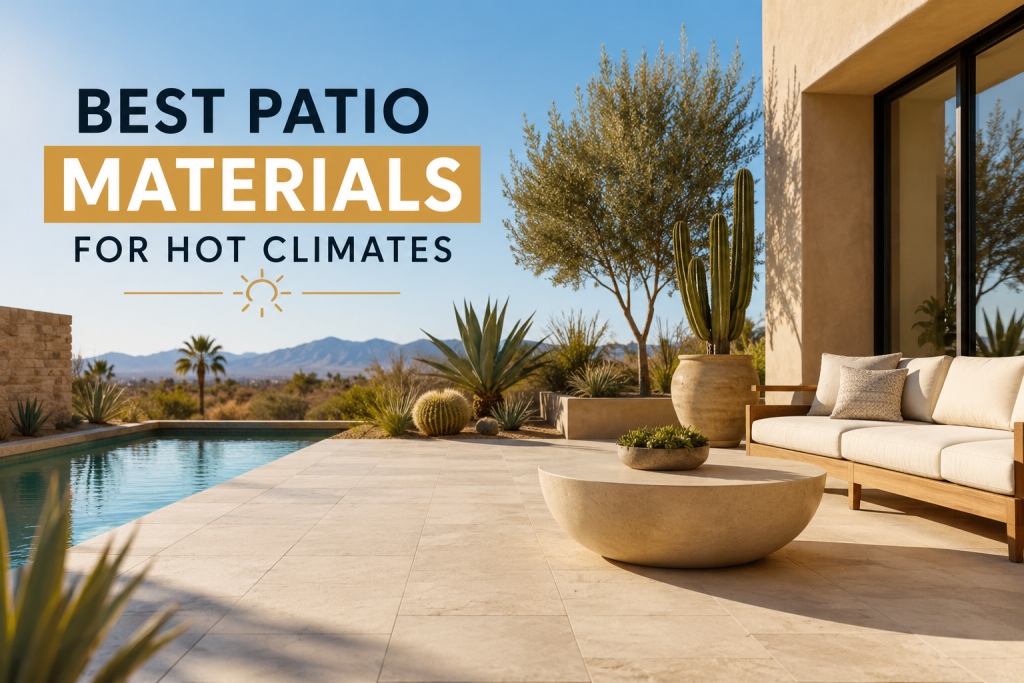
Natural stone is often considered one of the strongest choices for hot climates because of its ability to manage surface temperatures while delivering long-term durability. Among premium options, lighter stones tend to absorb less heat and remain more comfortable during peak summer conditions. Travertine is especially popular for patios in Arizona, Texas, and other high-temperature regions because its porous structure helps reduce heat retention. Limestone and certain light-colored flagstones can also perform well when properly installed and sealed. Among the best patio materials for hot climates, these natural stone options are often preferred for their cooler surface temperatures, long-term durability, and strong outdoor comfort performance.
Benefits of natural stone include:
- Cooler surface temperatures
- Strong UV resistance
- Premium appearance
- Long service life
- Good resale appeal
For homeowners searching for patio flooring for hot weather, natural stone often creates a more comfortable outdoor experience compared with dense, heat-absorbing materials. Although installation costs are higher, natural stone remains one of the most attractive outdoor patio surfaces for homeowners prioritizing long-term comfort and premium curb appeal.
Concrete Patios: Affordable but Heat Sensitive
Concrete remains one of the most common patio choices in the United States because of its affordability, clean appearance, and installation flexibility. For homeowners building larger outdoor spaces, concrete often delivers strong value at a lower upfront cost. However, performance in hot climates depends heavily on color, finish, and sun exposure. Dark or dense concrete surfaces can absorb and retain heat, making patios uncomfortable during peak afternoon temperatures. Lighter finishes and textured coatings may help reduce heat buildup.
Advantages of concrete patios include:
- Lower installation cost
- Fast construction timeline
- Flexible design options
- Wide finish selection
The biggest limitation is temperature retention. In regions with extreme summer conditions, homeowners should carefully evaluate shade strategies and surface treatments. When comparing the best patio materials, concrete can still perform well—but it is rarely the coolest option for long-term outdoor comfort.
Pavers: Balance of Durability and Temperature Control
Pavers remain one of the most practical choices for homeowners who want a balance between appearance, comfort, and long-term performance. Because pavers are installed as individual units rather than a single slab, they typically handle expansion and temperature movement more effectively in hot climates. Material selection plays a major role in heat performance. Lighter-colored pavers generally stay cooler than darker options, helping create more comfortable outdoor spaces during extended summer conditions.
Benefits of paver patios include:
- Easier repairs and replacement
- Better flexibility during thermal movement
- Strong curb appeal
- Long lifespan
- Multiple design options
Many homeowners researching patio materials for Arizona choose pavers because they perform well under intense sun while maintaining visual appeal. Among today’s most popular durable patio materials, pavers continue to offer a strong combination of heat management, appearance, and long-term reliability.
Are Porcelain Pavers Among the Best Patio Materials for Hot Climates?
Porcelain pavers have become increasingly popular among homeowners looking for a clean, modern patio design with strong heat performance. Manufactured at high temperatures, porcelain surfaces are dense, durable, and designed to resist fading even under prolonged sun exposure. One of the biggest advantages is low maintenance. Unlike porous materials, porcelain absorbs very little moisture and typically requires less ongoing care to maintain appearance over time.
Advantages of porcelain pavers include:
- Strong UV resistance
- Lower water absorption
- Modern architectural appearance
- Fade resistance
- Easy cleaning and upkeep
For homeowners prioritizing low-maintenance patio materials, porcelain can be an attractive long-term option—especially in regions with intense heat and limited rainfall. When evaluating the best patio materials, porcelain stands out for combining contemporary design with durability and reliable warm-weather performance.
Gravel and Alternative Patio Surfaces
Not every hot-climate patio needs premium stone or pavers. Gravel and other alternative surfaces can provide strong performance while keeping installation costs lower and improving drainage. Gravel stays popular in desert and Southwest landscapes because it does not trap heat the same way large solid surfaces often do. It also allows rainwater to move through more naturally, reducing standing water and helping maintain surface stability.
Other alternatives include:
- Decomposed granite
- Stabilized gravel systems
- Permeable pavers
- Composite outdoor surfaces
Benefits of these materials include:
- Lower installation cost
- Flexible layouts
- Good drainage performance
- Reduced heat concentration
Homeowners comparing outdoor patio surfaces should consider maintenance expectations alongside appearance. Loose materials may require occasional leveling and replenishment but can perform exceptionally well in dry climates. When evaluating the best patio materials, budget-conscious homeowners should look beyond installation cost and consider long-term comfort, usability, and climate performance. Alternative surfaces can still deliver strong function and reliable outdoor living value over time.
Comparison Table: Which Patio Material Performs Best?
Selecting the right patio surface becomes easier when you compare performance across the factors that matter most in hot climates. Heat control, durability, maintenance, and long-term value should all influence the final decision.
| Patio Material | Heat Resistance | Comfort Underfoot | Maintenance | Durability | Cost |
| Travertine / Natural Stone | Excellent | Excellent | Moderate | Excellent | $$$ |
| Concrete | Moderate | Moderate | Moderate | Good | $ |
| Pavers | Very Good | Very Good | Low–Moderate | Excellent | $$–$$$ |
| Porcelain Pavers | Excellent | Very Good | Low | Excellent | $$$ |
| Gravel | Good | Moderate | Moderate | Good | $ |
Homeowners searching for best patio materials should focus on performance rather than upfront pricing alone. For cooler walking surfaces and premium appearance, natural stone and porcelain often lead. For balanced cost and durability, pavers remain one of the strongest choices. Gravel and concrete continue to work well for homeowners prioritizing value and installation flexibility.
How to Choose the Best Patio Material for Your Climate
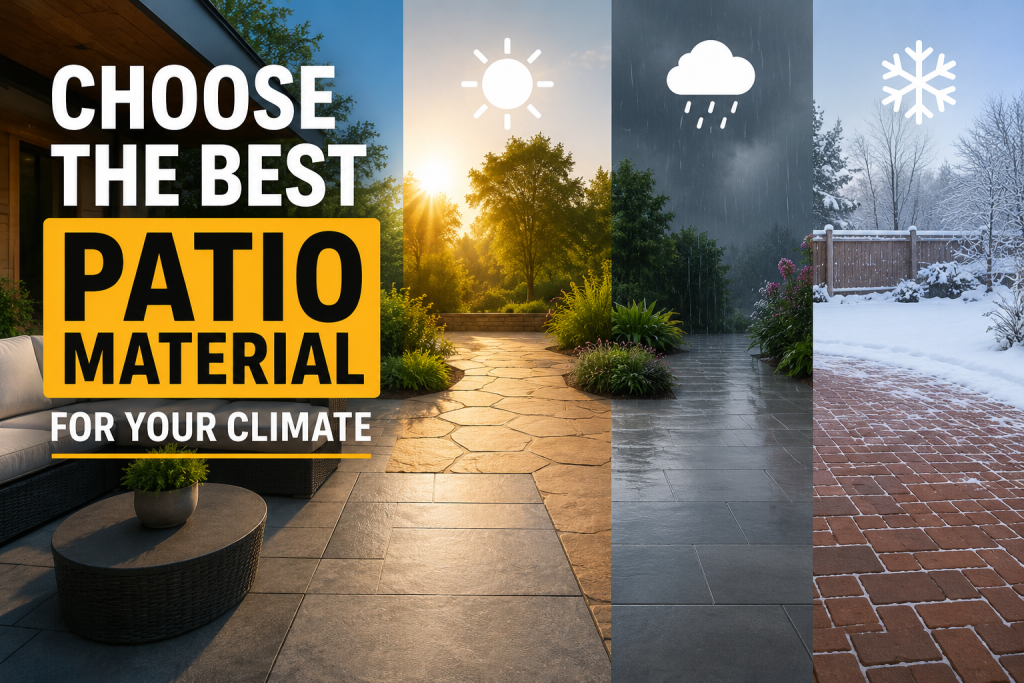
The right patio surface depends on more than appearance or budget. Climate conditions, maintenance expectations, and long-term ownership plans should guide the final decision. In desert regions such as Arizona and Nevada, lighter surfaces that reflect heat often improve comfort and reduce surface temperatures. Homeowners evaluating patio materials for Arizona typically prioritize cooler finishes and materials that resist UV exposure. In hotter and more humid areas like Florida or parts of the Gulf Coast, moisture resistance and easy cleaning become equally important.
Use this framework when deciding:
- Choose natural stone for premium cooling and appearance
- Choose pavers for balanced durability and flexibility
- Choose porcelain for modern design and easier upkeep
- Choose concrete for lower upfront cost
- Choose gravel for budget-friendly performance
Among today’s best patio materials, the ideal choice is the one that matches your regional climate, outdoor lifestyle, and expected maintenance commitment over the long term.
Final Verdict
There is no single patio material that performs best in every climate, budget, or backyard design. The ideal choice depends on how much heat your patio receives, how often the space is used, and how much maintenance you are willing to manage over time. For homeowners prioritizing cooler surface temperatures and premium appearance, natural stone remains one of the strongest options. Pavers offer an excellent balance of durability, repair flexibility, and long-term value. Porcelain performs well for modern, lower-maintenance spaces, while concrete and gravel continue to provide practical solutions for budget-conscious projects. When comparing the best patio materials, focus on long-term comfort and climate performance—not just installation cost. The right patio should stay usable during the hottest months while improving outdoor living, curb appeal, and long-term homeowner satisfaction.
FAQs
Which of the Best Patio Materials Stays Coolest in Hot Climates?
Among the best patio materials for hot climates, lighter natural stone surfaces—especially travertine—are commonly chosen because they absorb less heat and remain more comfortable under direct sun. Their cooling performance makes them a popular option for homeowners prioritizing outdoor comfort in high-temperature regions.
Is concrete too hot for patios?
Concrete can become warm in full sun, particularly darker finishes. Lighter colors and shade features may help reduce surface temperatures.
Are pavers cooler than concrete?
In many cases, lighter-colored pavers feel more comfortable than standard concrete because they manage heat and movement more effectively.
Which patio material lasts longest in extreme heat?
Natural stone, porcelain pavers, and high-quality pavers often provide excellent long-term durability when properly installed.
What are the most durable patio materials?
Pavers, porcelain, and natural stone are among the most reliable choices for homeowners seeking long service life and reduced maintenance.