


Best Roofing for Heavy Rain for US Homes
Heavy rainfall is one of the biggest challenges homeowners face when choosing a roofing system. In regions such as Florida, Washington, Oregon, Louisiana, and parts of Texas, roofs are exposed to frequent storms, prolonged moisture, and wind-driven rain that can accelerate wear and increase the risk of leaks. Selecting the best roofing for heavy rain is not just about preventing water intrusion—it is also about protecting your home’s structural integrity, maintaining curb appeal, and avoiding costly repairs. The right roofing material should effectively shed water, resist moisture damage, and perform reliably throughout years of exposure to wet weather.
Factors such as roof pitch, underlayment quality, flashing installation, and local climate conditions all influence long-term performance. While several roofing materials can handle rainfall, some options consistently outperform others in areas with heavy precipitation. This guide explores the best roofing for heavy rain, compares leading roofing materials, and explains the key features homeowners should prioritize when investing in a roof designed for rainy climates.
Why Choosing the Best Roofing for Heavy Rain Matters
A roof serves as the first line of defense against the elements, but heavy rainfall places unique demands on roofing systems. Homeowners in regions with frequent storms often experience issues such as moisture intrusion, mold growth, wood rot, and insulation damage when their roofs are not designed to handle persistent rain. Choosing the best roofing for heavy rain helps reduce these risks while extending the lifespan of the entire roofing system.
Beyond preventing leaks, a high-performing roof can improve energy efficiency, support property value, and lower long-term maintenance expenses. Modern roofing products are engineered to shed water quickly and withstand repeated exposure to wet conditions. Investing in the best roofing for heavy rain can also provide peace of mind during severe weather events, especially in hurricane-prone coastal states and other areas that experience prolonged periods of rainfall.
Common Problems Caused by Heavy Rain on Roofs
Heavy rain can expose weaknesses in aging or poorly installed roofs. Water often finds its way through damaged shingles, deteriorated flashing, or improperly sealed roof penetrations. Over time, these issues may lead to stained ceilings, attic moisture, structural deterioration, and costly repairs. One of the most important considerations is selecting materials that offer excellent water resistance. Many homeowners specifically look for waterproof roofing materials because they help minimize moisture-related problems and improve long-term roof performance in wet environments.
How Water Damage Impacts Home Value and Insurance Claims
Water damage is one of the most expensive issues homeowners can face. When rain repeatedly penetrates a roof, it can affect roof decking, attic insulation, drywall, and even a home’s structural framing. These hidden problems often remain unnoticed until significant repairs are required, resulting in higher restoration costs and potential disruptions to daily life. From a real estate perspective, visible signs of water damage can reduce buyer confidence and negatively impact resale value. Home inspectors frequently identify moisture-related concerns during property transactions, which may lead to repair negotiations or delayed sales.
This is one reason many homeowners prioritize rain-resistant roofing when planning a roof replacement in wet regions. Insurance considerations also play a role. While some policies cover sudden storm-related damage, insurers may deny claims if poor maintenance contributed to the issue. Installing durable roofing materials and maintaining proper drainage can help homeowners reduce risks and better protect their investment. In areas with frequent rainfall, a reliable roof is often viewed as a long-term asset rather than a short-term expense.
Best Roofing for Heavy Rain: Top Materials Compared
When evaluating the best roofing for heavy rain, homeowners should focus on how effectively a material sheds water, resists moisture damage, and performs over decades of exposure to wet conditions. Roofing performance can vary significantly depending on climate, installation quality, roof slope, and maintenance practices. Several roofing systems perform well in rainy regions, but some consistently rank above others due to their durability and water-shedding capabilities. Materials such as metal roofing, architectural asphalt shingles, slate, and synthetic products are commonly recommended in areas that experience frequent rainfall. The ideal choice depends on budget, local weather patterns, expected lifespan, and homeowner priorities.
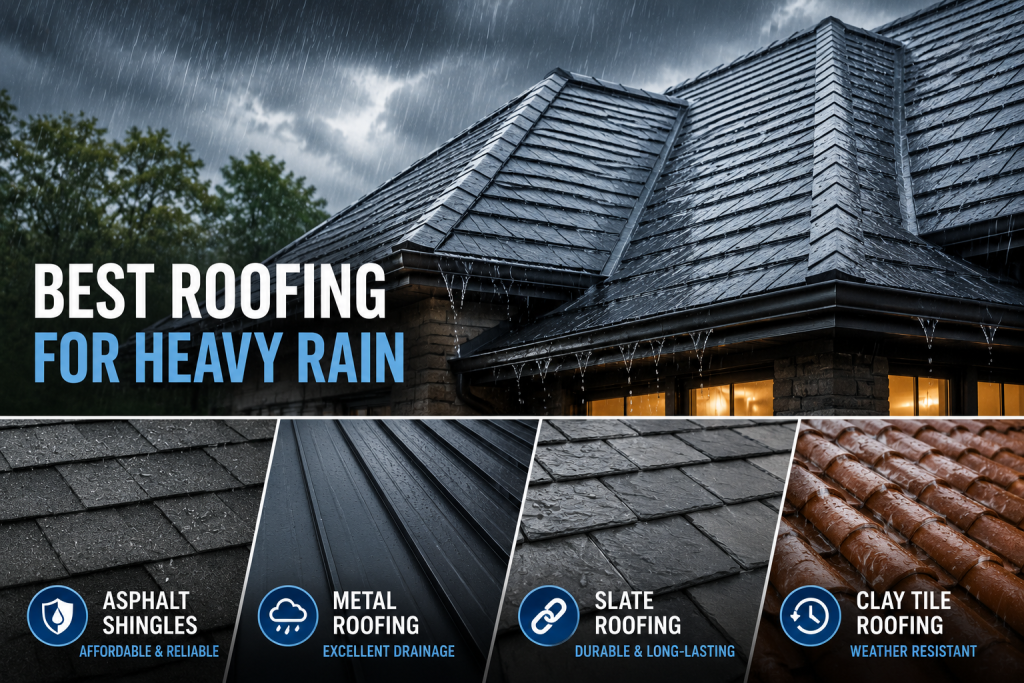
Metal Roofing: A Leading Choice for Heavy Rainfall
Metal roofing is widely regarded as one of the strongest options for homes exposed to heavy rainfall. Its smooth surface allows water to drain quickly, reducing the likelihood of standing water and moisture-related deterioration. Because of this performance, many contractors recommend metal roofing for wet climates in regions such as the Pacific Northwest, Florida, and the Gulf Coast. Premium metal roofs can last 40 to 70 years when properly installed and maintained. They also resist cracking, warping, and many forms of weather-related damage. Combined with high-quality underlayment and flashing systems, metal roofing offers excellent protection against persistent rain while delivering long-term value for homeowners.
Asphalt Shingles: Affordable Protection for Wet Regions
Asphalt shingles remain the most popular residential roofing material in the United States due to their affordability, availability, and reliable performance. Modern architectural shingles are designed to handle substantial rainfall when installed correctly, making them a practical option for many homeowners seeking the best roofing for heavy rain without the higher upfront costs associated with premium materials. High-quality shingles from manufacturers such as GAF, Owens Corning, and CertainTeed often include enhanced moisture protection features and extended warranty coverage. Proper installation is especially important, as underlayment quality and flashing details can significantly affect long-term performance.
Many homeowners researching asphalt shingles for rain appreciate their balance between cost and durability. While they may not match the lifespan of metal or slate roofing, premium architectural shingles can provide decades of dependable protection in rainy climates. For homeowners focused on value and performance, they continue to be one of the most practical roofing solutions available.
Slate Roofing for Long-Term Water Resistance
Slate roofing has earned a reputation as one of the most durable roofing materials available. Made from natural stone, slate offers exceptional resistance to moisture and can withstand decades of exposure to heavy rainfall without significant deterioration. For homeowners seeking the best roofing for heavy rain and planning to stay in their homes long term, slate is often considered a premium investment.
One of slate’s biggest advantages is its ability to shed water efficiently while maintaining its structural integrity. Unlike some roofing materials that can degrade from prolonged moisture exposure, slate remains highly resilient in wet conditions. It also provides excellent curb appeal, making it attractive to homeowners focused on both performance and property value. The primary drawback is cost. Slate roofing requires a higher initial investment and often needs specialized installation due to its weight. However, its longevity and minimal maintenance requirements can offset those costs over time, particularly in regions that experience frequent rain and severe weather.
Clay and Concrete Tiles in Rainy Climates
Clay and concrete tiles are frequently used in regions where homeowners need durable roofing solutions capable of handling challenging weather conditions. These materials are especially common in states such as Florida, Arizona, and parts of California, where long-term durability and weather resistance are major priorities. Their design allows water to move efficiently off the roof surface, making them a strong contender for the best roofing for heavy rain.
Concrete tiles are generally more affordable than natural clay while still providing excellent moisture resistance and a long service life. Clay tiles, on the other hand, are valued for their distinctive appearance and exceptional durability. Both options perform best when installed on properly engineered roof structures that can support their weight. While tile roofs require a higher upfront investment than asphalt shingles, many homeowners appreciate their longevity, low maintenance requirements, and ability to withstand years of exposure to rain, humidity, and changing weather conditions.
Synthetic Roofing Materials for Modern Homes
Synthetic roofing products have become increasingly popular among homeowners looking for a balance between durability, appearance, and long-term performance. These materials are typically manufactured to replicate the look of slate, wood shake, or tile while offering improved resistance to moisture and weather-related wear. In many cases, synthetic products are lighter and easier to install than their natural counterparts.
For homeowners searching for the best roofing for heavy rain, synthetic roofing can provide excellent water-shedding capabilities and strong resistance to cracking, warping, and mold growth. Many premium products are engineered to withstand prolonged exposure to moisture, making them suitable for regions that receive significant annual rainfall. Another advantage is versatility. Synthetic roofing is available in a wide range of styles and colors, allowing homeowners to enhance curb appeal without sacrificing performance. When installed by experienced contractors, these systems can deliver reliable protection and long service lives in demanding weather conditions.
Key Features to Look for in the Best Roofing for Heavy Rain
Selecting the best roofing for heavy rain involves more than choosing the right material. The overall roofing system—including roof design, underlayment, flashing, and drainage components—plays a major role in preventing water intrusion and extending roof lifespan. Even premium roofing materials can underperform if critical installation details are overlooked. Homeowners should prioritize products and installation methods that promote fast water runoff and long-term moisture protection. Features such as high-performance underlayment, properly sealed flashing, and durable ventilation systems help reduce the risk of leaks and structural damage.
Many contractors also recommend investing in leak-resistant roofing solutions that are specifically engineered for regions with frequent storms and prolonged wet weather. In addition, properly designed roof drainage systems are essential for directing water away from the roof and foundation. Effective drainage helps prevent ponding water, minimizes moisture-related deterioration, and supports the overall performance of the roofing system throughout its service life.
Roof Pitch and Water Shedding Performance
Roof pitch is one of the most important factors affecting how well a roof handles heavy rainfall. A steeper roof slope allows water to flow off the surface more quickly, reducing the likelihood of standing water and moisture-related problems. This is why roof pitch should always be considered alongside material selection when evaluating the best roofing for heavy rain. Homes located in regions with frequent storms often benefit from roofing designs that encourage rapid water runoff. Proper pitch works together with underlayment, flashing, and gutter systems to create a complete moisture-management strategy.
Many roofing professionals consider roof slope a critical component of successful roofing for rainy climates, regardless of the material installed. Even the most durable roofing products can experience premature wear if water is allowed to collect on the roof surface. By combining an appropriate roof pitch with quality installation practices, homeowners can improve performance, reduce maintenance concerns, and maximize the lifespan of their roofing investment.
Importance of High-Quality Underlayment
While roofing materials receive most of the attention, underlayment is a critical layer that provides additional protection against moisture intrusion. Installed between the roof deck and the exterior roofing material, underlayment serves as a secondary barrier when wind-driven rain or severe storms push water beneath the roof covering. Homeowners evaluating the best roofing for heavy rain should pay close attention to underlayment quality. Premium synthetic underlayments generally offer better tear resistance, water protection, and durability than traditional felt products.
In many parts of the United States, contractors also install specialized water barriers in vulnerable areas such as valleys, roof edges, and around penetrations. A properly selected underlayment helps protect roof decking from moisture damage and can significantly improve the overall performance of the roofing system. Combined with quality materials and professional installation, it contributes to long-term durability and greater protection during periods of heavy rainfall.
Flashing and Leak Prevention Systems
Flashing is one of the most important yet often overlooked components of a roofing system. These metal pieces are installed around chimneys, skylights, roof valleys, vents, and other vulnerable areas where water is most likely to penetrate. Even when homeowners invest in the best roofing for heavy rain, poor flashing installation can lead to leaks and costly repairs. Properly installed flashing directs water away from critical roof junctions and prevents moisture from entering the home. Modern flashing systems are commonly manufactured from aluminum, galvanized steel, or copper, each offering varying levels of durability and weather resistance.
Professional installation is essential because even small gaps or improperly sealed joints can become entry points for water. Regular inspections are also important. Over time, flashing can loosen, corrode, or sustain storm damage. Identifying and repairing these issues early helps maintain the integrity of the roofing system and reduces the risk of moisture-related problems throughout the home.
How Climate Affects Roofing Performance
Climate plays a major role in determining how well a roof performs over time. A roofing material that works exceptionally well in a dry region may not deliver the same results in areas that experience frequent rainfall, high humidity, or severe storms. Homeowners should evaluate local weather conditions before selecting the best roofing for heavy rain. Factors such as annual precipitation, storm frequency, temperature fluctuations, and wind exposure all influence roofing durability. Coastal regions often face wind-driven rain and hurricane-related weather, while northern states may experience a combination of heavy rain, snow, and freeze-thaw cycles.
These environmental conditions place different demands on roofing systems and can affect maintenance requirements, lifespan, and overall performance. Understanding regional climate patterns allows homeowners to choose materials that are better suited to local conditions. Matching roofing products to the environment can improve long-term protection, reduce repair costs, and maximize the value of a roof replacement project.
Best Roofing Options for Florida and the Gulf Coast
Florida and the Gulf Coast present some of the most demanding conditions for residential roofing in the United States. Homeowners in these regions must deal with heavy rainfall, high humidity, tropical storms, and the potential for hurricane-force winds. As a result, selecting the best roofing for heavy rain requires careful consideration of both water resistance and storm durability. Metal roofing is a popular choice throughout the region because it sheds water efficiently and performs well during severe weather events.
Concrete and clay tile roofs are also common, particularly in coastal communities where homeowners value durability and long service life. In addition, many insurance providers favor roofing systems that meet modern wind-resistance standards. Proper installation is just as important as material selection. High-quality underlayment, secure fastening systems, and well-designed drainage components help improve roof performance and reduce the risk of moisture intrusion during prolonged periods of rain and strong winds.
Roofing Solutions for the Pacific Northwest
The Pacific Northwest, including Washington and Oregon, is known for its frequent rainfall, persistent moisture, and extended wet seasons. Unlike regions that experience intense but short-lived storms, homeowners in this area often face months of damp weather that can gradually impact roofing materials. Choosing the best roofing for heavy rain is essential for maintaining long-term protection and preventing moisture-related deterioration. Metal roofing remains a strong option because it allows water to drain quickly and requires relatively little maintenance.
Synthetic roofing products are also gaining popularity due to their durability and resistance to mold, mildew, and moisture damage. High-quality architectural asphalt shingles continue to be a practical choice for homeowners seeking a balance between cost and performance. Ventilation is particularly important in the Pacific Northwest. Proper attic airflow helps control moisture buildup, reduces the risk of mold growth, and supports the overall health of the roofing system. Combined with routine inspections, effective ventilation can significantly extend roof lifespan in consistently wet environments.
Roofing Recommendations for Snow and Rain Regions
Homeowners in northern states often face a combination of heavy rainfall, snow accumulation, ice formation, and freeze-thaw cycles. These conditions create unique challenges that require roofing materials capable of handling moisture while also supporting additional seasonal loads. In these environments, selecting the best roofing for heavy rain involves evaluating performance throughout the entire year rather than focusing solely on rainfall. Metal roofing is frequently recommended because its smooth surface encourages both water and snow to slide off more efficiently.
Slate roofing also performs exceptionally well due to its durability and natural resistance to moisture. Premium architectural shingles can be effective when paired with high-quality underlayment and proper attic ventilation. Ice dams are a common concern in colder climates. Adequate insulation, ventilation, and water-protection barriers help reduce the risk of water backing up beneath roofing materials. By addressing both rain and winter weather challenges, homeowners can improve roof longevity and reduce the likelihood of costly repairs.
Roof Drainage Systems: The Overlooked Factor
Many homeowners focus primarily on roofing materials when researching the best roofing for heavy rain, but drainage is equally important. Even the highest-quality roof can experience performance issues if rainwater is not directed away efficiently. A well-designed drainage system helps protect the roof, siding, foundation, landscaping, and other parts of the property from water-related damage. Effective drainage begins with proper roof design and extends to gutters, downspouts, splash blocks, and water-management solutions around the home.
These components work together to move rainwater away from vulnerable areas and reduce the risk of moisture accumulation. Without adequate drainage, excessive water can contribute to roof deterioration, foundation settlement, and basement moisture problems. Homeowners should include drainage inspections as part of their regular maintenance routine. Keeping drainage components clean and functional helps maximize the lifespan of the roofing system while reducing the likelihood of costly repairs following periods of heavy rainfall.
Gutters, Downspouts, and Water Management
Gutters and downspouts play a critical role in protecting a home from water damage. Their primary function is to collect rainwater from the roof and channel it safely away from the foundation. When these systems become clogged, damaged, or undersized, water can overflow and create problems that affect both the roof and the structure below. Homeowners investing in the best roofing for heavy rain should also evaluate the condition and capacity of their gutter system. In areas that receive significant annual rainfall, larger gutters and properly positioned downspouts can improve water flow and reduce the risk of overflow during storms.
Gutter guards may also help minimize debris buildup and maintenance requirements. Routine cleaning and inspection are essential for long-term performance. Leaves, branches, and other debris can restrict water flow and increase stress on the system. By maintaining gutters and downspouts properly, homeowners can improve drainage efficiency and provide additional protection for their roofing investment.
Preventing Ponding Water and Foundation Damage
Ponding water occurs when rainwater remains on a roof or accumulates around a home’s foundation instead of draining away properly. Over time, standing water can accelerate material deterioration, increase the likelihood of leaks, and create conditions that support mold and mildew growth. Preventing these issues is an important part of maintaining the best roofing for heavy rain.
Low-slope roofs are particularly vulnerable to ponding water if drainage pathways become blocked or if the roof surface develops uneven areas. Regular inspections help identify potential problems before they lead to significant damage. Homeowners should also ensure that gutters, downspouts, and drainage extensions direct water far enough away from the home’s foundation. Foundation damage can be costly and difficult to repair. Excess moisture around the base of a home may contribute to soil movement, cracking, and long-term structural concerns. Effective water management protects not only the roof but also the overall stability and value of the property.
Cost vs Performance Comparison
Cost is an important factor when selecting the best roofing for heavy rain, but homeowners should also evaluate durability, maintenance requirements, and expected lifespan. A lower-cost roof may save money upfront, while a premium roofing system can deliver better long-term value through reduced maintenance and a longer service life.
The table below compares some of the most popular roofing materials used in rainy regions across the United States.
| Roofing Material | Typical Lifespan | Rain Performance | Maintenance Level | Relative Cost |
| Metal Roofing | 40–70 Years | Excellent | Low | High |
| Architectural Asphalt Shingles | 20–30 Years | Good to Very Good | Moderate | Low to Moderate |
| Slate Roofing | 75–100+ Years | Excellent | Low | Very High |
| Clay Tile Roofing | 50–100 Years | Excellent | Low | High |
| Synthetic Roofing | 30–50 Years | Very Good | Low to Moderate | Moderate to High |
For many homeowners, the ideal choice depends on budget, local climate conditions, and long-term ownership plans. Evaluating performance alongside cost helps ensure a roofing investment that delivers lasting protection and value.
Best Roofing for Heavy Rain Based on Homeowner Priorities
The best roofing for heavy rain is not the same for every homeowner. Budget, expected length of homeownership, maintenance preferences, and local weather conditions all influence the ideal roofing choice. Understanding these priorities can help homeowners select a roofing system that aligns with both their financial goals and long-term property needs.
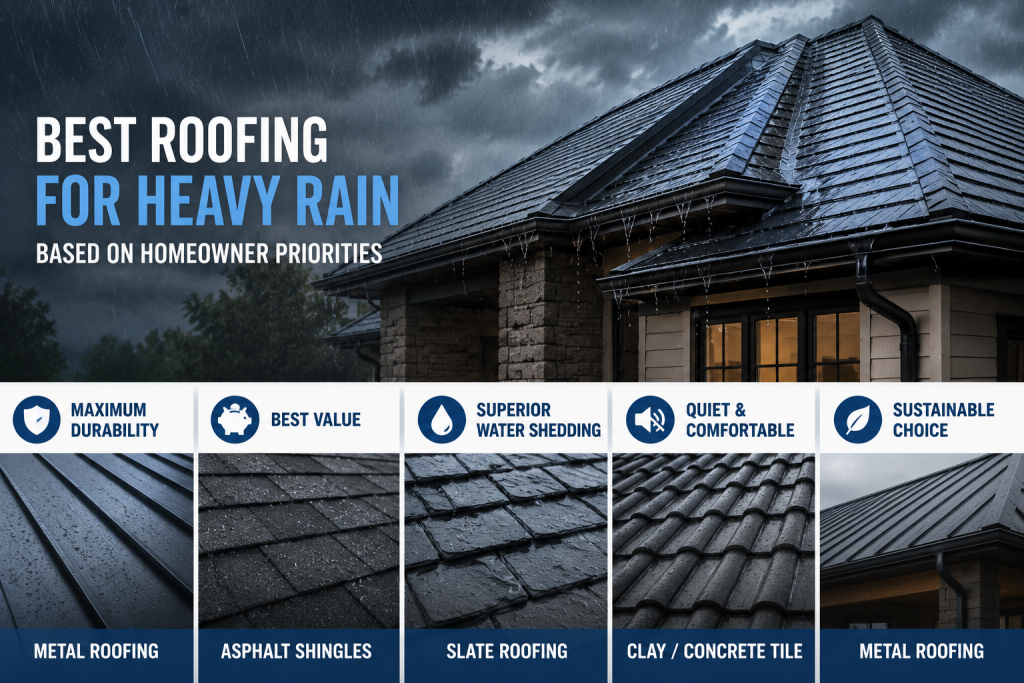
Best Budget-Friendly Option
Architectural asphalt shingles remain the most practical choice for homeowners seeking reliable performance at a reasonable cost. They are widely available, relatively easy to install, and capable of providing dependable protection when paired with quality underlayment and proper installation practices.
Best Premium Option
For homeowners focused on maximum durability and weather resistance, metal roofing is often the preferred premium solution. Its ability to shed water quickly, resist moisture-related deterioration, and deliver decades of service makes it a strong option for regions with frequent rainfall.
Best Long-Term Investment
Slate roofing is frequently considered the long-term leader due to its exceptional lifespan and resistance to moisture. Although the upfront investment is substantial, many homeowners view slate as a once-in-a-lifetime roofing solution that can provide generations of reliable performance.
Conclusion
Choosing the best roofing for heavy rain requires more than comparing materials alone. Homeowners should evaluate roof pitch, underlayment quality, flashing systems, drainage performance, and regional climate conditions before making a final decision. While metal roofing, slate, clay tile, synthetic products, and architectural asphalt shingles each offer advantages, the best option ultimately depends on budget, location, and long-term goals. By investing in a roofing system designed for wet weather and ensuring professional installation, homeowners can improve durability, reduce maintenance concerns, and protect their property from costly water damage for years to come.
Frequently Asked Questions
What is the best roofing for heavy rain?
The best roofing for heavy rain includes metal roofing and slate roofing because they are highly water-resistant and designed to shed rain efficiently. These roofing materials offer excellent protection against water intrusion, making them ideal for homes in regions that experience frequent or heavy rainfall.
Are metal roofs better than shingles in heavy rain?
In many situations, metal roofing provides superior water-shedding performance and a longer lifespan than traditional asphalt shingles. However, premium architectural shingles can still offer excellent protection when properly installed and maintained.
What roof pitch is best for rainy climates?
Steeper roof pitches generally perform better in rainy climates because they encourage faster water runoff. The ideal pitch depends on the roofing material, local building requirements, and regional weather conditions.
How can homeowners prevent roof leaks during heavy storms?
Regular inspections, prompt repairs, quality flashing installation, proper attic ventilation, and effective drainage systems all help reduce the risk of roof leaks. Homeowners should also address damaged roofing components as soon as problems are identified.
What is the best roofing material for areas with heavy rainfall?
Metal roofing is one of the best options for heavy rain because it sheds water quickly, resists moisture damage, and can last 40–70 years with proper installation. Slate, clay tiles, and high-quality asphalt shingles are also excellent choices when installed with proper waterproof underlayment.
Which roof design is best for heavy rain?
Steep-sloped roofs perform best in regions with frequent heavy rain because they allow water to drain quickly, reducing the risk of pooling, leaks, and water damage. Proper gutter systems and roof ventilation further improve drainage and roof longevity.
How can I make my roof more resistant to heavy rain?
Choose water-resistant roofing materials, install high-quality underlayment and flashing, keep gutters clean, and schedule regular roof inspections. Promptly repairing damaged shingles or seals also helps prevent leaks during heavy storms.