


Best Roofing for Humid Climates: Top Materials for Moisture, Mold, and Long-Term Performance
Choosing the best roofing for humid climates is one of the most important decisions homeowners can make in regions where high humidity, frequent rain, and warm temperatures create challenging conditions for roofing systems. States such as Florida, Texas, Louisiana, and South Carolina often experience prolonged moisture exposure that can accelerate roof deterioration if the wrong material is installed. Humidity does more than make the air feel uncomfortable. Over time, trapped moisture can contribute to mold growth, algae stains, wood rot, and reduced energy efficiency.
In coastal regions, salt-laden air can add another layer of stress, making roof durability even more critical. Homeowners who invest in moisture-resistant roofing solutions are often better protected against these long-term issues. The good news is that several roofing materials are specifically designed to withstand humid environments. From metal roofing and clay tiles to advanced asphalt shingles, the right option can improve your home’s lifespan, curb appeal, and overall value. This guide explores the best choices for humid regions and explains how to select a roofing system that performs well for decades.
Why Choosing the Best Roofing for Humid Climates Matters
Selecting the best roofing for humid climates goes beyond appearance or upfront cost. In regions with persistent humidity, roofing materials are constantly exposed to moisture, temperature fluctuations, and biological growth. These conditions can shorten a roof’s lifespan and increase maintenance expenses when the wrong material is chosen. Homeowners in areas such as Florida, the Gulf Coast, and other humid Southern states often face challenges that homeowners in drier climates rarely encounter.
A well-designed roofing system helps protect structural components, improve indoor comfort, and reduce the risk of costly repairs. The right roof can also contribute to better energy efficiency by helping regulate attic temperatures and reducing moisture buildup. Understanding how humidity affects roofing performance is the first step toward making a smart long-term investment.
How Humidity Affects Roofing Materials
High humidity allows moisture to linger on roofing surfaces for extended periods. When moisture becomes trapped beneath roofing materials or inside attic spaces, it can create ideal conditions for mold, mildew, and wood decay. Even premium roofing products may deteriorate faster if they are not designed for humid environments. Homeowners seeking mold-resistant roofing options should pay close attention to material composition, water-shedding capabilities, and installation quality. Proper material selection can significantly reduce moisture-related damage and improve overall roof longevity.
Common Roofing Problems in Humid Regions
Humid climates often accelerate several roofing issues. Algae streaks, moss growth, moisture infiltration, and premature shingle deterioration are among the most common concerns. Poor attic airflow can make these problems even worse by trapping warm, moist air beneath the roof deck. Over time, excessive humidity may lead to higher maintenance costs, reduced curb appeal, and potential structural damage. Choosing the best roofing for humid climates helps homeowners minimize these risks while maintaining strong long-term performance and protection.
Best Roofing for Humid Climates: Top Materials Compared
When evaluating the best roofing for humid climates, homeowners should focus on moisture resistance, lifespan, maintenance requirements, and regional weather conditions. Not every roofing material performs equally well in high-humidity environments. Some options are naturally resistant to moisture and biological growth, while others require additional protective features to achieve long-term performance. The following roofing materials consistently rank among the best choices for humid and coastal regions across the United States.
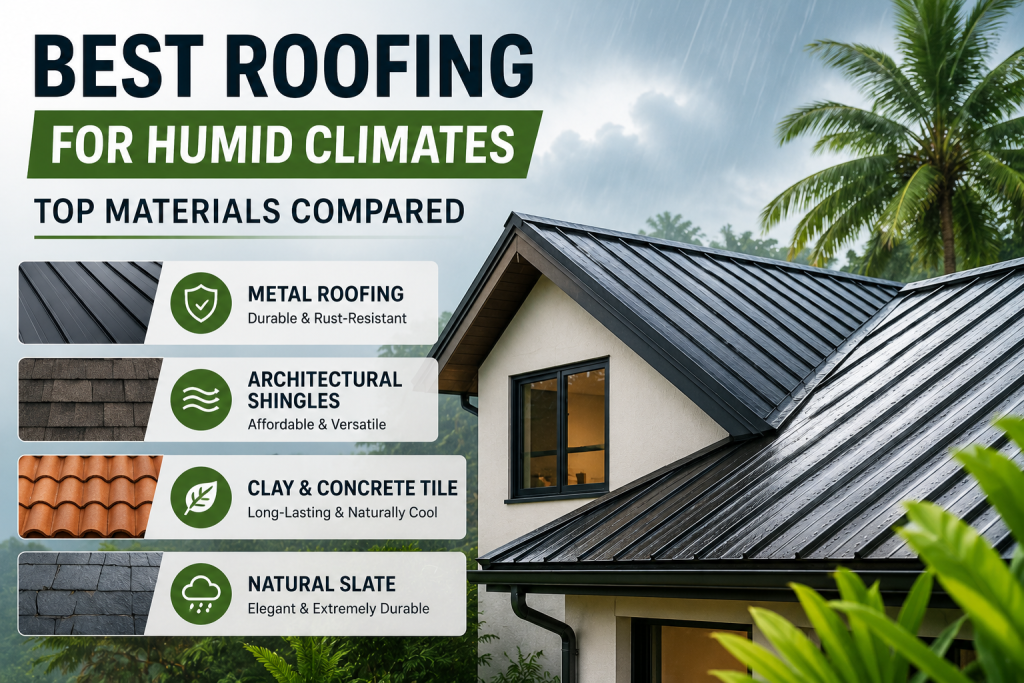
Metal Roofing Systems
Metal roofing is often considered one of the strongest options for humid environments. Unlike organic materials, metal does not absorb moisture, making it highly resistant to rot, mildew, and insect damage. Modern systems from manufacturers such as GAF, CertainTeed, and ATAS International are engineered to withstand years of exposure to rain and humidity. Many homeowners looking for roofing for Florida homes choose metal roofing because it also offers excellent wind resistance and energy efficiency. Reflective coatings can help reduce attic heat buildup, lowering cooling costs during hot Southern summers.
Clay and Concrete Tile Roofing
Clay and concrete tiles have been used successfully in humid climates for decades. Their dense composition allows them to shed water effectively while resisting moisture-related deterioration. These roofing systems are particularly popular in coastal and tropical regions where durability is a top priority. In addition to their long lifespan, tile roofs can improve curb appeal and increase property value. Although installation costs are higher than asphalt shingles, many homeowners view them as a worthwhile long-term investment.
Architectural Asphalt Shingles
Architectural asphalt shingles remain one of the most widely used residential roofing materials in the United States. Premium products often include copper granules and specialized coatings that help prevent algae growth and discoloration. Homeowners should look for algae-resistant shingles when selecting asphalt roofing in humid areas. These advanced products can help maintain a cleaner appearance and reduce maintenance requirements compared to traditional shingles.
Synthetic Roofing Materials
Synthetic roofing products are designed to replicate the appearance of slate, wood shake, or tile while offering enhanced weather resistance. Many modern synthetic systems are manufactured to withstand moisture exposure, making them attractive options for humid climates. These products are often lighter than natural materials and can provide excellent long-term durability. For homeowners seeking durable roofing materials without the weight or maintenance demands of traditional roofing systems, synthetic options deserve serious consideration.
Best Roofing for Humid Climates in Coastal and Hurricane-Prone Areas
Homeowners living near the Atlantic Ocean, Gulf Coast, or other coastal regions face roofing challenges that extend beyond humidity alone. Salt-laden air, intense UV exposure, tropical storms, and hurricane-force winds can accelerate wear and reduce the lifespan of standard roofing products. As a result, selecting the best roofing for humid climates becomes even more important in these environments. Roofing systems in coastal areas must resist corrosion, manage heavy rainfall, and remain securely attached during severe weather events. Materials that perform well inland may not always provide the same level of protection near the coast.
Salt-Air Resistance
Salt carried by coastal winds can gradually corrode exposed roofing components, flashing, fasteners, and metal surfaces. This is why material selection plays a critical role in long-term roof performance. Aluminum and specially coated steel roofing products generally offer better protection against corrosion than standard metal systems. Many homeowners invest in coastal roofing systems specifically designed to withstand salt exposure while maintaining structural integrity. These systems can help reduce maintenance needs and extend the service life of the roof in harsh marine environments.
Wind and Storm Durability
Hurricanes and tropical storms place enormous stress on residential roofs. Strong wind uplift can loosen shingles, damage flashing, and create openings that allow water intrusion. Roofing materials with high wind ratings are often recommended for homes located in states such as Florida, Louisiana, and Texas. Metal roofing, concrete tile, and premium architectural shingles are commonly selected for their ability to withstand severe weather. Combined with proper installation techniques and building-code compliance, these materials can provide dependable protection in some of the country’s most demanding climate conditions. For many coastal homeowners, the best roofing for humid climates is one that balances moisture resistance with exceptional storm durability.
The Role of Ventilation in Humid Roofing Systems
Even the best roofing for humid climates can underperform if the home lacks proper attic airflow. Roofing materials are only one part of a complete roofing system. Without adequate ventilation, warm, moisture-filled air can become trapped inside the attic, increasing the risk of condensation, mold growth, and premature roof deterioration. Proper airflow helps regulate attic temperatures, remove excess moisture, and support the long-term performance of roofing materials. Homeowners often focus on shingles or roofing panels while overlooking ventilation, but both components must work together to protect the home effectively.
Why Attic Ventilation Matters
A balanced attic ventilation system allows fresh air to enter through intake vents while pushing warm, humid air out through exhaust vents. This continuous airflow helps prevent moisture accumulation beneath the roof deck and reduces the likelihood of structural damage. Investing in proper ventilation for humid climates can improve roof longevity, lower cooling costs, and help maintain a healthier indoor environment. In regions with year-round humidity, ventilation is often just as important as selecting the right roofing material.
Signs of Poor Roof Ventilation
Several warning signs may indicate inadequate attic airflow. These include excessive attic heat, musty odors, visible mold growth, peeling paint, and higher-than-normal energy bills. Homeowners may also notice moisture stains on ceilings or signs of wood deterioration within attic spaces. If these issues are ignored, trapped moisture can weaken roofing components and shorten the lifespan of the entire system. Regular roof inspections and ventilation assessments can help identify problems before they lead to costly repairs. When evaluating the best roofing for humid climates, homeowners should always consider ventilation as part of the overall roofing strategy.
Features to Look for in Moisture-Resistant Roofing
Choosing the best roofing for humid climates involves more than comparing materials. Homeowners should also evaluate specific performance features that help roofs withstand constant exposure to moisture, heat, and biological growth. Modern roofing products often include advanced technologies designed to improve durability and reduce maintenance requirements in challenging environments. When comparing roofing systems, it is important to consider water-shedding capabilities, resistance to algae and mold, protective coatings, and overall system design. These features can have a significant impact on how well a roof performs over its expected lifespan.
Algae Resistance Technologies
Dark streaks on roofs are commonly caused by airborne algae that thrive in warm, humid conditions. While algae growth does not always damage the roof directly, it can negatively affect curb appeal and lead to more frequent cleaning. Many premium roofing products incorporate copper-infused or specially treated granules that inhibit algae growth. These technologies help roofing surfaces stay cleaner for longer periods and reduce the likelihood of visible staining. For homeowners in humid regions, algae-resistant features can provide valuable long-term benefits.
Mold Prevention and Water Management
Effective moisture management is essential for maintaining roof performance. Roofing systems should be designed to quickly shed water and prevent moisture from becoming trapped beneath roofing materials. Proper flashing, underlayment installation, and drainage design all contribute to this process. Homeowners should also pay attention to attic moisture control and routine maintenance. Combined with quality installation practices, these factors help reduce the risk of mold growth, wood rot, and structural deterioration. Selecting the best roofing for humid climates means looking beyond surface materials and evaluating how the entire roofing system handles moisture over time.
Roofing Material Comparison Table
Selecting the best roofing for humid climates often comes down to balancing durability, maintenance requirements, weather resistance, and budget. While no roofing material is perfect for every home, understanding the strengths and limitations of each option can help homeowners make a more informed decision.
| Roofing Material | Average Lifespan | Humidity Resistance | Coastal Performance | Maintenance Needs | Typical Cost |
| Metal Roofing | 40–70 years | Excellent | Excellent | Low | $$$ |
| Clay Tile | 50–100 years | Excellent | Very Good | Low to Moderate | $$$$ |
| Concrete Tile | 40–75 years | Excellent | Very Good | Low to Moderate | $$$ |
| Architectural Asphalt Shingles | 25–35 years | Good | Good | Moderate | $$ |
| Synthetic Roofing | 30–50 years | Excellent | Good to Excellent | Low | $$$ |
This comparison highlights why many homeowners prioritize metal, tile, and synthetic roofing products when searching for the best roofing for humid climates. The ideal choice depends on local weather conditions, home design, maintenance expectations, and long-term budget considerations.
How to Choose the Best Roofing for Humid Climates for Your Home
Finding the best roofing for humid climates requires a careful evaluation of regional weather patterns, property needs, and long-term ownership goals. While product performance is important, homeowners should also consider installation quality, maintenance expectations, and overall return on investment. A roofing system that performs exceptionally well in one part of the country may not be the ideal solution elsewhere. Understanding your local climate and budget priorities can help narrow the options.
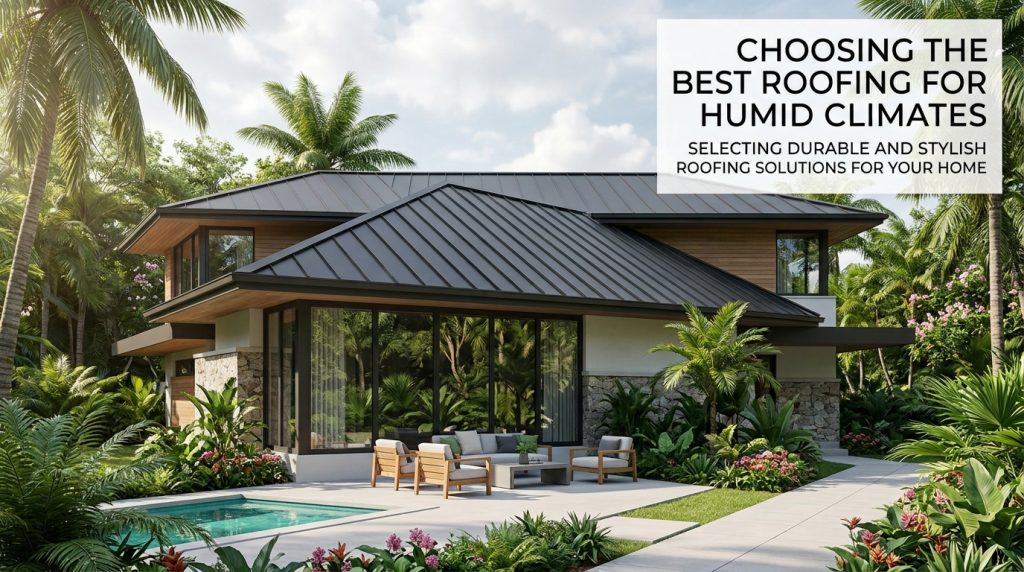
Home Location and Climate Zone
Climate plays a major role in roofing performance. Homes in coastal Florida face different challenges than properties in inland Texas or the humid Southeast. Factors such as rainfall frequency, salt-air exposure, hurricane risk, and year-round humidity should influence material selection. Homeowners should also review local building codes and insurance requirements, particularly in storm-prone regions where enhanced wind resistance may be required.
Budget vs Long-Term Value
The least expensive roofing option is not always the most cost-effective over time. Lower upfront costs may be attractive, but frequent repairs and shorter service life can increase total ownership expenses. When evaluating the best roofing for humid climates, homeowners should compare expected lifespan, maintenance costs, energy efficiency benefits, and resale value. Investing in a higher-quality roofing system often provides stronger long-term performance and greater protection against moisture-related problems.
Conclusion
Choosing the best roofing for humid climates requires more than selecting an attractive roofing material. Homeowners must consider humidity levels, rainfall patterns, coastal exposure, ventilation requirements, and long-term durability when making their decision. Metal roofing, clay tile, concrete tile, premium architectural shingles, and synthetic roofing products all offer advantages in humid environments. The best option depends on your location, budget, maintenance preferences, and performance expectations. Homes in coastal regions may benefit from enhanced corrosion resistance, while inland properties may prioritize energy efficiency and overall longevity. A successful roofing project combines high-quality materials, proper installation, and effective moisture management. By evaluating these factors carefully, homeowners can select the best roofing for humid climates and enjoy stronger protection, improved energy efficiency, and lasting value for decades to come.
Frequently Asked Questions
What is the best roofing for humid climates if you want the longest lifespan?
Clay tile, concrete tile, and metal roofing are widely considered the best roofing for humid climates when long-term durability is the top priority. Depending on installation quality, local weather conditions, and maintenance, these materials can last between 40 and 100 years. Their strong resistance to moisture-related deterioration, mold growth, and humidity damage makes them popular choices for homeowners in regions with frequent rainfall and high humidity.
Are metal roofs good for Florida homes?
Yes. Metal roofing is widely used throughout Florida because it performs well in humid conditions, sheds water efficiently, and offers excellent wind resistance. Many metal roofing systems are also designed to withstand hurricane-force winds, making them a practical option for homeowners in coastal and storm-prone areas.
How do I prevent algae growth on my roof?
Homeowners can reduce algae growth by choosing roofing products with algae-resistant technology, maintaining proper roof drainage, trimming overhanging tree branches, and scheduling routine roof inspections. Regular cleaning can also help preserve curb appeal and prevent dark streaking.
Does roof ventilation reduce mold?
Yes. Proper attic ventilation helps remove warm, moisture-laden air before it accumulates beneath the roof deck. By reducing condensation and controlling humidity levels, ventilation can significantly lower the risk of mold growth and moisture-related roof damage.