


Best Siding for Cold Climates: Top Materials for Winter Weather
Cold-weather regions place more pressure on exterior materials than many homeowners expect. Snow accumulation, freeze–thaw cycles, moisture exposure, and long winters can all affect siding performance over time. Choosing the right product is not only about appearance—it also affects maintenance, energy use, durability, and long-term ownership costs. In 2026, selecting the best siding for cold climates depends on several factors including insulation performance, moisture resistance, installation quality, and local weather conditions. Materials that perform well in mild environments may not deliver the same results during extended cold seasons.
Homeowners in northern states often prioritize products that resist cracking, reduce moisture problems, and maintain performance through repeated temperature changes. Long-term durability and exterior protection usually matter more than lowest upfront cost. This guide compares leading siding materials and explains what homeowners should evaluate before making a final decision for cold-weather conditions.
How to Choose the Best Siding for Cold Climates
Choosing exterior materials for colder regions requires more than comparing appearance or initial pricing. Homeowners should evaluate how siding performs under snow exposure, moisture cycles, freezing temperatures, and seasonal expansion and contraction. When comparing options for the best siding for cold climates, start by looking at moisture management. Exterior systems that absorb water or hold moisture for long periods may experience faster wear during repeated freeze–thaw conditions. Thermal performance is another important consideration. Materials that help stabilize indoor temperatures can improve comfort and reduce seasonal heating demand over time.
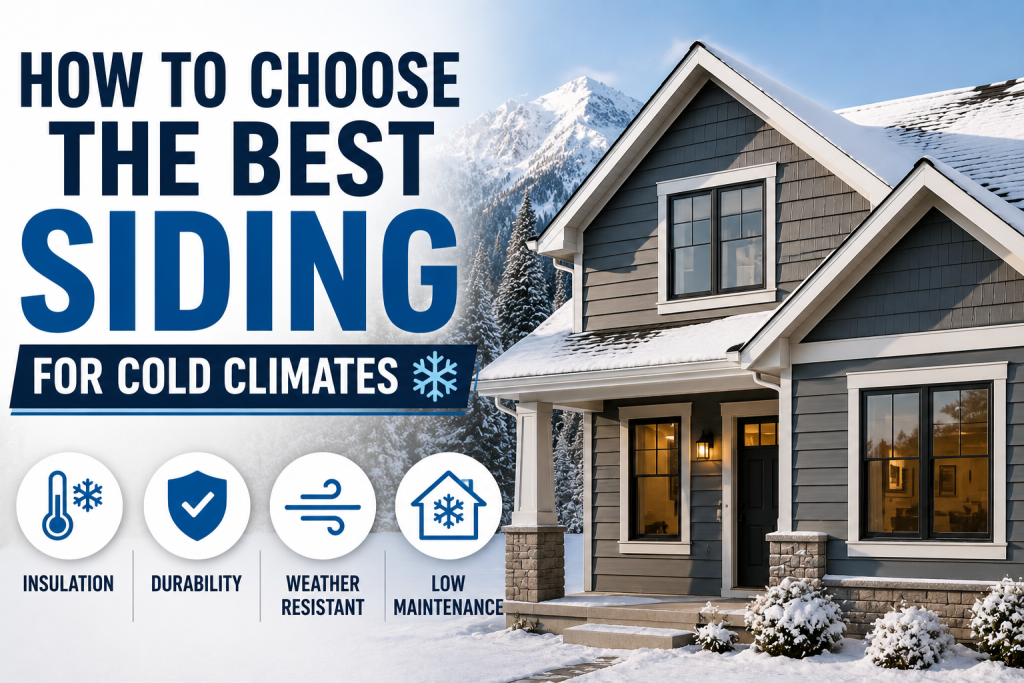
Installation quality also plays a major role because gaps, poor flashing, and inadequate preparation often reduce long-term performance. Durability expectations should match local weather conditions. Regions with long winters and heavy snowfall usually benefit from materials designed to maintain structural stability and appearance through changing seasonal conditions. Instead of selecting based on marketing claims alone, homeowners should compare lifespan, maintenance requirements, and total ownership value before making a final decision.
What Cold Weather Does to Exterior Siding
Cold climates create a unique set of conditions that can shorten the lifespan of exterior materials if the wrong product is selected. Temperature swings, ice accumulation, snow buildup, and moisture exposure all place ongoing stress on siding systems. One of the most common challenges is repeated freeze–thaw movement. When moisture enters small openings and temperatures drop, expansion can place pressure on exterior surfaces and gradually reduce long-term performance. Snow accumulation can create additional stress by increasing moisture exposure and extending drying time around exterior walls.
Wind-driven winter weather may also push moisture into vulnerable areas if installation details are not properly completed. Some materials become more brittle in colder temperatures, while others maintain flexibility and structural stability more effectively through seasonal changes. Understanding how cold-weather conditions affect siding performance helps homeowners make more informed decisions before committing to a replacement or exterior upgrade and selecting the best siding for cold climates.
Key Performance Factors Homeowners Should Compare
Not all siding products respond to cold weather in the same way, which is why comparing performance factors often leads to better long-term decisions than comparing appearance alone. When evaluating the best siding for cold climates, homeowners should start with moisture resistance. Materials that limit water absorption generally perform more reliably during repeated freezing and thawing cycles. Thermal efficiency is another important factor because exterior performance can influence comfort and seasonal heating demand. Impact resistance should also be considered in areas that experience snow accumulation, ice exposure, or strong winter storms.
Maintenance expectations vary between products as well. Some materials require more frequent inspections, repainting, or repairs, while others are designed for lower ongoing upkeep. Homeowners should also compare warranty coverage, expected lifespan, and installation requirements to determine which siding option delivers the strongest overall value for their climate conditions.
Best Siding for Cold Climates: Top Material Options
There is no single siding material that works perfectly in every cold-weather region. The right choice depends on moisture exposure, winter severity, maintenance expectations, and long-term homeowner priorities. When comparing options for the best siding for cold climates, vinyl remains a common choice because of its affordability and relatively low maintenance requirements. Higher-quality products generally perform better during seasonal temperature swings.
Another strong option is insulated siding, which combines exterior protection with additional thermal support and may help improve indoor comfort during colder months. Fiber cement continues to attract homeowners because of its durability and resistance to weather exposure, while engineered wood products appeal to those seeking a warmer, more natural appearance. Material selection should also consider local climate patterns. Homes exposed to heavy snow, prolonged freezing temperatures, or frequent moisture cycles often benefit from prioritizing long-term performance over initial purchase price.
Comparing Cost, Durability, and Energy Efficiency
Cold-weather siding decisions often involve balancing upfront investment with long-term ownership value. Lower-cost materials may reduce initial spending, but maintenance requirements and weather performance can influence total cost over time. Homeowners focused on reducing heating demand often compare options based on thermal performance and long-term comfort. Choosing energy-efficient siding may support better indoor temperature stability and improve overall exterior performance during colder months, making it an important consideration when selecting the best siding for cold climates.
Durability should be evaluated alongside efficiency. Some of the most durable siding materials maintain structural performance through repeated freeze–thaw cycles and seasonal weather changes while requiring less long-term upkeep. Product lifespan, warranty protection, and maintenance expectations also influence total value. Materials that cost more initially may create better ownership outcomes when repair frequency and long-term performance are considered. Rather than comparing only purchase price, homeowners should evaluate full lifecycle value before selecting an exterior system.
Insulated vs Standard Siding Systems
Cold-weather homeowners often compare insulated and standard siding systems to determine which option delivers the strongest long-term value. While appearance may look similar, performance differences can become more noticeable during extended winter seasons.When evaluating the best siding for cold climates, insulation performance is only one factor. Moisture management, installation quality, and weather resistance also influence long-term results.
Standard siding systems are commonly selected for lower upfront investment and broad product availability. However, performance may vary depending on wall construction, climate conditions, and overall installation quality. Insulated systems are often chosen to improve thermal stability and support more consistent indoor comfort during colder months. They may also help reduce temperature fluctuations across exterior walls. Homeowners should compare warranty coverage, maintenance expectations, and expected ownership timeline before deciding which system aligns best with their long-term exterior goals.
Which Siding Performs Best in Snow and Ice?
Snow and ice create conditions that challenge exterior materials in ways warmer climates typically do not. Moisture buildup, freezing temperatures, and repeated seasonal expansion place long-term stress on siding performance. Homeowners researching siding for snow climates should prioritize materials that resist moisture intrusion and maintain structural stability during freeze–thaw cycles. Products that retain excess moisture may experience faster wear over time. Another important factor is selecting a winter-resistant siding option that performs consistently under extended cold exposure. Exterior systems that maintain dimensional stability and resist weather-related damage generally deliver stronger long-term results.
Material choice should also account for local snowfall patterns and maintenance expectations. Areas with heavy snow accumulation often benefit from products designed for long-term weather durability rather than appearance alone. Installation quality remains equally important because even high-performing materials can underdeliver if flashing, ventilation, and moisture control are not properly addressed.
Fiber Cement vs Engineered Wood for Cold Regions
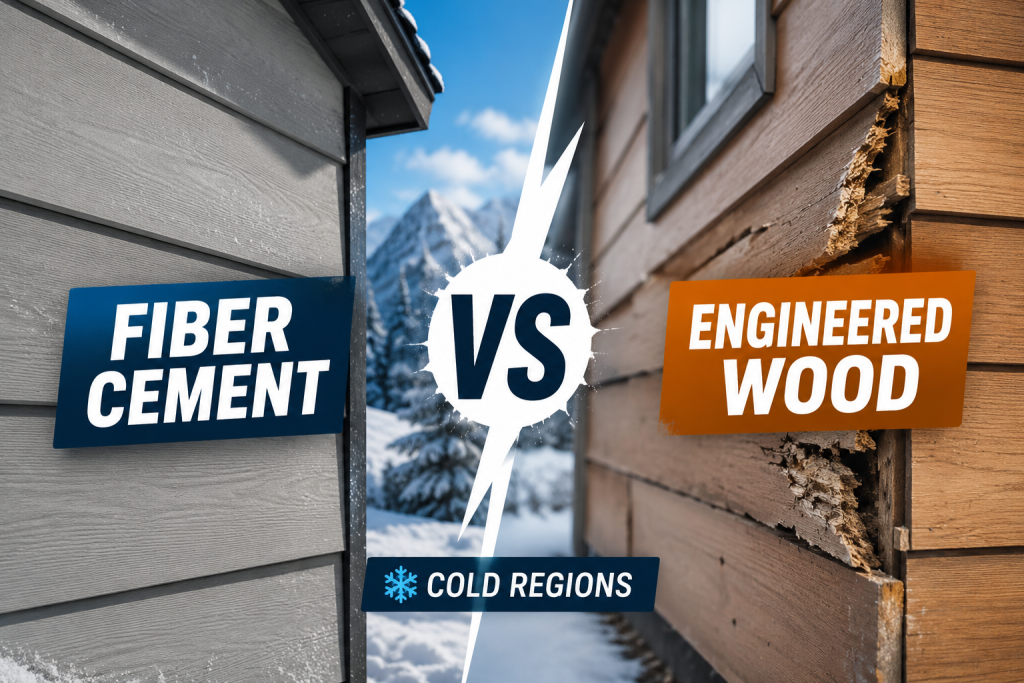
Homeowners in colder regions often narrow their decision to fiber cement and engineered wood because both offer a balance of appearance and long-term performance. The right option usually depends on maintenance expectations, moisture exposure, and local winter conditions, especially for homeowners searching for the best siding for cold climates. Many homeowners evaluate fiber cement siding for cold weather because of its resistance to temperature swings, exterior durability, and ability to perform through repeated seasonal changes. It is commonly selected in regions that experience long winters and demanding weather conditions.
Others prefer engineered wood siding for its warmer appearance and lighter installation profile. Modern engineered products can offer strong weather performance while maintaining a more natural exterior look. Each material has tradeoffs. Fiber cement generally prioritizes weather durability and lower expansion rates, while engineered wood may appeal to homeowners focused on appearance and installation flexibility. Comparing maintenance requirements, warranties, and expected ownership timelines often leads to a more reliable decision than comparing material type alone.
Common Mistakes Homeowners Make
Selecting siding for colder regions can become expensive when decisions are based only on appearance or short-term pricing. Many homeowners overlook performance details that become more noticeable after multiple winter seasons. One common mistake is choosing materials without considering local climate conditions. Exterior products that perform well in mild environments may not deliver the same results in regions with heavy snow, moisture exposure, and repeated freeze–thaw cycles.
Another issue is focusing too heavily on upfront cost while ignoring long-term maintenance requirements and ownership value. Homeowners evaluating the best siding for cold climates should compare durability, weather resistance, and expected lifespan alongside installation costs. Installation quality is another area that is frequently underestimated. Poor flashing, insufficient moisture management, and rushed workmanship can reduce performance even when high-quality materials are used. The strongest siding decisions usually balance climate demands, maintenance expectations, comfort goals, and long-term value rather than relying on material claims alone.
Conclusion
Choosing siding for colder regions requires looking beyond appearance and upfront cost. Long winters, moisture exposure, freeze–thaw conditions, and seasonal weather changes all influence how exterior materials perform over time. Homeowners searching for the best siding for cold climates should compare durability, moisture resistance, thermal performance, maintenance expectations, and installation quality before making a final decision. The right material is often the one that delivers reliable long-term performance rather than the lowest initial price. Comparing warranties, ownership costs, and expected lifespan can create better outcomes and reduce the likelihood of future repairs or premature replacement. A well-planned siding upgrade can improve exterior protection, support year-round comfort, and strengthen long-term homeowner value in cold-weather environments.
Frequently Asked Questions
What is the best siding for cold climates for long-term durability?
The best siding for cold climates depends on material selection, installation quality, maintenance habits, and local weather conditions. Products designed for moisture resistance and long-term weather durability generally perform better over time and maintain stronger exterior performance through changing winter conditions.
Does siding help reduce winter heating costs?
Siding alone does not replace insulation, but exterior systems that improve weather protection and reduce air leakage may support better indoor comfort and more stable seasonal energy use.
Is vinyl siding good for snowy regions?
High-quality vinyl products can perform well in colder environments when installed correctly and paired with proper moisture management and ventilation practices.
Which siding requires the least maintenance?
Maintenance expectations vary by product type. Some materials require periodic repainting and inspections, while others are designed for lower long-term upkeep.
Can siding crack during freezing temperatures?
Certain materials may become more vulnerable under extreme cold if moisture enters weak areas or installation standards are not followed properly.
How many contractor estimates should homeowners request?
Requesting at least three itemized estimates usually creates a better comparison of materials, warranties, installation scope, and overall project value.