


Common Siding Problems and How to Fix Them
Your home’s siding does more than improve curb appeal—it acts as the first layer of defense against moisture, heat, wind, and seasonal weather changes. When siding starts failing, small cosmetic issues can quickly turn into expensive exterior repairs if they are ignored. Many homeowners don’t notice siding problems until they see higher utility bills, peeling interior paint, moisture stains, or visible movement along exterior walls. In regions with high humidity, freeze–thaw cycles, strong sun exposure, or severe storms, exterior materials often wear unevenly and create hidden vulnerabilities.
The good news is that most siding issues show warning signs before major failure occurs. Learning how to identify early symptoms can help reduce repair costs, protect resale value, and extend the life of your exterior. This guide explains the most common issues homeowners face, how to evaluate the severity of damage, and when repair makes more financial sense than a full replacement.
Most Common Siding Problems Homeowners Face
Exterior damage rarely happens all at once. In most cases, homeowners notice subtle changes first—small cracks, movement between panels, discoloration, trapped moisture, or sections that no longer sit flush against the wall. Identifying the type of failure early makes repairs simpler and helps prevent structural issues behind the cladding.
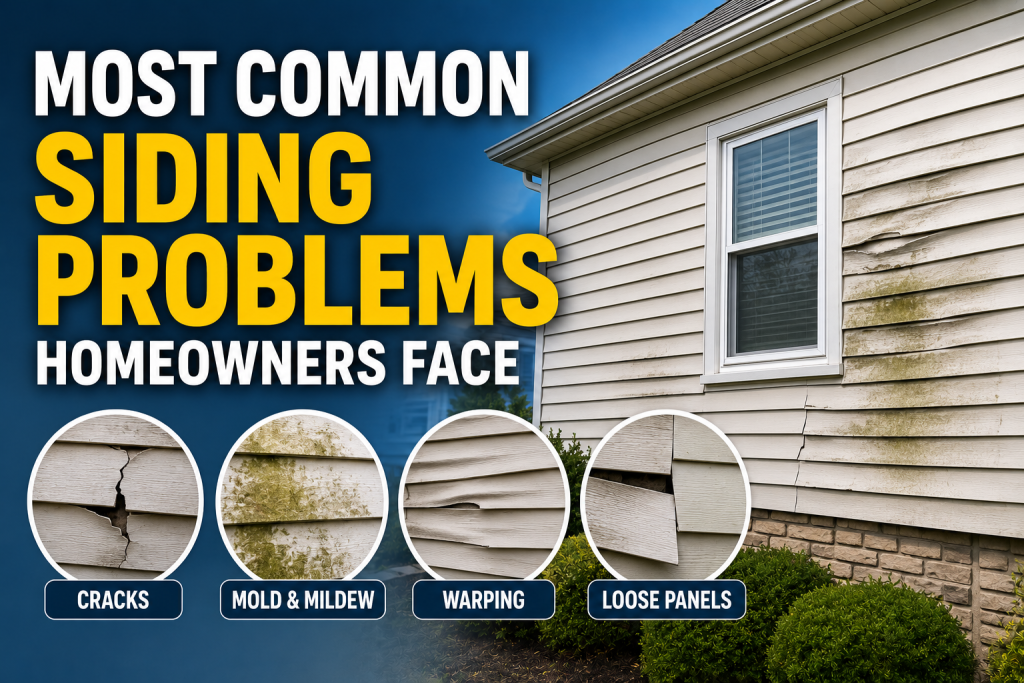
Different materials react differently to weather. Vinyl can expand and deform during prolonged heat exposure, while fiber cement and engineered wood often show moisture-related wear over time. Homes in humid Southern states, coastal environments, and regions with repeated freeze–thaw cycles typically require more frequent inspections. Understanding the source of damage is the first step toward solving long-term siding problems instead of repeatedly treating symptoms.
Cracks, Gaps, and Surface Damage
Small cracks and visible separation usually appear around corners, fasteners, and areas exposed to direct sunlight. Temperature swings and age-related movement can create openings that allow moisture to enter behind the exterior surface. Early action is important because minor defects often spread faster than homeowners expect. In many situations, targeted cracked siding repair restores protection without requiring full replacement.
Loose Panels and Wind Damage
Panels that shift, rattle, or detach during storms often indicate installation stress or fastening issues. Wind uplift can gradually loosen sections until gaps form along the wall assembly. If homeowners notice visible movement or uneven alignment, addressing loose siding panels quickly helps reduce the risk of deeper exterior deterioration.
Moisture Intrusion and Rot
Water is one of the most damaging threats to exterior materials. Staining, soft spots, mold growth, and bubbling paint may signal that moisture has reached the underlying structure. Unchecked siding water damage can eventually affect insulation performance, increase maintenance costs, and shorten the expected lifespan of the entire exterior system.
How to Diagnose Siding Problems Before Repairs
Before scheduling repairs or requesting contractor estimates, homeowners should confirm whether damage is isolated or part of larger siding problems affecting the exterior. A careful inspection can prevent unnecessary spending and help determine whether repair, reinforcement, or replacement is the better long-term solution. Start with a full walkaround during daylight hours and inspect areas near windows, corners, roof edges, and downspouts. Seasonal weather patterns often accelerate exterior wear, especially in humid climates and regions that experience rapid temperature swings, making early identification of siding problems even more important.
Visual Inspection Checklist
Look for discoloration, uneven panel alignment, gaps at joints, exposed fasteners, and surfaces that appear swollen or distorted. Heat exposure can sometimes lead to warped vinyl siding, particularly on elevations that receive prolonged afternoon sun. Homeowners should also inspect caulk lines and transitions where water commonly enters behind the exterior layer. Taking photos over time makes it easier to track progression.
Signs the Structure May Be Affected
Not every exterior defect stays cosmetic. If walls feel soft, moisture appears indoors, or energy bills increase unexpectedly, the issue may extend beneath the visible surface.Repeated repairs without proper diagnosis often lead to recurring damage and hidden deterioration. When symptoms appear in multiple locations, a more comprehensive exterior assessment usually delivers better long-term results than spot fixes.
Repair Solutions for Different Siding Materials
Not every damaged exterior requires replacement. The right repair method depends on the siding material, the age of the installation, and whether moisture has reached the underlying wall assembly. Homeowners who match the repair approach to the material often get better durability and lower lifetime costs. Vinyl, fiber cement, and engineered wood each respond differently to weather, expansion, and impact. In many cases, repairing localized damage early extends service life and preserves curb appeal.
Vinyl Siding Repairs
Vinyl repairs typically involve replacing individual sections rather than removing an entire wall area. Minor movement, detached edges, and isolated impact damage can often be corrected with matching panels and proper fastening techniques before they develop into larger siding problems. The goal should be restoring ventilation gaps and allowing natural expansion instead of forcing panels into place. Correct installation details reduce the chance of recurring exterior movement and help prevent future siding problems.
Fiber Cement and Engineered Wood Repairs
Materials such as James Hardie fiber cement and LP SmartSide engineered wood generally require more precise repair methods. Surface deterioration, failed joints, and moisture exposure should be corrected before repainting or sealing. When damage remains localized, targeted repairs are usually enough to maintain appearance and performance.
When House Siding Repair Stops Making Sense
There comes a point where repeated repairs become more expensive than replacement. Multiple damaged elevations, widespread moisture intrusion, recurring failures, and aging materials often indicate larger system issues. If homeowners continue investing in the same areas every season, house siding repair may no longer provide a practical return. At that stage, comparing replacement costs against future maintenance becomes the smarter financial decision.
Preventive Maintenance to Avoid Future Damage
Preventive care is usually less expensive than repeated repairs. A simple inspection routine helps homeowners catch early signs of movement, moisture entry, and weather-related wear before they become larger exterior projects. Maintenance schedules should reflect local climate conditions. Homes in humid Southern regions often need more frequent checks for moisture buildup, while homes in colder states benefit from inspections after winter freeze–thaw cycles and storm seasons.
Seasonal Inspection Routine
One of the most effective siding maintenance tips is creating a twice-yearly exterior checklist. Walk the perimeter of the home and inspect seams, trim transitions, caulk lines, and areas around windows and gutters to catch early signs of exterior damage.Remove debris that traps moisture against the wall and trim back landscaping that limits airflow. Regular inspections also help preserve curb appeal, reduce the likelihood of recurring issues, and support long-term resale value.
Drainage, Gutters, and Moisture Control
Water management plays a major role in exterior longevity. Overflowing gutters, poor grading, and clogged downspouts often create repeated exposure along lower wall sections. A practical approach to exterior siding troubleshooting is following the path of water during rainfall and identifying where runoff collects or splashes back onto the home. Improving drainage conditions often prevents recurring damage and reduces future repair costs.
Repair vs Replace — What Makes Financial Sense?
One of the biggest questions homeowners face is whether continued repairs are worth the cost or whether replacement delivers better long-term value. The answer depends on the extent of damage, the age of the exterior system, and how often issues continue to return. If damage is isolated to one area and the surrounding materials remain stable, repairs are usually the most cost-effective option. However, recurring failures across multiple elevations often indicate deeper performance concerns that increase labor and maintenance costs over time.
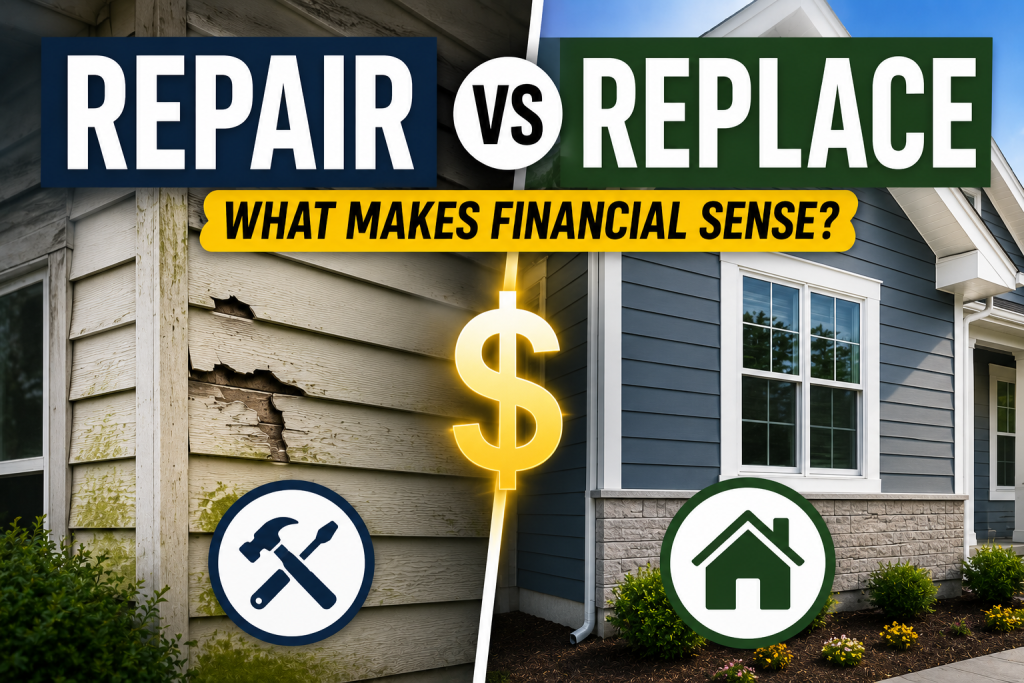
Insurance considerations can also influence the decision. Storm-related damage may qualify for coverage depending on policy terms and inspection findings. Homeowners should document visible conditions and review requirements before approving work. Repeated repairs for the same siding problems can become more expensive than installing a new system with updated materials and warranties. Replacement may also improve energy performance, reduce future maintenance demands, and strengthen resale value. For homes located in high-humidity regions, storm-prone areas, or climates with severe seasonal shifts, investing in durable exterior materials often provides better long-term ownership costs than ongoing patch repairs.
Final Thoughts
Protecting your home’s exterior starts with recognizing warning signs early and responding before minor issues become expensive projects. Small defects, moisture exposure, and weather-related wear often develop gradually, giving homeowners opportunities to identify siding problems before major damage occurs. Routine inspections, climate-aware maintenance, and timely repairs can extend exterior lifespan and preserve curb appeal. When siding problems become widespread or repeated repairs stop delivering value, replacement may become the more practical investment. A proactive approach helps homeowners lower long-term ownership costs, improve exterior performance, and keep their homes protected through changing seasons.
Frequently Asked Questions
Can siding problems lead to mold growth?
Yes. Certain siding problems can allow moisture to get behind exterior materials and remain trapped over time, creating conditions that support mold and mildew growth. Early detection and timely repairs help reduce the risk of interior damage, insulation performance issues, and more extensive exterior deterioration.
Is siding repair covered by homeowners insurance?
Coverage depends on the cause of damage and the details of the insurance policy. Sudden events such as storms or wind may qualify for coverage, while normal aging and deferred maintenance are often excluded. Homeowners should document damage before beginning repairs.
How long does house siding typically last?
Service life varies by material and climate exposure. Vinyl siding often lasts several decades with proper care, while fiber cement and engineered wood products may perform longer when maintained according to manufacturer guidance.
Can homeowners repair siding themselves?
Minor cosmetic fixes may be manageable for experienced homeowners, but larger repairs involving moisture intrusion, structural concerns, or multiple elevations are usually better handled by qualified exterior professionals.