


Complete Home Lighting Guide for Every Room 2026
Lighting plays a critical role in how a home looks, feels, and functions. Beyond simply illuminating a space, proper lighting can improve comfort, support daily activities, highlight architectural features, and enhance overall design appeal. A well-planned home lighting guide helps homeowners understand how different lighting strategies create more functional and inviting living environments.
Each room in a home has unique lighting requirements. The lighting needs of a kitchen differ significantly from those of a bedroom, home office, or living room. Understanding these differences is essential for creating a balanced and effective lighting system. This home lighting help explores the fundamentals of residential lighting, explains how to light each room effectively, and provides practical recommendations to improve both functionality and visual comfort.
Why the Home Lighting Guide Starts With a Lighting Plan?
A thoughtful lighting strategy is essential for creating a comfortable, functional, and visually appealing home. One of the primary goals of a home lighting guide is to help homeowners understand that lighting should be planned just as carefully as furniture layouts, paint colors, and décor selections. Without a clear lighting plan, rooms can suffer from uneven brightness, poor visibility, and reduced functionality. Certain areas may feel too dark for daily tasks, while others may become overly bright and uncomfortable.
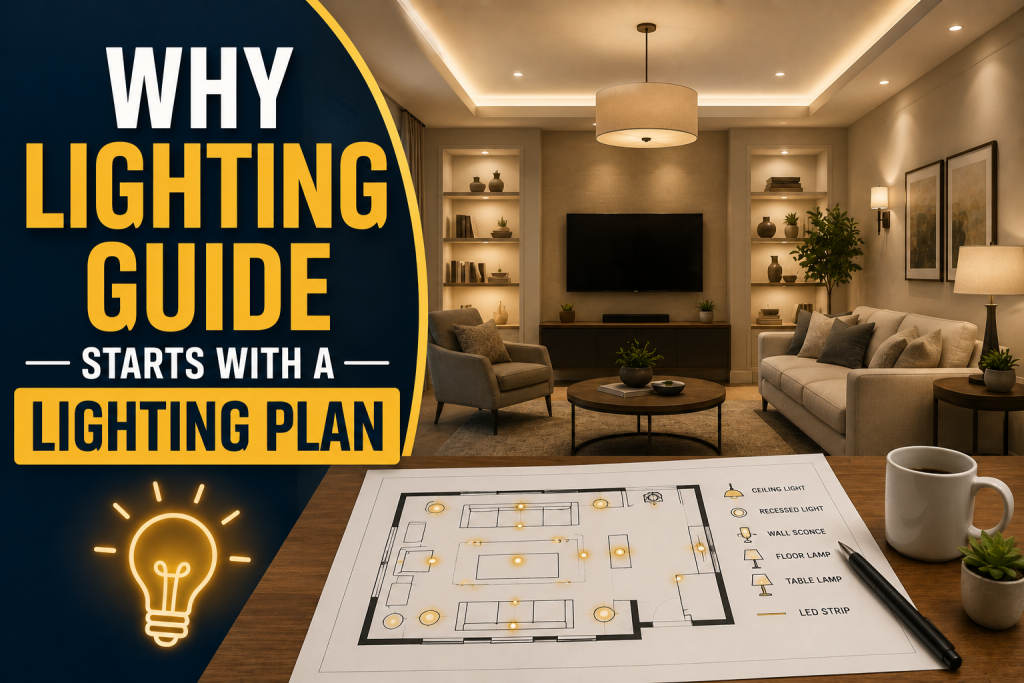
A well-designed lighting plan helps distribute light effectively, supports different activities, and creates a balanced atmosphere throughout the home. Planning also makes it easier to select appropriate fixtures, determine placement locations, and identify opportunities for energy-efficient upgrades. By following a structured lighting strategy, homeowners can improve comfort, enhance room aesthetics, and ensure each space receives the illumination it needs to function effectively.
Understanding the Three Types of Lighting
A successful lighting design relies on more than a single fixture in the center of a room. Every comprehensive home lighting guide emphasizes the importance of combining multiple lighting layers to create a comfortable and functional environment. The three primary lighting categories each serve a distinct purpose within the home.
Ambient Lighting
Ambient lighting provides general illumination and serves as the foundation of a room’s lighting system. Common examples include ceiling fixtures, chandeliers, recessed lights, and flush-mount fixtures.
Task Lighting
Task lighting focuses on specific activities such as reading, cooking, working, or applying makeup. Desk lamps, under-cabinet lighting, vanity lights, and reading lamps are common task lighting solutions.
Accent Lighting
Accent lighting is used to highlight architectural features, artwork, decorative elements, or focal points within a room. Wall sconces, picture lights, and directional spotlights are frequently used for this purpose. Combining these three lighting layers helps create balanced illumination while improving both functionality and visual appeal.
Room Lighting Ideas for Comfort and Function
The living room is one of the most frequently used spaces in a home, making proper lighting especially important. A complete home lighting guide should include strategies for creating a living room that supports relaxation, entertaining, reading, and everyday activities. Effective living room lighting begins with a combination of ambient, task, and accent lighting. Ceiling fixtures or recessed lights typically provide general illumination, while floor lamps and table lamps add focused lighting for reading and conversation areas.
Accent lighting can be used to highlight artwork, fireplaces, shelving, or architectural features. Natural light should also be incorporated whenever possible. Large windows, light-colored walls, and reflective surfaces can help maximize daylight and reduce reliance on artificial lighting during the day. By layering multiple light sources, homeowners can create a living room that feels comfortable, functional, and visually balanced throughout the day and evening.
Room Lighting Ideas for Relaxation
Bedrooms require a different lighting approach than living rooms or kitchens because they are designed primarily for rest. A well-planned home lighting guide should emphasize creating a calm and comfortable atmosphere while still providing adequate illumination for everyday tasks. Many effective bedroom lighting ideas begin with soft ambient lighting that promotes relaxation and reduces harsh glare. Ceiling fixtures, flush-mount lights, or dimmable recessed lighting can provide general illumination without overwhelming the space.
Bedside lamps are also valuable because they offer convenient task lighting for reading and other nighttime activities. Layered lighting is particularly important in bedrooms. Accent lighting behind headboards, wall sconces, or decorative fixtures can add warmth and visual interest while maintaining a relaxing environment. Incorporating dimmer switches allows homeowners to adjust brightness levels throughout the day, helping create a more comfortable and adaptable bedroom setting.
Kitchen and Dining Room Lighting Ideas
Proper lighting is essential in kitchens and dining areas because these spaces support food preparation, dining, entertaining, and family gatherings. A well-designed home lighting guide should address both functionality and atmosphere when planning lighting for these rooms.
- Use bright ambient lighting to provide overall visibility throughout the kitchen.
- Install task lighting under cabinets to improve visibility on countertops and work surfaces.
- Position pendant lights above kitchen islands to enhance both function and style.
- Ensure food preparation areas receive adequate illumination to support safety and efficiency.
- Use dimmer switches in dining rooms to adjust brightness levels for different occasions.
- Install a chandelier or decorative fixture above the dining table to create a focal point.
- Incorporate accent lighting to highlight architectural features, cabinetry, or decorative elements.
- Maximize natural light whenever possible to improve comfort and reduce daytime energy use.
Combining these room lighting tips can help homeowners create kitchens and dining spaces that are both practical and visually appealing.
Bathroom and Hallway Lighting Recommendations
Bathrooms and hallways are often overlooked during lighting planning, yet they play an important role in the overall functionality of a home. A complete home lighting guide should include strategies for ensuring these spaces are both safe and comfortable to use. In bathrooms, layered lighting is especially important. Overhead fixtures provide general illumination, while vanity lighting helps support grooming tasks such as shaving, makeup application, and personal care. Placing fixtures on both sides of a mirror can help reduce shadows and improve visibility.
Hallways require consistent lighting to ensure safe movement throughout the home. Recessed lights, flush-mount fixtures, and wall sconces are popular options for providing even illumination. In longer hallways, multiple fixtures may be necessary to eliminate dark spots and improve visibility. By selecting appropriate fixtures and maintaining balanced light distribution, homeowners can enhance both safety and functionality in these frequently used areas.
Residential Lighting Style Best Practices
Successful residential lighting design focuses on balancing functionality, comfort, energy efficiency, and visual appeal. Rather than relying on a single light source, homeowners should create layered lighting systems that support the specific needs of each room. One of the most important principles is matching lighting to room function. Areas used for reading, cooking, and working typically require brighter task lighting, while bedrooms and living spaces benefit from softer illumination.
Fixture placement is equally important because poorly positioned lights can create shadows and reduce effectiveness. Natural light should also be considered during the planning process. Maximizing daylight through windows and reflective surfaces can improve comfort while reducing energy consumption. In addition, dimmer switches and LED technology allow homeowners to adjust brightness levels and improve efficiency. Following proven design principles helps create lighting systems that enhance usability, improve aesthetics, and support long-term homeowner satisfaction.
Creating a Home Lighting Guide Plan Step by Step
Developing a structured lighting strategy helps ensure every room receives the appropriate level of illumination. A well-organized home lighting plan improves functionality, enhances comfort, and supports a cohesive design throughout the home.
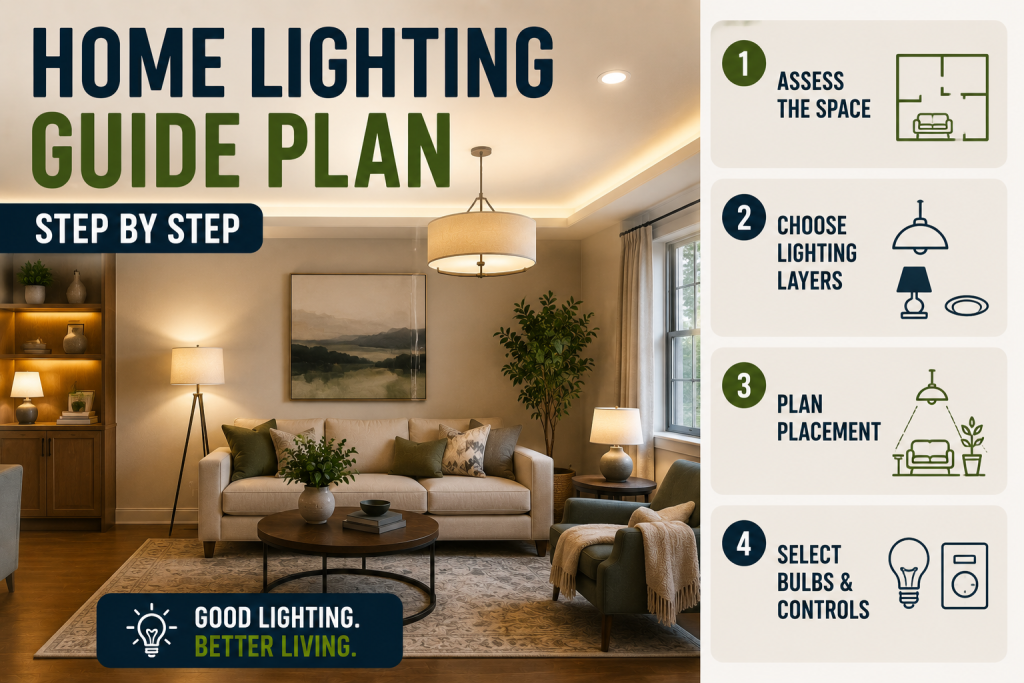
Home Lighting Guide: Start With Room Function
Begin by identifying how each room will be used. Kitchens, home offices, and bathrooms generally require brighter task lighting, while bedrooms and living rooms often benefit from softer, layered illumination.
Evaluate Natural Light Sources
Assess the amount of daylight each room receives. Spaces with limited natural light may require additional fixtures or brighter bulbs to maintain adequate visibility.
Select Appropriate Lighting Layers
Combine ambient, task, and accent lighting to create balanced illumination. Layered lighting improves flexibility and allows rooms to adapt to different activities.
Choose Energy-Efficient Fixtures
LED fixtures and dimmer switches can improve efficiency while reducing long-term energy costs. These upgrades also provide greater control over brightness levels.
Review and Adjust
After installation, evaluate the lighting at different times of day. Small adjustments to fixture placement or bulb selection can significantly improve overall performance.
Common Home Lighting Mistakes to Avoid
Even the best fixtures cannot compensate for poor planning. Many lighting issues occur because homeowners overlook fundamental design principles when selecting and positioning light sources. A complete home lighting guide should address these common mistakes to help create more effective lighting systems. One frequent error is relying on a single overhead fixture to illuminate an entire room. This approach often creates shadows and uneven light distribution.
Another mistake is ignoring the importance of layered lighting, which can reduce flexibility and limit functionality. Homeowners also commonly select bulbs with incorrect brightness levels or color temperatures for the intended space. Excessively bright lighting can feel harsh, while insufficient lighting may make a room less comfortable and harder to use. Poor fixture placement can further contribute to visual imbalance and reduced performance. Avoiding these mistakes helps create a home that feels brighter, more functional, and better suited to everyday living.
Conclusion
A well-designed lighting system can significantly improve the comfort, functionality, and appearance of a home. This home lighting guide has explored the key principles of residential lighting, including layered lighting, fixture placement, room-specific recommendations, and effective planning strategies. By combining ambient, task, and accent lighting, homeowners can create spaces that better support daily activities while enhancing overall visual appeal. Whether you’re updating a single room or developing a complete lighting plan for your home, thoughtful design decisions can make a lasting difference. Investing in proper lighting improves usability, increases energy efficiency, and helps create a more welcoming environment for both homeowners and guests.
Frequently Asked Questions
What is a home lighting guide?
A home lighting guide provides recommendations for selecting fixtures, planning lighting layouts, and using ambient, task, and accent lighting to improve comfort and functionality throughout a home.
What are some indoor lighting tips for modern homes?
Popular indoor lighting ideas include layered lighting, recessed fixtures, pendant lights, wall sconces, smart lighting systems, and energy-efficient LED solutions that improve both style and performance.
Why is a lighting design guide important?
A lighting layout guide helps homeowners determine fixture placement, lighting zones, and brightness requirements for each room. Proper planning improves visibility, comfort, and energy efficiency.
What are the best room lighting ideas?
Effective room lighting ideas include dimmable overhead fixtures, bedside lamps, wall sconces, and accent lighting that creates a relaxing atmosphere.
How do I create an effective home lighting plan?
A successful house lighting plan starts with evaluating room functions, natural light sources, and lighting needs. Combining multiple lighting layers helps create a balanced and adaptable environment.