


Concrete Patio vs Paver Patio Cost: Which Saves More?
A patio is one of the most practical outdoor upgrades for homeowners looking to improve curb appeal, expand usable living space, and increase long-term property value. But before starting a backyard renovation, one question usually comes first: should you choose concrete or pavers? At first glance, concrete often appears to be the lower-cost option. Pavers, on the other hand, usually require a larger upfront investment but offer greater design flexibility and easier repairs over time. The right choice depends on more than installation pricing—it also comes down to climate, maintenance expectations, lifespan, and resale goals. In this guide, we’ll break down concrete patio vs paver patio cost, compare long-term ownership expenses, and help homeowners determine which material delivers the better overall value for their outdoor space.
Average Cost: Concrete Patio vs Paver Patio Cost
For most homeowners, cost is the starting point when choosing patio materials. While design and durability matter, the initial investment often shapes the final decision. On average, a standard concrete patio costs between $6 and $15 per square foot installed, depending on thickness, finish quality, labor rates, and site preparation. Decorative finishes increase pricing, and Stamped concrete patio cost commonly ranges from $12 to $25 per square foot. Pavers generally require a larger upfront budget. Typical paver patio pricing falls between $15 and $35 per square foot installed, with premium stone products reaching even higher.
For a typical 400-square-foot backyard project:
| Patio Type | Estimated Installed Cost |
| Basic Concrete Patio | $2,400–$6,000 |
| Decorative / Stamped Concrete | $4,800–$10,000 |
| Paver Patio | $6,000–$14,000 |
This early patio cost comparison shows concrete winning on initial affordability. However, when evaluating concrete patio vs paver patio cost, installation pricing tells only part of the story—maintenance, lifespan, and repair expenses can significantly influence total ownership cost over time and affect overall long-term value.
What Impacts Patio Pricing?
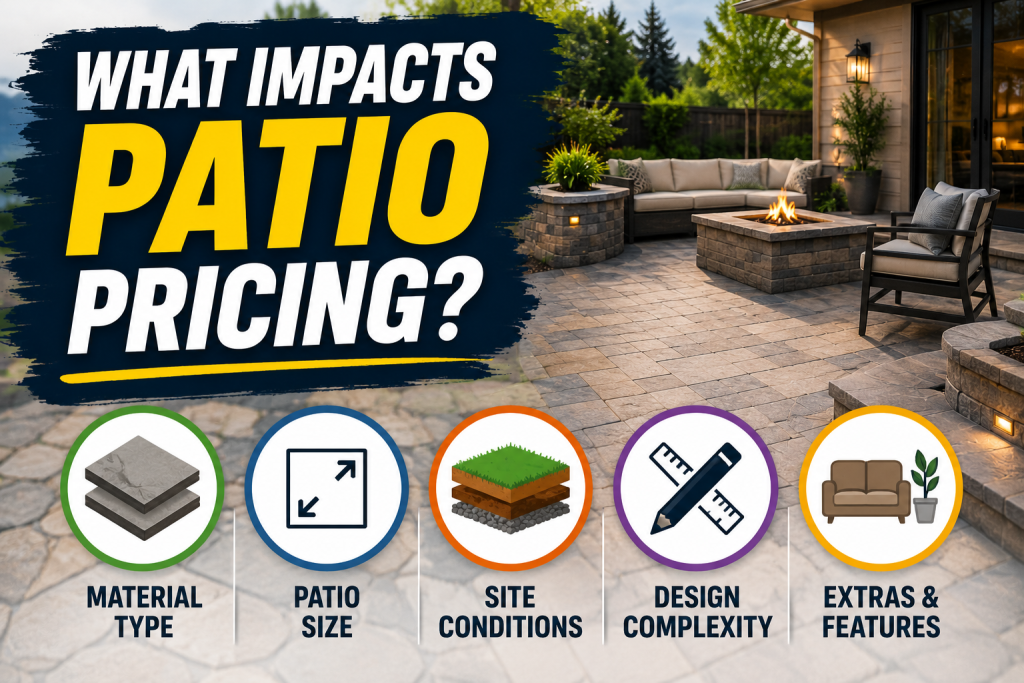
Two patios with the same square footage can end up with very different final costs. Material selection matters, but several project variables influence what homeowners actually pay.
Site Preparation
Ground conditions play a major role in pricing. Excavation, grading, removing existing concrete, drainage improvements, and leveling uneven yards all increase labor and preparation costs.
Material and Finish Selection
Basic broom-finished concrete stays on the lower end of the budget range, while decorative textures and color treatments raise costs. Higher-end pavers also vary widely based on style, thickness, and pattern complexity.
Labor and Regional Market Rates
Installation pricing often differs across U.S. markets. Homeowners in states like Texas, Florida, and California may see different labor costs based on local demand and contractor availability.
Design Complexity
Curved layouts, borders, fire pit areas, retaining walls, and built-in seating can increase both labor and material expenses. When comparing patio options, looking beyond material price alone usually leads to a more accurate long-term investment decision.
Concrete Patio vs Paver Patio Cost: Full Comparison
Concrete remains one of the most popular patio materials in the United States because it delivers a clean appearance and lower upfront costs. For homeowners planning a practical outdoor upgrade without stretching the renovation budget, concrete often becomes the default choice. One major advantage of professional concrete patio installation is speed. Most projects can be completed faster than paver systems, which helps reduce labor hours and overall disruption.
Benefits of concrete patios include:
- Lower initial investment
- Faster installation timeline
- Minimal design complexity
- Smooth surface for outdoor furniture
However, lower cost comes with tradeoffs.
Concrete slabs can develop visible cracking over time due to ground movement, moisture changes, and freeze-thaw cycles common across northern and Midwestern climates. Repairs are often more noticeable because damaged areas may require patching or resurfacing instead of isolated replacement. When evaluating concrete patio vs paver patio cost, homeowners should also consider long-term maintenance and repair expenses—not just installation pricing. For homeowners prioritizing affordability first and customization second, concrete continues to offer dependable long-term value despite its maintenance tradeoffs.
Paver Patio Costs: Where the Higher Price Can Pay Off
Paver patios typically cost more upfront, but many homeowners choose them because of their appearance, flexibility, and long-term performance. Unlike poured surfaces, pavers are installed as individual units over a prepared base, which allows movement without creating large visible cracks. Higher installation costs are largely driven by excavation depth, base preparation, edge restraints, and labor-intensive placement. That is why premium patios often carry a noticeable price difference compared with standard concrete.
Advantages of paver patios include:
- Easier spot repairs
- Greater design and pattern options
- Strong curb appeal
- Better drainage performance
- Reduced visibility of surface movement
Pavers are especially attractive in regions with seasonal expansion and contraction, including parts of the Midwest and Northeast. They also remain popular in warm-weather markets such as Texas and Florida where outdoor living spaces contribute heavily to resale value. When comparing concrete patio vs paver patio cost, homeowners should look beyond upfront installation expenses and consider long-term ownership value, maintenance flexibility, and future repair costs. For homeowners planning to stay in their homes longer term, paying more initially can create stronger value over the life of the patio.
Durability and Maintenance Comparison
Upfront cost matters, but durability often determines which patio becomes the better long-term investment. When evaluating concrete patio vs paver patio cost, homeowners should compare expected lifespan, maintenance requirements, and repair flexibility before making a final decision rather than focusing only on installation expenses. Concrete patios generally last 25–35 years when properly installed and maintained. Routine sealing helps reduce moisture penetration and surface wear, but cracks may still develop over time due to settling and weather exposure.
Paver systems commonly last 30–50+ years because individual units can shift slightly without affecting the entire surface. If damage occurs, sections are usually easier to remove and replace.
| Factor | Concrete | Pavers |
| Expected Lifespan | 25–35 Years | 30–50+ Years |
| Repair Method | Patching | Individual Replacement |
| Crack Resistance | Moderate | Higher |
| Maintenance | Sealing | Joint Sand Maintenance |
This patio durability comparison becomes especially important in areas that experience heavy rain, seasonal freezing, or frequent temperature swings. Lower maintenance over time may offset higher installation costs for some homeowners.
Which Patio Delivers Better ROI?
Return on investment depends on more than project cost. Homeowners should evaluate how a patio improves everyday use, resale appeal, maintenance expenses, and overall property presentation. Concrete patios often deliver stronger short-term value because of their lower installation cost. When comparing concrete patio vs paver patio cost, many homeowners choose concrete because it creates usable outdoor space without requiring a major renovation budget, making it an attractive option for those preparing to sell within a few years.
Paver patios usually perform better when long-term ownership and visual appeal are priorities. Their premium appearance can strengthen curb appeal and help outdoor areas feel more customized and finished.
When evaluating patio ROI, consider:
- Expected time in the home
- Local buyer expectations
- Neighborhood price range
- HOA standards
- Future maintenance costs
- Outdoor entertaining goals
In many suburban markets across the South and Sun Belt, upgraded outdoor living spaces continue to attract buyer attention. The best return often comes from choosing a patio that matches both the home’s value and the surrounding neighborhood.
Choosing the Right Patio for Your Home
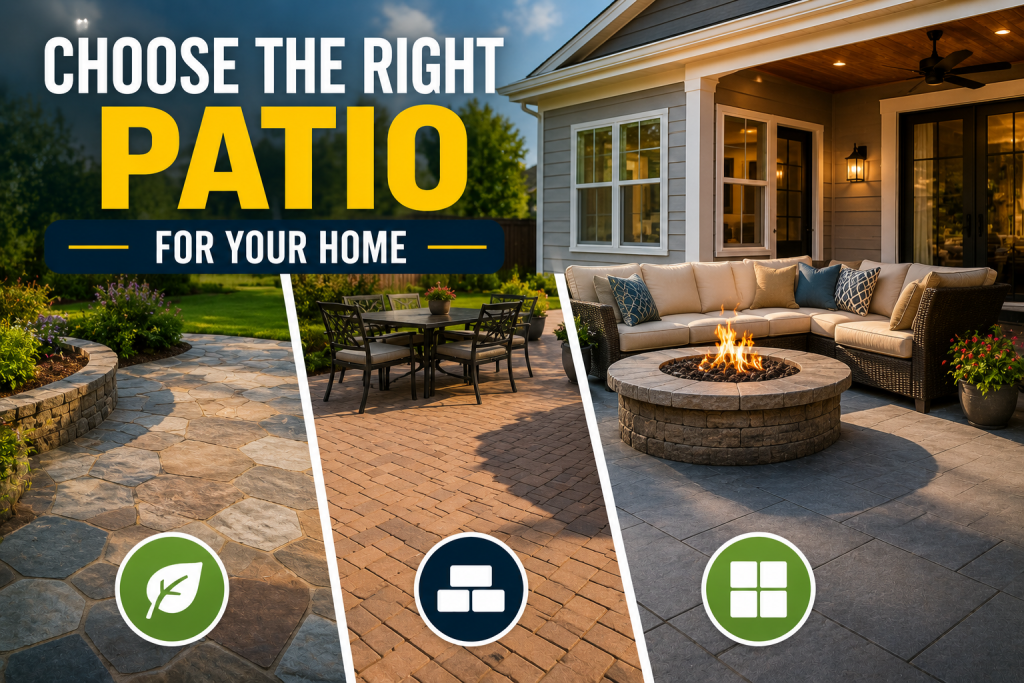
The better patio option is not always the cheaper one—it is the one that fits your budget, climate, maintenance expectations, and long-term goals as a homeowner. A concrete patio makes sense if your priorities are affordability, faster installation, and a clean, simple outdoor design. It works especially well for homeowners creating functional entertaining space without making a major investment. A paver patio may be the stronger choice if you value appearance, customization, and easier future repairs. Although installation costs are higher, many homeowners view the added flexibility as worthwhile over time.
When comparing backyard patio materials, think beyond the first estimate and ask:
- How long do you plan to stay in the home?
- Does your region experience freeze-thaw cycles?
- Are you prioritizing resale value or budget?
- How much maintenance are you comfortable handling?
Final Verdict
There is no single winner in the concrete patio vs paver patio cost decision because the better investment depends on how you plan to use your outdoor space. Concrete usually delivers the lowest upfront cost and a faster installation timeline, making it attractive for homeowners focused on affordability and immediate functionality. It remains a reliable choice for straightforward backyard projects and homes where keeping renovation costs controlled is the priority. Pavers require a larger initial investment but often provide greater flexibility, stronger visual appeal, and simpler long-term repairs. For homeowners planning to stay in their home for many years, the higher upfront spend may create better overall value. If your goal is budget efficiency, concrete is often the practical choice. If your goal is long-term appearance, adaptability, and outdoor living appeal, pavers frequently justify the added cost. Choose the patio that aligns with your climate, maintenance expectations, and long-term property plans.
FAQs
Is stamped concrete cheaper than pavers?
In many projects, yes. Decorative concrete usually costs less than premium paver installations, although custom finishes can narrow the gap.
Do pavers last longer than concrete?
Pavers often achieve a longer service life because individual sections can move and be replaced without rebuilding the entire patio.
Which Patio Requires Less Maintenance in a Concrete Patio vs Paver Patio Cost Comparison?
When comparing concrete patio vs paver patio cost, concrete generally requires periodic sealing and crack monitoring to maintain appearance and surface durability. Pavers may need occasional joint sand replacement and localized repairs, but damaged sections can often be replaced individually without rebuilding the entire patio. Long term, maintenance costs depend on climate, usage, and overall installation quality.
Does patio type affect home value?
Outdoor upgrades can improve buyer perception, curb appeal, and usable living space, especially in markets where outdoor entertaining is common.
Which option works better in colder climates?
Pavers are often preferred in freeze-thaw regions because they handle seasonal movement more effectively than large concrete slabs.