


Custom Closets vs Prefab Closet Systems
Choosing the right closet system can significantly impact bedroom organization, storage efficiency, and overall home functionality. As homeowners look for better ways to manage clothing, accessories, and personal belongings, the debate over custom closets and prefab closets has become increasingly common. Both options offer valuable storage benefits, but they differ in terms of cost, customization, installation, and long-term value.
Custom closets are designed to fit a specific space and storage needs, providing a tailored solution that maximizes every inch of available room. Prefab closet systems, on the other hand, offer ready-made components that are often more affordable and easier to install. Understanding the strengths and limitations of each option can help homeowners make an informed decision based on their budget, lifestyle, and organizational goals. This guide compares custom closets vs prefab closets to help determine which solution is the best fit for your home.
Understanding Custom Closets vs Prefab Closets
When comparing custom closets vs prefab closets, it is important to understand how these storage systems differ in design, installation, and functionality. While both are intended to improve organization and maximize storage space, they serve different homeowner needs and budgets. Custom closets are built specifically for a particular space. These systems are designed around the homeowner’s storage requirements and can include custom shelving, drawers, hanging areas, and specialized compartments. Because they are tailored to exact dimensions, custom closets often maximize every inch of available storage space.
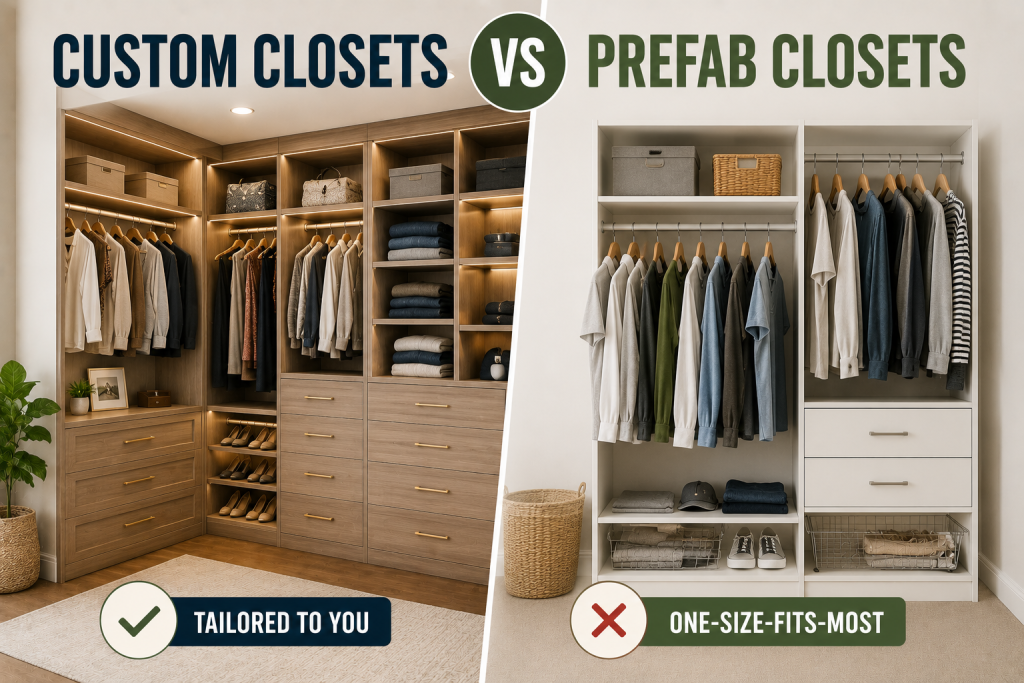
Prefab closets, sometimes referred to as prefab storage systems, use pre-manufactured components that are available in standard sizes. These systems are generally more affordable and can often be installed more quickly than custom alternatives. Many prefab options also include adjustable features that provide flexibility as storage needs change. Understanding these key differences helps homeowners make a more informed decision when evaluating custom closets and prefab closets for their bedroom storage needs.
Benefits of Custom Closets
Custom closet systems are designed to meet specific storage needs and room dimensions, making them a popular choice for homeowners who want a highly personalized organization solution. When evaluating custom closets vs prefab closets, understanding the advantages of custom designs can help determine whether the additional investment is worthwhile.
Personalized Storage Design
One of the biggest advantages of custom closets is the ability to create a storage layout tailored to individual needs. Homeowners can incorporate specialized shelving, drawers, shoe storage, accessory organizers, and hanging spaces that match their lifestyle and wardrobe requirements.
Maximum Space Utilization
Custom closets are built to fit exact room dimensions, allowing homeowners to make use of every available inch. This is especially beneficial in oddly shaped closets, small bedrooms, or large walk-in closets where standard systems may leave unused space.
Premium Appearance
Many homeowners choose custom closets because of their upscale appearance. High-quality materials, custom finishes, and integrated storage features can create a polished look that complements bedroom design while improving overall organization. These features often make custom closets a desirable long-term closet storage solution.
Drawbacks of Custom Closets
While custom closets offer numerous benefits, they may not be the ideal solution for every homeowner. When comparing custom closets vs prefab closets, it is important to consider the potential disadvantages associated with fully customized systems. One of the most significant drawbacks is cost. Custom closet pricing is generally higher than the cost of prefab alternatives because these systems require personalized design, premium materials, and professional installation. For homeowners working with a limited budget, this additional expense may be difficult to justify.
Installation timelines can also be longer. Custom closets often require measurements, design consultations, manufacturing, and installation scheduling before the project can be completed. This process may take several weeks, depending on the complexity of the design. Another consideration is the need for professional installation. Unlike many prefab systems that can be assembled, custom closets typically require experienced installers to ensure proper fit and functionality. While these systems offer exceptional customization, the higher investment and longer project timeline may not suit every homeowner’s needs.
Benefits of Prefab Closet Systems
Prefab closet systems are a popular choice for homeowners seeking practical storage upgrades without the higher investment associated with custom designs. When comparing custom closets vs prefab closets, prefab options often stand out for their affordability, convenience, and flexibility.
Budget-friendly Closet Systems
One of the primary advantages of prefab closets is cost. Many affordable closet systems provide effective solutions at a fraction of the price of custom installations, making them accessible to a wider range of homeowners.
Faster Installation
Prefab systems are manufactured in standard sizes and are typically available for immediate purchase. Because there is no custom fabrication process, installation can often be completed much faster than a fully customized closet project.
Flexible Modular Components
Many modern modular closets feature adjustable shelves, drawers, and hanging rods that can be reconfigured as storage needs change. This flexibility allows homeowners to modify their organization system over time without replacing the entire closet.
These advantages make prefab closet systems an attractive option for homeowners seeking efficient and budget-friendly closet solutions.
Drawbacks of Prefab Closet Systems
Although prefab closet systems offer affordability and convenience, they also have limitations that homeowners should consider. When evaluating custom closets vs prefab closets, these drawbacks can play an important role in determining which option provides the best long-term value. One common limitation is reduced customization. Because prefab space systems are manufactured in standard sizes, they may not fully accommodate unique closet layouts or specialized storage requirements. This can result in unused space, particularly in closets with unusual dimensions.
Material quality can also vary significantly between products. While many prefab systems are durable and functional, some lower-cost options may not offer the same longevity or premium appearance as custom-built alternatives. Over time, wear and tear may become more noticeable, especially in high-use areas. In addition, prefab systems may provide fewer design options and organizational features compared to custom solutions. Homeowners seeking highly personalized storage layouts, integrated accessories, or premium finishes may find standard systems somewhat limiting despite their affordability and convenience.
Custom Closet vs Prefab Space Pricing
Cost is often one of the most important factors homeowners consider when comparing custom closets and prefab closets. While both options improve organization and storage efficiency, the investment required can vary significantly depending on the materials, design complexity, and installation requirements. Custom closet prices are generally higher because each system is designed specifically for the homeowner’s space and storage needs. Costs often include design consultations, custom fabrication, premium materials, and professional installation. These factors contribute to a larger upfront investment but can also provide greater personalization and long-term value.
In contrast, prefab space systems are typically more budget-friendly. Because they are mass-produced and available in standard sizes, manufacturing and installation costs are generally lower. Many homeowners also choose to install prefab systems themselves, reducing labor expenses even further. When evaluating costs, homeowners should consider not only the initial investment but also durability, storage efficiency, and how the system meets their long-term organizational needs.
Closet Organization Evaluation
Both custom and prefab systems can improve organization, but their effectiveness often depends on the homeowner’s storage needs, available space, and long-term goals. A detailed closet organization Comparison helps highlight the strengths and limitations of each option.
Custom Closets vs Prefab Closets for Storage Efficiency
When evaluating custom closets vs prefab closets, custom systems generally provide greater storage efficiency because they are designed to fit exact dimensions. This allows homeowners to maximize vertical space, corners, and other areas that standard systems may not fully utilize.
Accessibility and Daily Convenience
Custom closets can be tailored to accommodate specific wardrobes and daily routines, making frequently used items easier to access. Prefab systems also offer practical organization, but their standard configurations may not provide the same level of convenience for every homeowner.
Flexibility for Changing Storage Needs
Many modular closets offer adjustable shelves, drawers, and hanging components that can be reconfigured over time. This flexibility makes prefab systems attractive for homeowners whose storage requirements may change in the future.
Ultimately, both options can serve as effective closet storage solutions, but the right choice depends on whether customization, flexibility, or budget is the highest priority.
Built-In Closet Tips and Design Flexibility
One of the biggest differences between custom and prefab systems is the level of design flexibility they offer. Homeowners looking for personalized storage often explore various built-in closet ideas to create a solution that matches both their organizational needs and bedroom layout. Custom closets provide virtually unlimited design possibilities. Homeowners can incorporate specialized storage zones for shoes, accessories, handbags, folded clothing, and seasonal items. Features such as built-in drawers, custom shelving, islands, and integrated lighting can further enhance functionality and appearance.
Prefab systems offer less customization but still provide a variety of configuration options. Many modern systems include adjustable shelves, hanging rods, and modular components that allow homeowners to adapt the layout as storage needs evolve. These features make prefab systems a practical option for those seeking flexibility without the cost of a fully customized installation. When comparing custom closets vs prefab closets, design flexibility is often a deciding factor for homeowners who want a storage solution tailored to their specific lifestyle and space requirements.
Which Option Lasts Longer?
Durability is an important consideration when comparing custom closets vs prefab closets, especially for homeowners looking for a long-term storage investment. The lifespan of a closet system often depends on material quality, construction methods, installation quality, and how heavily the system is used over time. Custom closets are typically built with higher-quality materials and are designed specifically for the space in which they are installed. Because they are professionally fitted and often incorporate premium components, custom systems generally offer excellent durability and long-term performance. With proper maintenance, they can remain functional and attractive for many years.
Prefab closet systems can also provide reliable performance, particularly when constructed from quality materials. However, durability varies significantly between manufacturers and product lines. Lower-cost systems may show wear more quickly, especially in high-traffic closets. For homeowners prioritizing longevity, custom systems often provide the strongest long-term value. However, well-made prefab solutions can still serve as effective and dependable closet solutions when selected carefully and maintained properly.
Custom Closets vs Prefab Closets for Home Value
Homeowners often consider how storage upgrades may affect resale value when deciding between custom closets vs prefab closets. While both options can improve organization and functionality, their impact on buyer perception and long-term value may differ. Custom closets are viewed as premium home features because they offer tailored storage, high-quality materials, and a polished appearance. In walk-in closets and primary bedrooms, custom systems can create a more luxurious feel that may appeal to potential buyers. These upgrades are often associated with convenience, organization, and thoughtful home design.
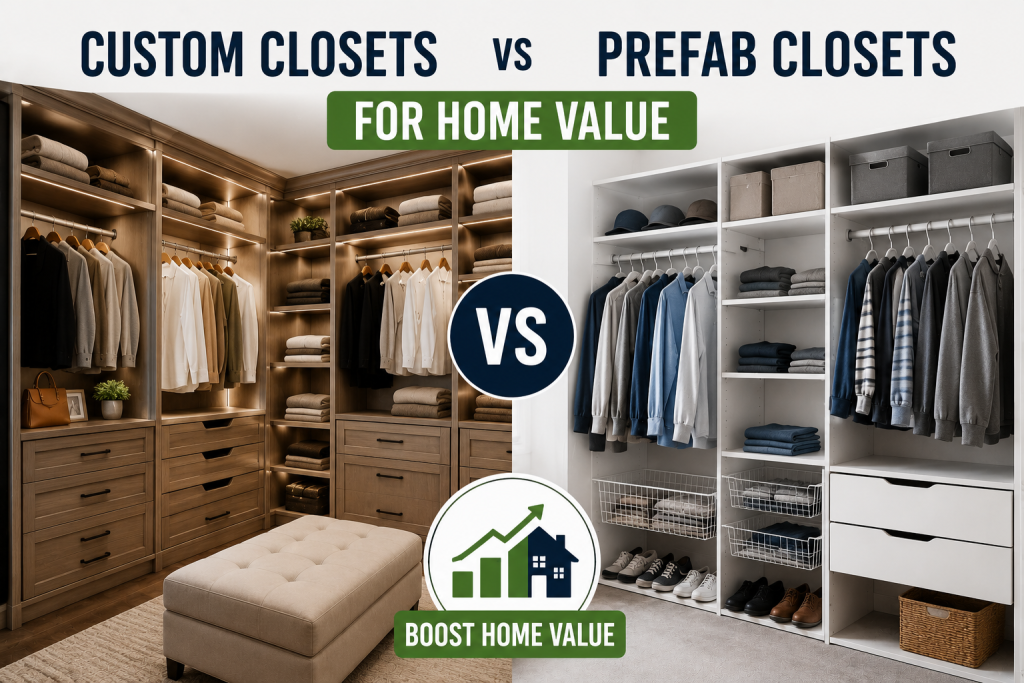
Prefab closet systems can also add value by improving storage capacity and making closets more functional. Although they may not carry the same premium perception as custom installations, well-designed prefab systems still enhance organization and can make a home more attractive to buyers compared to basic wire shelving or unfinished storage areas. Ultimately, both options can contribute positively to home value. The best choice depends on budget, goals, and whether maximizing customization or achieving an affordable organization is the primary objective.
Custom Closets vs Prefab Closets Checklist
Before choosing between custom closets vs prefab closets, homeowners should carefully evaluate their storage goals, budget, and available space. Consider how much clothing, footwear, and accessories need to be stored, as well as whether the closet has unique dimensions that may benefit from a customized solution. Understanding daily organization habits can also help determine which type of system will provide the most value.
It is important to compare installation requirements, material quality, design flexibility, and long-term durability. Homeowners should also consider future storage needs and whether adjustable or expandable components may be beneficial over time. Evaluating the custom closet price alongside the worth of prefab alternatives can help establish a realistic budget. By reviewing these factors before making a decision, homeowners can choose a closet system that supports both immediate organization goals and long-term storage efficiency.
Conclusion
The choice between custom closets vs prefab closets ultimately depends on your budget, storage requirements, and long-term priorities. Custom closets offer personalized designs, premium materials, and maximum space utilization, making them an excellent option for homeowners seeking a tailored storage solution. Prefab systems, on the other hand, provide affordability, flexibility, and faster installation while still delivering effective organization. Both options can improve functionality, reduce clutter, and enhance bedroom storage. By comparing factors such as custom closet price, durability, design flexibility, and overall value, homeowners can make an informed decision that aligns with their lifestyle. The right closet system can provide lasting organization, convenience, and improved daily functionality for years to come.
Frequently Asked Questions
Are custom closets worth the extra cost?
For many homeowners, custom closets are worth the investment because they maximize storage space, provide personalized organization, and offer a premium appearance. The value depends on budget, storage needs, and long-term goals.
What is the difference between custom and prefab closets?
The primary difference is customization. Custom closets are designed specifically for a particular space and homeowner, while prefab closets use standardized components that can be assembled and configured to fit a variety of layouts.
Custom Closets vs Prefab Closets: Which option provides more storage?
In most cases, custom closets provide greater storage efficiency because they are built to utilize every available inch of space. However, many modern modular closet systems also offer excellent organization and storage capacity.
Are prefab closet systems durable?
Yes, many prefab closet systems are durable when constructed from quality materials. Durability varies by manufacturer and product line, so homeowners should compare materials, construction quality, and warranties before purchasing.
Do custom closets increase home value?
Custom closets can positively influence buyer perception by improving organization and creating a more upscale appearance. While the exact return on investment varies, well-designed closet systems are often viewed as desirable home upgrades.