


Does New Siding Increase Home Value? ROI Explained
For homeowners thinking about selling, renovating, or improving long-term property performance, one question comes up often: does new siding increase home value? The short answer is yes—but the actual increase depends on the existing condition of the home, the siding material selected, local buyer expectations, and installation quality. New siding changes more than appearance. It can improve first impressions, reduce visible wear, increase weather protection, and make a home feel more updated to buyers during showings. In many US markets, exterior condition strongly influences perceived value before buyers ever step inside.
Modern siding projects may also support lower maintenance requirements and improved thermal performance depending on the product selected. For homeowners comparing renovation projects, siding often competes with roofing, windows, and landscaping because of its visible impact on buyer perception. One of the biggest advantages homeowners notice is improved curb appeal improvements, especially in competitive neighborhoods where exterior presentation influences offers and time on market. The key is understanding when siding replacement creates measurable value—and when repairs or alternative upgrades may deliver a better return.
Does New Siding Increase Home Value? Factors That Affect ROI
If homeowners want a realistic answer to does new siding increase home value, they need to look beyond the installation cost alone. The return depends on several connected factors that shape buyer perception and actual market performance. The first factor is existing siding condition. Homes with faded color, warping, moisture damage, or visible maintenance issues typically see stronger improvement after replacement than homes with siding that still performs well.
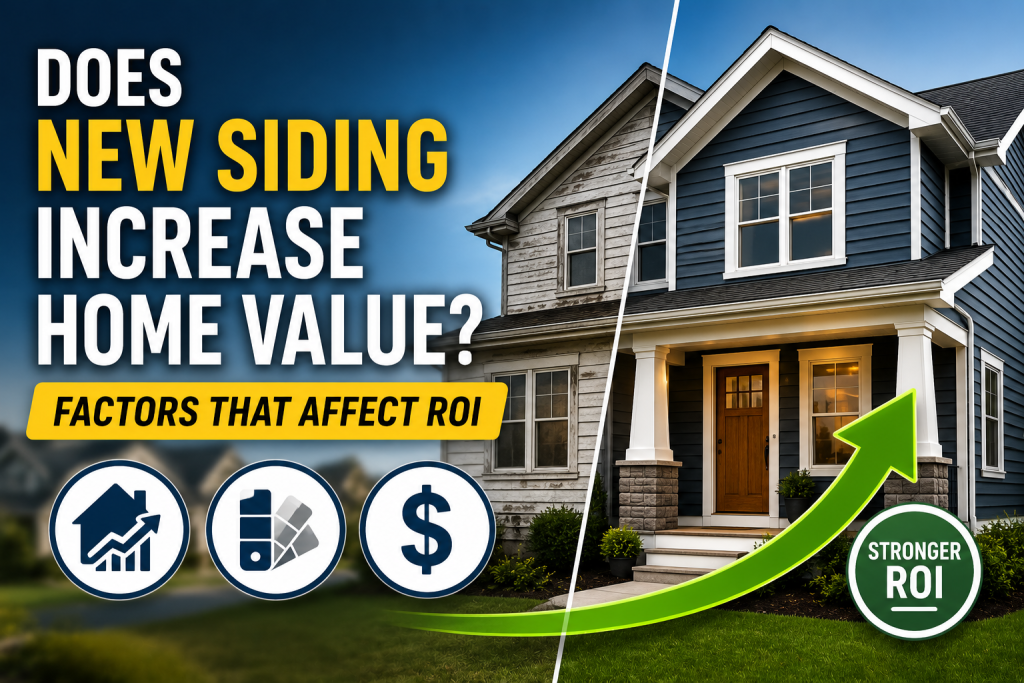
Material selection also matters. Premium products such as fiber cement may appeal differently than standard vinyl depending on climate, maintenance expectations, and neighborhood standards. In regions with heavy rain, freeze–thaw cycles, or intense sun exposure, durability becomes part of buyer decision-making. Local market expectations play a major role. In areas where updated exteriors are common, older siding may stand out negatively during showings and inspections. Homeowners should also evaluate project economics through siding ROI, not appearance alone. Labor quality, installation details, and long-term ownership costs all influence the final outcome.
How Buyers Judge Exterior Condition
Homebuyers often form opinions within seconds of arriving at a property, which is why exterior appearance has such a strong influence on perceived value. When homeowners ask does new siding increase home value, buyer psychology is part of the answer. Most buyers do not evaluate siding like a contractor. Instead, they look for signs that suggest whether the home has been maintained over time. Faded panels, visible damage, mismatched repairs, moisture staining, and aging finishes can create concern about future expenses—even if the underlying structure remains sound.
Updated siding sends a different signal. It suggests reduced near-term maintenance, improved protection from weather exposure, and a more move-in-ready experience. That perception becomes especially important in suburban markets where comparable homes compete for attention. From a selling standpoint, siding upgrades often work best when paired with coordinated exterior details such as trim condition, entry appearance, driveway cleanliness, and landscaping consistency. Buyers tend to evaluate the entire exterior package rather than one isolated improvement.
Why Appraisers Notice Siding Upgrades
While buyers respond emotionally to appearance, appraisers evaluate improvements through market evidence and overall property condition. That distinction matters when homeowners wonder whether siding replacement contributes to measurable value. Appraisers generally do not assign value to new siding as an isolated feature. Instead, they assess how the upgrade affects the home’s condition, market competitiveness, expected maintenance profile, and comparison against recently sold properties nearby. This is one reason homeowners ask does new siding increase home value, since appraisers often evaluate how exterior improvements contribute to overall market appeal rather than assigning direct value to siding alone.
Exterior improvements can strengthen adjustment decisions when competing homes show newer finishes, updated envelopes, or lower expected ownership costs. In some cases, replacement also supports stronger listing presentation and better showing outcomes. This is where broader remodeling return on investment becomes important. Exterior projects often perform differently from interior remodels because they influence both buyer confidence and first impressions. Homes with consistent exterior updates may also reduce concerns uncovered during inspections, helping support smoother negotiations and fewer requests for repair credits.
How Much Value Can New Siding Add to a Home
Homeowners usually want a numbers-based answer after asking whether siding replacement is worth the investment. For many sellers evaluating exterior projects, the question becomes does new siding increase home value in a measurable way. In most cases, value gains come from a combination of improved marketability, stronger buyer confidence, and better overall exterior condition rather than a dollar-for-dollar recovery.
The actual increase depends on location, siding material, home age, neighborhood standards, and timing of the sale. In many US markets, exterior renovations tend to perform best when the upgrade solves a visible problem rather than adding a premium feature buyers were not expecting. One reason homeowners continue to ask does new siding increase home value is because exterior condition influences both listing appeal and perceived maintenance risk. Updated siding can make older homes feel more current and competitive during showings.
The strongest results usually come when replacement aligns with broader exterior home upgrades instead of functioning as a standalone improvement. Pairing siding with refreshed trim, modern exterior colors, and minor landscaping improvements often creates a more noticeable impact. Value should ultimately be measured through buyer response, market positioning, and long-term ownership outcomes—not installation cost alone.
Fiber Cement vs Vinyl Return Potential
Material selection can significantly influence outcomes, especially when homeowners prioritize durability, maintenance expectations, and resale positioning. While there is no universal winner, fiber cement and vinyl remain two of the most common siding choices across the United States. Fiber cement is often associated with stronger premium perception in many suburban and higher-value markets. Homeowners may choose it for durability, dimensional appearance, and performance in regions that experience humidity, storms, or seasonal weather variation.
Vinyl siding continues to appeal because of lower upfront costs and broad availability. For many households, the value equation is less about maximizing sale price and more about balancing affordability with market expectations. When evaluating does new siding increase home value, the best material is usually the one that matches neighborhood standards and avoids over-improving relative to nearby homes. Homeowners focused on resale value siding decisions should compare installation quality, maintenance requirements, expected lifespan, and local buyer preferences before committing to a replacement project.
When Replacement Outperforms Repairs
Repairing damaged siding can make financial sense when problems are isolated and the remaining exterior still performs well. However, there are situations where replacement creates stronger long-term value. If multiple walls show fading, cracking, moisture intrusion, repeated patchwork, or uneven aging, repairs may become a short-term solution that delays larger costs. Buyers often notice inconsistency across exterior surfaces, which can reduce confidence during showings.
Replacement also becomes more attractive when homeowners plan to sell within the next few years. A refreshed exterior can improve presentation and reduce concerns about deferred maintenance. For homeowners asking does new siding increase home value, the answer is often influenced by local competition and buyer expectations. In neighborhoods where homes have already been updated, keeping older siding may weaken competitive positioning.
Another factor is operating cost. Some modern products contribute to better envelope performance and may complement insulation improvements over time. That is one reason homeowners explore energy-efficient siding upgrades as part of a broader ownership strategy. The goal should not be replacing siding simply for appearance—it should be choosing the option that creates the strongest overall value outcome for the property.
Does New Siding Increase Home Value Compared With Other Exterior Upgrades
Siding is only one of several projects homeowners consider before selling or improving long-term property performance. To decide whether does new siding increase home value more effectively than other renovations, it helps to compare visibility, maintenance impact, and buyer perception. Roof replacement often becomes a higher priority when age or storm damage creates concern during inspections. Window upgrades may improve comfort and efficiency, but those benefits are not always immediately visible during showings.
Siding occupies a unique position because it combines appearance with practical performance. Buyers notice the exterior instantly, and visible deterioration can influence expectations for the rest of the property. Compared with cosmetic projects alone, siding replacement tends to offer broader benefits through appearance updates, weather protection, and ownership confidence. Many homeowners evaluate these outcomes as part of broader siding replacement benefits rather than focusing only on resale timing. The strongest project is usually the one that addresses the most visible weakness while matching neighborhood expectations and overall home condition.
| Project | Typical Goal | Buyer Visibility | Long-Term Impact |
| Siding Replacement | Exterior renewal | High | High |
| Roof Replacement | Structural confidence | Medium | High |
| Window Upgrade | Efficiency | Medium | Medium |
| Landscaping | Visual appeal | High | Medium |
| Exterior Paint | Appearance refresh | High | Short–Medium |
The Benefits of New Siding Beyond Resale
Home value is important, but homeowners who replace siding often experience advantages long before a future sale happens. Looking only at resale can overlook meaningful improvements in ownership experience and property performance. This broader impact is one reason many homeowners ask does new siding increase home value, since the benefits often extend beyond a future transaction. One of the biggest gains is reduced maintenance. Older exteriors frequently require ongoing patching, repainting, sealing, or moisture management. Newer systems are designed to provide more consistent protection with less upkeep over time.
Another benefit is improved energy performance.When replacement is completed alongside proper wall preparation and air sealing practices, homeowners may notice better indoor comfort and more stable utility costs depending on climate and existing conditions. Protection is another major factor. Updated siding can help homes handle moisture exposure, seasonal temperature changes, and environmental wear more effectively. In coastal and storm-prone areas, durability expectations become especially important.
Many homeowners also evaluate siding projects through overall ROI expectations and broader ownership goals. In practice, value comes not only from future sale potential but from reducing recurring costs and improving day-to-day confidence in the property. This broader perspective is one reason homeowners continue asking does new siding increase home value, because the benefits may extend beyond resale and support long-term ownership satisfaction. These long-term outcomes are often overlooked even though they can influence homeowner satisfaction for years after installation.
Best Situations to Replace Siding Before Selling
Not every homeowner needs to replace siding before listing a property. In many situations, targeted repairs and exterior maintenance can still support a successful sale. The decision usually comes down to condition, timing, and local market expectations. Replacement becomes easier to justify when the existing siding shows widespread deterioration rather than isolated defects. Visible warping, repeated moisture issues, fading across multiple elevations, loose panels, and inconsistent repairs can create concerns during showings and inspections. Timing also matters. Homeowners planning to sell within the next 6–18 months often benefit more from projects that immediately improve presentation and reduce buyer objections.
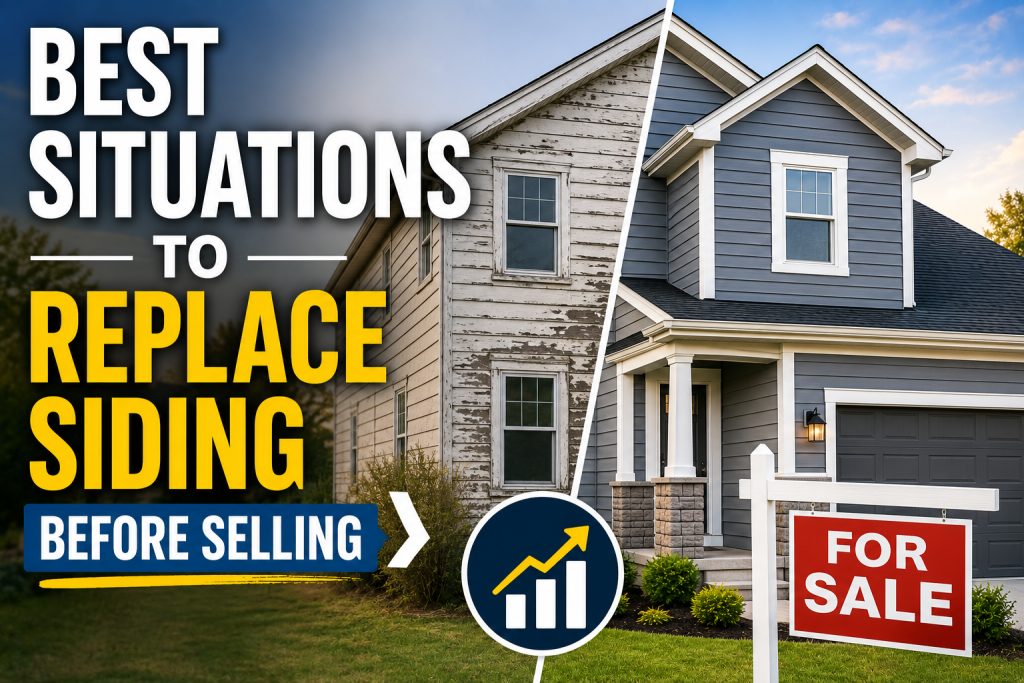
Neighborhood positioning should also influence the decision. If comparable homes already feature updated exteriors, older siding may weaken competitiveness and extend time on market.b For homeowners still asking does new siding increase home value and whether replacement makes sense, the better question is often not “Will this increase value?” but “Will this make my home easier to sell and more attractive compared with nearby alternatives?” That perspective usually leads to stronger renovation decisions.
Conclusion
So, does new siding increase home value? In many cases, yes—but the outcome depends on more than simply installing new materials. Siding tends to create the strongest results when it improves visible condition, aligns with neighborhood expectations, reduces future maintenance concerns, and strengthens overall market presentation. Buyers often respond to homes that feel well maintained and move-in ready, making exterior condition an important part of the selling equation. That does not mean replacement is always necessary. Homes with limited wear may benefit more from repairs, cleaning, or targeted exterior updates. The right decision should balance project cost, ownership timeline, local competition, and long-term goals. For homeowners planning to sell, siding should be evaluated as part of the complete exterior strategy—not as an isolated upgrade. When timing, material choice, and installation quality align, new siding can become one of the more practical investments for improving both homeowner confidence and market appeal.
Frequently Asked Questions
Does New Siding Increase Home Value Before Selling?
Yes, but the result depends on the home’s condition and local market expectations. If siding damage is visible, widespread, or lowers buyer confidence, replacing it may improve presentation and reduce negotiation pressure. When homeowners ask does new siding increase home value, the answer is often strongest in neighborhoods where updated exteriors influence buyer decisions and comparable homes already show recent exterior improvements.
What siding materials typically perform best for long-term value?
There is no universal best option. Fiber cement is often selected for durability and premium appearance, while vinyl remains popular because of lower upfront cost and broad market acceptance. The right choice depends on climate, maintenance expectations, and local buyer preferences.
Does vinyl siding increase appraisal value?
New vinyl siding may contribute indirectly by improving overall property condition and market competitiveness. Appraisers typically evaluate how upgrades influence comparison with similar recently sold homes rather than assigning value to siding independently.
How long before listing should siding be replaced?
For homeowners planning replacement before selling, completing the project at least several months before listing can help. That timing allows exterior details to settle visually, provides time for supporting maintenance work, and improves listing photography and showing preparation.