


Farmhouse Roof Styles: A Complete Guide to Choosing the Perfect Roof for Your Home
The roof is one of the most recognizable features of any farmhouse home. Whether you’re restoring a traditional country property or building a new rural-inspired residence, the right roof design plays a major role in appearance, durability, and long-term value. Today’s farmhouse roof styles combine classic architectural elements with modern performance, giving homeowners more choices than ever before. Historically, farmhouses were designed with simple roof structures that could withstand local weather conditions while remaining affordable to build. Over time, these practical designs evolved into architectural statements that define the character of rural and suburban homes across the United States.
From Texas ranch properties to Midwest country homes, roof selection often influences curb appeal, energy efficiency, and resale potential. When comparing different farmhouse roof styles, homeowners should consider climate, maintenance requirements, roofing materials, and overall architectural goals. Features such as roof pitch, overhang depth, attic ventilation, and weather resistance all contribute to long-term performance. Understanding these factors can help you choose a roof design that complements your home’s exterior while delivering reliable protection for decades.
Popular Farmhouse Roof Styles for American Homes
Several roof designs have become closely associated with farmhouse architecture in the United States. While preferences vary by region, the most successful farmhouse roof styles balance traditional character with practical performance. Homeowners often choose roof shapes based on weather conditions, attic space needs, and the overall appearance they want to achieve.
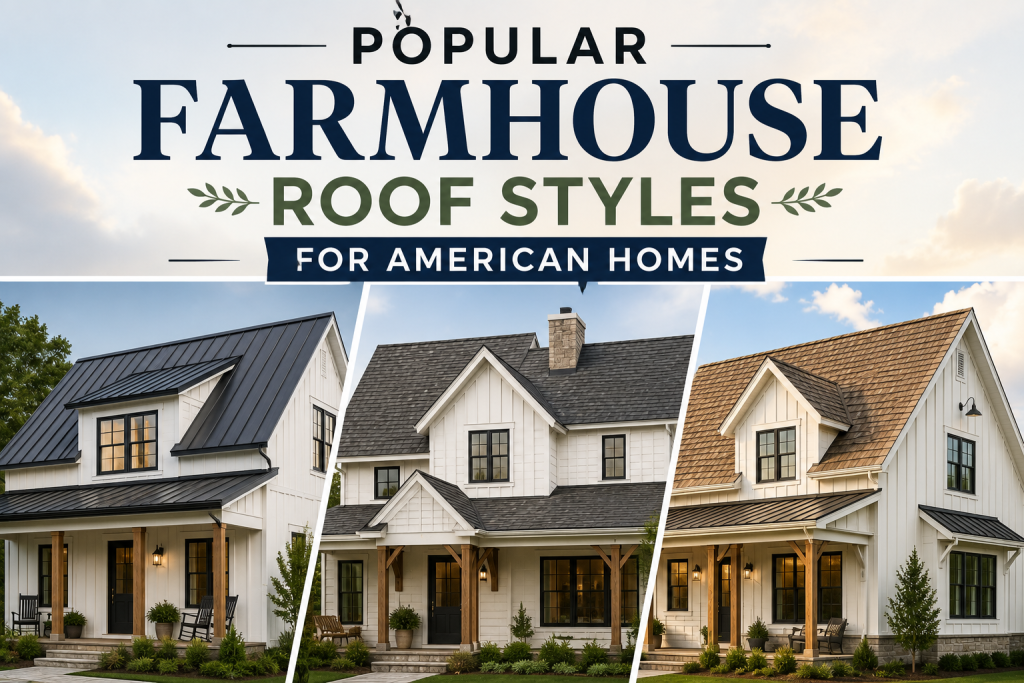
Gable Roof Designs and Their Timeless Appeal
The gable roof farmhouse remains one of the most recognizable examples of American farmhouse architecture. Its simple triangular shape creates excellent water drainage and allows snow to slide off more easily during winter months. Gable roofs also provide ample attic ventilation and work well with a variety of exterior materials, making them a common choice in states such as Iowa, Kansas, and Ohio.
Gambrel Roof Styles Inspired by Classic Barns
Gambrel roofs feature two slopes on each side, creating additional interior space beneath the roofline. Often associated with historic barns and rural properties, this design offers a distinctive appearance while maximizing usable attic storage. Homeowners seeking authentic rustic roof designs frequently choose gambrel roofs to reinforce traditional farmhouse character.
Hip Roof Farmhouses for Wind Resistance
Hip roofs slope downward on all sides, creating a strong and stable structure. This design performs particularly well in regions exposed to high winds and severe storms. Because of their durability and balanced appearance, hip roofs continue to be a practical option among modern farmhouse roof styles, especially in coastal and southern states.
Farmhouse Roof Styles That Match Modern Design Trends
While traditional roof designs remain popular, many homeowners are now blending classic architecture with contemporary materials and finishes. Modern interpretations of farmhouse roof styles focus on clean lines, durability, and energy efficiency while preserving the charm that makes farmhouse homes so appealing.
Why Metal Roofs Are Popular in Modern Farmhouses
One of the biggest trends in modern farmhouse roofing is the growing use of metal systems. Many homeowners prefer metal farmhouse roofs because they offer exceptional durability, low maintenance requirements, and a lifespan that can exceed 50 years. Metal roofing also reflects solar heat more effectively than many traditional materials, helping reduce cooling costs in warmer regions such as Texas and Arizona.
Standing Seam Metal Roofing for Contemporary Farmhouses
Among premium roofing options, standing seam metal roofing has become a favorite for contemporary farmhouse projects. Its concealed fasteners create a clean, streamlined appearance while providing strong protection against moisture intrusion. This roofing style complements white siding, black window frames, and other design elements commonly found in modern farmhouse construction.
Combining Traditional Roof Shapes with Modern Materials
Many homeowners achieve the best results by pairing classic roof forms, such as gable and gambrel designs, with advanced materials that improve weather resistance and longevity. This combination allows farmhouse homes to maintain their traditional appearance while benefiting from modern building technology.
Choosing the Best Farmhouse Roof Styles Based on Climate
Climate should be one of the most important factors when selecting a roof design. The best farmhouse roof styles not only enhance curb appeal but also help protect a home from regional weather challenges. From heavy snowfall in northern states to intense heat in the South, roof performance can vary significantly depending on local conditions.
Roof Options for Snowy Northern States
In areas such as Minnesota, Wisconsin, and Michigan, steep roof pitches are often preferred because they encourage snow and ice to slide off more easily. Gable roofs are particularly effective in these regions, helping reduce excess weight that can place stress on the roof structure during winter.
Roofing Solutions for Southern and Humid Climates
Homes located in states such as Florida, Georgia, and Louisiana benefit from roofing materials that resist moisture, humidity, and prolonged sun exposure. Metal roofing systems and properly ventilated attic spaces can improve energy efficiency while minimizing heat buildup during the summer months.
Roof Designs for Windy and Coastal Regions
Coastal homeowners often prioritize structural strength and storm resistance when evaluating farmhouse roof styles. Hip roofs are frequently recommended because their inward-sloping design provides greater stability during high-wind events. In hurricane-prone regions, selecting roofing systems that meet local building codes can also contribute to lower insurance risks and improved long-term performance.
Materials Commonly Used with Farmhouse Roof Styles
The material you choose is just as important as the roof shape itself. While many country home roof styles share similar structural designs, their appearance, lifespan, and maintenance requirements can vary significantly depending on the roofing material. Selecting the right option helps homeowners balance performance, aesthetics, and long-term value.
Asphalt Shingles
Asphalt shingles remain the most widely used residential roofing material in the United States. They are affordable, readily available, and offered in a wide range of colors and profiles. For homeowners seeking traditional farmhouse character without a large upfront investment, asphalt shingles often provide a practical solution.
Metal Roofing Systems
Metal roofing continues to gain popularity because of its durability and resistance to extreme weather. Products from manufacturers such as GAF, Owens Corning, and CertainTeed offer systems designed to withstand decades of exposure while maintaining their appearance.
Composite and Premium Roofing Products
Composite roofing materials are engineered to mimic the look of slate, wood shakes, or other premium products while requiring less maintenance. These materials appeal to homeowners who want the visual appeal of traditional farmhouse roof styles without the upkeep associated with natural materials.
Farmhouse Exterior Ideas That Complement Roof Design
A well-designed roof should work together with the rest of the home’s exterior. The most successful farmhouse roof styles create a cohesive appearance by complementing siding, trim, windows, and outdoor living spaces. Careful coordination between these elements can significantly improve curb appeal and increase perceived property value.
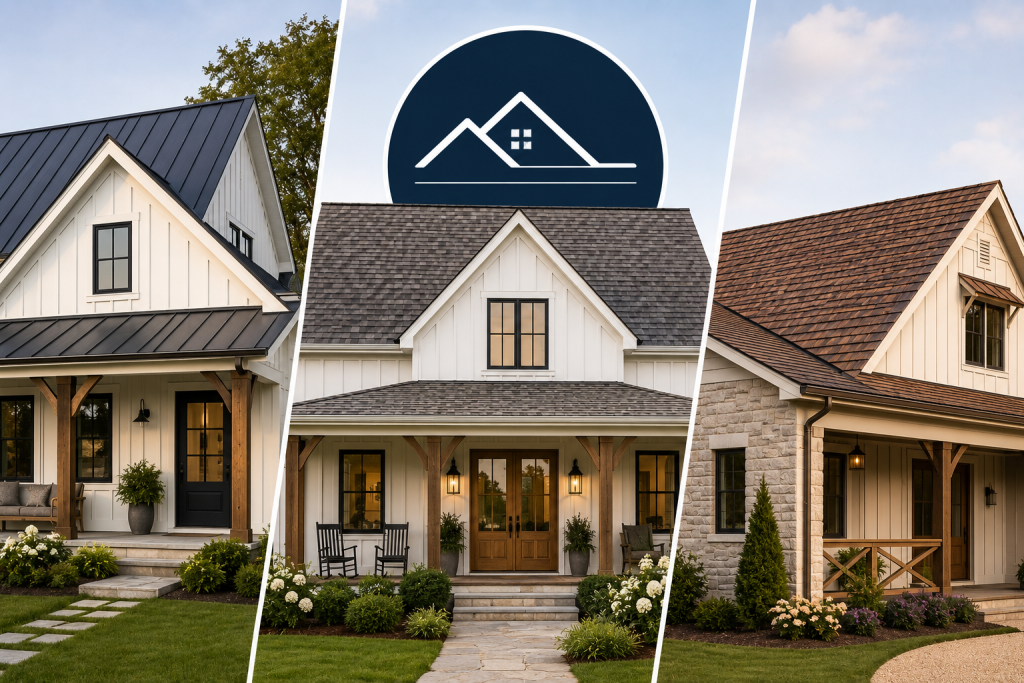
Siding and Roofing Combinations
When exploring farmhouse exterior ideas, many homeowners pair neutral-colored roofing with white board-and-batten siding, natural stone accents, or painted brick. These combinations create a timeless appearance while allowing architectural details to stand out. Black-framed windows and wood accents are also common additions that help reinforce modern farmhouse character.
Porch Designs and Architectural Details
Front porches remain a defining feature of many farmhouse homes. Wide covered porches, decorative columns, and exposed wood beams can strengthen the visual impact of the roofline while creating a welcoming outdoor space. Architectural details such as dormers, cupolas, and extended roof overhangs can further enhance the overall design and contribute to the distinctive appeal associated with classic farmhouse roof styles.
Farmhouse Roof Styles Comparison Table
Choosing among different farmhouse roof styles often comes down to balancing appearance, durability, maintenance requirements, and climate suitability. The comparison below highlights some of the most common options used in American farmhouse architecture.
| Roof Style | Appearance | Typical Cost | Durability | Best Climate | Maintenance |
| Gable Roof | Traditional and versatile | Moderate | High | Snowy and temperate regions | Low |
| Gambrel Roof | Barn-inspired and spacious | Moderate to High | High | Rural and temperate climates | Moderate |
| Hip Roof | Balanced and refined | High | Very High | Windy and coastal areas | Low |
| Metal Gable Roof | Modern farmhouse look | High | Very High | Most U.S. climates | Very Low |
| Standing Seam Roof | Clean and contemporary | Premium | Excellent | Hot, snowy, and mixed climates | Very Low |
Key Considerations When Comparing Roof Styles
When evaluating farmhouse roof styles, homeowners should look beyond initial installation costs. Factors such as expected lifespan, energy efficiency, maintenance expenses, and regional weather conditions often have a greater impact on long-term value. A roof that performs well in a snowy Midwest climate may not be the ideal choice for a hurricane-prone coastal location. Matching the roof design to both architectural goals and environmental conditions typically produces the best long-term results.
Conclusion
The best farmhouse roof styles combine timeless architectural appeal with practical performance. Whether you prefer a traditional gable roof, a barn-inspired gambrel design, or a durable metal roofing system, the right choice should reflect your home’s architecture, local climate, and long-term maintenance goals. Homeowners in snowy northern states may benefit from steep roof pitches that improve snow shedding, while coastal properties often require roof designs engineered for wind resistance.
Material selection is equally important, as factors such as durability, energy efficiency, and expected lifespan can significantly influence the overall value of a roofing investment. Before making a final decision, evaluate how the roof will complement your siding, porch design, and other exterior features. The most successful farmhouse roof styles create a balanced appearance while delivering reliable protection for decades. By carefully matching roof design, materials, and regional requirements, homeowners can achieve a farmhouse exterior that is both attractive and built to last.
Frequently Asked Questions
What is the most popular farmhouse roof style?
The gable roof is generally considered the most popular option among American homeowners. Its simple design, strong drainage performance, and timeless appearance make it a natural fit for both traditional and contemporary farmhouse architecture. Gable roofs are also cost-effective to build and adapt well to a variety of roofing materials.
Are metal roofs good for farmhouse homes?
Yes. Metal roofing is one of the most durable choices available for farmhouse properties. It offers excellent resistance to wind, rain, snow, and fire while requiring minimal maintenance. Many homeowners also appreciate its long lifespan and energy-efficient performance, particularly in regions with hot summers.
Which roof style works best in snowy climates?
Steep-pitched gable roofs are often recommended for areas that experience significant snowfall. Their shape helps shed snow more efficiently, reducing the risk of excessive weight accumulation. Proper attic ventilation and insulation can further improve winter performance.
How long do farmhouse roofs last?
The lifespan depends largely on the material used. Asphalt shingle roofs typically last 20 to 30 years, while metal roofing systems can exceed 50 years with proper maintenance. Premium composite products may also provide decades of reliable service when installed according to manufacturer specifications.
Do farmhouse roof styles increase home value?
Well-designed farmhouse roof styles can enhance curb appeal, improve weather protection, and contribute to a home’s overall marketability. Buyers often view quality roofing as a valuable upgrade because it reduces future maintenance concerns and supports long-term property value.