


Hidden Remodeling Costs Homeowners Forget
Home renovation projects rarely stay exactly on budget, and that’s largely because of hidden remodeling costs that appear after work begins. Even carefully planned remodels in the United States often uncover expenses that were not visible during the initial estimate phase. These can include structural issues, outdated electrical systems, plumbing failures, or code compliance upgrades required under standards like the International Residential Code (IRC). The challenge for homeowners is that most unexpected renovation expenses only surface once demolition starts, making them difficult to predict upfront. This is especially common in older homes across cities like Chicago, Boston, or Philadelphia, where previous renovations may not meet modern building standards. Understanding these hidden costs early helps homeowners set realistic expectations and avoid financial stress during construction. A remodel is never just about design, it is equally about preparing for the unknown.
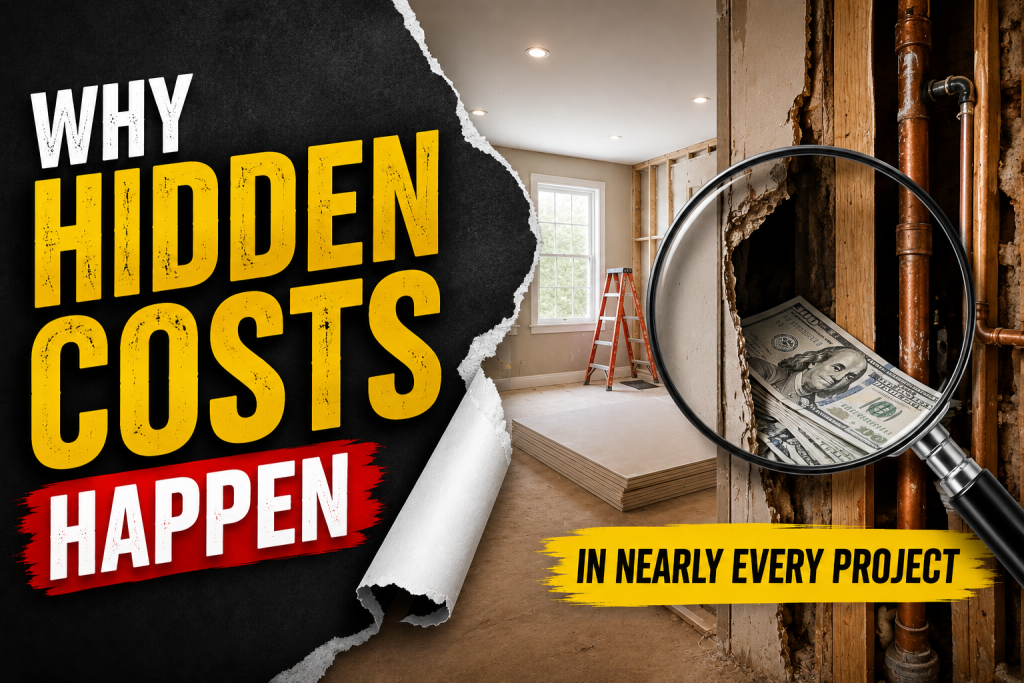
Why Hidden Remodeling Costs Happen in Nearly Every Project
Hidden remodeling costs are common in nearly every US renovation because most homes conceal conditions that only become visible once work begins. Even when contractors perform pre-project inspections, they cannot fully see behind walls, under flooring, or within aging plumbing and electrical systems. As a result, unexpected renovation expenses are often discovered during demolition or structural opening phases.
Another major reason is the age and variation of US housing stock. Homes built decades ago often contain outdated materials, unpermitted modifications, or systems that no longer meet modern code requirements under the International Residential Code (IRC). Once exposed, these issues must be corrected before the remodel can continue. Additionally, homeowner upgrades during construction, such as changing layouts or selecting premium materials, can increase scope beyond initial estimates. This combination of unknown conditions and evolving decisions is why renovation overruns are so common in real-world remodeling projects.
Unexpected Renovation Expenses That Add Up Fast
Some hidden remodeling costs appear small at first but quickly accumulate and significantly impact the overall budget. One of the most common sources of unexpected renovation expenses is structural repair. Once walls or flooring are removed, contractors may discover damaged framing, foundation cracks, or moisture issues that require immediate correction before work can continue.
Another major cost driver is outdated mechanical systems. Homes with old electrical panels, aluminum wiring, or aging galvanized plumbing often need full replacement to meet safety standards and comply with the International Residential Code (IRC). These upgrades are rarely included in initial estimates. Mold remediation, asbestos removal, and pest damage repairs can also surface in older properties, especially in humid regions or long-neglected homes. In cities like Miami or Houston, moisture-related issues are particularly common. These expenses can quickly turn a planned remodel into a significantly larger financial project if not anticipated early.
Permit Costs for Remodeling and Code Compliance Surprises
Permit-related expenses are one of the most underestimated hidden remodeling costs, especially for homeowners tackling major renovations for the first time. In the US, most structural, electrical, plumbing, and HVAC work requires permits issued by local municipalities. These fees vary widely by city and project scope, and they can add several thousand dollars to the overall budget depending on complexity.
Beyond the upfront permit fees, the bigger financial surprise often comes from required corrections during inspection. If work does not fully comply with the International Residential Code (IRC) or local amendments, contractors may need to redo portions of the project, leading to additional labor and material costs. These corrections can significantly increase unexpected renovation expenses and extend project timelines. Cities like Los Angeles, New York, and San Francisco tend to have stricter enforcement and longer approval timelines, which can also contribute to delays and indirect budget increases through extended labor schedules.
Demolition Costs and What Homeowners Don’t Expect
Demolition is often treated as a simple first step, but it can introduce some of the most overlooked hidden remodeling costs in a renovation project. While homeowners may assume tearing out walls, flooring, or cabinetry is straightforward, the reality is that demolition involves labor, equipment, disposal fees, and strict safety handling requirements.
In the US, disposal costs alone can escalate quickly due to landfill fees, material sorting rules, and hazardous waste regulations enforced in many municipalities. Older homes may also reveal asbestos, lead-based paint, or other materials that require specialized removal procedures, significantly increasing unexpected renovation expenses. Additionally, access limitations in tightly built neighborhoods or multi-story homes can raise labor time and equipment needs. In cities like Chicago or Boston, where older housing stock is common, demolition often uncovers structural surprises that require immediate correction before rebuilding can proceed, further impacting the overall budget.
Contractor Change Orders and Why They Inflate Budgets
Contractor change orders are one of the most common sources of hidden remodeling costs, and they can quickly push a project beyond its original estimate. A change order happens when the scope of work is modified after construction has already started, requiring adjustments in labor, materials, or timelines. These changes may be initiated by the homeowner or triggered by unforeseen site conditions.
In many US remodels, change orders are driven by discoveries such as hidden water damage, outdated wiring, or structural issues that must be corrected to meet safety standards under the International Residential Code (IRC). However, they can also result from homeowner decisions, such as upgrading finishes, altering layouts, or adding new features mid-project.
Each change order typically increases both labor and material costs, and can also extend project duration. When multiple change orders occur, they often contribute significantly to overall renovation overruns, making budget control more difficult and less predictable.
Remodeling Contingency Budget (The 10–20% Rule)
A remodeling contingency budget is the financial buffer homeowners set aside specifically to cover hidden remodeling costs that appear during construction. In the US, most contractors and renovation professionals recommend allocating an additional 10% to 20% of the total project budget for this purpose, depending on the age and condition of the home.
Older homes in cities like Philadelphia, Chicago, or New York often require a higher contingency because they are more likely to have outdated electrical systems, plumbing issues, or structural inconsistencies that must be corrected to meet modern standards under the International Residential Code (IRC). Newer homes may fall closer to the 10% range due to fewer unknowns. This contingency is not intended for upgrades or design changes, it is strictly for unexpected renovation expenses that arise once demolition begins. Without it, homeowners are far more likely to experience financial strain or project delays when surprises inevitably occur.
Renovation Overruns: The Biggest Budget Risk
Renovation overruns are the final stage where multiple hidden remodeling costs accumulate and push a project beyond its original financial plan. While individual issues like permit delays, structural repairs, or material upgrades may seem manageable on their own, they often stack together throughout the project lifecycle, creating a significant budget gap by completion. One of the biggest drivers of overruns is scope creep, small decisions made during construction that gradually expand the project beyond its original design.
This includes upgrading finishes, adding features, or correcting design elements after work has already begun. Labor delays, material price fluctuations, and extended timelines also contribute heavily to cost escalation. In older US homes, additional surprises uncovered during demolition further increase the risk. Once combined with contractor change orders and compliance requirements under the International Residential Code (IRC), these factors make renovation overruns one of the most common financial challenges in remodeling projects.
How to Avoid Hidden Remodeling Costs Before They Start
While it’s impossible to eliminate hidden remodeling costs entirely, homeowners can significantly reduce risk with proper planning and documentation before construction begins. The most effective strategy starts with a detailed, written scope of work that clearly defines what is included, and more importantly, what is not included, in the contract. Vague estimates are one of the leading causes of unexpected renovation expenses later in the project.
A pre-renovation inspection is also critical. Having licensed professionals evaluate electrical, plumbing, roofing, and structural systems helps identify potential issues before demolition begins. This is especially important in older US homes that may not meet modern standards under the International Residential Code (IRC). Homeowners should also compare fixed-price bids rather than loose estimates whenever possible and limit mid-project design changes. The fewer adjustments made during construction, the lower the risk of renovation overruns and budget escalation.

Conclusion
Most hidden remodeling costs are not actually “hidden” in hindsight, they are simply unknowns that surface once construction begins. From structural repairs and outdated systems to permit requirements under the International Residential Code (IRC), these expenses are a normal part of renovating homes across the United States. The key to controlling unexpected renovation expenses is preparation. A clear scope of work, a realistic remodeling contingency budget, and proper pre-renovation inspections significantly reduce financial surprises. While no remodel is entirely predictable, homeowners who plan for variability are far less likely to experience severe renovation overruns. Ultimately, successful remodeling is less about avoiding surprises completely and more about building a budget that can absorb them without derailing the entire project.
FAQ
What are the most common hidden remodeling costs?
The most common hidden remodeling costs include structural repairs, outdated electrical and plumbing systems, mold or water damage remediation, permit upgrades, and demolition-related disposal fees. These issues typically appear once walls or flooring are opened during construction.
How much contingency should I add to my renovation budget?
Most US remodeling professionals recommend a remodeling contingency budget of 10%–20% of the total project cost. Older homes or complex renovations may require a higher buffer due to increased risk of unexpected renovation expenses.
Why do renovation budgets go over so often?
Budgets exceed expectations due to scope changes, hidden structural issues, permit requirements under the International Residential Code (IRC), and contractor change orders that increase labor and material costs during construction.
Can contractor change orders be avoided?
They cannot be fully avoided, but they can be minimized with a detailed contract, pre-renovation inspections, and clearly defined project scope before work begins.