


Hurricane-Resistant Roofing for Storms in US Climates
For homeowners living along the Florida coast, the Gulf Coast, or other hurricane-prone regions, roof protection is one of the most important investments they can make. High winds, wind-driven rain, and flying debris can cause severe structural damage in a matter of hours, often leading to costly repairs that extend far beyond the roof itself. Choosing the right hurricane-resistant roofing system helps reduce the risk of roof uplift, water intrusion, and storm-related damage.
Modern roofing technologies have evolved significantly over the last decade, giving homeowners access to stronger materials, improved fastening systems, and enhanced installation methods designed specifically for extreme weather conditions. Whether you’re building a new home or planning a roof replacement, understanding how hurricane-resistant roofing performs under severe weather conditions can help you make a smarter long-term investment. The right roof can improve property protection, support insurance eligibility, increase resale value, and provide greater peace of mind during hurricane season.
Why Hurricane-Resistant Roofing Matters for Coastal Homes
Homes located in coastal states face unique weather challenges that can place tremendous stress on roofing systems. Hurricanes generate powerful uplift forces that can loosen shingles, damage roof decking, and expose a home’s interior to water intrusion. Once a roof system is compromised, repair costs often extend to insulation, drywall, flooring, and personal belongings.
Investing in hurricane-resistant roofing is about more than surviving a single storm. It is a long-term strategy for protecting your property against recurring weather events while maintaining structural integrity and reducing future maintenance expenses. Homeowners in Florida, Texas, Louisiana, and the Carolinas increasingly prioritize roof systems designed to meet strict building codes and withstand severe weather conditions.In addition to protecting the structure, properly installed hurricane-resistant roofing can improve homeowner confidence, support insurance requirements, and help preserve property value in storm-prone markets.
How Hurricane Winds Damage Roof Systems
Hurricane winds create pressure differences across a home’s exterior. As wind flows over the roof, it generates uplift forces that attempt to pull roofing materials away from the structure. Roof edges, corners, and ridges typically experience the greatest pressure and are often the first areas to fail. When roofing materials become detached, wind-driven rain can enter the building envelope and accelerate damage throughout the home. This is why modern roof designs emphasize stronger fastening systems, enhanced underlayment protection, and compliance with standards promoted by FEMA and the Insurance Institute for Business & Home Safety (IBHS).
The Hidden Cost of Roof Failure During Storms
Many homeowners focus only on roof replacement costs, but secondary damage often creates a much larger financial burden. Water intrusion can damage ceilings, electrical systems, insulation, furniture, and flooring long after the storm passes. A failed roof may also result in temporary relocation expenses, insurance deductibles, and lengthy repair timelines. By choosing a roofing system engineered for hurricane conditions, homeowners can reduce the likelihood of catastrophic losses while protecting one of their most valuable assets.
Best Hurricane-Resistant Roofing Materials for Homeowners
Not all roofing materials provide the same level of storm protection. The effectiveness of a roof during a hurricane depends on material strength, installation quality, fastening systems, and compliance with local building codes. Homeowners evaluating hurricane-resistant roofing options should compare durability, wind ratings, maintenance requirements, and long-term value before making a decision.
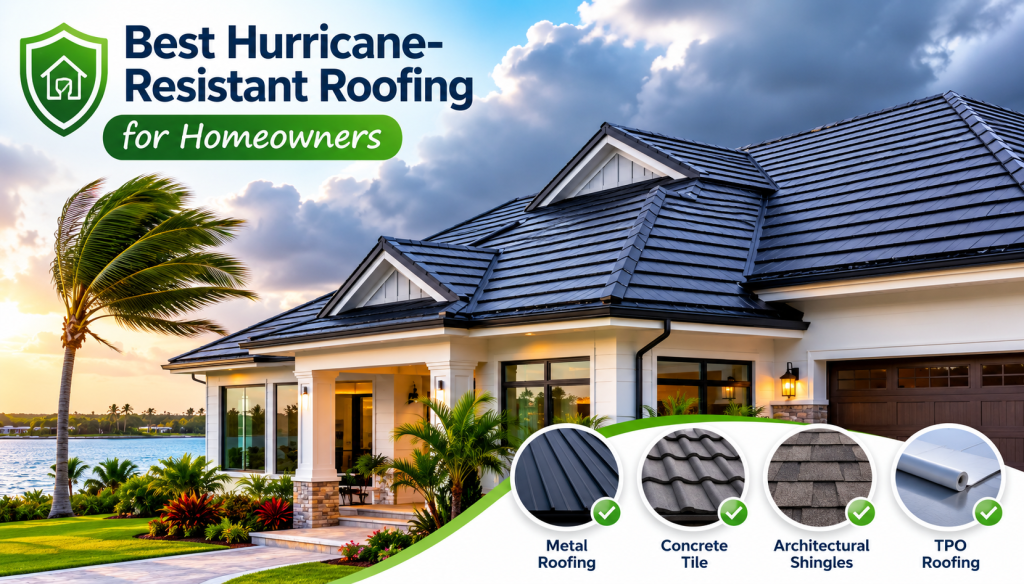
The most reliable roofing systems for hurricane-prone regions include metal roofing, impact-rated asphalt shingles, and properly installed tile roofs. Each option offers unique advantages depending on budget, climate conditions, and homeowner priorities.
| Roofing Material | Typical Lifespan | Wind Performance | Maintenance |
| Metal Roofing | 40–70 Years | Excellent | Low |
| Class 4 Asphalt Shingles | 20–40 Years | Very Good | Moderate |
| Concrete/Clay Tile | 50+ Years | Excellent* | Moderate |
*Performance depends heavily on proper installation and fastening methods.
Metal Roofing Systems and Hurricane Performance
Many coastal homeowners choose metal roofing for hurricanes because properly installed standing-seam metal panels can withstand extremely high wind speeds. Metal roofs are lightweight, durable, and resistant to moisture-related deterioration. They also shed rain efficiently and perform well in regions exposed to repeated tropical storms.
Class 4 Asphalt Shingles and Impact Protection
Among asphalt roofing products, Class 4 impact-resistant shingles provide the highest impact rating available for residential applications. These shingles are engineered to withstand debris strikes better than traditional products and may qualify homeowners for insurance discounts in some states. They also offer a familiar appearance while delivering enhanced storm protection.
Concrete and Clay Tile Roofing
Concrete and clay tiles remain popular in Florida and other coastal regions due to their longevity and resistance to harsh weather conditions. When installed according to manufacturer specifications and local code requirements, tile roofs can perform exceptionally well during hurricanes. However, because of their weight, homeowners should verify that the home’s structure is capable of supporting the roofing system before installation.
Hurricane-Resistant Roofing Features That Matter Most
Selecting quality materials is only part of the equation. The overall performance of hurricane-resistant roofing depends on how every component works together as a complete system. Even premium roofing materials can fail if the roof deck, fasteners, underlayment, and structural connections are not designed to handle extreme weather conditions. Modern roofing systems used in hurricane-prone regions often include reinforced roof decking, corrosion-resistant fasteners, enhanced edge protection, and high-performance underlayment products. These features help reduce wind uplift, improve water resistance, and strengthen the roof’s ability to withstand severe storms. Homeowners should evaluate roofing systems based on their complete assembly rather than focusing solely on the visible roofing material. A properly engineered roof system can significantly improve long-term durability and storm performance.
Why Roof-to-Wall Connections Are Critical
One of the most overlooked elements of hurricane-resistant roofing is the connection between the roof structure and the home’s walls. During a hurricane, powerful uplift forces attempt to separate the roof from the building. Reinforced connectors, hurricane straps, and properly installed fasteners help transfer these loads throughout the structure and reduce the likelihood of catastrophic failure.
Secondary Water Barriers and Leak Prevention
Even when roofing materials remain intact, wind-driven rain can penetrate vulnerable areas around flashing, vents, and roof penetrations. Secondary water barriers provide an additional layer of protection beneath the primary roofing material, helping prevent moisture from entering the home. Many building professionals consider these systems essential for storm-proof roofing because they offer valuable protection when the outer roofing layer experiences damage during a major storm event.
Choosing Hurricane-Resistant Roofing in Florida and Coastal States
Regional climate conditions play a major role in determining the best roofing solution. Homeowners along the Gulf Coast and Atlantic coastline must consider hurricane exposure, salt-air corrosion, heavy rainfall, and strict building code requirements when selecting hurricane-resistant roofing systems. Florida, in particular, has some of the most demanding roofing regulations in the United States. The state’s building code emphasizes wind resistance, roof attachment standards, and water intrusion protection to improve home resilience during major storms. As a result, many modern Florida roofing systems incorporate enhanced fastening methods, impact-rated materials, and upgraded underlayment assemblies. Working with experienced roofing contractors who understand local requirements is critical. Proper installation often has a greater impact on storm performance than the roofing material itself.
Florida Roofing Systems Built for Extreme Winds
Roofs installed in hurricane-prone areas must be capable of resisting uplift pressures generated by sustained high winds and powerful gusts. Many homeowners choose advanced roofing assemblies that combine reinforced decking, sealed roof decks, and upgraded fastening systems to meet modern code requirements and improve long-term protection.
Roofing for Coastal Homes Near Saltwater Exposure
When selecting roofing for coastal homes, homeowners should also consider material resistance to salt-air corrosion. Coastal environments can accelerate wear on fasteners, flashing, and metal components, reducing roof longevity if the wrong materials are used. Corrosion-resistant fasteners, high-quality coatings, and durable roofing materials can help extend service life while maintaining the performance expected from a well-designed hurricane-resistant roofing system.
Comparing Impact-Resistant Shingles vs Metal Roofing
For many homeowners, the decision often comes down to asphalt shingles or metal roofing. Both options can contribute to a strong hurricane-resistant roofing system when installed correctly, but they differ in cost, lifespan, maintenance requirements, and long-term performance. Many homeowners prefer impact-resistant shingles because they offer a traditional appearance, lower upfront costs, and improved protection against wind-borne debris compared to standard asphalt products. They are widely available and can provide an attractive balance between affordability and durability. Metal roofing, on the other hand, is frequently considered one of the most reliable forms of wind-resistant roofing due to its exceptional uplift resistance and long service life. Although initial installation costs are typically higher, many homeowners view metal roofing as a long-term investment that can reduce maintenance and replacement expenses.
| Feature | Impact-Rated Shingles | Metal Roofing |
| Upfront Cost | Lower | Higher |
| Lifespan | 20–40 Years | 40–70 Years |
| Wind Performance | Very Good | Excellent |
| Maintenance | Moderate | Low |
| Insurance Benefits | Possible Discounts | Possible Discounts |
| Coastal Durability | Good | Excellent (with proper coatings) |
The right choice depends on budget, local climate conditions, homeowner preferences, and the expected length of home ownership. Both systems can provide excellent protection when integrated into a properly designed roofing assembly.
How to Upgrade an Existing Roof for Better Hurricane Protection
Homeowners do not always need a complete roof replacement to improve storm resilience. In many cases, strategic upgrades can strengthen an existing roof and enhance the performance of a hurricane-resistant roofing system. The most effective improvements typically focus on structural reinforcement, fastening systems, water protection, and code compliance.
Professional roof inspections can help identify vulnerabilities before hurricane season arrives. Roofing contractors often recommend upgrades such as improved roof deck attachment, enhanced underlayment systems, stronger flashing details, and corrosion-resistant fasteners. These improvements can increase a roof’s ability to withstand severe weather while extending its overall service life. For older homes, investing in targeted upgrades may provide meaningful protection while postponing the cost of a full roof replacement.
Reinforcing Older Roof Structures
Many homes built decades ago were constructed under less demanding building codes. Strengthening roof-to-wall connections, replacing deteriorated decking, and upgrading fastening systems can significantly improve structural performance during high-wind events. Homeowners should also inspect attic spaces for signs of moisture damage, wood deterioration, or previous storm-related issues that could weaken roof performance.
When Full Roof Replacement Makes More Sense
While upgrades can improve protection, some roofing systems eventually reach the point where replacement becomes the more practical option. Aging materials, recurring leaks, extensive storm damage, or structural deterioration may limit the effectiveness of repairs. Installing a modern hurricane-resistant roofing system allows homeowners to benefit from updated materials, improved installation methods, and current building code requirements that are specifically designed to address today’s storm risks.
Cost of Hurricane-Resistant Roofing in 2026
The cost of a hurricane-resistant roofing system varies based on material selection, roof size, labor rates, and regional building code requirements. While premium roofing systems require a larger upfront investment, they often provide greater durability, lower maintenance costs, and improved storm protection over the long term. For a typical American home, upgraded asphalt roofing systems generally cost between $5 and $10 per square foot installed. Metal roofing systems commonly range from $9 to $18 per square foot, while concrete and clay tile roofs can exceed $12 to $25 per square foot depending on design complexity and structural requirements. Homeowners should evaluate roofing costs based on lifetime value rather than initial installation expenses alone. A roof that lasts decades longer and performs better during severe weather can often deliver a stronger return on investment.
| Roofing Type | Estimated Installed Cost (Per Sq. Ft.) | Typical Lifespan |
| Asphalt Roofing | $5–$10 | 20–40 Years |
| Metal Roofing | $9–$18 | 40–70 Years |
| Concrete Tile | $12–$25+ | 50+ Years |
| Clay Tile | $15–$30+ | 50+ Years |
Insurance savings can also contribute to long-term value. In some hurricane-prone regions, homeowners may qualify for premium reductions when installing roofing systems that meet specific wind and impact resistance standards. Combined with improved resale appeal and reduced storm-related repair expenses, a high-quality roofing system can become one of the most valuable exterior upgrades a homeowner makes.
Conclusion
Choosing the right hurricane-resistant roofing system is one of the most important decisions homeowners in storm-prone regions can make. A well-designed roof does more than protect against wind and rain—it helps safeguard the entire structure, reduces the risk of costly repairs, and supports long-term property value. From reinforced roof assemblies and modern fastening systems to durable roofing materials and code-compliant installation practices, every component contributes to overall storm performance. Homeowners in Florida, the Gulf Coast, and other hurricane-prone areas should prioritize roofing solutions that address both wind uplift and water intrusion risks. While upfront costs may be higher for premium systems, the long-term benefits often include improved durability, potential insurance savings, reduced maintenance expenses, and greater peace of mind during hurricane season. Investing in quality roofing today can help protect your home for decades to come.
Frequently Asked Questions
What is the best roofing material for hurricanes?
There is no single roofing material that works best for every home. Metal roofing, impact-rated asphalt shingles, and properly installed concrete or clay tile roofs are among the strongest options for hurricane-prone regions. The best choice depends on budget, local building codes, maintenance expectations, and climate conditions.
Are metal roofs better than shingles during hurricanes?
Metal roofs generally provide superior wind resistance and longer service life compared to traditional asphalt shingles. However, modern impact-rated shingles can also perform exceptionally well when installed according to manufacturer specifications and local code requirements.
What wind speed can a hurricane-resistant roof withstand?
Performance varies by roofing system, installation method, and local code standards. Many modern roofing systems used in coastal regions are designed to withstand wind speeds exceeding 130 mph, while some advanced systems are rated for even higher wind conditions.
Do insurance companies offer discounts for impact-resistant roofs?
In some states, homeowners may qualify for insurance discounts when installing qualifying roofing products that meet specific impact-resistance or wind-resistance standards. Requirements vary by insurer and location, so homeowners should verify eligibility directly with their insurance provider.
Is hurricane-resistant roofing required in Florida?
Florida building codes require roofing systems to meet strict wind-resistance standards, particularly in coastal and high-velocity hurricane zones. While specific requirements depend on location, modern roofing installations must comply with state and local code regulations designed to improve storm resilience.