


Ultimate Ice Dam Damage Explained For US Homes
Ice dams are one of the most common cold-weather roofing problems faced by homeowners across northern parts of the United States. From Minnesota and Wisconsin to Maine and Colorado, heavy snowfall combined with fluctuating winter temperatures can create conditions that lead to serious roof-related issues. While many homeowners view ice buildup along roof edges as a seasonal nuisance, the consequences can be far more expensive than they appear. Ice dam damage occurs when melted snow refreezes near the roof’s edge, creating a barrier that prevents proper drainage.
As water becomes trapped behind the ice, it can seep beneath shingles, penetrate roof decking, and eventually enter the home’s interior. Over time, this moisture intrusion can affect insulation, ceilings, walls, and even structural components. Understanding how this winter roofing problem develops is the first step toward protecting your home. In this guide, we’ll explain the causes, warning signs, repair costs, and prevention strategies that every homeowner should know before winter weather takes a toll on their property.
What Is Ice Dam Damage?
When snow melts on a warm roof and refreezes near the eaves, it can create a barrier that prevents proper drainage. The trapped water may back up beneath shingles and penetrate vulnerable areas of the roofing system. Over time, this moisture intrusion can affect roof decking, insulation, interior finishes, and other structural components throughout the home.
How Roof Ice Dams Form
Most roof ice dams develop when heat escapes from the living space into the attic. The warmer roof surface causes snow to melt, even when outdoor temperatures remain below freezing. As the meltwater flows toward colder roof edges, it refreezes and gradually forms an ice barrier. With nowhere else to go, additional water accumulates behind the dam and increases the likelihood of ice dam damage throughout the roofing system.
Why Ice Dams Are Common in Northern States
Homes in states such as Minnesota, Michigan, Wisconsin, and Maine experience long winters, frequent snowfall, and repeated freeze-thaw cycles. These conditions create an ideal environment for ice dams to develop. Large snow accumulations combined with temperature differences across the roof can trigger ongoing melting and refreezing, placing continuous stress on roofing materials and increasing the risk of moisture intrusion during winter months.
Common Signs of Ice Dam Damage
Recognizing ice dam damage early can help homeowners avoid costly repairs and extensive moisture-related problems. While some warning signs are easy to spot from inside the house, others may appear on the roof exterior after snow and ice begin to accumulate. Paying attention to these indicators can help prevent minor issues from turning into major restoration projects.
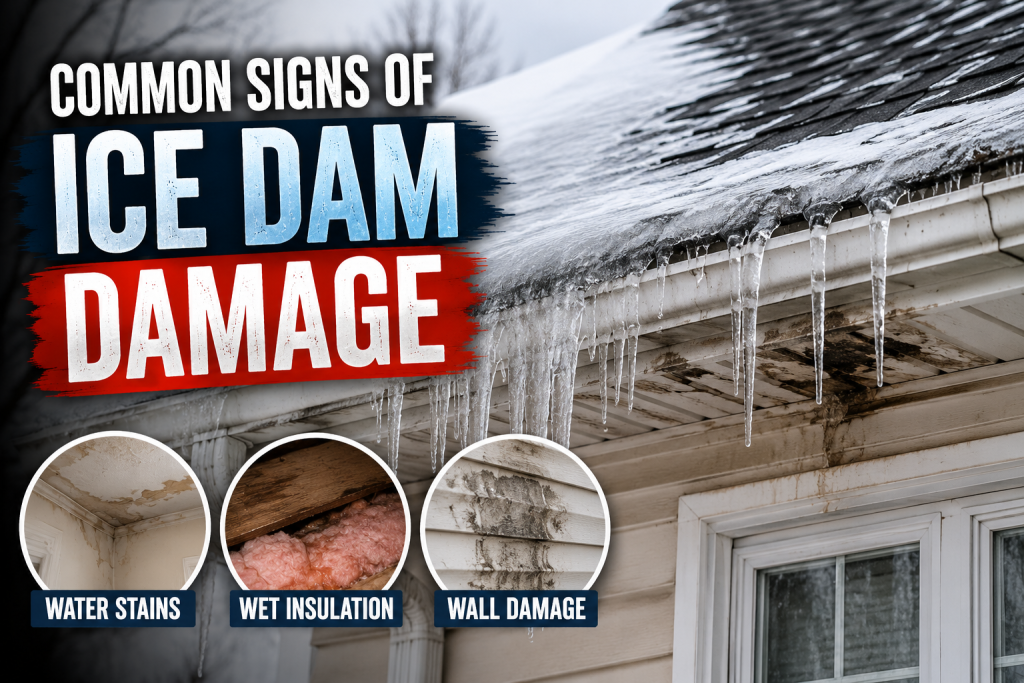
Interior Water Stains
One of the earliest signs of ice dam damage is discoloration on ceilings or walls. As trapped water works its way beneath roofing materials, it may leak into attics and living spaces. Homeowners often notice yellow or brown stains, peeling paint, damp insulation, or musty odors. In severe cases, water damage from ice dams can lead to mold growth and deterioration of drywall, creating both structural and indoor air quality concerns.
Damaged Gutters and Roofing Materials
Excessive ice buildup can place significant weight on gutters and roof edges. Over time, ice dam damage may loosen shingles, bend flashing, separate gutters from the fascia, or damage roof decking. Homeowners may also notice cracked shingles or signs of winter roof damage after the snow melts. These exterior warning signs should never be ignored, as they often indicate underlying moisture problems that require prompt attention.
How Ice Dam Damage Affects Your Home
The impact of ice dams extends far beyond a few roof leaks. When water repeatedly enters a home during winter, it can affect structural components, reduce energy efficiency, and increase long-term maintenance costs. The longer the problem remains unresolved, the greater the potential for widespread deterioration throughout the property.
Structural Risks to Roof Systems
Persistent ice dam damage can weaken critical roofing components over time. Moisture trapped beneath shingles may cause roof decking to rot, while repeated freeze-thaw cycles can accelerate material deterioration. In severe cases, water infiltration may compromise fascia boards, soffits, and other structural elements that support the roof assembly. Homeowners dealing with significant snow accumulation should also monitor for snow roof damage, especially when heavy snow and ice remain on the roof for extended periods.
Long-Term Interior Consequences
Beyond the roof itself, moisture intrusion can affect insulation, ceilings, wall cavities, and wood framing. Water entering the home often reduces insulation performance, leading to higher heating costs during winter. If moisture remains trapped inside building materials, mold growth and wood decay can develop over time. These hidden problems may continue worsening long after the visible ice has disappeared, making early detection and repair especially important for protecting home value.
What Causes Ice Dam Damage?
Understanding the root causes of ice dams is essential for developing an effective prevention strategy. Although snow and freezing temperatures contribute to the problem, the underlying issue is usually uneven roof temperatures. When portions of the roof remain warm while roof edges stay below freezing, snow melts and refreezes in a continuous cycle that encourages ice dam formation.
Attic Insulation Problems
Many cases of ice dam damage can be traced to attic insulation problems. Insufficient or poorly installed insulation allows heat from living spaces to escape into the attic. As the roof surface warms, snow begins to melt even during cold weather. The resulting meltwater travels downward until it reaches colder roof edges, where it refreezes and creates conditions that support ice dam formation. Proper insulation helps maintain a more consistent roof temperature and reduces unnecessary heat loss.
Roof Ventilation Issues
In addition to insulation concerns, roof ventilation issues often play a major role in the development of ice dam damage. A properly ventilated attic allows cold outdoor air to circulate beneath the roof deck, helping maintain uniform temperatures across the roof surface. Without adequate airflow from soffit and ridge vents, warm air becomes trapped inside the attic, increasing the likelihood of snowmelt and refreezing. Addressing ventilation deficiencies can significantly reduce the conditions that contribute to recurring ice dam problems.
How to Prevent Ice Dam Damage
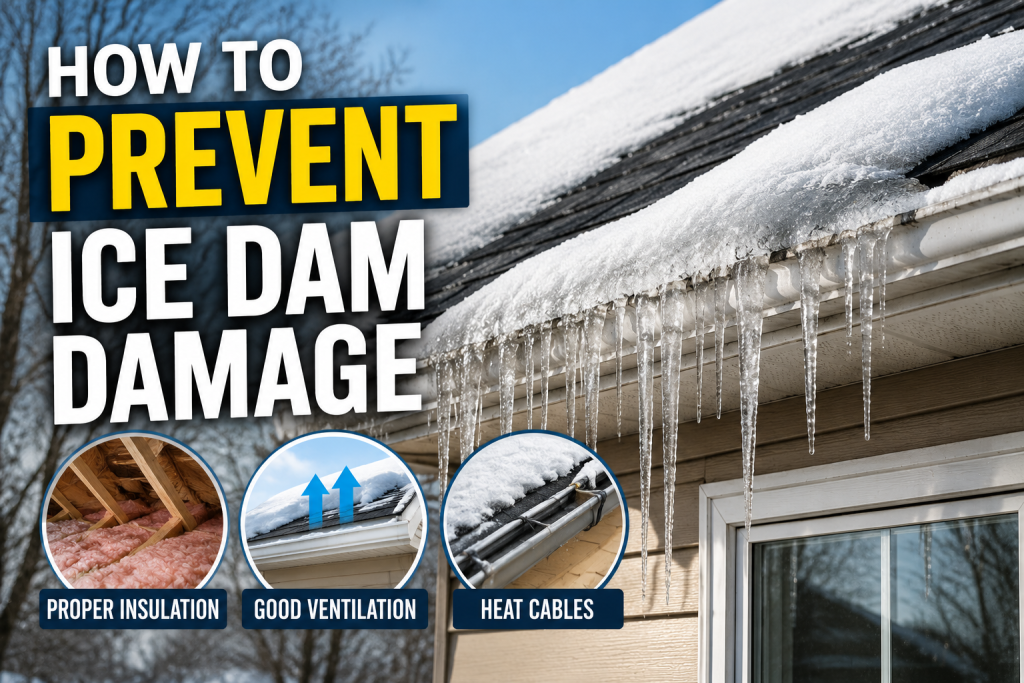
Preventing ice dams starts with addressing the factors that contribute to their formation. Proper attic insulation, balanced roof ventilation, and regular winter maintenance can help reduce the risk of moisture intrusion and roofing problems. For most homeowners, investing in preventative measures is significantly more affordable than dealing with extensive roof and interior repairs later on.
Improve Attic Insulation
Adequate attic insulation helps maintain a consistent roof temperature by reducing heat transfer from the living space below. Homeowners in cold-weather states should ensure insulation levels meet current energy-efficiency recommendations from the U.S. Department of Energy and ENERGY STAR. Improving insulation performance is one of the most reliable methods for preventing ice dams and reducing winter heat loss.
Improve Roof Ventilation
Proper roof ventilation helps maintain consistent temperatures across the roof by allowing cold outdoor air to circulate beneath the roof deck. Continuous airflow through soffit and ridge vents can reduce excessive snowmelt and limit the freeze-thaw cycle that leads to ice dams. When paired with adequate insulation, a well-ventilated attic supports better energy efficiency, roof longevity, and overall home protection.
Snow Removal Best Practices
Removing excess snow from the lower sections of the roof can help minimize the conditions that lead to ice dams during severe winter weather. Many homeowners use roof rakes with extended handles to safely clear snow while remaining on the ground. Because icy roof surfaces present significant fall hazards, climbing onto the roof is generally not recommended. For persistent ice buildup or heavy snow accumulation, a professional roofing contractor can provide a safer and more effective solution.
Homeowner Ice Dam Prevention Checklist
Reducing the likelihood of ice dam damage requires a proactive approach before winter arrives. Use the following checklist to help protect your home:
- Inspect attic insulation for gaps or compressed areas.
- Seal air leaks around light fixtures, plumbing penetrations, and attic access points.
- Verify that soffit and ridge vents remain unobstructed.
- Clean gutters and downspouts before snowfall begins.
- Remove excessive snow accumulation when conditions allow.
- Schedule annual roof inspections to identify potential vulnerabilities.
- Address minor roof leaks before freezing temperatures arrive.
By following these preventive measures, homeowners can minimize the likelihood of ice dam formation, reduce costly winter repairs, and help extend the lifespan of their roofing system.
When to Call a Roofing Professional
While some homeowners can manage minor maintenance tasks, professional assistance is often necessary when ice dam damage becomes severe. Water stains on ceilings, recurring leaks, sagging roof sections, damaged shingles, or visible rot may indicate underlying problems that require expert evaluation. A qualified roofing contractor can identify hidden moisture issues, assess structural conditions, and recommend appropriate repairs before the damage spreads further. Homeowners in snow-prone states such as Minnesota, Wisconsin, Michigan, Maine, and Colorado can benefit from routine roof inspections. Regular evaluations help identify insulation deficiencies, ventilation concerns, and other conditions that contribute to ice dams before they lead to costly roofing problems.
Conclusion
In conclusion, ice dam damage is a significant issue that can compromise the structural integrity, energy efficiency, and longevity of a building. When ice dams prevent melting snow from draining properly, water can seep beneath roofing materials, causing leaks, insulation damage, mold growth, and costly repairs. Regular roof maintenance, proper attic insulation, and adequate ventilation are essential preventive measures that reduce the risk of ice dam formation. By identifying potential problems early and implementing effective prevention strategies, homeowners and property managers can protect their buildings from extensive damage and minimize long-term maintenance expenses.
Frequently Asked Questions
Can ice dam damage cause roof leaks?
Yes. One of the most common consequences of ice dam damage is water intrusion beneath shingles. As water backs up behind an ice dam, it can enter the roof system and eventually reach ceilings, walls, and insulation.
Does homeowners insurance cover ice dam damage?
Coverage depends on the policy and the cause of the damage. Many insurance providers may cover sudden water-related losses, but damage resulting from neglected maintenance may be excluded. Homeowners should review their policy details and consult their insurance carrier for clarification.
How much does it cost to repair ice dam damage?
Repair costs vary based on the extent of the problem. Minor repairs may involve replacing damaged shingles or insulation, while severe ice dam damage can require roof decking replacement, interior restoration, mold remediation, and structural repairs.
What is the best long-term solution?
The most effective long-term strategy is maintaining proper attic insulation, balanced ventilation, and regular roof maintenance. These measures help create consistent roof temperatures and reduce the conditions that contribute to ongoing ice dam damage.