


James Hardie vs LP SmartSide siding: Which one is better?
Choosing replacement siding is one of the biggest exterior decisions a homeowner can make because it affects curb appeal, maintenance costs, durability, and long-term home value. Two of the most recognized names in the market are James Hardie and LP SmartSide, but they use very different materials and deliver different ownership experiences. In this James Hardie vs LP SmartSide comparison, we’ll break down how each product performs in real-world American conditions—from humid Gulf Coast climates to Midwest freeze-thaw cycles and hot Southern summers. While both products sit in the premium siding category, the better option depends on your priorities: lower maintenance, installation cost, weather resistance, appearance, and expected lifespan. This guide is built to help US homeowners compare performance—not marketing claims—before committing to a siding investment.
James Hardie vs LP SmartSide: Quick Comparison
At a high level, both siding systems target homeowners who want stronger long-term performance than traditional vinyl siding, but the materials and ownership experience differ.
| Category | James Hardie | LP SmartSide |
| Material | Fiber cement | Engineered wood |
| Typical Appearance | Clean painted finish | More natural wood texture |
| Weight | Heavier | Lighter |
| Installation | More labor-intensive | Faster installation |
| Moisture Resistance | Very strong | Good with proper maintenance |
| Impact Resistance | Strong | Strong |
| Maintenance | Lower | Moderate |
| Best Regions | Humid, coastal, storm-prone | Mixed climates, remodel projects |
In most James Hardie vs LP SmartSide homeowner comparisons, fiber cement is chosen for durability and lower maintenance expectations, while engineered wood often appeals to buyers prioritizing installation flexibility and a warmer exterior appearance.
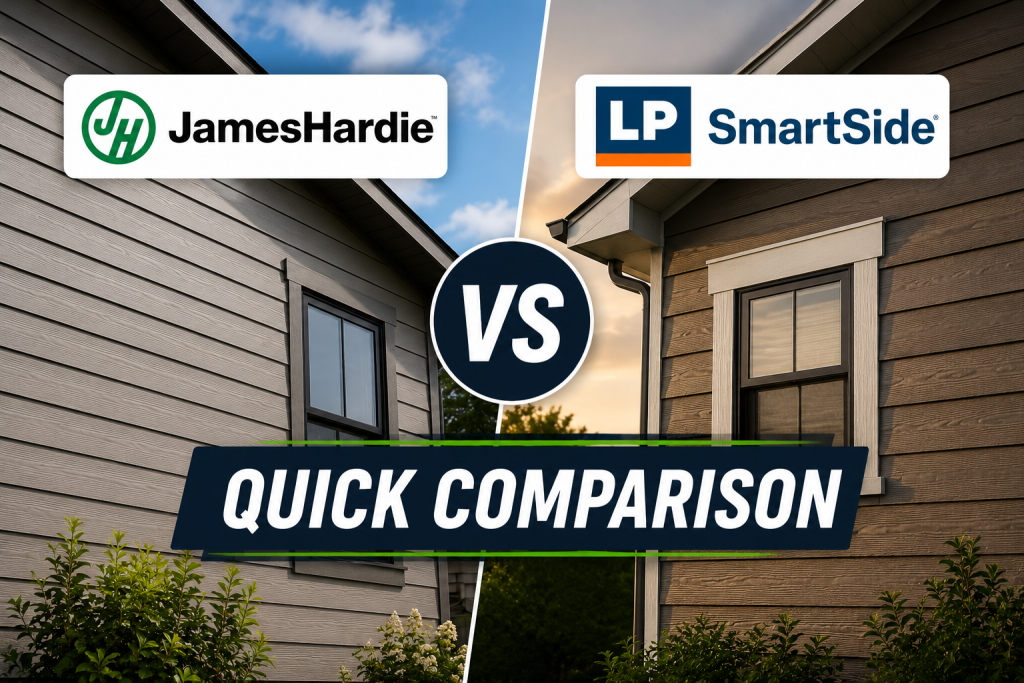
The better value depends less on brand preference and more on climate, labor pricing, and how long you expect to stay in the home.
What Is James Hardie Siding?
James Hardie siding is a fiber cement product designed for homeowners who want strong weather resistance with lower long-term upkeep. It combines cement, sand, and cellulose fibers to create panels that are built to handle moisture, temperature swings, and daily exposure better than many traditional siding materials. For homeowners researching fiber cement vs engineered wood siding, the biggest distinction is composition. Fiber cement does not rely on wood fibers for structural performance, which makes it especially attractive in humid regions and areas exposed to seasonal weather cycles.
How Fiber Cement Performs in Humid and Storm-Prone Regions
Fiber cement siding has become popular across states such as Florida, Texas, and parts of the Southeast because of its ability to maintain appearance under heat, humidity, and heavy rain. It also offers strong dimensional stability during seasonal expansion and contraction.
Where James Hardie Makes the Most Sense
A practical James Hardie siding review usually highlights homeowners focused on long ownership periods, lower repaint frequency, curb appeal, and exterior durability. It is often selected for higher-end exterior remodels where maintenance reduction matters as much as appearance.
What Is LP SmartSide and Why Homeowners Consider It?
LP SmartSide is an engineered wood siding product created for homeowners who want the appearance of traditional wood with improved durability and easier handling during installation. In the James Hardie vs LP SmartSide discussion, LP SmartSide is often recognized for its lighter weight and simplified installation process. When evaluating an engineered wood siding comparison, many homeowners are attracted to the balance of appearance, moisture resistance, and potentially lower installation labor compared with heavier siding materials.
How Engineered Wood Construction Works
Unlike solid wood siding, engineered wood products are manufactured to improve consistency and reduce common issues such as movement and surface instability. The lighter panel weight can also simplify installation on remodel projects.
Best Use Cases for LP SmartSide
A balanced LP SmartSide review often points to homeowners who want a more natural wood-style exterior without moving into premium cedar pricing. It is commonly considered for suburban renovations, exterior upgrades, and projects where installation speed matters alongside curb appeal.
James Hardie vs LP SmartSide: Durability, Weather, and Maintenance
Durability is where many homeowners narrow their decision. In a practical James Hardie vs LP SmartSide evaluation, performance depends on local climate, maintenance expectations, and how long the siding is expected to remain in place. For a meaningful siding durability comparison, fiber cement generally stands out for moisture resistance and long-term stability in humid and storm-exposed environments. Engineered wood, however, can offer strong impact performance while reducing installation complexity because of its lighter construction.
Impact Resistance and Moisture Performance
Homes in regions with frequent humidity, heavy rain, or temperature swings often prioritize resistance to expansion and moisture-related wear. Material selection becomes especially important for preserving curb appeal and reducing future exterior work.
Expected Lifespan and Ownership Costs
Long-term value is influenced by repaint cycles, maintenance requirements, repair frequency, and labor availability. Homeowners planning to stay in a property for many years often evaluate lifetime ownership costs rather than installation price alone.
Installation Cost and Long-Term Value
Material pricing tells only part of the story. For most US homeowners, total siding investment includes labor, trim work, disposal, repainting expectations, and future maintenance requirements. In a typical James Hardie vs LP SmartSide decision process, installation costs can vary because fiber cement products are heavier and usually require more cutting and handling time. Engineered wood products are lighter, which may reduce labor hours depending on the contractor and project complexity.
Long-term value should also include ownership considerations such as energy performance, curb appeal, insurance factors, and resale potential. A siding system with a higher upfront cost can still create stronger value if it lowers maintenance expenses over time. Before choosing, homeowners should compare total ownership cost over 20–30 years instead of focusing only on installation quotes.
Warranty Comparison
Warranty coverage matters because siding is a long-term exterior investment, and homeowners want confidence that the manufacturer stands behind the product over time. When doing a siding warranty comparison, homeowners should look beyond the number of years listed in marketing materials. Coverage limitations, transferability, finish protection, installation requirements, and exclusions often have a bigger impact than the headline warranty term.
In the James Hardie vs LP SmartSide comparison, James Hardie is commonly selected by homeowners who prioritize lower-maintenance ownership and structured manufacturer support. LP SmartSide often appeals to buyers looking for a combination of appearance flexibility and long-term coverage expectations. Before signing a contract, ask the installer for written details covering labor responsibilities, registration requirements, repaint obligations, and how warranty claims are handled after installation. Reviewing these details upfront can help avoid unexpected costs later.
Which Exterior Siding Brand Is Better for Your Home?
There is no universal winner because the right choice depends on climate, ownership goals, maintenance expectations, and budget. Among premium exterior siding brands, James Hardie is often a stronger fit for homeowners prioritizing lower maintenance, long-term durability, and performance in humid or storm-prone environments. It can make sense in places such as Florida, the Gulf Coast, and areas that experience frequent weather exposure.
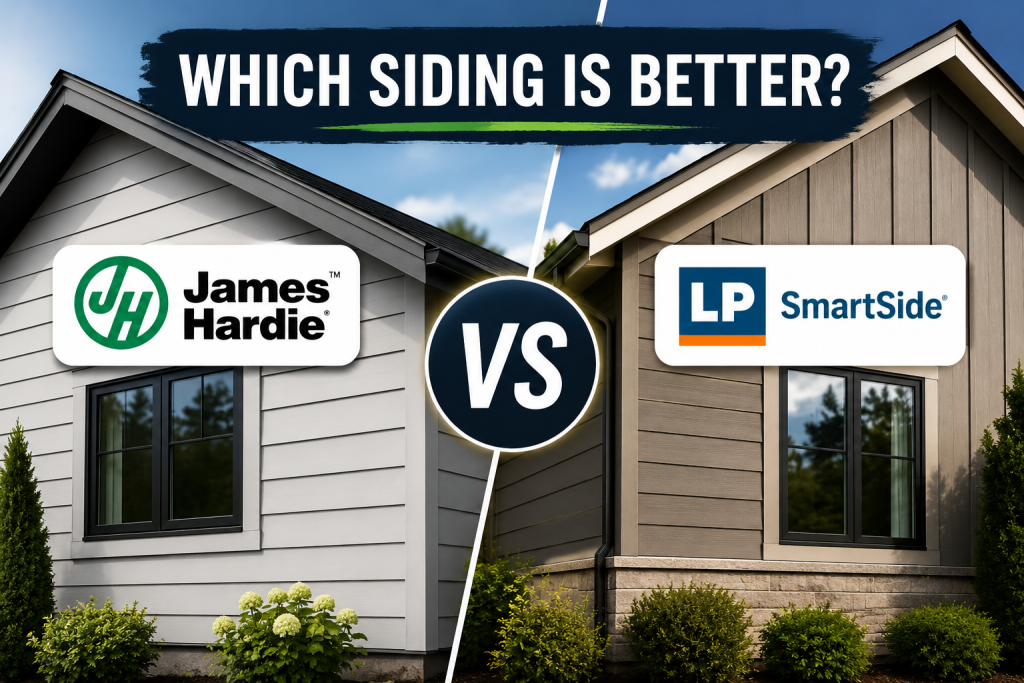
LP SmartSide may be a better match for homeowners who want a wood-inspired appearance, lighter materials, and potentially faster installation timelines. It can work well for remodel projects and regions with more moderate climate conditions. If your goal is minimizing maintenance over decades, fiber cement often deserves serious consideration. If appearance flexibility and installation efficiency matter more, engineered wood may deliver stronger overall value. The best siding decision is the one that matches your local conditions and long-term ownership plans.
Conclusion
Choosing between these two siding systems ultimately comes down to your climate, ownership timeline, maintenance expectations, and renovation goals. In the James Hardie vs LP SmartSide decision, homeowners planning long-term ownership and prioritizing durability often lean toward fiber cement because of its stability and lower maintenance profile. Homeowners who prefer a wood-inspired appearance and easier installation may find engineered wood to be the better fit. Before making a final decision, compare contractor experience, written warranty terms, expected maintenance costs, and how each siding option is expected to perform in your local environment over the next several decades.
Frequently Asked Questions
In James Hardie vs LP SmartSide, Which Option Is More Affordable?
In a typical James Hardie vs LP SmartSide project comparison, LP SmartSide can sometimes have lower installation costs because the material is lighter and may require less labor time. However, total project pricing varies based on region, trim complexity, contractor rates, project scope, and long-term maintenance expectations. Homeowners should compare total ownership cost rather than choosing based only on upfront installation pricing.
Which siding lasts longer?
Lifespan depends on climate exposure, installation quality, and maintenance practices. Fiber cement is often selected by homeowners focused on long-term weather resistance and reduced upkeep over time.
Does engineered wood require more maintenance?
Maintenance requirements depend on local conditions and finish quality. Engineered wood products may benefit from periodic inspections and proper moisture management to maintain long-term performance.
What adds more resale value?
Resale value is usually influenced by curb appeal, neighborhood standards, exterior condition, and perceived maintenance burden. Well-installed premium siding can improve buyer confidence regardless of material type.