

LED vs Halogen Outdoor Lighting: Which Option Makes More Sense for Modern Homes?
Outdoor lighting does more than illuminate a driveway or backyard, it affects curb appeal, safety, energy costs, and long-term maintenance. For many American homeowners, upgrading exterior lighting has become part of broader home improvement goals focused on efficiency and property value. The debate around LED vs halogen outdoor lighting has grown as older systems reach replacement age and utility costs continue to matter more in renovation decisions. While halogen fixtures were once a popular choice for landscape accents and exterior flood lighting, newer LED systems have changed homeowner expectations for performance and operating costs.
Today’s lighting decisions are no longer based only on brightness. Homeowners often compare lifespan, heat output, maintenance frequency, and seasonal durability before choosing a system. Regional conditions also play a role, what performs well in humid Florida may not be the same choice homeowners prefer in Arizona or the Midwest. In this guide, we’ll compare both technologies across efficiency, performance, cost, and practical outdoor use cases so you can choose the option that fits your home and long-term goals.
Understanding LED and Halogen Outdoor Lighting
Before comparing performance and cost, it helps to understand how these two lighting systems actually produce light.
How LED Technology Works
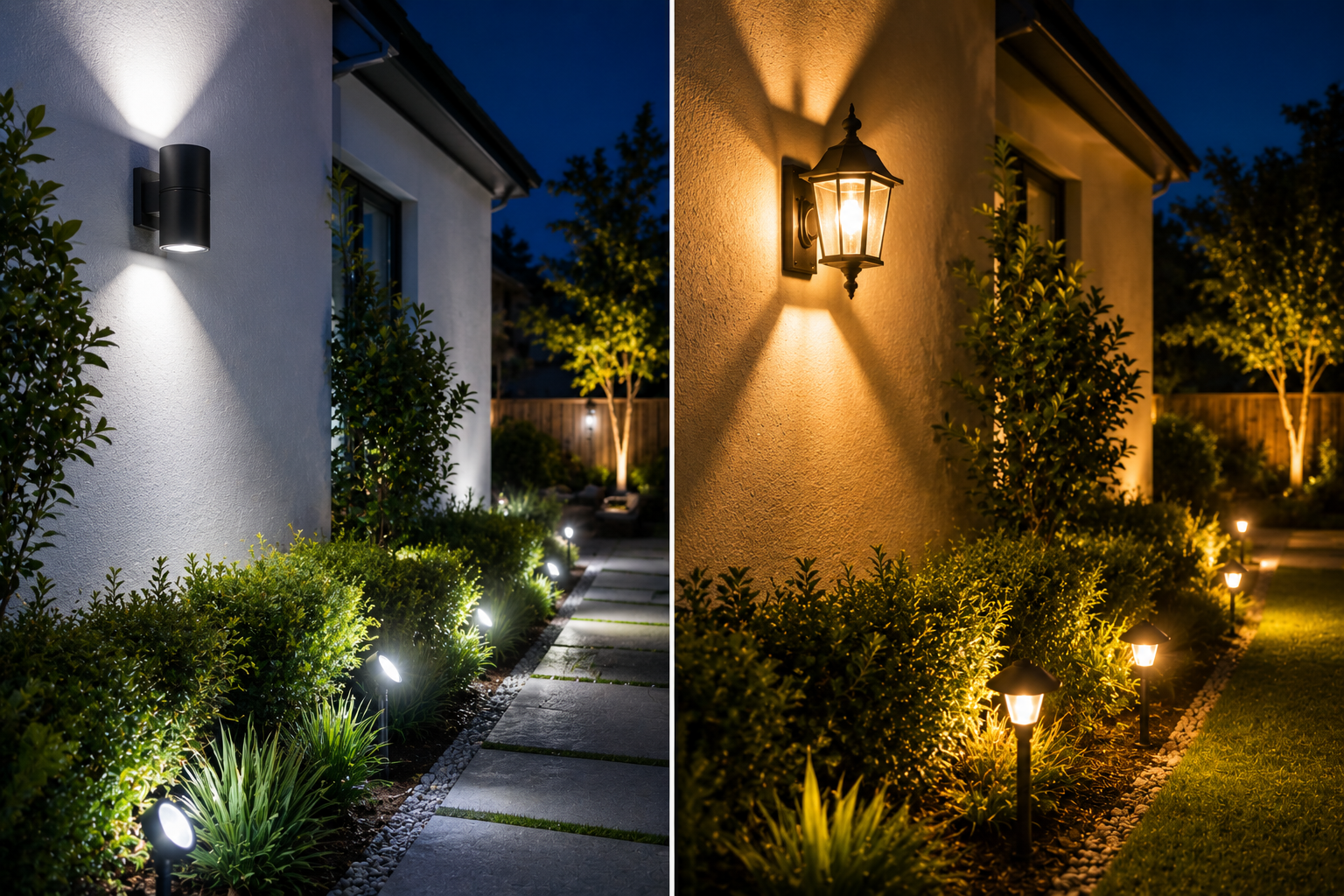
LED (light-emitting diode) fixtures generate light through semiconductor technology rather than heating a filament. Because less energy is wasted as heat, LEDs operate cooler and use significantly less electricity over time. This is one reason many homeowners upgrading exterior spaces choose LED landscape lighting for pathways, patios, and architectural accents.
LED systems also offer greater flexibility in brightness levels, beam spread, and color temperature options. When evaluating LED vs halogen outdoor lighting, many homeowners appreciate that LEDs can maintain consistent illumination with lower maintenance demands. Whether illuminating a front walkway or highlighting landscaping around a 2,500-square-foot home, LED fixtures provide reliable performance and greater lighting control.
How Halogen Lighting Differs
Halogen lighting is an improved version of traditional incandescent technology. It produces light by heating a tungsten filament enclosed in halogen gas. This process creates a warm appearance many homeowners still associate with classic outdoor lighting design. However, halogen landscape lights generate noticeably more heat and generally require more frequent bulb replacement. They remain common in older exterior setups and some accent applications where homeowners prioritize familiar color characteristics over long-term efficiency. Understanding these operating differences creates the foundation for evaluating which option delivers better value outdoors.
LED vs Halogen Outdoor Lighting: Side-by-Side Comparison
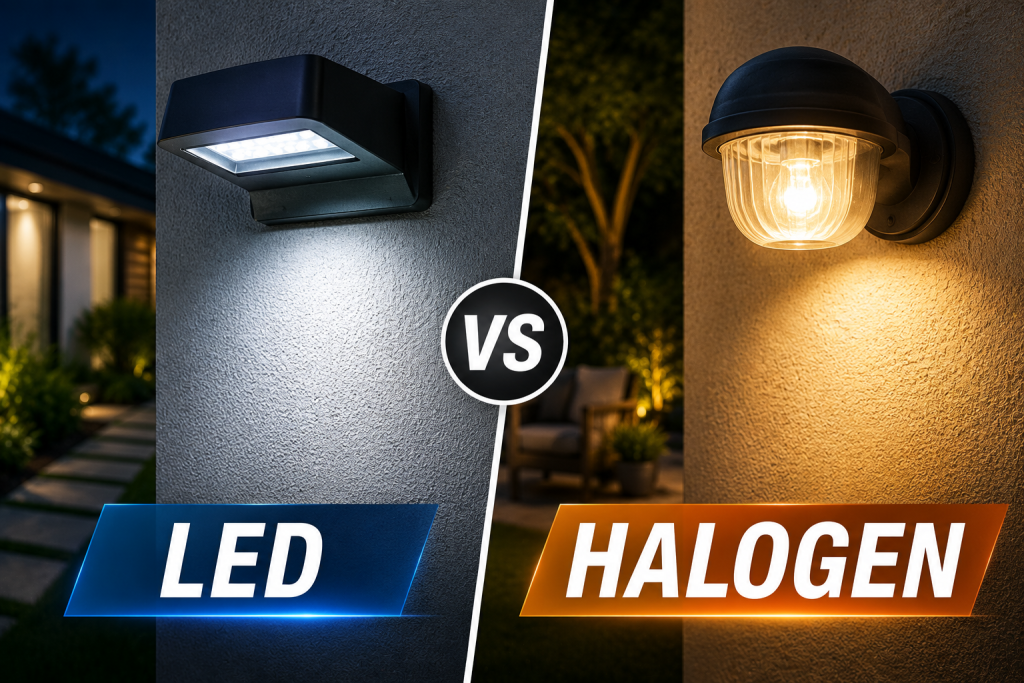
Choosing between LED and halogen usually comes down to total ownership value rather than initial purchase price. While halogen fixtures may cost less upfront, long-term performance often changes the equation.
| Factor | LED | Halogen |
| Upfront Cost | Higher initial investment | Lower purchase cost |
| Lifespan | Typically tens of thousands of hours | Shorter replacement cycle |
| Energy Consumption | Low | Higher |
| Heat Output | Minimal | High |
| Maintenance | Less frequent | More frequent bulb changes |
| Outdoor Durability | Strong for year-round use | More affected by operating conditions |
| Long-Term Cost | Lower over time | Higher over time |
From a homeowner perspective, the biggest difference is operating efficiency. Modern LED systems convert more electricity into usable light instead of heat, making them a practical upgrade for homes focused on lowering utility expenses. When making an outdoor bulb comparison, it also helps to consider maintenance habits. In the broader decision between LED vs halogen outdoor lighting, homeowners replacing multiple exterior fixtures around a yard, driveway, or entry area may notice the convenience advantage of fewer replacements and lower long-term upkeep over several years. For homeowners planning renovations with resale value in mind, efficient exterior upgrades can also support better curb appeal and reduced ongoing ownership costs.
Energy Efficiency and Operating Costs
For most homeowners, long-term operating cost becomes the deciding factor once installation is complete. Exterior lights often run for several hours each night, which means even small efficiency differences can affect annual utility expenses. This is where LED vs halogen outdoor lighting becomes easier to evaluate. LED fixtures typically require substantially less electricity to produce comparable brightness levels, helping reduce energy consumption across driveways, walkways, patios, and security zones. Homeowners focused on energy-efficient outdoor lighting often look beyond monthly bills and consider maintenance savings as well. Fewer bulb replacements mean less time servicing fixtures and fewer recurring purchases over the life of the system.
Flood lighting is another area where efficiency matters. Homes using LED flood lights for garages, backyards, or perimeter lighting generally benefit from lower heat output and more consistent operation during extended evening use. In comparison, halogen flood lights can consume more power and create additional heat during long operating cycles. For households planning exterior upgrades with long-term value in mind, efficiency improvements frequently become one of the fastest ways to reduce ownership costs without sacrificing appearance or visibility.
LED vs Halogen Outdoor Lighting: Performance for Landscape and Flood Lighting Applications
Outdoor lighting performance is not just about brightness, it also depends on placement, beam control, durability, and how the space is used throughout the year.
Landscape Lighting Applications
Landscape lighting is often designed to improve curb appeal while creating safer outdoor movement after dark. Homeowners illuminating garden beds, pathways, retaining walls, or front entries typically prioritize even coverage and consistent output. In these situations, LED landscape lighting has become a common choice because it supports longer operating hours with less maintenance. Within the broader comparison of LED vs halogen outdoor lighting, LEDs also offer more flexible beam control that helps reduce overly bright areas while maintaining visibility around pathways, landscaping features, and architectural details. By comparison, halogen landscape lights may still appeal to homeowners who prefer a warmer traditional appearance for accent features or mature landscaping.
Flood Lighting Applications
Flood lighting serves a different purpose, coverage, visibility, and security. Driveways, garages, side yards, and backyard gathering spaces often require wider light distribution. This is where outdoor lighting efficiency becomes more noticeable. Fixtures that operate several hours each evening benefit from lower energy demand and reduced heat generation. Homes in warmer states such as Texas or Arizona may especially value lighting systems that maintain performance without adding unnecessary heat near exterior surfaces. Matching fixture type to the intended outdoor application usually produces better results than choosing based only on upfront cost.
Which Lighting Performs Better Across US Climate Regions?
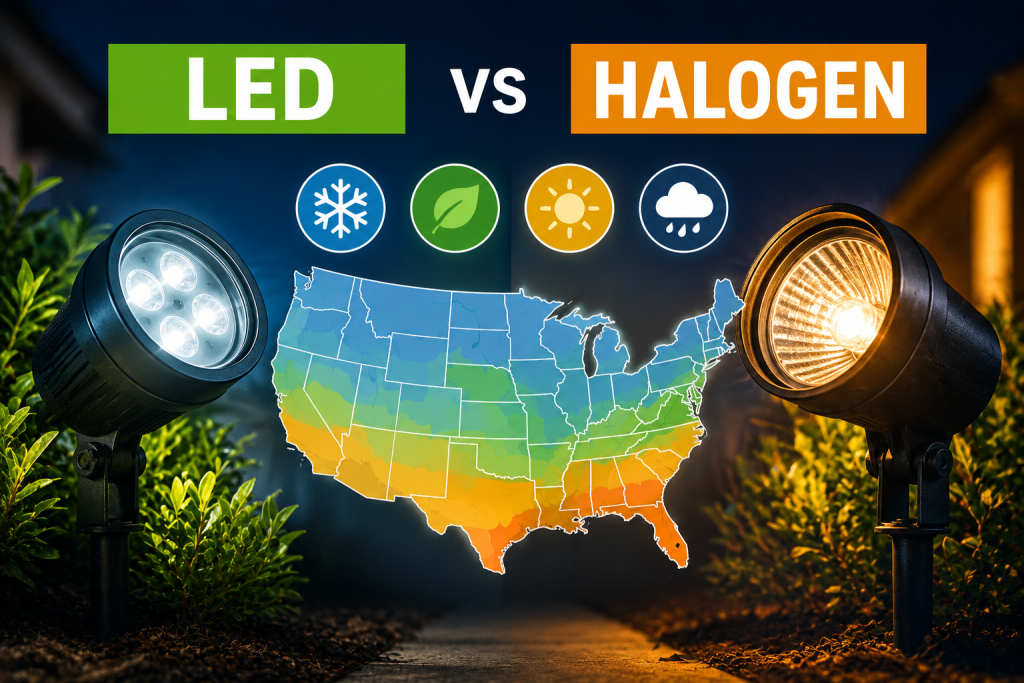
Outdoor lighting performance can vary significantly depending on climate. When evaluating LED vs halogen outdoor lighting, temperature swings, humidity, precipitation, and seasonal operating patterns all influence how well fixtures hold up over time. In humid Southern states such as Florida and Louisiana, moisture resistance becomes a major consideration. Lighting systems that produce less heat and maintain stable operation often require fewer maintenance visits and reduce the likelihood of early component wear. In hot regions including Texas, Arizona, and parts of Southern California, long evening use and high summer temperatures can place additional stress on exterior fixtures. Cooler operating systems tend to perform more consistently and place less thermal strain on surrounding materials.
Snow-heavy regions across the Midwest and Northeast create different challenges. Freeze-thaw cycles, snow accumulation, and seasonal exposure increase the value of durable lighting systems that require fewer bulb changes during colder months. Coastal environments introduce salt exposure and higher moisture levels, making fixture construction and long-term reliability especially important. Homeowners evaluating LED vs halogen outdoor lighting should think beyond brightness alone and consider local climate conditions, maintenance expectations, and long-term operating demands. Selecting lighting that aligns with regional weather patterns often leads to lower ownership costs and a more dependable outdoor setup.
When Halogen Still Makes Sense
Although LED systems dominate most modern exterior upgrades, halogen lighting still has situations where it can be a reasonable choice for homeowners. One of the biggest reasons people continue using halogen is appearance. Halogen bulbs are known for producing a warm, familiar glow that some homeowners prefer for traditional architecture, mature landscaping, or older outdoor fixture designs. Halogen may also make sense for smaller projects with limited usage hours. If a homeowner is updating a decorative accent area, seasonal entertaining space, or a section of the yard that operates only occasionally, the lower upfront cost can feel more practical than a full system conversion. Existing compatibility is another consideration.
Some older outdoor fixtures were originally designed around halogen performance characteristics, and replacing only the bulb may seem simpler during short-term ownership. When considering LED vs halogen outdoor lighting, homeowners with existing systems often weigh the convenience of keeping current fixtures against the long-term benefits of upgrading. That said, homeowners planning renovations with energy savings, lower maintenance, and long-term resale value in mind often find that modern lighting upgrades create greater value over time. The right choice depends less on which technology is newer and more on how your outdoor spaces are actually used.
Final Verdict: Which Outdoor Lighting Should Homeowners Choose?
For most homeowners planning exterior upgrades today, LED will usually deliver the stronger long-term value. Lower operating costs, reduced maintenance, cooler performance, and longer service life make LED an easy fit for modern outdoor living spaces and efficiency-focused renovations.
Choose LED if you want:
- Lower electricity use over time
- Fewer bulb replacements
- Better long-term ownership costs
- Reliable performance for daily outdoor use
- Improved curb appeal with flexible lighting options
- Exterior upgrades that support resale value
Halogen may still make sense if you want:
- A warmer traditional lighting appearance
- Lower upfront project costs
- Compatibility with existing fixtures
- Lighting for areas used only occasionally
When comparing LED vs halogen outdoor lighting, the best decision usually comes down to how often your lights operate and what matters most to your household. Homes with nightly lighting schedules, larger yards, security lighting, or long-term renovation plans typically gain more value from efficient systems. Rather than choosing based only on initial pricing, think about total ownership costs over several years. Outdoor lighting is a small upgrade that can influence energy bills, maintenance effort, nighttime usability, and overall perception of your home. For many homeowners, the most cost-effective outdoor lighting decision is the one that performs well long after installation day.
FAQs
Is LED vs Halogen Outdoor Lighting Worth the Upfront Cost?
For most homeowners, yes. When comparing LED vs halogen outdoor lighting, LED fixtures often cost more initially, but lower electricity use and reduced maintenance can offset the higher purchase price over time. Homes with lighting that runs nightly, such as pathways, driveways, patios, or security areas, typically see greater long-term value from choosing LED systems.
Does halogen lighting produce better color?
Halogen lighting is often associated with a warm, familiar appearance that some homeowners prefer for traditional exteriors and accent lighting. However, modern LED systems now offer multiple color temperature options that can closely match warmer lighting styles while maintaining better efficiency.
How long do outdoor LEDs last?
Actual lifespan varies by fixture quality, operating hours, and climate conditions, but outdoor LED systems generally last substantially longer than traditional halogen bulbs. Reduced replacement frequency is one reason many homeowners choose LEDs for exterior upgrades.
Can existing outdoor fixtures be converted to LED?
In many cases, yes. Existing compatible fixtures may allow bulb replacement without a complete system overhaul. However, homeowners should verify voltage requirements, fixture compatibility, and exterior rating before converting.
Which lighting is better for security applications?
For driveways, garages, and backyard visibility, LEDs are often preferred because they provide strong illumination with lower operating costs and less heat generation during longer use periods.