


Ultimate Living Room Design Guide for Modern American Homes
A well-designed living room is the heart of the home, but most people decorate by buying furniture first and planning never. This living room design guide flips that: start with layout and traffic flow, then layer in modern living room ideas for furniture, lighting, and color. You’ll also find cozy living room inspiration, the 2026 trends worth following, and the 7 mistakes that make even expensive rooms feel off.
What Makes a Great Modern Living Room
A great modern living room combines beauty, comfort, and functionality in a way that supports everyday life. While design trends continue to evolve, the most successful spaces focus on creating a balanced environment that feels both welcoming and practical. Modern homeowners are increasingly looking for rooms that accommodate family activities, remote work, entertainment, and social gatherings without feeling cluttered or overcrowded.
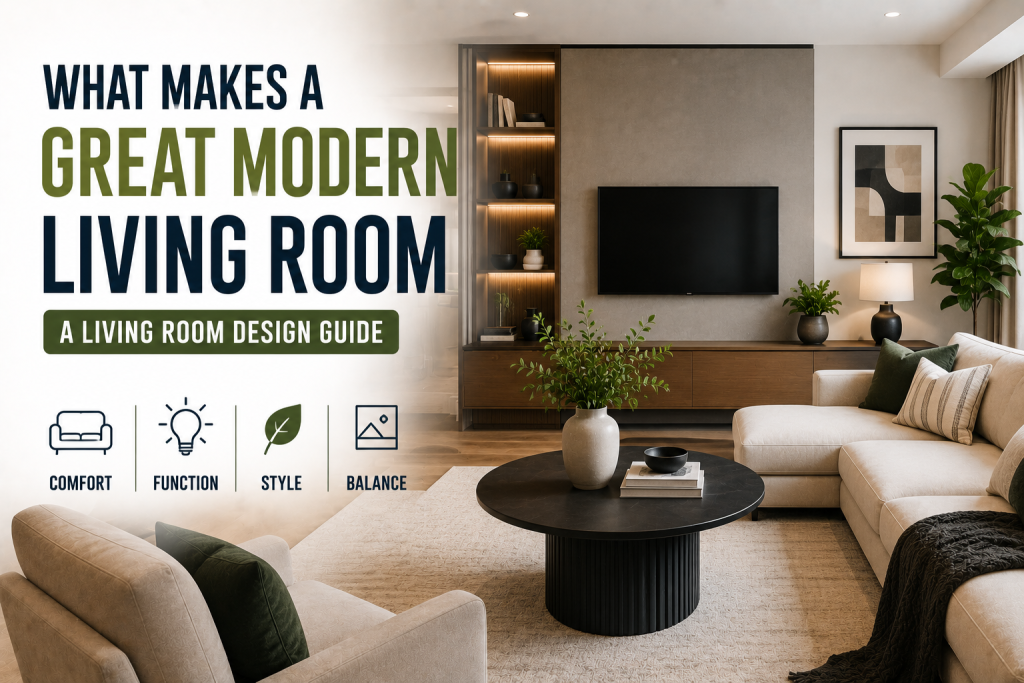
One of the defining characteristics of American living room design is the emphasis on open, adaptable spaces. Clean lines, comfortable seating, layered lighting, and thoughtful furniture placement help create a cohesive look. Natural materials such as wood, stone, and textured fabrics also play a significant role in modern interiors, adding warmth and character without sacrificing simplicity. The best modern living room tips prioritize how the space functions for the people. Rather than following trends blindly, homeowners should focus on layouts, colors, and furnishings that complement their lifestyle while enhancing comfort, visual appeal, and long-term home value.
Start With Your Layout: Measure Before You Buy
Before selecting paint colors, décor, or furniture, it’s essential to understand your living room’s layout. One of the most important principles in any living room design guide is selecting a layout that supports your daily lifestyle. A well-planned layout creates a foundation for every design decision and helps prevent costly mistakes. Whether you have a spacious open-concept home in Dallas or a compact city residence in Chicago, effective space planning improves both comfort and functionality. Start by measuring the room’s dimensions, including wall lengths, ceiling height, windows, doorways, and architectural features such as fireplaces or built-in shelving.
Next, identify natural traffic flow patterns to ensure family members and guests can move through the space without obstacles. Furniture should support movement rather than block pathways. Finally, create functional zones based on how the room will be used. You may need separate areas for conversation, television viewing, reading, or children’s activities. Many successful contemporary room layouts use zoning techniques to maximize usability while maintaining a cohesive design. Careful planning at this stage makes every future decorating decision easier and more effective.
5 Living Room Layouts for American Homes
The right layout can dramatically improve how a living room looks and functions. Among today’s most popular contemporary living room layouts, open-concept designs remain a favorite because they create a seamless connection between the living room, kitchen, and dining areas. This approach is especially common in newer homes throughout Texas, Florida, and Arizona. For larger family homes, furniture is often arranged around a central focal point such as a fireplace, media wall, or large picture window.
Smaller homes and apartments benefit from space-saving layouts that use multifunctional furniture and strategic storage solutions to maximize square footage. Many homeowners are also embracing flexible living spaces that serve multiple purposes, including work-from-home setups, reading nooks, or entertainment areas. The most effective living room furniture tips support these evolving needs while maintaining visual balance. Regardless of room size, successful layouts prioritize comfort, conversation, and easy movement throughout the space. A well-structured living room design guide helps homeowners identify the layout that best fits their space, lifestyle, and long-term design goals.
Modern Living Room Ideas That Never Go Out of Style
While design trends come and go, certain modern living room ideas continue to remain popular because they combine timeless appeal with everyday practicality. Neutral color palettes featuring shades of white, beige, gray, and warm earth tones provide a versatile foundation that works with virtually any design style. These colors also make it easier to update décor over time without a complete redesign. Layered lighting is another enduring feature of successful living rooms.
Combining natural light, ceiling fixtures, table lamps, and accent lighting creates depth and improves functionality throughout the day. Statement furniture pieces, such as a well-crafted sectional sofa or a distinctive coffee table, can anchor the room while adding personality. Natural materials like wood, stone, linen, and leather help create warmth and visual texture. Whether in a suburban Denver home or a contemporary Los Angeles residence, these timeless design principles contribute to a sophisticated living space that remains stylish for years to come.
How to Choose Living Room Furniture That Fits
Selecting the right furniture is one of the most important steps in any living room design guide. The goal is to create a comfortable, functional space without overcrowding the room. Furniture should complement the room’s dimensions, support daily activities, and contribute to a cohesive design aesthetic.
Sofas and Sectionals
A well-planned living room design guide always begins with selecting seating that matches both the room’s size and the homeowner’s lifestyle needs. The sofa typically serves as the centerpiece of the living room. Large open-concept homes often benefit from sectionals, while smaller spaces may work better with a standard sofa paired with accent chairs.
Coffee Tables and Accent Pieces
A coffee table should be proportional to the seating area and provide both style and functionality. Accent tables can add convenience while helping balance the room’s layout.
Entertainment and Storage Solutions
Modern homeowners often need furniture that serves multiple purposes. Media consoles, built-in shelving, and storage ottomans help reduce clutter while maintaining a clean appearance.
Living Room Design Guide: Prioritize Scale and Comfort
Among the best living room furniture ideas is choosing pieces that fit the room appropriately. Oversized furniture can make a space feel cramped, while undersized pieces may leave it feeling incomplete and uninviting.
Designer Tricks for a High-End Look on a Budget
Creating a luxurious living room does not always require a large budget. Many professional designers use simple techniques to elevate a space and make it feel more polished, comfortable, and visually appealing. The most effective living room decorating tips focus on layering elements that add depth, texture, and personality. A professional living room design guide always recommends layering textures and lighting to create visual depth.
- Use a large area rug to anchor the seating arrangement and define the space.
- Incorporate a mix of materials such as wood, glass, metal, linen, and leather to create visual interest.
- Layer lighting with ceiling fixtures, floor lamps, table lamps, and accent lighting for a warm and inviting atmosphere.
- Add oversized artwork or a statement mirror to create a focal point and enhance the room’s scale.
- Include decorative pillows and throw blankets to introduce texture and comfort.
- Use indoor plants to bring natural color and freshness into the space.
- Maintain a balanced layout by avoiding excessive décor that can make the room feel cluttered.
These simple upgrades can help homeowners achieve a refined, designer-inspired look while maintaining everyday functionality.
Cozy Living Room Ideas That Feel Like Home
A stylish living room should also feel warm and inviting. The best cozy living room inspiration focuses on creating a space where family members and guests naturally want to spend time. Comfort often comes from a thoughtful combination of lighting, textures, furniture placement, and personal touches that make the room feel lived-in without appearing cluttered. Soft textiles play a major role in enhancing comfort. Plush area rugs, textured throw blankets, and layered accent pillows can instantly make a space feel more welcoming.
Warm lighting from table and floor lamps creates a relaxing atmosphere, especially in the evening hours. Homeowners can also add comfort by incorporating reading corners, window seating, or conversation-focused furniture arrangements.No living room design guide would be complete without addressing comfort and everyday functionality. Natural elements such as wood finishes, indoor plants, and woven materials help soften modern interiors while adding character. Whether you live in a suburban home in Austin or a downtown apartment in Seattle, a cozy living room encourages relaxation and supports everyday living without sacrificing style.
Living Room Trends Worth Following (bedroom fix)
The latest trends in American bedroom design reflect a growing desire for spaces that are both beautiful and practical. Homeowners are moving away from overly formal rooms and embracing designs that support modern lifestyles, family activities, and flexible living arrangements. The focus is on creating spaces that feel comfortable, personalized, and adaptable. Earth-tone color palettes continue to gain popularity, with shades of warm beige, soft brown, olive green, and muted terracotta replacing cooler grays.
Sustainable materials such as reclaimed wood, natural stone, and eco-friendly textiles are also becoming common choices among environmentally conscious homeowners. Smart home integration remains a major trend, with hidden charging stations, voice-controlled lighting, and automated window treatments enhancing convenience. Modern trends continue to shape how a living room design guide approaches furniture selection and room planning. Another emerging trend is the use of multifunctional furniture that supports remote work, entertaining, and everyday family life. These design choices help homeowners create living rooms that remain stylish while meeting the changing needs of modern American households.
7 Design Mistakes That Ruin a Living Room
Even the most attractive living rooms can feel uncomfortable or unbalanced when key design principles are overlooked. Understanding these common mistakes can help homeowners make smarter decisions and create a space that looks cohesive, functions efficiently, and supports everyday living.
- Furniture too large for the room (or too small; scale matters both ways)
- One overhead light instead of layered lighting
- No clear focal point (fireplace, media wall, or statement art)
- Too many accessories creating visual clutter
- Ignoring traffic flow when placing furniture
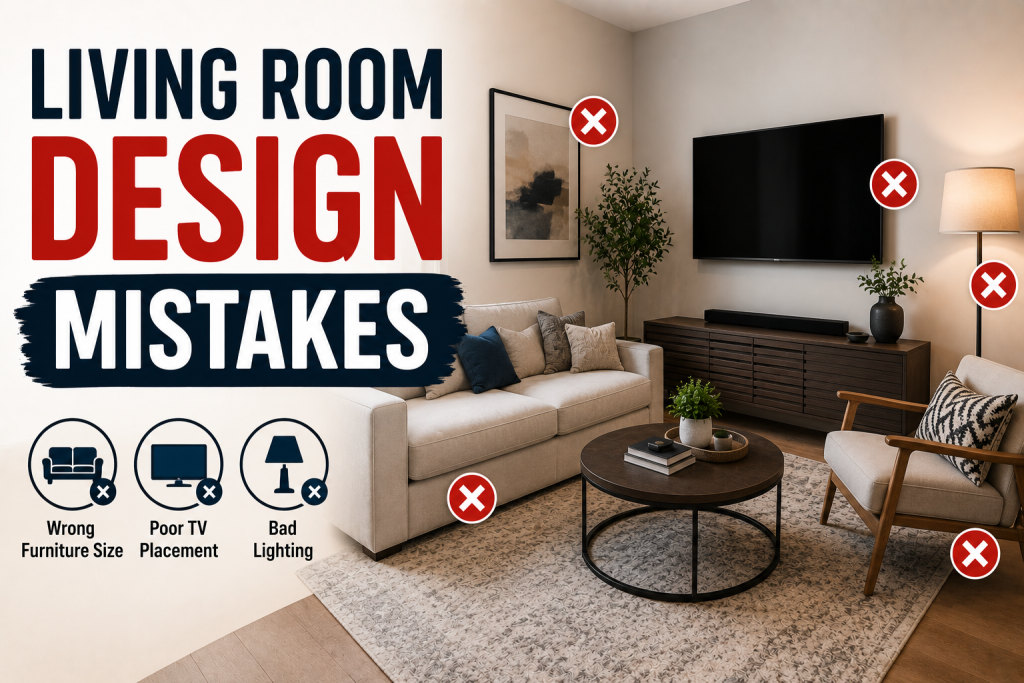
Choosing Furniture That Is Too Large
Oversized sectionals, coffee tables, or entertainment centers can overwhelm a room and restrict movement. Furniture should be scaled appropriately to the available square footage.
Ignoring Lighting Layers
A comprehensive living room design guide always recommends using multiple light sources rather than relying solely on a single ceiling fixture. A combination of ambient, task, and accent lighting creates depth, improves functionality, and helps the room feel more inviting throughout the day and evening.
Neglecting Scale and Proportion
Furniture, artwork, and décor should work together harmoniously. Pieces that are too small or too large can disrupt the room’s visual balance.
Creating Excessive Clutter
Too many decorative accessories, furniture pieces, or personal items can make the room feel crowded. Thoughtful editing helps maintain a clean and organized appearance.
Failing to Establish a Focal Point
Every successful living room benefits from a clear focal point, whether it’s a fireplace, media wall, large window, or statement piece of artwork. A well-planned living room design guide emphasizes the importance of establishing a focal point to create visual balance and direction. Without one, the room may feel disconnected and lack visual cohesion.
Does Good Design Raise Your Home’s Value?
A well-designed living room can significantly influence how potential buyers perceive a home. Because the living room is often one of the first spaces visitors see, it plays a major role in shaping overall impressions. Thoughtful design choices can make a property feel more spacious, functional, and move-in ready, all of which contribute to stronger buyer interest. Modern layouts, updated lighting, neutral color palettes, and quality furnishings help showcase a home’s potential while appealing to a broader range of buyers. A comprehensive living room design guide can also help homeowners make design decisions that support future resale value.
Open and inviting living spaces are especially attractive in competitive real estate markets such as Dallas, Phoenix, Denver, and Atlanta. Even relatively affordable upgrades, such as fresh paint, updated décor, and improved furniture placement, can enhance a home’s presentation. Beyond aesthetics, a well-planned living room demonstrates that the property has been properly maintained. For homeowners considering future resale, investing in smart design improvements can improve marketability, increase perceived value, and support a faster sale when the time comes to list the home.
Conclusion
Designing a beautiful and functional living room requires more than simply choosing attractive furniture or following the latest trends. The most successful spaces are thoughtfully planned around the needs of the people who use them every day. From selecting the right layout and furniture to incorporating timeless décor and comfortable design elements, every decision contributes to the overall look and feel of the room. This living room design guide has explored essential strategies for creating a space that balances style, comfort, and practicality.
By prioritizing comfort, proper space planning, and timeless design principles, homeowners can create living rooms that support everyday life, enhance resale value, and remain visually appealing for years to come. A well-designed living room is not just a place to gather; it’s an investment in the overall enjoyment and value of your home.
Frequently Asked Questions
What is the best layout for a modern living room?
The best layout depends on your room size and lifestyle needs. Most modern living rooms work best when furniture is arranged around a focal point, such as a fireplace or television. A home interior design guide can help homeowners choose a layout that maximizes both comfort and functionality.
How can I make a small living room look larger?
Use light-colored walls, strategically placed mirrors, and appropriately sized furniture to create the illusion of more space. Maximizing natural light and reducing clutter can also make a smaller living room feel more open and inviting.
What colors are trending for living rooms in 2026?
Popular colors include warm neutrals, soft beige, olive green, terracotta, taupe, and earthy brown tones. These shades create a comfortable atmosphere while complementing a wide range of furniture and décor styles.
What furniture is essential in a living room?
Most living rooms require a comfortable sofa, a coffee table, adequate lighting, and functional storage solutions. Depending on the available space, homeowners may also include accent chairs, side tables, media consoles, and bookshelves.
Why should homeowners follow a living room design guide?
A living room design guide provides a structured approach to layout planning, furniture selection, decorating decisions, and long-term functionality, helping homeowners avoid costly mistakes.