


Best Lighting Ideas for Living Rooms in the US: Complete Guide
The right living room lighting ideas can transform a space more than new furniture, yet most homeowners rely on a single overhead fixture and wonder why the room feels flat. Great lighting uses three layers: ambient, task, and accent. This guide covers ceiling lights, floor and table lamps, wall sconces, smart lighting trends, small-room solutions, and the mistakes that kill ambiance.
The 3 Layers of Great Living Room Lighting
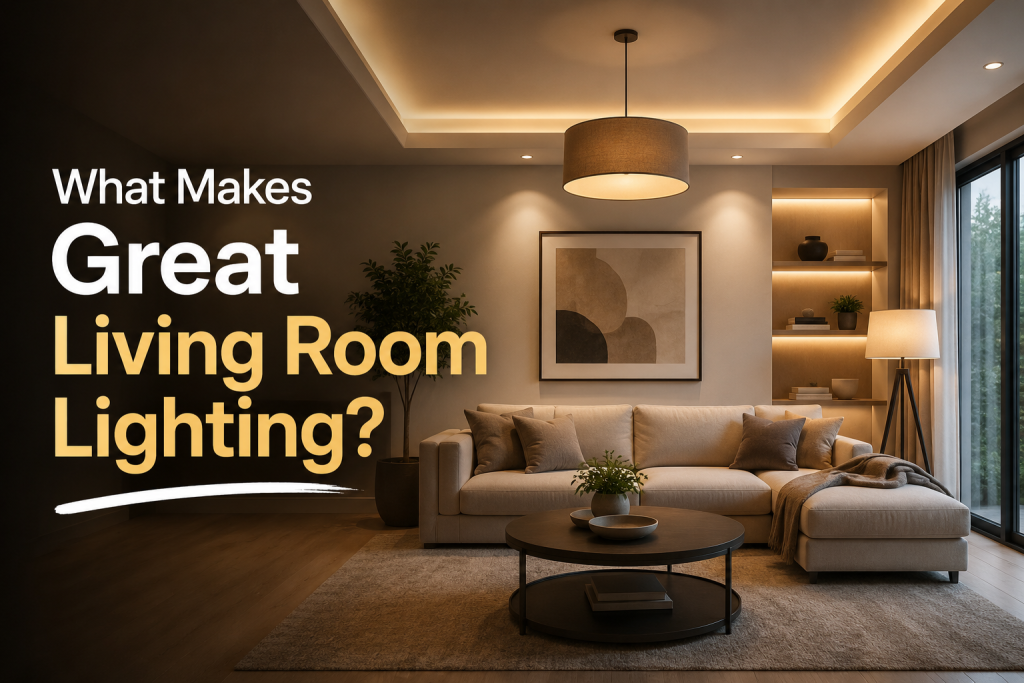
A successful lighting design starts with understanding how different light sources work together. Rather than relying on a single overhead fixture, professional designers recommend using multiple layers of light to create a comfortable, flexible, and visually appealing space. This approach improves functionality while helping homeowners adapt the room for everything from movie nights to social gatherings. The best living room lighting ideas rely on multiple layers of light working together.
Understanding the Three Layers of Light
Every well-designed living room should include three essential lighting layers:
- Ambient lighting provides overall illumination and serves as the room’s primary light source.
- Task lighting supports specific activities such as reading, working, or hobbies.
- Accent lighting highlights architectural features, artwork, built-in shelving, or decorative elements.
When combined properly, these layers eliminate dark corners and create a balanced atmosphere throughout the room.
Why Does Layered Lighting Create Better Results?
One of the most effective layered lighting ideas is combining ceiling fixtures, lamps, and decorative accent lights. This strategy allows homeowners to adjust brightness levels based on the time of day and activity. Following proven ambient lighting tips while incorporating targeted fixtures creates a more comfortable living environment, improves visual depth, and makes the room feel larger and more inviting.
Statement Ceiling Lights: Chandeliers, Pendants & Flush Mounts (bedroom fix)
The ceiling fixture is often the foundation of living room lighting ideas. Choosing the right fixture can instantly define the room’s style while providing the overall illumination needed for daily activities. Popular options include chandeliers, flush-mount fixtures, semi-flush designs, and pendant lights, each offering a different aesthetic and level of brightness. For homes with higher ceilings, a statement chandelier can create a dramatic focal point that anchors the entire room.
In smaller spaces or rooms with lower ceilings, sleek flush-mount fixtures provide ample light without overwhelming the design. Homeowners seeking a contemporary look often prefer pendant lights or integrated LED fixtures that deliver clean lines and energy efficiency. When selecting ceiling lights for living room spaces, consider the room’s dimensions, ceiling height, and furniture layout. A properly scaled fixture not only enhances visual appeal but also ensures even light distribution, making the living room feel more comfortable, functional, and welcoming throughout the day.
Floor Lamps That Add Height and Warmth
One of the most practical living room lighting ideas is using floor lamps to add both height and warmth to the space. Floor lamps are one of the easiest ways to enhance a living room without major renovations. They provide additional light exactly where it is needed while adding visual height and dimension to the space. Unlike overhead fixtures that distribute light broadly, floor lamps create focused illumination that helps make seating areas feel more comfortable and inviting. Strategically placing a floor lamp beside a sectional sofa, accent chair, or reading nook can improve functionality while contributing to the room’s overall design.
Arc floor lamps work particularly well in larger living rooms because they extend light over seating areas without requiring additional ceiling fixtures. Slim-profile designs are also excellent for apartments and smaller homes where space is limited. For homeowners aiming to achieve cozy room lighting, warm LED bulbs paired with decorative floor lamps can create a relaxing atmosphere in the evening hours. Combining floor lamps with overhead lighting also supports a layered approach, allowing greater flexibility and control over the room’s ambiance throughout the day.
Table Lamps for a Softer Evening Glow
Table lamps are an essential part of a balanced lighting plan because they introduce warmth and visual comfort that overhead fixtures alone often cannot achieve. Positioned on end tables, console tables, or built-in shelving, table lamps help soften shadows and create a more welcoming environment. They are especially useful during the evening when bright ceiling lights may feel too harsh for relaxation. In larger living rooms, placing matching lamps on opposite sides of the seating area can create symmetry and improve light distribution. One of the easiest living room lighting ideas to implement is layering table lamps throughout the space.
For a more eclectic look, homeowners can mix lamp styles while maintaining a consistent color palette or material finish. Lamps with fabric shades are particularly effective at diffusing light and producing a gentle glow. Many interior designers recommend table lamps as part of their favorite ambient lighting ideas because they provide comfortable illumination without overwhelming the room. When paired with ceiling fixtures and floor lamps, table lamps help create a layered lighting scheme that enhances both functionality and visual appeal.
Wall Sconces for Elegant Accent Light
Wall sconces offer a stylish way to introduce depth and character to a living room while reducing dependence on overhead lighting. Mounted directly on the wall, these fixtures provide targeted illumination that can highlight architectural details, artwork, fireplaces, or built-in shelving. They are particularly valuable in rooms where floor and table space are limited. Modern sconces are available in a wide range of styles, from traditional lantern-inspired designs to sleek contemporary fixtures with integrated LED technology.
Installing sconces on either side of a fireplace, entertainment center, or large piece of artwork can create visual balance while drawing attention to key focal points within the room. Adjustable models also provide additional flexibility by directing light exactly where it is needed. Among today’s popular living room lighting ideas, wall sconces remain a stylish way to add depth and character. Among the most effective accent lighting ideas, wall sconces add dimension without creating clutter. When combined with ceiling fixtures and lamps, they help establish a sophisticated layered lighting design that makes the living room feel more polished, comfortable, and professionally designed.
Lighting Trends: Smart, Tunable & Sculptural
Today’s homeowners are looking for lighting solutions that combine style, convenience, and energy efficiency. As a result, modern living room lighting ideas continue to evolve beyond traditional fixtures and basic bulb choices. Contemporary designs emphasize clean lines, smart technology integration, and flexible lighting controls that adapt to different activities and moods. Smart lighting systems from brands such as Philips Hue and Lutron allow homeowners to adjust brightness, color temperature, and schedules directly from a smartphone or voice assistant.
Integrated LED fixtures have also become increasingly popular because they consume less energy and typically last much longer than conventional bulbs. Minimalist pendant lights, geometric chandeliers, and sculptural fixtures are frequently used to create visual interest while maintaining a modern aesthetic. Another growing trend is tunable white lighting, which lets homeowners shift between cooler daylight tones and warmer evening settings. These innovations help create a more personalized living environment while improving comfort, convenience, and long-term energy savings.
Lighting Ideas for Small Living Rooms
Choosing the right lighting for small living rooms requires a thoughtful approach that maximizes brightness without making the space feel crowded. Large, oversized fixtures can overwhelm a compact room, while insufficient lighting may make it appear even smaller. The goal is to create an open, airy atmosphere by combining multiple light sources that work together efficiently. Flush-mount ceiling fixtures are often an excellent choice because they provide broad illumination while preserving valuable headroom. Wall sconces can also free up floor and table space, making the room feel less cluttered. The most successful living room lighting ideas for small spaces maximize brightness without creating clutter
Mirrors positioned across from windows or light fixtures help reflect both natural and artificial light, visually expanding the space and increasing brightness. Homeowners should also consider multifunctional lighting solutions, such as floor lamps with built-in shelving or smart fixtures with adjustable brightness settings. By layering light strategically and avoiding dark corners, even a medium-sized living room can feel larger, more comfortable, and more inviting for everyday use and entertaining.
Cozy Lighting for Relaxation (2700K–3000K Rule)
Creating a warm and inviting atmosphere starts with selecting the right light sources and color temperatures. While bright, cool-toned lighting can be useful during the day, most homeowners prefer softer illumination in the evening when relaxing, watching television, or spending time with family. Thoughtful lighting choices can significantly influence how comfortable and welcoming a living room feels. One of the simplest ways to achieve cozy living room lighting is by using warm white LED bulbs in the 2,700K to 3,000K range. Some of the most effective living room lighting ideas focus on creating a warm and relaxing atmosphere.
- Choose warm white LEDs: 2700K–3000K for evening relaxation
- Add dimmer switches for flexible brightness throughout the day
- Layer table + floor + wall sources instead of one bright ceiling light
- Use smart bulbs (Philips Hue, Lutron) for tunable color temperature
These bulbs produce a gentle glow that mimics traditional incandescent lighting without the higher energy consumption. Adding dimmer switches provides even greater control, allowing brightness levels to be adjusted throughout the day. Combining table lamps, floor lamps, wall sconces, and accent lighting helps eliminate harsh shadows and creates a layered effect that feels comfortable and balanced. Small additions such as LED candles, illuminated shelving, or soft backlighting behind a television can further enhance the room’s relaxing ambiance.
Energy-Efficient Lighting That Cuts Your Bills
Energy-efficient lighting is one of the simplest home upgrades that can reduce utility bills while improving overall comfort. Modern lighting technology allows homeowners to achieve better illumination with significantly less energy consumption than traditional incandescent bulbs. In addition to lowering monthly electricity costs, efficient lighting solutions often require less maintenance and provide longer service life.
Living Room Lighting Ideas That Save Energy
The most effective living room lighting ideas combine style with efficiency. Replacing older bulbs with LED alternatives can reduce energy use while providing consistent brightness and improved longevity. LEDs are available in a wide range of color temperatures, making it easy to create the desired atmosphere without sacrificing performance. Homeowners can also maximize natural daylight by keeping windows unobstructed and using light-colored wall finishes that reflect sunlight throughout the room.
Smart Lighting and Long-Term Savings
Smart lighting systems offer additional opportunities to reduce energy waste. Features such as motion sensors, automated schedules, occupancy detection, and smartphone controls help ensure lights are used when needed. Choosing products by Energy Star can further improve efficiency, making smart lighting a practical investment for homeowners seeking both comfort and long-term savings.
6 Lighting Mistakes That Flatten a Room
Even the most attractive light fixtures can fall short if they are not part of a well-planned lighting strategy. One of the most common mistakes homeowners make is relying on a single overhead fixture to illuminate the entire room. Even the best living room lighting ideas can fail if common design mistakes are overlooked. This often creates harsh shadows, uneven brightness, and a space that feels flat rather than inviting. A layered lighting approach typically delivers far better results. Another frequent issue is choosing the wrong bulb color temperature.
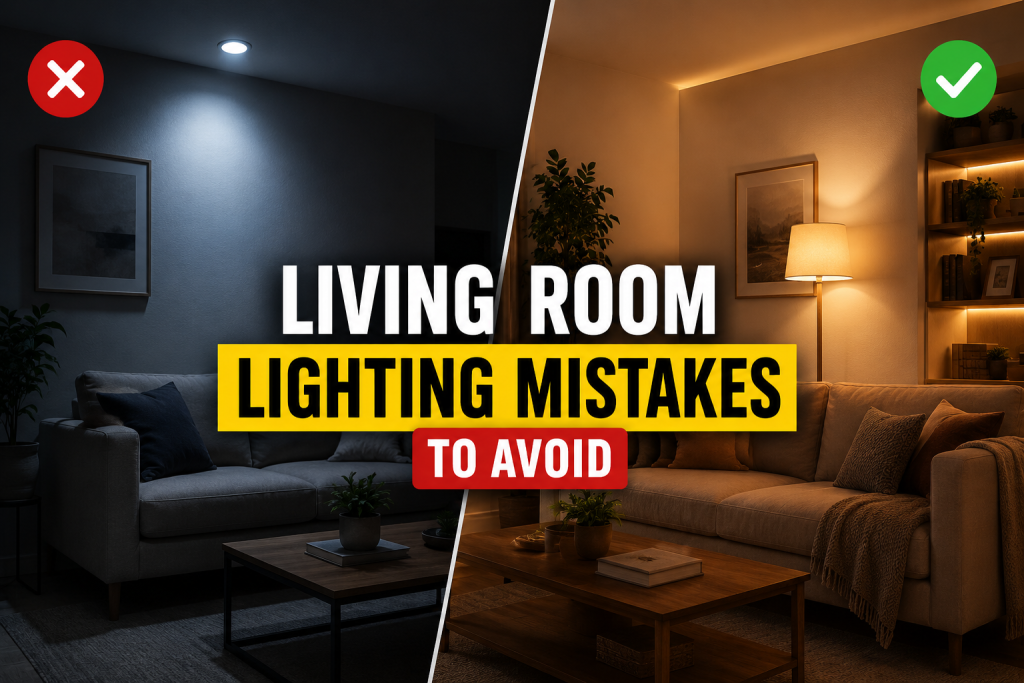
Extremely cool lighting can make a living room feel sterile, while overly warm lighting may reduce visibility for certain activities. Fixture size is also important; a chandelier or pendant that is too large can overwhelm the room, while one that is too small may appear out of proportion. Many homeowners also overlook dimmer switches, which provide valuable flexibility throughout the day. Poor fixture placement, insufficient task lighting, and failing to highlight focal points such as artwork or fireplaces can further limit the effectiveness of an otherwise beautiful living room design.
How to Build Your Lighting Plan (Room Size Guide)
The best lighting plan depends on your living room’s size, layout, ceiling height, and how the space is used on a daily basis. Rather than selecting fixtures individually, homeowners should begin by evaluating the room as a whole and determining where ambient, task, and accent lighting are needed. This approach helps create a balanced environment that supports both functionality and aesthetics. For small living rooms, compact ceiling fixtures, wall sconces, and strategically placed lamps can maximize brightness without overwhelming the space. Choosing the right living room lighting ideas starts with understanding your room’s size, layout, and daily lighting needs.
Medium-sized rooms often benefit from a central ceiling fixture combined with floor lamps and table lamps to create multiple layers of light. In large or open-concept living rooms, combining chandeliers, recessed lighting, and accent fixtures can help define different zones while maintaining visual cohesion. It’s also important to consider lifestyle needs. Families who frequently entertain guests may require flexible lighting controls, while homeowners who enjoy reading or working in the living room may benefit from additional task lighting. A thoughtful lighting plan ensures the space remains comfortable, functional, and visually appealing throughout the day.
Conclusion
The best living room lighting ideas combine functionality, comfort, and style to create a space that works for every part of your day. By incorporating layered lighting, selecting appropriately sized fixtures, and using energy-efficient LEDs, homeowners can dramatically improve both the appearance and usability of their living rooms. Whether you’re upgrading a small space or redesigning a large open-concept area, thoughtful lighting choices can enhance ambiance, highlight design features, and support everyday activities. With the right combination of ceiling fixtures, lamps, and accent lighting, you can create a living room that feels warm, welcoming, and beautifully illuminated year-round.
Frequently Asked Questions
What are the best living room lighting ideas for arranging lights in a living room?
The best living room lighting ideas combine ambient, task, and accent lighting. Use a central ceiling fixture for overall brightness, add floor or table lamps for functionality, and include accent lighting to highlight décor and create a warm, balanced atmosphere.
What color temperature is best for living rooms?
A warm white color temperature between 2,700K and 3,000K is generally ideal for living rooms. This range creates a comfortable and inviting atmosphere while still providing sufficient visibility for daily activities.
Are LED lights good for living rooms?
Yes. LED lights are energy-efficient, long-lasting, and available in various brightness levels and color temperatures. They help reduce electricity costs while offering greater flexibility than traditional incandescent bulbs.
How do I make a living room feel cozy with lighting?
Use warm-toned bulbs, dimmer switches, table lamps, floor lamps, and accent lighting to create a soft and relaxing ambiance. Avoid relying solely on bright overhead fixtures.
What lighting works best in small living rooms?
Flush-mount ceiling fixtures, wall sconces, mirrors, and multifunctional lamps work particularly well in smaller spaces. These options provide ample illumination while minimizing visual clutter and preserving floor space.