

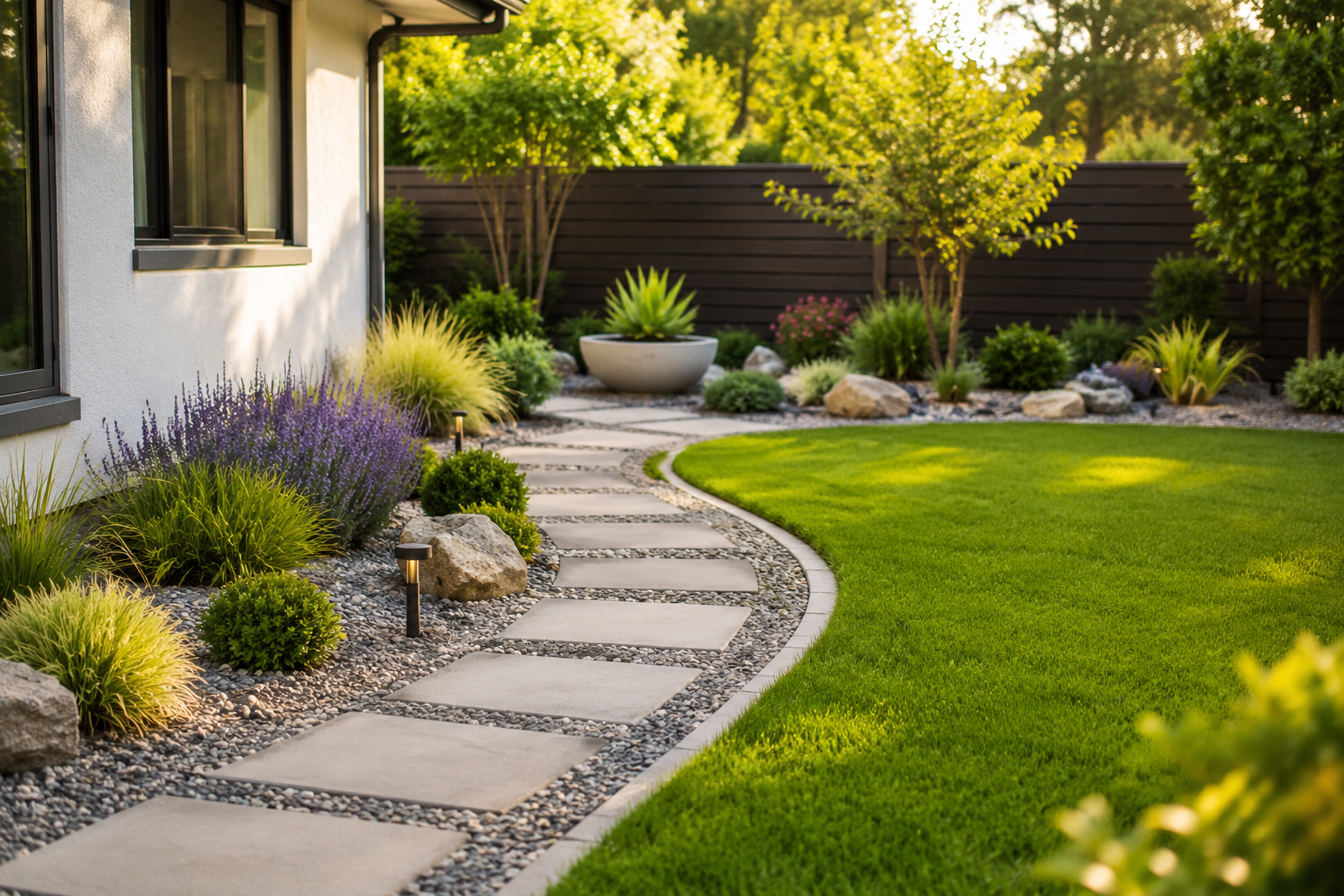
Best Low-Maintenance Landscaping Ideas
A beautiful yard does not have to require constant mowing, watering, trimming, and seasonal upkeep. More homeowners are looking for outdoor spaces that remain attractive while reducing long-term maintenance demands and recurring costs. The most effective landscape designs focus on smarter planning rather than adding more plants or features. Material selection, plant choices, layout efficiency, and climate awareness can all influence how much time and money a yard requires throughout the year.
Many homeowners also apply simple front yard landscaping approaches that prioritize cleaner layouts, fewer maintenance demands, and stronger curb appeal without adding unnecessary complexity. Exploring practical low-maintenance landscaping ideas helps homeowners create outdoor spaces that support curb appeal while reducing routine work. Whether the goal is lowering water usage, simplifying maintenance, or improving long-term property appearance, the right landscaping strategy can deliver lasting value without creating additional upkeep.
Why Low-Maintenance Landscaping Ideas Appeal to Homeowners
Many homeowners are rethinking traditional landscaping approaches that require frequent mowing, watering, pruning, and seasonal replacement. Instead, they are prioritizing outdoor spaces that stay attractive while demanding less time and ongoing effort. This shift has also increased interest in xeriscape landscaping, which focuses on reducing maintenance and improving water efficiency through smarter plant and material selection.
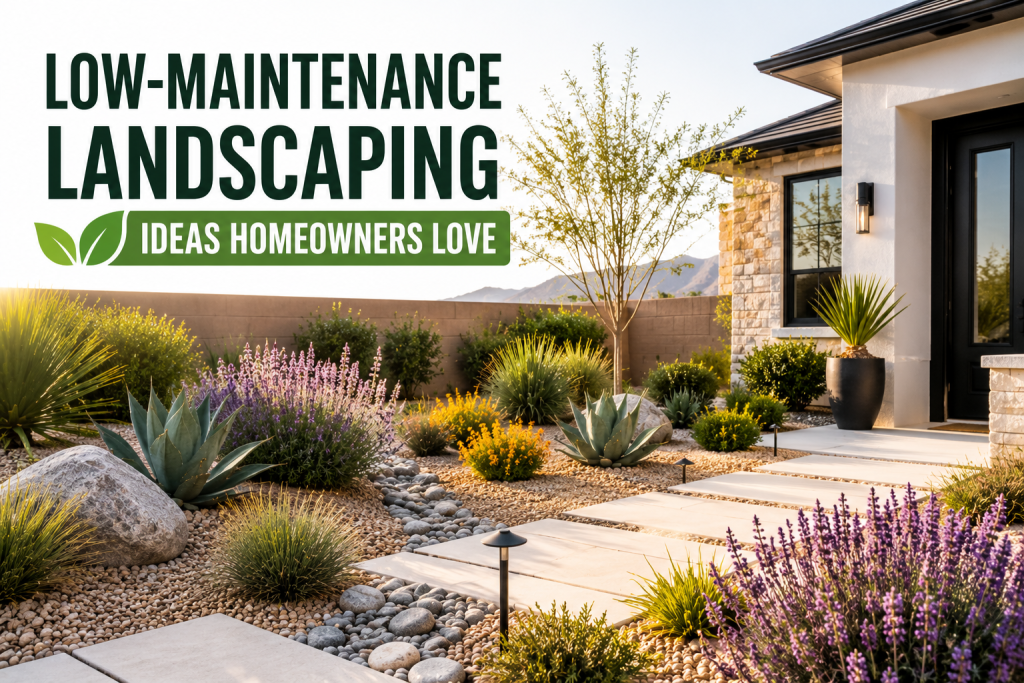
A lower-maintenance landscape can reduce routine yard work, improve water efficiency, and help control long-term upkeep costs. These benefits become especially valuable in regions with hotter temperatures, changing weather patterns, or busy household schedules. One of the biggest advantages of adopting low-maintenance landscaping ideas is creating a yard that supports curb appeal without becoming a constant maintenance project.
Homeowners who focus on practical design choices often find that thoughtful landscaping improves usability, reduces seasonal workload, and creates a more sustainable outdoor environment over time. Incorporating low-water landscaping strategies can further reduce irrigation demands while helping outdoor spaces remain attractive with less ongoing maintenance.
Replace High-Maintenance Lawns
Traditional lawns often require some of the highest levels of ongoing outdoor maintenance. Regular mowing, watering, fertilizing, and seasonal repairs can increase both time commitments and long-term yard expenses. Replacing portions of traditional turf with lower-maintenance alternatives can reduce upkeep while maintaining visual appeal. Options such as gravel areas, decorative stone, expanded planting beds, and durable ground covers often create a cleaner and more manageable layout. For homeowners seeking a more manageable outdoor design, reducing lawn size is frequently one of the most effective changes. This approach can also support lower water consumption and simplify seasonal care while maintaining a polished exterior appearance throughout the year.
Use Mulch to Reduce Upkeep
Mulch is one of the simplest landscape materials for reducing long-term outdoor maintenance. When applied correctly, it helps retain soil moisture, regulate temperature, suppress weed growth, and improve the overall appearance of planting areas. Organic and decorative mulch options can reduce the amount of watering and maintenance required throughout the growing season. Mulched areas also create cleaner transitions between planting zones and reduce exposed soil.
Homeowners exploring affordable landscaping ideas often prioritize mulch because it delivers visual improvement while lowering routine yard work. As part of effective low-maintenance landscaping ideas, mulch also fits naturally into easy landscaping ideas by supporting healthier planting conditions and creating a cleaner, easier-to-manage landscape design.
Long-Term Low-Maintenance Landscaping Ideas That Save Time
Hardscaping can significantly reduce outdoor maintenance while improving structure and usability. Features such as gravel pathways, stone borders, paver patios, retaining walls, and decorative rock areas require far less upkeep than large planted sections.Adding more hardscape elements helps minimize mowing, watering, trimming, and seasonal cleanup. These materials also create visual contrast and improve overall landscape organization. For homeowners researching low-maintenance landscaping ideas, hardscaping often provides one of the strongest long-term returns because it reduces recurring labor without sacrificing curb appeal. When planned thoughtfully, hardscape features create a balanced outdoor design that remains functional, durable, and visually appealing across changing seasons.
Choose Native and Climate-Friendly Plants
Plant selection plays a major role in determining how much maintenance a landscape requires over time. Native and climate-appropriate plants are generally better adapted to local weather patterns, making them easier to maintain and more resilient throughout the year. Homeowners in warmer and drier regions often prioritize drought-tolerant landscaping to reduce irrigation demands and improve long-term performance. Choosing plants that naturally thrive in local conditions can lower watering needs and reduce seasonal replacement. One of the most practical low-maintenance landscaping ideas is designing around plant varieties that match regional climate conditions rather than relying on high-maintenance selections. A thoughtful planting strategy can improve appearance while reducing long-term upkeep and resource use.
Create Smarter Irrigation Zones
Efficient watering strategies can significantly reduce landscape maintenance while improving plant performance. Instead of treating the entire yard as one watering area, irrigation zones allow homeowners to group plants based on similar moisture needs. This approach helps prevent overwatering, reduces water waste, and supports healthier long-term growth. Separating shaded areas, planted beds, and exposed sections creates more consistent watering results throughout changing seasons. Homeowners applying low-maintenance landscaping ideas often discover that irrigation planning reduces both routine work and utility costs. Simple adjustments such as timed watering schedules, drip systems, and grouped planting zones can create a more efficient landscape that stays healthier with less ongoing effort.
Design With Fewer Plant Varieties
Using too many plant types can make a landscape harder to maintain over time. Different growth rates, watering schedules, pruning needs, and seasonal cycles often increase the amount of work required throughout the year.A more streamlined planting approach creates consistency and simplifies routine care. Repeating a smaller group of reliable plants across different areas can improve visual cohesion while reducing maintenance demands. This strategy also aligns with practical low upkeep garden ideas by making irrigation, trimming, and seasonal maintenance more predictable. Homeowners focused on long-term simplicity often find that limiting plant variety creates a cleaner landscape design that remains attractive without requiring constant attention.
Reduce Maintenance With Ground Covers
Ground covers can be an effective alternative to traditional turf in areas where regular lawn maintenance becomes difficult or unnecessary. These low-growing plant options help reduce mowing needs while creating a finished and intentional landscape appearance. Depending on climate and property goals, ground covers may also improve moisture retention, reduce weed growth, and limit exposed soil. Many homeowners use them to soften landscape edges and reduce the amount of active maintenance required throughout the yard.
Long-Term Low-Maintenance Landscaping Ideas That Save Time
Creating a lower-maintenance yard starts with design, but long-term results depend on consistent habits. Small adjustments throughout the year can prevent unnecessary work and help landscapes remain manageable over time.
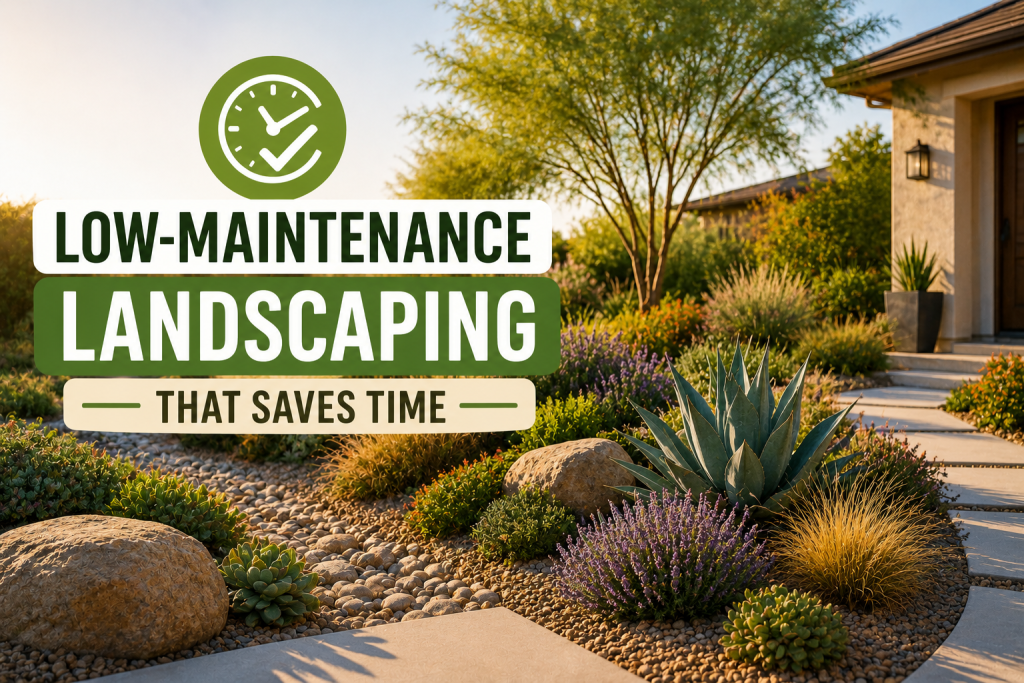
Use these practices to reduce future upkeep:
- Refresh mulch when needed
- Remove weeds before they spread
- Group plants with similar care needs
- Inspect irrigation systems seasonally
- Prune selectively instead of excessively
- Reduce clutter in planting beds
Homeowners applying low-maintenance landscaping ideas often see better results when routine maintenance stays simple and predictable. A sustainable landscaping approach focuses on preventing problems early rather than relying on major seasonal cleanup projects.
Conclusion
Creating a beautiful outdoor space does not require constant upkeep or endless seasonal work. With thoughtful planning and practical design choices, homeowners can build landscapes that remain attractive while reducing long-term maintenance demands. The most effective strategies focus on simplifying plant selection, reducing unnecessary lawn areas, improving watering efficiency, and using durable materials that support long-term performance. By applying smart low-maintenance landscaping ideas, homeowners can create outdoor spaces that balance curb appeal, usability, and lower ongoing effort. Whether the goal is reducing water use, simplifying yard care, or improving overall property appearance, a well-planned landscape can deliver lasting value with less maintenance year after year.
Frequently Asked Questions
What is the easiest landscaping option to maintain?
Landscapes that combine reduced lawn space, durable hardscaping, mulch, and climate-appropriate planting are typically among the easiest options to maintain over time.
How can low-maintenance landscaping ideas reduce landscape maintenance costs?
Applying low-maintenance landscaping ideas such as reducing lawn areas, improving irrigation efficiency, selecting durable materials, and simplifying plant choices can help homeowners lower long-term maintenance expenses while keeping outdoor spaces attractive.
Do low-maintenance landscapes increase home value?
Well-designed landscapes can improve curb appeal and strengthen buyer perception. While results vary by market, organized and attractive outdoor spaces often support overall property appeal.
Are native plants better for low-maintenance yards?
Native plants are often easier to maintain because they are naturally adapted to local conditions and may require less watering and seasonal intervention.
What should homeowners avoid in low-maintenance landscaping?
Avoid excessive plant variety, oversized lawn areas, high-water designs, and landscaping choices that require constant trimming or frequent seasonal replacement.