

Luxury Vinyl Plank Flooring Cost per Square Foot (US 2026 Guide)
Understanding luxury vinyl plank flooring cost is one of the most important steps for US homeowners planning a flooring renovation or full-home upgrade. LVP has become one of the most popular flooring options in residential construction because it balances affordability, durability, and modern design appeal. On average, luxury vinyl plank flooring is priced per square foot, and total project cost depends on material quality, installation method, subfloor condition, and room size. Homeowners typically compare budget-friendly, mid-range, and premium LVP products when estimating total expenses.
In many US homes, LVP is chosen as a cost-effective alternative to hardwood or tile, especially in kitchens, bathrooms, and basements where moisture resistance is important. However, the final installed cost is not just about materials, it also includes labor, underlayment, and preparation work. This guide breaks down every factor affecting vinyl plank flooring prices, including installation, labor, and hidden costs, so homeowners can plan a realistic budget.
LVP Flooring Installation Cost Breakdown
The LVP flooring installation cost is a major part of overall luxury vinyl plank flooring cost, and it can vary significantly across US homes depending on project complexity and local labor rates. While LVP is often marketed as a budget-friendly flooring option, installation is where costs can quickly increase if preparation work is needed. On average, installation includes several components: labor for laying the planks, subfloor preparation, underlayment (if required), and finishing details like transitions and trim. Homes with uneven subfloors or old flooring removal will naturally see higher total installation costs due to extra labor.
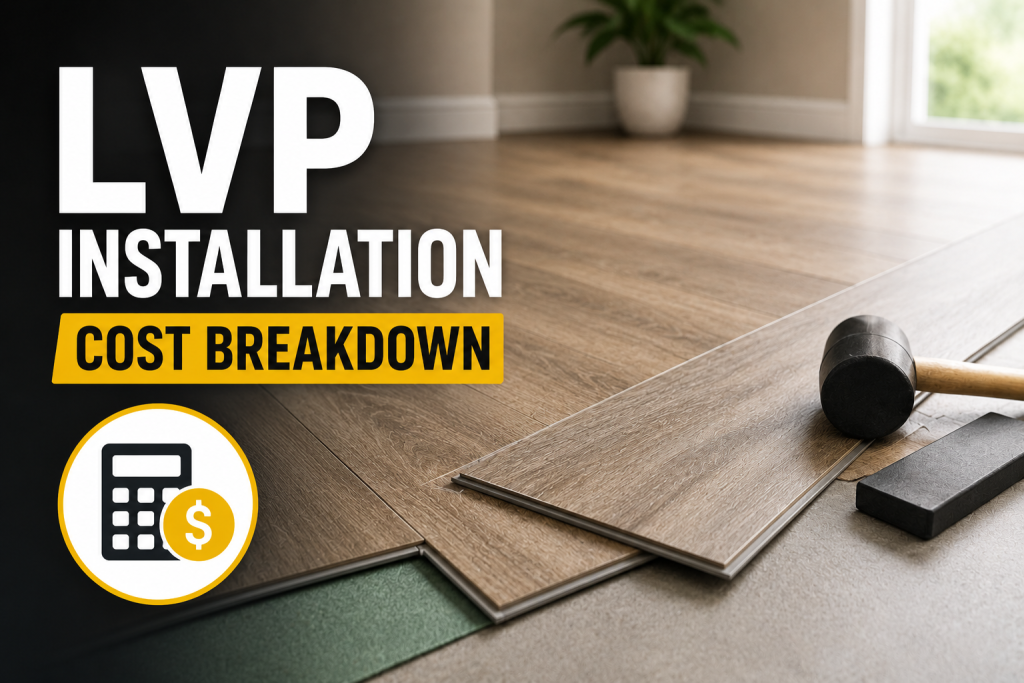
In most residential projects, click-lock LVP systems are faster and less expensive to install compared to glue-down versions. However, glue-down installations may be preferred in commercial spaces or high-traffic areas for added stability. Another key factor is room layout complexity. Open, rectangular spaces are cheaper to install, while rooms with multiple corners, stairs, or tight areas increase labor time and cost. Overall, installation typically represents a significant portion of total vinyl plank flooring prices, especially in professional projects.
Vinyl Plank Flooring Prices by Quality Tier
Vinyl plank flooring prices vary widely depending on product quality, thickness, and wear layer durability, all of which directly impact the overall luxury vinyl plank flooring cost for US homeowners. At the entry level, budget LVP is the most affordable option and is commonly used in rental properties or low-traffic rooms. It typically has a thinner wear layer and simpler visual design, but still provides basic water resistance and ease of installation.
Mid-range LVP is the most popular choice for residential homes. It offers a thicker wear layer, improved scratch resistance, and more realistic wood textures. This category strikes a strong balance between durability and cost, making it ideal for living rooms, kitchens, and hallways. Premium LVP sits at the top of the pricing range and includes advanced features such as enhanced embossing, rigid core construction (SPC or WPC), and longer warranties. These products are designed for high-traffic homes and areas where long-term performance is a priority. Choosing the right tier significantly affects total residential vinyl flooring cost, especially in full-home installations.
Waterproof Vinyl Flooring Cost Factors
When evaluating luxury vinyl plank flooring cost, one of the biggest pricing influences is whether you choose standard or waterproof vinyl flooring cost options. In US homes, waterproof LVP is especially popular for kitchens, bathrooms, laundry rooms, and basements where moisture exposure is frequent. Waterproof LVP typically costs more than basic vinyl plank flooring because it uses advanced rigid core technology such as SPC (stone plastic composite) or WPC (wood plastic composite). These cores are engineered to prevent water from penetrating the boards, helping protect both the flooring and subfloor from damage. The increased cost also comes from the enhanced wear layers and tighter locking systems that improve moisture resistance.
These features reduce the risk of swelling, warping, or long-term structural issues in humid environments. However, while waterproof LVP increases upfront material costs, it can reduce long-term repair and replacement expenses, especially in moisture-prone homes. This makes it a strong long-term investment in regions with high humidity or frequent spills. Overall, waterproof performance is a key factor that directly impacts vinyl plank flooring prices across different product tiers.
Vinyl Flooring Labor Cost in the US
The vinyl flooring labor cost is one of the most significant factors affecting overall luxury vinyl plank flooring cost, especially for homeowners choosing professional installation in the US. While LVP itself is relatively affordable, labor pricing can vary widely based on region, contractor experience, and project complexity. On average, professional installation costs include surface preparation, layout planning, cutting and fitting planks, and finishing work such as trim and transitions. Simple, open layouts with click-lock LVP systems are faster to install and therefore less expensive. However, homes with uneven subfloors, stairs, or old flooring removal will require additional labor time, increasing total cost.
Labor rates can also differ significantly between urban and suburban areas. Higher-cost regions typically charge more per square foot, while smaller markets may offer more competitive pricing. Subfloor repairs, moisture barriers, or leveling compounds further increase the final bill. Although DIY installation can reduce expenses, many homeowners still prefer professional installation to ensure proper alignment and long-term durability, especially in high-traffic areas.
Affordable Flooring Installation Options
When planning a renovation, many homeowners look for affordable flooring installation strategies to reduce overall luxury vinyl plank flooring cost without sacrificing quality or durability. In the US market, LVP is already considered one of the most budget-friendly premium flooring options, but there are still several ways to lower total project expenses. One of the most effective cost-saving methods is choosing click-lock LVP systems. These floating floors are designed for easier installation, often reducing or eliminating the need for professional labor. This makes them ideal for DIY homeowners who are comfortable handling basic tools and measurements.
Another option is installing LVP over existing flooring, provided the surface is clean, level, and structurally sound. This avoids demolition and disposal costs, which can significantly increase project budgets. However, subfloor imperfections must still be addressed to prevent long-term issues. Homeowners can also reduce costs by selecting mid-range products instead of premium lines, focusing on durability features that match the room’s usage rather than unnecessary upgrades. Combined, these strategies help make vinyl plank flooring prices more manageable for large-scale residential projects.
Luxury Vinyl Tile Pricing vs LVP
When comparing luxury vinyl tile pricing to standard plank formats, homeowners will notice that costs can vary slightly depending on design, thickness, and installation method. Both luxury vinyl tile (LVT) and luxury vinyl plank (LVP) fall under the same product family, but they are used differently in residential design and can influence overall luxury vinyl plank flooring cost decisions. LVP is designed to replicate hardwood flooring, making it ideal for living rooms, bedrooms, and hallways where long plank visuals are preferred. LVT, on the other hand, is designed to mimic stone or ceramic tile and is commonly used in bathrooms, kitchens, and entryways where a more structured tile pattern is desired.
In terms of pricing, LVT and LVP are often similar per square foot, but LVT may become slightly more expensive depending on intricate patterns or specialty finishes. Installation costs can also vary depending on layout complexity, tile-style patterns sometimes require more precise alignment and cutting. Ultimately, both options deliver strong durability and waterproof performance, and the choice usually depends more on design preference than major cost differences in vinyl plank flooring prices.
Residential Vinyl Flooring Cost by Room
Understanding residential vinyl flooring cost by room helps homeowners budget more accurately within a full luxury vinyl plank flooring cost plan. Since installation conditions vary across the home, pricing is rarely uniform per square foot in real-world projects. Kitchens are often on the higher end of cost because they require careful cutting around cabinets, appliances, and plumbing fixtures. Moisture protection may also require additional underlayment or sealing considerations. Bathrooms can also increase costs slightly due to tight layouts and the need for precise waterproof installation. Living rooms and bedrooms are typically the most cost-efficient areas for LVP installation.
These spaces usually have open layouts, fewer obstacles, and easier subfloor access, which reduces both labor time and installation complexity. Basements can vary significantly depending on moisture levels and whether leveling or vapor barriers are needed. In many US homes, basements require extra preparation, which can raise overall project costs. By breaking costs down by room, homeowners get a clearer understanding of where vinyl plank flooring prices increase and where they remain most affordable.
Hidden Costs in Vinyl Flooring Installation
When calculating luxury vinyl plank flooring cost, many US homeowners focus only on material and basic installation, but hidden expenses can significantly change the final budget. These additional costs often appear during preparation or finishing stages of the project. One of the most common hidden costs is old flooring removal. If existing carpet, tile, or hardwood needs to be taken out, disposal fees and labor charges can add to the total. Subfloor repair is another major factor, especially in older homes where uneven or damaged surfaces must be corrected before installation.
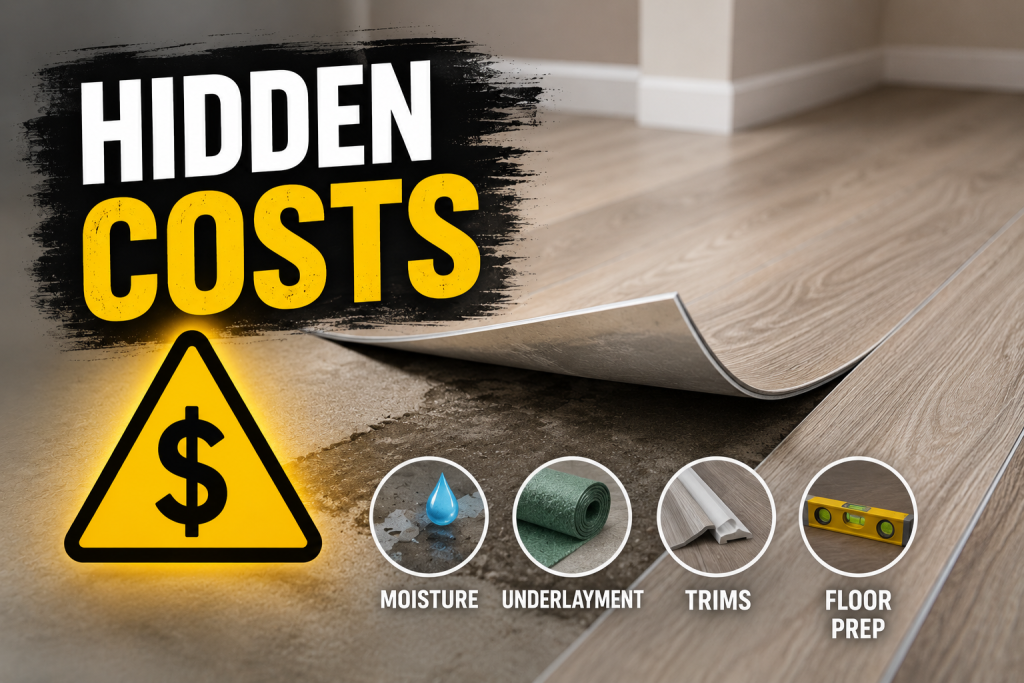
Moisture barriers and underlayment materials can also increase costs, particularly in basements or ground-level installations. These layers are essential for protecting waterproof vinyl flooring systems and ensuring long-term durability. Additional expenses may include transition strips, baseboards, stair installations, and detailed cuts around cabinets or doorways. These finishing elements often require extra labor time, which impacts vinyl flooring labor cost beyond basic square footage estimates. Understanding these hidden costs helps homeowners create a more realistic and complete budget before starting installation.
Final Verdict
When planning a realistic luxury vinyl plank flooring cost budget, US homeowners should consider both material and installation together rather than focusing on price per square foot alone. While LVP is widely known as an affordable flooring option, the final cost depends on product quality, labor rates, and site conditions. For most residential projects, budget-friendly LVP will fall on the lower end of the pricing spectrum, making it ideal for rental properties or large-area renovations. Mid-range products represent the most balanced choice, offering durability, realistic visuals, and strong long-term performance in everyday living spaces.
Premium LVP, while more expensive, provides enhanced wear resistance and design realism for high-traffic or design-focused homes. Installation complexity is often the deciding factor in final cost variation. Simple layouts with click-lock systems are more affordable, while projects involving subfloor repair, moisture barriers, or detailed layouts will increase overall expenses. In most US homes, a well-planned LVP project delivers strong value by balancing upfront vinyl plank flooring prices with long-term durability and low maintenance requirements.
FAQs About Luxury Vinyl Plank Flooring Cost
What is the average luxury vinyl plank flooring cost in the US?
The luxury vinyl plank flooring cost typically varies by quality and installation, but most US homeowners budget per square foot including both materials and labor.
What is included in LVP flooring installation cost?
LVP flooring installation cost usually includes labor, subfloor preparation, layout, cutting, and finishing details like transitions and trim.
Why do vinyl plank flooring prices vary so much?
Vinyl plank flooring prices vary based on thickness, wear layer quality, brand, waterproof features, and design realism.
Is waterproof vinyl flooring more expensive?
Yes, waterproof vinyl flooring cost is usually higher because it uses rigid core technology like SPC or WPC for better moisture protection.
How much does vinyl flooring labor cost?
Vinyl flooring labor cost depends on location and complexity, with higher rates for uneven subfloors or detailed layouts.
What are the most affordable flooring installation options?
Click-lock systems and DIY installation are the most affordable flooring installation methods for reducing overall project cost.
Is residential vinyl flooring worth the cost?
Yes, residential vinyl flooring cost is considered cost-effective because it balances durability, waterproofing, and low maintenance.