


Understanding Minimalist Interior Styles
Minimalism is often associated with empty rooms and stark white walls, but the concept goes much deeper than appearance alone. At its core, minimalism focuses on creating functional, intentional spaces where every element serves a purpose. Instead of filling a room with decorative items, homeowners prioritize quality, practicality, and visual balance. Among the many minimalist interior styles available today, the common goal is reducing unnecessary clutter while enhancing comfort and usability. This design philosophy encourages thoughtful furniture selection, efficient storage solutions, and layouts that support everyday living. Natural light, open space, and simple architectural details often play a major role in achieving the desired look. As minimalist design continues to evolve, different interpretations have emerged to suit various lifestyles and aesthetic preferences. Some styles emphasize warmth and texture, while others focus on symmetry, natural materials, or modern architectural elements. Understanding these distinctions can help homeowners choose a minimalist approach that aligns with both their personal taste and the way they use their living space.
Key Elements Found Across Minimalist Interior Styles
While each minimalist approach has its own character, several foundational principles remain consistent across most minimalist interior styles. These elements work together to create spaces that feel organized, purposeful, and visually calming. One of the most recognizable features is a restrained color palette. Neutral shades such as white, beige, gray, and soft earth tones help establish a sense of openness while reducing visual distractions. Furniture is typically selected for both function and aesthetics, with an emphasis on clean lines and timeless design rather than ornate details.

Storage also plays a critical role. Built-in cabinets, hidden compartments, and multi-functional furniture help maintain an uncluttered appearance without sacrificing practicality. In many homes, thoughtful storage solutions allow everyday items to remain accessible while staying out of sight. Natural light is another defining characteristic. Large windows, open layouts, and minimal window treatments help brighten interiors and make rooms feel larger. Combined with carefully chosen materials such as wood, stone, linen, and metal, these features create a balanced environment that feels both modern and inviting. Although design preferences vary, these shared principles form the foundation upon which the most popular minimalist approaches are built.
Scandinavian Minimalism
Originating in the Nordic countries, Scandinavian minimalism combines simplicity, functionality, and comfort in a way that feels welcoming rather than stark. This design approach emerged from the region’s long winters and limited daylight, leading homeowners to prioritize bright, airy interiors that maximize natural light and create a sense of warmth throughout the year. The style typically features a neutral color palette, light-toned wood flooring, and furniture with clean, understated lines. Rather than relying on excessive decoration, Scandinavian spaces incorporate texture through materials such as wool, linen, cotton, and natural wood. These subtle layers help create visual interest while maintaining an uncluttered appearance, which is a defining characteristic of many minimalist interior styles.
Functionality remains a central principle. Every piece of furniture is chosen with purpose, whether it provides storage, seating, or multi-use flexibility. Open layouts and thoughtfully arranged furnishings help improve flow while making rooms feel more spacious. This approach is especially popular among homeowners who appreciate practical design but still want their living spaces to feel cozy and inviting. By balancing simplicity with comfort, Scandinavian-inspired interiors demonstrate that minimalist design does not have to feel cold or impersonal.
Why Scandinavian Design Remains Popular
One reason this design approach continues to attract homeowners is its ability to balance beauty and practicality. Unlike trends that focus primarily on appearance, Scandinavian-inspired spaces are designed to support everyday living. The emphasis on comfort, functionality, and organization makes the style suitable for a wide range of home sizes and lifestyles, which is why it remains one of the most popular influences within minimalist interior styles. Another factor behind its popularity is its versatility. Whether incorporated into a downtown apartment, a suburban family home, or a modern townhouse, the design principles adapt easily to different architectural settings. The use of neutral colors and natural materials also allows homeowners to refresh their spaces over time without needing major renovations.
Many people are also drawn to the calming atmosphere these interiors create. Thoughtful furniture placement, uncluttered surfaces, and abundant natural light help reduce visual noise and promote a sense of relaxation. In a world where homes often serve as workplaces, entertainment spaces, and family gathering areas, this focus on simplicity feels increasingly relevant. The lasting appeal of Scandinavian design lies in its ability to create spaces that are attractive, comfortable, and highly functional without relying on excess. These qualities have helped shape some of the most admired minimalist interior styles seen in modern homes today.
Japanese Minimalism
Rooted in centuries of design philosophy, Japanese minimalism emphasizes harmony, balance, and a deep connection to nature. Rather than focusing solely on reducing possessions, this approach encourages homeowners to create environments that promote mindfulness and intentional living. Every object within the space is carefully selected, ensuring it contributes to both functionality and visual tranquility. Natural materials are central to the design. Wood, bamboo, stone, paper, and other organic elements help establish a calming atmosphere while strengthening the relationship between indoor and outdoor spaces. Furniture is often low-profile, with simple forms that avoid unnecessary ornamentation.
Open floor plans and uncluttered layouts further reinforce a sense of spaciousness and flow, making this approach a distinctive example of minimalist interior styles. Another defining characteristic is the appreciation of negative space. Empty areas are not viewed as unfinished but as an important design element that allows rooms to breathe and feel balanced. Soft lighting, muted color palettes, and carefully curated décor help maintain a peaceful environment without overwhelming the senses. For homeowners seeking a serene retreat from busy daily routines, this style offers a timeless approach that prioritizes simplicity, purpose, and a stronger connection to the surrounding environment.
Modern Minimalist Homes
Many of today’s modern minimalist homes blend traditional minimalist principles with contemporary architecture, creating spaces that feel both sophisticated and highly functional. This style often emphasizes open floor plans, expansive windows, and seamless transitions between living areas, allowing natural light to become a central design feature. Architectural simplicity is one of its defining characteristics. Clean geometric forms, uncluttered surfaces, and carefully integrated storage solutions help maintain a streamlined appearance throughout the home. Rather than relying on decorative details, visual interest is created through proportions, materials, and thoughtful spatial design, which are common traits found in many minimalist interior styles.
Technology is also commonly incorporated into these interiors. Smart lighting systems, hidden appliances, and integrated home automation features support convenience while preserving a clean aesthetic. Furniture selections tend to follow the same philosophy, favoring sleek profiles and practical functionality over excessive ornamentation. This approach appeals to homeowners who appreciate contemporary architecture but still want the organization and simplicity associated with minimalism. By combining modern building techniques with purposeful design choices, these homes offer a refined living environment that feels open, efficient, and adaptable to changing lifestyle needs.
Features Common in Modern Minimalist Interior Styles
While individual homes may vary in appearance, several characteristics consistently appear across today’s minimalist interior styles. These features help create spaces that feel organized, visually balanced, and practical for everyday living. One of the most noticeable elements is the use of open-concept layouts. By reducing unnecessary walls and barriers, homeowners can improve natural light distribution and create a stronger sense of flow between living, dining, and kitchen areas. This openness also contributes to a more spacious feel, even in moderately sized homes.
Storage is carefully integrated into the overall design rather than added as an afterthought. Built-in shelving, concealed cabinets, and multi-purpose furniture help maintain clean surfaces while maximizing functionality. Material selection also plays a significant role, with wood, glass, metal, and stone frequently used to add texture without overwhelming the space. Large windows, simple architectural lines, and restrained decorative accents further reinforce the minimalist aesthetic. Together, these elements create interiors that prioritize comfort, efficiency, and long-term usability while maintaining a timeless appearance. These characteristics continue to define some of today’s most popular minimalist interior styles.
Monochromatic Interiors
Among the many approaches to minimalist design, monochromatic interiors stand out for their disciplined use of a single color family throughout a space. Rather than relying on multiple contrasting colors, this style creates visual harmony by layering different shades, tones, and textures within the same palette. A monochromatic scheme does not mean a room lacks character. In fact, texture becomes even more important when color variation is limited. Designers often combine materials such as wood, stone, linen, leather, and matte finishes to introduce depth while maintaining a cohesive appearance. Subtle contrasts in texture help prevent the space from feeling flat or repetitive.
Lighting also plays a significant role in enhancing the overall effect. Natural light can highlight variations within the chosen palette, while carefully placed fixtures add dimension and warmth during the evening hours. This approach creates a refined aesthetic that feels calm and visually consistent, making it a distinctive choice among minimalist interior styles. For homeowners who appreciate simplicity and order, monochromatic design offers a sophisticated way to achieve a minimalist look while maintaining a strong sense of elegance and cohesion.
Contemporary Minimalist Decor
Unlike traditional minimalist approaches that follow strict design rules, contemporary minimalist decor adapts to current lifestyle trends while maintaining a focus on simplicity and functionality. This style embraces clean aesthetics but allows for greater flexibility in furniture selection, materials, and decorative accents. One of its defining features is the strategic use of statement pieces. Rather than filling a room with multiple decorative objects, homeowners may choose a single artwork, sculptural light fixture, or distinctive furniture item as a focal point. This creates visual interest without compromising the overall sense of openness and balance.
Technology is often integrated seamlessly into the design. Smart home features, concealed entertainment systems, and modern appliances contribute to convenience while preserving uncluttered spaces. Contemporary minimalist interiors may also incorporate a wider range of textures and finishes than more traditional interpretations, adding warmth and personality to the home. These qualities have helped shape some of the most adaptable minimalist interior styles seen in modern residences.m As design preferences continue to evolve, this approach remains popular because it offers the simplicity of minimalism while accommodating modern living requirements. The result is a space that feels current, practical, and visually refined without becoming overly decorative.
Comparing Popular Minimalist Interior Styles
Although all minimalist interior styles share a commitment to simplicity and functionality, each approach creates a different living experience. Some emphasize warmth and comfort, while others focus on balance, architectural precision, or visual consistency. Understanding these distinctions can help homeowners choose a style that aligns with their preferences, daily routines, and long-term design goals.
| Style | Best For | Color Palette | Key Materials | Overall Feel |
| Scandinavian | Homeowners seeking warmth and comfort | Light neutrals and soft earth tones | Wood, wool, linen | Cozy and inviting |
| Japanese | Those who value calm and mindfulness | Natural, muted shades | Bamboo, wood, stone | Peaceful and balanced |
| Modern | Contemporary living and open layouts | Neutral tones with subtle contrast | Glass, metal, concrete | Sleek and sophisticated |
| Monochromatic | Visual consistency and elegance | Single-color palette variations | Mixed textures and finishes | Refined and cohesive |
| Contemporary | Flexible modern lifestyles | Neutral base with accent elements | Mixed modern materials | Current and adaptable |
The right choice depends on how you want your home to feel and function. Some homeowners prefer the warmth of Nordic-inspired spaces, while others are drawn to the serenity of Japanese design or the architectural appeal of modern interiors. Evaluating your lifestyle needs can make the selection process much easier.
Choosing the Right Minimalist Home Theme
Selecting from various minimalist home themes involves more than choosing a visual style. The best option should complement your daily habits, household needs, and the overall architecture of your home. A design that looks appealing in photographs may not always provide the comfort or functionality required for everyday living. Start by evaluating how you use your space. Families with children may benefit from practical storage solutions and durable materials, while individuals or couples might prioritize openness and simplicity.
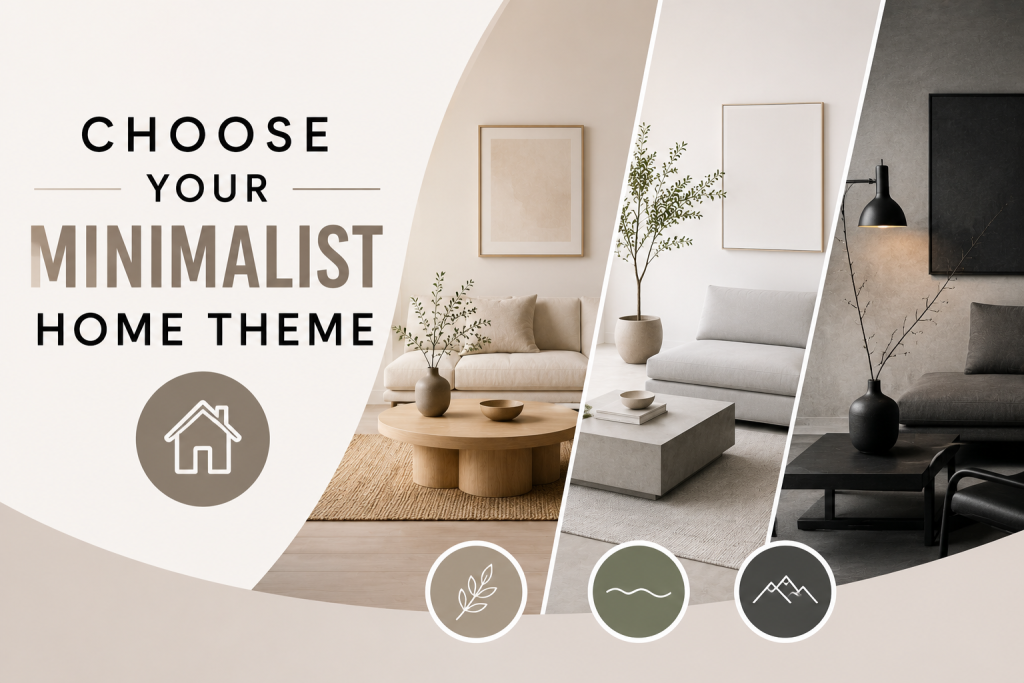
The amount of natural light in your home can also influence which minimalist approach feels most effective. Bright interiors often work well with lighter palettes, while darker spaces may require thoughtful material and lighting choices to maintain balance, regardless of which minimalist interior styles you prefer. Maintenance requirements should be another consideration. Some styles depend on highly organized spaces and carefully curated furnishings, while others offer more flexibility in how rooms are arranged and used. By identifying your priorities early, it becomes easier to choose a design direction that remains practical and enjoyable for years to come.
Matching Minimalist Interior Styles to Your Lifestyle
The most successful minimalist interior styles are those that align with the way you actually live. While aesthetics are important, functionality should remain the primary factor when selecting a design direction. A home that supports your daily routines will feel more comfortable and sustainable over time than one chosen solely for visual appeal. For homeowners who value warmth and relaxation, Scandinavian-inspired spaces may provide the right balance between simplicity and comfort. Those seeking a more tranquil and reflective environment may prefer Japanese influences that emphasize natural materials and intentional living.
Meanwhile, individuals drawn to sleek architecture and modern conveniences often gravitate toward contemporary interpretations of minimalism. It’s also important to consider your organizational habits. Some people naturally maintain highly organized spaces, while others need flexible storage systems to manage everyday belongings. The best minimalist designs accommodate these realities rather than working against them. Ultimately, the goal is not to create a perfectly empty home but to establish an environment that feels functional, comfortable, and visually balanced. The most effective clean interior styles support both practical living and long-term satisfaction, making your home easier to enjoy every day.
Conclusion
Minimalist design is far more diverse than many homeowners realize. From the warmth of Scandinavian interiors and the serenity of Japanese-inspired spaces to the sophistication of modern architecture and monochromatic color schemes, each approach offers a unique interpretation of simplicity. While these styles share common principles such as functionality, intentional design, and clutter reduction, they differ in how they create comfort, visual interest, and everyday usability. This variety is one reason why minimalist interior styles continue to appeal to homeowners with different preferences, lifestyles, and design goals.Choosing the right minimalist approach ultimately depends on your lifestyle, design preferences, and the way you use your home. Factors such as natural light, storage needs, maintenance expectations, and architectural style can all influence which direction feels most practical and enjoyable, especially when comparing different minimalist interior styles. Rather than focusing on strict design rules, successful minimalism is about creating a home that supports your daily life while eliminating unnecessary distractions. By understanding the characteristics of each style, homeowners can make informed decisions and build living spaces that feel balanced, functional, and timeless for years to come.
Frequently Asked Questions
What is the most popular minimalist interior design style?
Scandinavian design is often considered the most widely adopted minimalist approach because it combines simplicity, functionality, and comfort. Its use of natural materials, bright interiors, and practical furnishings makes it appealing to a broad range of homeowners.
Is Scandinavian design or Japanese design better?
Neither style is inherently better; the right choice depends on personal preferences and lifestyle needs. Scandinavian interiors typically feel warmer and more inviting, while Japanese-inspired spaces focus on balance, mindfulness, and a stronger connection to nature.
Can a minimalist home still feel cozy?
Yes. Minimalism does not require a space to feel cold or empty. Thoughtful use of textures, layered lighting, natural materials, and comfortable furnishings can create a welcoming atmosphere while maintaining a simple and uncluttered appearance.
Are monochromatic color schemes difficult to maintain?
Not necessarily. While monochromatic spaces can highlight clutter more easily, they are often easier to coordinate because all design elements follow a cohesive color palette. Regular organization and intentional styling help maintain the desired look.
How can I start creating a minimalist home?
Begin by removing unnecessary items and identifying what you use most frequently. Focus on functional furniture, efficient storage solutions, and a limited color palette. Making gradual changes often leads to more sustainable results than attempting a complete redesign at once.