


Modern Remodeling Costs: The True Price of Following Today’s Renovation Trends
Modern home design continues to evolve as homeowners seek cleaner aesthetics, smarter technology, and more personalized living spaces. From open-concept layouts to custom kitchens and energy-efficient upgrades, today’s renovation projects often prioritize both style and functionality. However, keeping up with these design preferences comes at a price.
Over the past few years, rising material costs, labor shortages, and increasing demand for customized features have significantly influenced modern remodeling costs across the United States. Homeowners in markets such as Texas, Florida, California, and Colorado frequently discover that trend-focused renovations can exceed initial budget expectations, particularly when premium materials and specialized craftsmanship are involved. Understanding what drives renovation spending is essential before starting a project. Whether you’re planning a kitchen remodel, upgrading your exterior, or modernizing an entire home, knowing where costs originate can help you make smarter financial decisions while protecting long-term property value and resale potential.
Why Modern Remodeling Trends Are Increasing Project Costs
Homeowners are investing more heavily in design-driven renovations than ever before. Features that were once considered luxury upgrades, such as smart home automation, oversized kitchen islands, hidden storage systems, and energy-efficient windows, are increasingly becoming standard expectations. As a result, modern remodeling costs continue to rise across many U.S. housing markets.
Another major factor is the growing demand for high-quality materials. Products from manufacturers such as James Hardie, Andersen Windows, and Owens Corning often command higher prices due to durability, performance, and brand reputation. At the same time, supply chain fluctuations and inflation have increased the cost of many building materials. Homeowners should also recognize that trendy home renovation pricing is often influenced by social media trends and consumer demand. Popular design styles can quickly increase material and contractor costs, especially in competitive markets such as Dallas, Miami, Phoenix, and Denver.
Understanding Modern Remodeling Costs in 2026
The average renovation budget varies widely depending on project scope, home size, location, and finish selections. In 2026, many homeowners are allocating significantly larger budgets for remodeling projects than they did just a few years ago. Rising material prices, permit requirements, and specialized installations have all contributed to higher modern remodeling costs nationwide.
For example, a mid-range kitchen remodel may cost tens of thousands of dollars, while a whole-home renovation can easily reach six figures in high-cost regions such as California or New York. Homeowners in states like Texas and Florida may benefit from slightly lower construction costs, but labor availability and local demand still affect final pricing. Current renovation budget trends show that homeowners are increasingly prioritizing energy efficiency, functional layouts, and long-term durability over purely cosmetic upgrades. These priorities often create greater upfront expenses but can improve resale value and reduce future maintenance costs.
How Remodeling Labor Costs Affect Total Spending
Labor is one of the largest expenses in any renovation project and often accounts for a substantial portion of total project pricing. Skilled trades such as electricians, plumbers, roofers, carpenters, and HVAC technicians are in high demand across many U.S. markets, making labor availability a critical factor when estimating modern remodeling costs.
Current remodeling labor costs are being influenced by workforce shortages, licensing requirements, and increased demand for specialized craftsmanship. Projects involving custom millwork, structural modifications, or advanced smart-home installations typically require experienced professionals whose rates are higher than general contractors. Regional differences also play an important role. Homeowners in major metropolitan areas such as Chicago, Los Angeles, and Miami often pay more for labor than those in smaller suburban markets. Understanding labor expenses early in the planning process can help prevent budget overruns and improve overall project management.
Premium Home Finishes and Their Price Impact
Material selection has a direct impact on renovation budgets, especially when homeowners choose designer-grade products and custom features. High-end countertops, handcrafted cabinetry, imported tile, and specialty lighting fixtures can significantly increase modern remodeling costs, even when the overall project scope remains unchanged. Many homeowners are attracted to premium home finishes because they enhance visual appeal, durability, and perceived property value.
Quartz countertops, custom wood cabinetry, wide-plank hardwood flooring, and luxury bathroom fixtures remain popular choices in upscale renovations throughout the United States. While these materials often deliver a more refined appearance, they also require larger upfront investments. In addition to material costs, installation expenses may rise because many premium products require specialized tools or experienced craftsmen. Before committing to high-end finishes, homeowners should carefully evaluate long-term value, maintenance requirements, and potential return on investment to ensure the upgrade aligns with their financial goals.
Modern Remodeling Costs by Project Type
Not all renovation projects require the same level of investment. Kitchen remodels, bathroom renovations, room additions, and exterior improvements each come with unique cost considerations that influence overall modern remodeling costs. Understanding these differences helps homeowners set realistic expectations before construction begins. Kitchen renovations are typically among the most expensive projects because they combine cabinetry, countertops, appliances, plumbing, electrical work, and finish selections.
Bathroom remodels often cost less but can still become expensive when custom tile work and luxury fixtures are involved. Whole-home renovations require the largest budgets due to their scale and complexity. nExterior projects such as roofing, siding replacement, window upgrades, and outdoor living spaces also contribute significantly to remodeling budgets. The final cost of any project depends on factors such as home size, material quality, labor availability, permit requirements, and regional market conditions.
Contemporary Home Upgrades That Add the Most Value
Homeowners looking to maximize return on investment should focus on improvements that enhance functionality, energy efficiency, and everyday comfort. Many of today’s most valuable renovations not only improve aesthetics but also help reduce utility expenses and increase buyer appeal. These factors can justify higher modern remodeling costs when the upgrades provide measurable long-term benefits. Popular contemporary home upgrades include ENERGY STAR-certified windows, smart thermostats, modern insulation systems, open-concept living areas, and upgraded kitchen layouts.
These improvements appeal to a broad range of buyers and often support stronger resale values in competitive housing markets. Energy-efficient enhancements are especially attractive in regions with extreme climates, including Texas, Arizona, and Florida. Homeowners who prioritize performance-driven upgrades rather than purely decorative changes are often better positioned to recover a larger portion of their renovation investment when it comes time to sell.
Luxury Remodeling Expenses Homeowners Often Underestimate
Many homeowners focus primarily on materials and contractor quotes when budgeting for a renovation, but several hidden costs can significantly increase modern remodeling costs. These overlooked expenses often emerge during construction and can place unexpected pressure on project budgets. Common luxury remodeling expenses include architectural design fees, structural engineering consultations, permit applications, temporary housing arrangements, and custom fabrication work.
High-end projects may also require specialized lighting plans, premium appliance installations, or advanced home automation systems that add considerable expense beyond standard construction costs. Unexpected issues discovered during demolition can create additional financial challenges. Outdated wiring, plumbing deficiencies, water damage, or structural concerns frequently require corrective work before renovation plans can proceed. Setting aside a contingency fund of at least 10% to 20% of the total project budget can help homeowners manage unforeseen expenses while keeping renovation goals on track.
Renovation Budget Trends Across Different US Regions
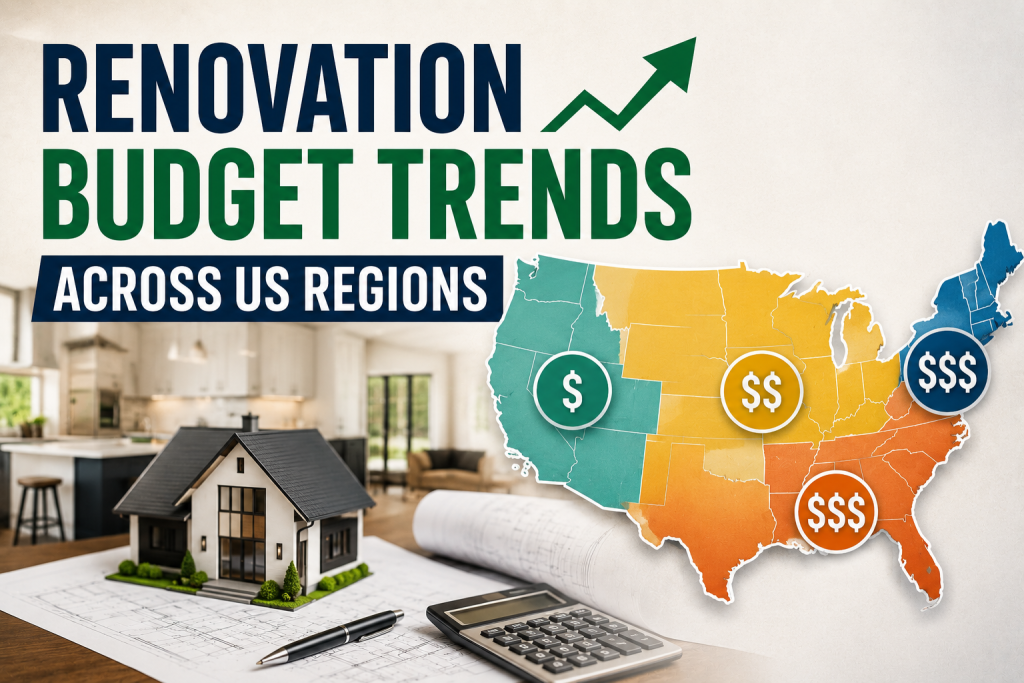
Renovation costs can vary dramatically depending on location, local labor markets, climate conditions, and regional construction demand. While national averages provide a useful benchmark, homeowners should evaluate pricing within their specific market to better understand potential modern remodeling costs. States such as California and New York generally experience higher renovation expenses due to elevated labor rates, permitting requirements, and real estate values.
In contrast, many areas of the Midwest may offer more affordable construction pricing, although material and labor shortages can still affect project budgets. Fast-growing markets like Texas, Florida, and Arizona continue to see strong remodeling activity, which often increases competition for skilled contractors. Regional weather patterns also influence spending. Coastal areas may prioritize hurricane-resistant materials, while northern states often invest more heavily in insulation, roofing systems, and weather protection designed to withstand harsh winter conditions.
How to Control Modern Remodeling Costs Without Sacrificing Style
Keeping a renovation budget under control does not mean abandoning quality or design goals. With careful planning, homeowners can reduce modern remodeling costs while still achieving a modern, attractive living space. The key is to focus spending on upgrades that deliver the greatest functional and visual impact. One effective strategy is to prioritize projects in phases rather than completing an entire home remodel at once.
Homeowners can also compare contractor bids, select durable mid-range materials, and reserve premium features for highly visible areas such as kitchens and primary bathrooms. These decisions often provide a better balance between cost and value. Many successful modern renovation ideas focus on improving efficiency and usability rather than pursuing expensive custom features. Energy-efficient windows, upgraded lighting, refreshed cabinetry, and improved storage solutions can create a modern appearance while helping homeowners stay within budget and protect long-term resale value.
Modern Renovation Ideas That Deliver Better ROI
Not every renovation generates the same financial return. Homeowners who focus on practical improvements often see stronger value appreciation than those who invest heavily in highly personalized features. While design trends change over time, projects that improve efficiency, functionality, and curb appeal tend to remain attractive to future buyers. Kitchen refreshes continue to offer strong returns, especially when existing layouts remain intact.
Updating cabinet fronts, countertops, lighting fixtures, and appliances can create a modern appearance without the expense of a complete rebuild. Bathroom upgrades, exterior improvements, and window replacements also remain popular investments in many U.S. housing markets. Energy-focused improvements deserve special attention. High-performance insulation, efficient HVAC systems, and ENERGY STAR-certified products can lower monthly utility costs while increasing buyer interest. Homeowners who balance aesthetics with long-term performance are often better positioned to maximize both comfort and property value over time.
Conclusion
Following modern design trends can transform a home’s appearance, functionality, and long-term value, but homeowners should understand the financial commitment involved before beginning any project. From material selection and labor availability to regional market conditions and permit requirements, numerous factors influence modern remodeling costs across the United States. The most successful renovations balance aesthetics with practicality. Rather than chasing every trend, homeowners should focus on upgrades that improve energy efficiency, comfort, durability, and resale potential. Careful planning, realistic budgeting, and strategic material choices can help control expenses while still delivering a modern, high-quality result. Whether you’re considering a kitchen remodel, a bathroom renovation, or a whole-home transformation, understanding current cost drivers allows you to make informed decisions and avoid unexpected financial surprises. With the right approach, a well-planned renovation can enhance both your daily living experience and your property’s long-term market value.
Frequently Asked Questions
What are the average modern remodeling costs for a home?
Average modern remodeling costs vary based on project scope, location, and material selections. Small renovation projects may cost a few thousand dollars, while whole-home remodels can exceed six figures. Factors such as labor rates, permits, and custom features have a significant impact on final pricing.
Which renovation projects provide the best return on investment?
Kitchen updates, bathroom improvements, siding replacement, window upgrades, and energy-efficiency improvements often provide strong returns. Projects that improve functionality and curb appeal generally attract more buyer interest than highly customized renovations.
Why do remodeling budgets often exceed initial estimates?
Unexpected structural issues, permit requirements, material price increases, and project changes frequently increase renovation expenses. Homeowners should maintain a contingency reserve of 10% to 20% to manage unforeseen costs during construction.
Are modern renovations more expensive than traditional renovations?
In many cases, yes. Modern renovations often include smart-home technology, energy-efficient systems, custom storage solutions, and premium materials that can increase overall project expenses compared to more basic remodeling projects.
How can homeowners reduce modern remodeling costs?
Planning projects in phases, obtaining multiple contractor bids, choosing value-oriented materials, and focusing on high-impact improvements can help reduce modern remodeling costs without sacrificing quality or long-term value.