

Porcelain vs Ceramic Tile Flooring (Complete US Homeowner Guide)
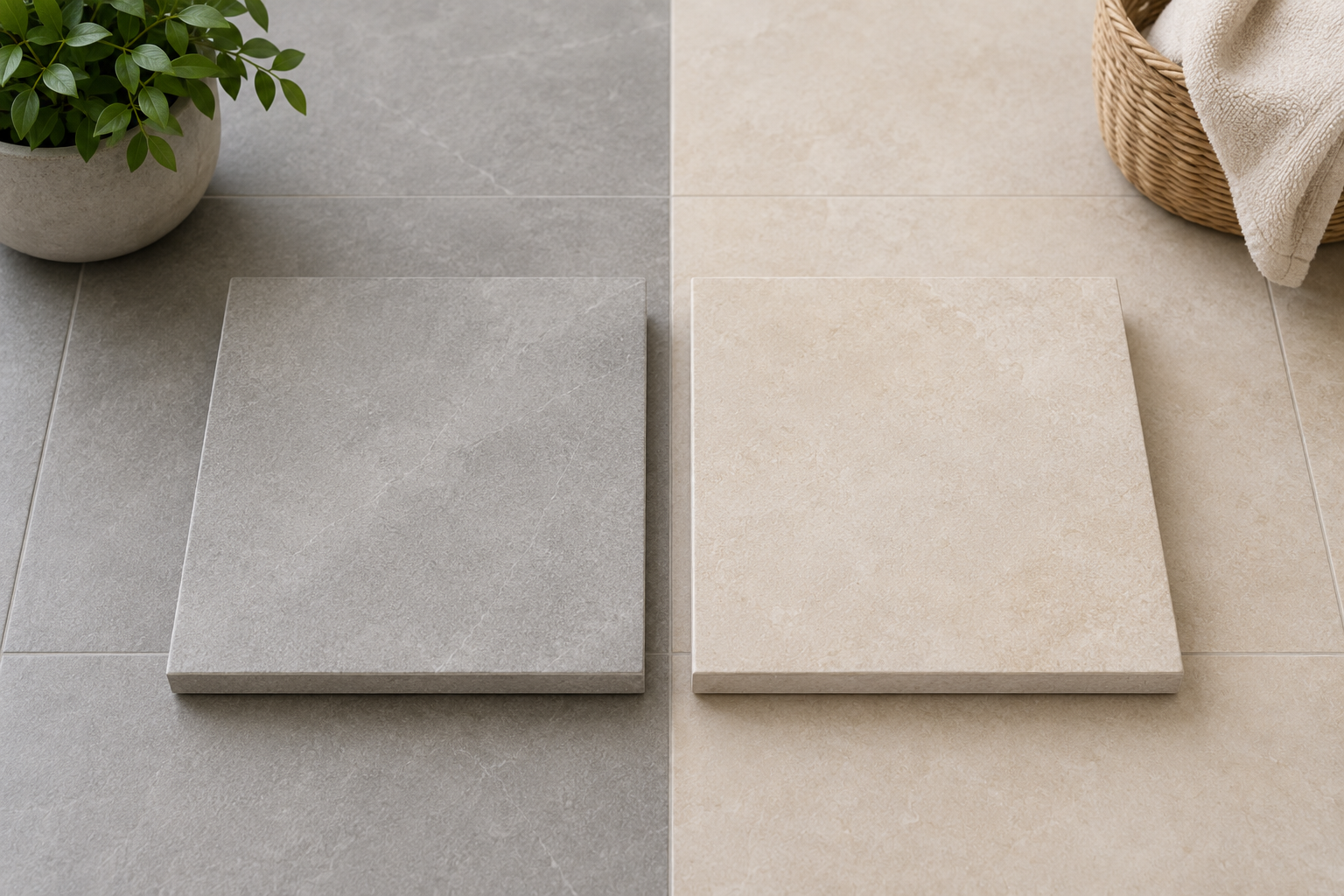
Understanding porcelain vs ceramic tile is essential for any US homeowner planning a flooring upgrade, especially in kitchens, bathrooms, or high-traffic living areas. While both fall under the same broad category of tile flooring, they perform differently in terms of durability, water resistance, cost, and long-term maintenance. The main difference comes from how each material is made. Ceramic tile is produced from natural clay and fired at lower temperatures, making it more affordable and easier to cut. Porcelain, on the other hand, is fired at higher temperatures, resulting in a denser, harder, and less porous material that performs better in demanding environments.
Choosing between the two is not just about budget, it’s about matching the right material to the right space. Factors like moisture exposure, foot traffic, and design goals all influence the decision. This guide breaks down the full ceramic tile comparison and porcelain floor tile benefits to help homeowners make the right long-term flooring choice.
Ceramic Tile Comparison Overview
A ceramic tile comparison starts with understanding its core advantages: affordability, versatility, and ease of installation. For many US homeowners, ceramic remains a popular choice because it delivers a balance between style and budget, making it widely used in residential remodeling projects. Ceramic tile is made from natural clay that is fired at lower temperatures compared to porcelain. This process makes it slightly softer and more porous, but also easier to cut and shape during installation. As a result, installation costs are often lower, which makes ceramic attractive for affordable tile flooring projects.
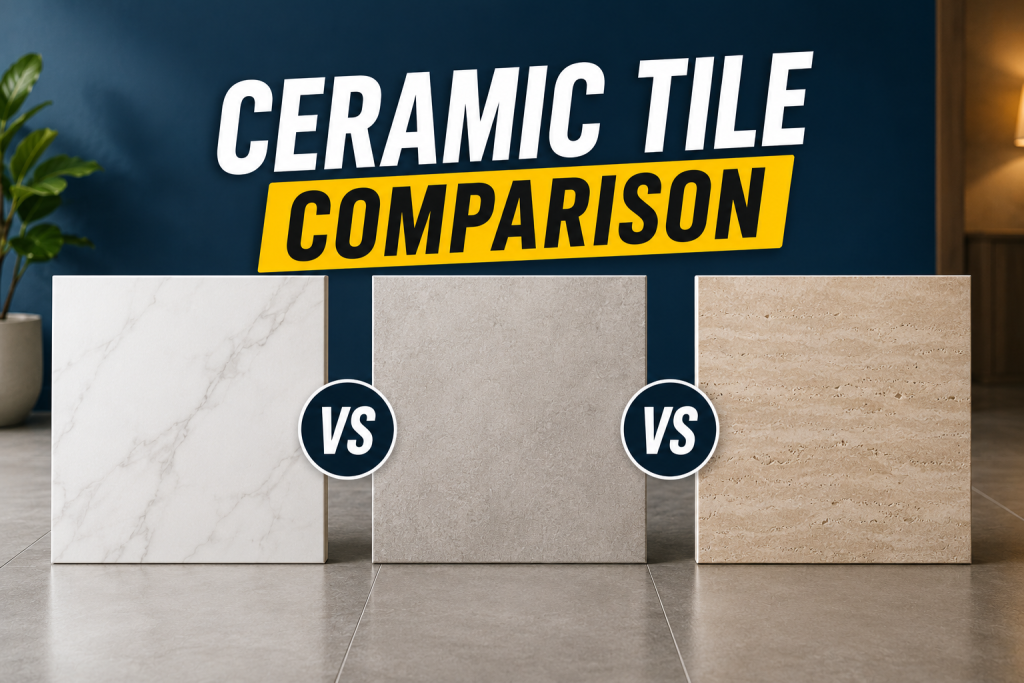
In terms of design, ceramic offers a wide variety of colors, patterns, and finishes, making it suitable for creative interiors. It works well in moderate-traffic areas such as guest bathrooms, laundry rooms, and decorative kitchen spaces. However, ceramic is less dense than porcelain, meaning it is more vulnerable to moisture absorption and chipping in heavy-use areas. This limitation is important when comparing it directly with higher-performance flooring options.
Porcelain Floor Tile Benefits
The porcelain floor tile benefits make it a preferred choice for homeowners who prioritize durability, moisture resistance, and long-term performance. In the porcelain vs ceramic tile comparison, porcelain consistently ranks higher in strength and resilience, especially in demanding residential environments. Porcelain is made from finer clay and fired at higher temperatures, resulting in a denser and less porous structure. This makes it highly resistant to water absorption, stains, and daily wear. Because of this, porcelain is often recommended for high-moisture spaces such as bathrooms, kitchens, and entryways where spills and humidity are common.
Another major advantage is its durability under heavy foot traffic. Porcelain can withstand impact and surface wear better than ceramic, making it suitable for busy households or open-concept living areas. It also performs well in both indoor and outdoor applications, adding flexibility to design choices. While installation can be more expensive due to its hardness, the long-term benefits often justify the investment in terms of reduced maintenance and extended lifespan.
Tile Durability Comparison
When evaluating tile durability comparison, the difference between porcelain and ceramic becomes one of the most important deciding factors in the porcelain vs ceramic tile debate. Durability directly impacts how well the flooring performs over time in real US household conditions. Porcelain tile is significantly denser and less porous than ceramic, which makes it more resistant to cracks, chips, and surface wear. This strength allows it to handle heavy furniture, high foot traffic, and moisture exposure without degrading quickly. In busy households or commercial-style residential spaces, porcelain typically outperforms ceramic in long-term durability.
Ceramic tile, while still durable, is softer and more prone to chipping or surface damage under heavy impact. It performs well in low to moderate traffic areas, but may show wear faster in kitchens, hallways, or entryways where daily use is more intense. In most residential applications, durability becomes a tradeoff between cost and performance, making it essential to match the tile type to the expected level of use in each room.
Bathroom Tile Flooring Options
When comparing bathroom tile flooring options, the porcelain vs ceramic tile decision becomes especially important because bathrooms are high-moisture, high-use environments. Water exposure, humidity, and slip risk all influence which material performs best over time. Porcelain tile is often the preferred choice for bathrooms due to its low porosity and strong resistance to water absorption. This makes it ideal for shower areas, bathroom floors, and wet zones where moisture control is critical. In most US homes, porcelain is considered the safer long-term option for bathroom tile flooring options because it reduces the risk of swelling, staining, and long-term water damage.
Ceramic tile can still be used in bathrooms, particularly in powder rooms or low-moisture spaces. However, it is more porous than porcelain, meaning it requires proper sealing and maintenance to perform well in humid conditions. Slip resistance is another key factor. Textured finishes in either material can improve safety, especially in wet areas where water exposure is frequent.
Kitchen Tile Flooring Comparison
A kitchen tile flooring comparison is a key part of the porcelain vs ceramic tile decision because kitchens are one of the most heavily used areas in US homes. Spills, heat exposure, foot traffic, and dropped objects all influence which material performs better long term. Porcelain tile is often the stronger option for kitchens due to its high density and resistance to stains and moisture. It handles spills from water, oil, and food more effectively, making it a reliable choice for busy cooking environments. In the kitchen tile flooring comparison, porcelain typically offers better durability under heavy use and requires less frequent maintenance.
Ceramic tile, however, remains a popular choice for budget-conscious kitchen renovations. It offers a wide range of design styles and is easier to install, which helps reduce upfront costs in affordable tile flooring projects. While it performs well in moderate-use kitchens, it may be more prone to chipping or wear in high-traffic areas. Ultimately, kitchen performance depends on balancing durability needs with budget and design preferences.
Tile Maintenance Comparison of Porcelain VS Ceramic Tile
A tile maintenance comparison between porcelain and ceramic is an important part of the porcelain vs ceramic tile decision because long-term upkeep directly affects cost, appearance, and durability in US homes. Porcelain tile is generally easier to maintain due to its dense, non-porous surface. It resists stains, moisture absorption, and everyday grime more effectively, which makes cleaning more straightforward. In most cases, regular sweeping and damp mopping are enough to keep it looking new, even in high-traffic areas.
Ceramic tile, while still relatively easy to maintain, is slightly more porous. This means it may require more frequent sealing (depending on the finish) and closer attention in moisture-prone areas. Stains and grime can penetrate more easily if not cleaned promptly, especially in kitchens and bathrooms. Grout maintenance is required for both materials, as grout lines are typically the most vulnerable part of any tile flooring system. Proper sealing and routine cleaning significantly improve long-term performance regardless of tile type.
Affordable Tile Flooring – Cost Differences
When evaluating affordable tile flooring, cost is often the deciding factor in the porcelain vs ceramic tile comparison for US homeowners. While both options can fit different budgets, their pricing structures vary based on material quality, installation complexity, and long-term performance expectations. Ceramic tile is generally the more budget-friendly option. It costs less to manufacture and is easier to cut and install, which helps reduce both material and labor expenses. This makes ceramic a strong choice for homeowners focused on affordable tile flooring projects such as guest bathrooms, laundry rooms, or low-traffic areas.
Porcelain tile, on the other hand, tends to have a higher upfront cost due to its density and manufacturing process. Installation can also be more expensive because it requires specialized tools and more labor-intensive handling. However, it often delivers better long-term value due to its durability and lower maintenance needs. Ultimately, the cost difference reflects a tradeoff between upfront savings and long-term performance investment.
Where Each Tile Type Works Best (Real Homes)
Understanding where each material performs best is key in the porcelain vs ceramic tile decision, especially for US homeowners planning room-specific renovations. The right choice depends on moisture levels, traffic intensity, and long-term durability expectations. Porcelain tile performs best in high-moisture and high-traffic areas. This includes bathrooms, kitchens, entryways, and even mudrooms where water, dirt, and daily wear are common. Because of its density and low porosity, porcelain is ideal for spaces that demand strong resistance to water and long-term structural stability.
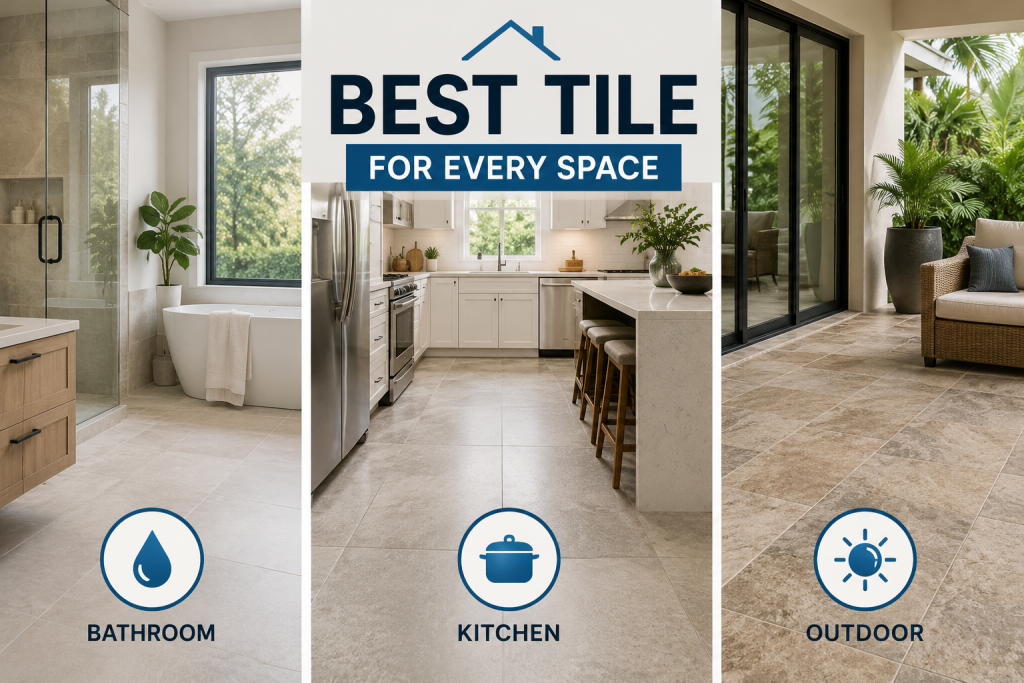
Ceramic tile is better suited for lower-traffic and less moisture-intensive areas. It works well in guest bathrooms, decorative kitchen backsplashes, laundry rooms, and accent flooring where design flexibility and affordable tile flooring are more important than maximum durability. In real US homes, many homeowners combine both materials, using porcelain in high-performance zones and ceramic in secondary spaces, to balance cost, durability, and design flexibility.
Final Verdict
Choosing between porcelain vs ceramic tile ultimately comes down to how the space will be used, your budget, and how long you expect the flooring to last. In most US homes, there is no single “best” option, only the best fit for each situation. Porcelain tile is the stronger long-term investment. It offers superior durability, lower water absorption, and better performance in high-traffic or moisture-heavy areas. For bathrooms, kitchens, and entryways, porcelain is typically the recommended choice when prioritizing performance and longevity.
Ceramic tile, however, remains a smart option for homeowners focused on affordable tile flooring and design flexibility. It works well in lighter-use areas and can significantly reduce upfront renovation costs while still delivering a clean, attractive finish. In practice, many homeowners use a hybrid approach, porcelain in demanding areas and ceramic in secondary spaces. This balance allows for cost control without sacrificing durability where it matters most.
FAQs
What is the main difference between porcelain vs ceramic tile?
The main difference in porcelain vs ceramic tile is density, porcelain is denser, less porous, and more durable than ceramic.
Is porcelain floor tile better than ceramic?
Yes, porcelain floor tile benefits include higher durability, better water resistance, and longer lifespan, especially in high-traffic areas.
Which tile is more affordable?
Ceramic is generally more affordable and considered better for affordable tile flooring projects due to lower material and installation costs.
Which tile is better for bathrooms?
For bathrooms, porcelain is usually preferred because it handles moisture better, making it ideal for bathroom tile flooring options.
How does tile durability comparison work?
A tile durability comparison shows porcelain as stronger and more resistant to cracking and wear than ceramic.
Is ceramic tile good for kitchens?
Yes, but kitchen tile flooring comparison shows porcelain performs better in high-use kitchens due to stain and moisture resistance.
How does tile maintenance compare?
In a tile maintenance comparison, porcelain is easier to maintain because it absorbs less moisture and stains.