


Porcelain vs Ceramic Tile for Bathrooms : Key Differences
When comparing porcelain vs ceramic tile, the main differences come down to density, durability, and water resistance. Porcelain tile is made from a denser type of clay and fired at higher temperatures, making it less porous and more resistant to moisture. This is why it is often recommended for high-moisture areas such as bathrooms, showers, and laundry rooms. Ceramic tile, on the other hand, is slightly softer and more porous, but still performs well in most bathroom environments when properly installed and sealed. It is often easier to cut and install, which can reduce labor costs during remodeling projects. Both materials are widely used in bathroom tile comparison discussions, especially when homeowners are deciding between performance and budget. Understanding these differences helps you choose the right option based on durability needs, design goals, and long-term maintenance expectations.
Waterproof Bathroom Tile & Performance Differences
When evaluating porcelain vs ceramic tile, water resistance is one of the most important factors for bathroom applications. Porcelain is widely considered a superior option for wet environments because it has a much lower water absorption rate. This makes it a strong choice for showers, floors, and other high-moisture areas where long-term durability is essential. Ceramic tile also performs well in bathrooms, but it is more porous and typically requires proper glazing and sealing to improve resistance.
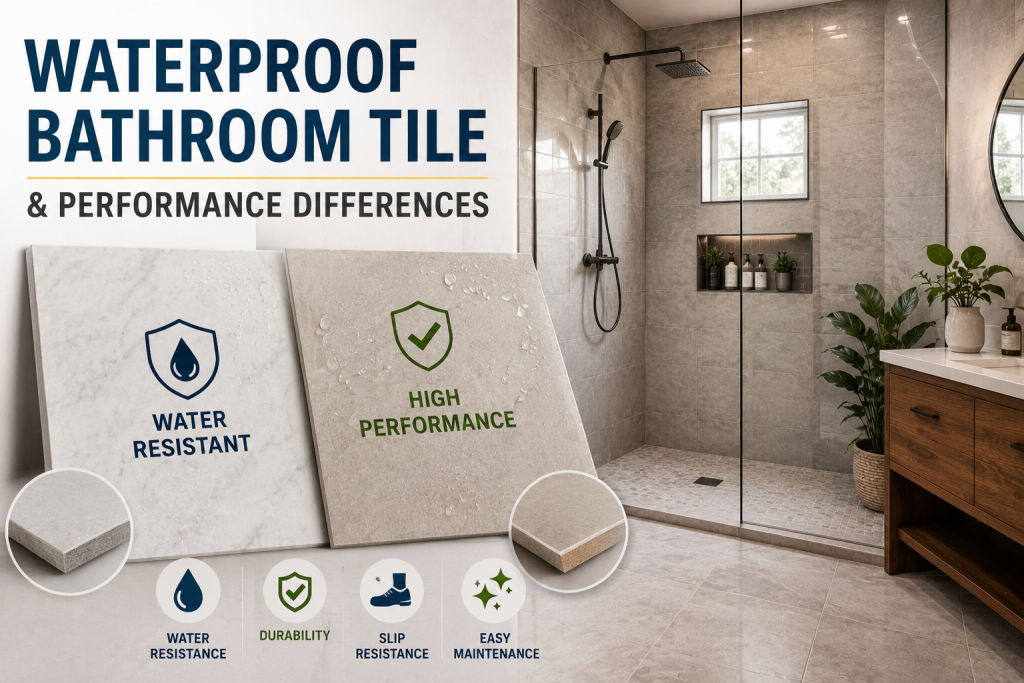
In most residential settings, it is suitable for walls and low-moisture areas, making it a practical and cost-effective option for many homeowners. In a broader bathroom tile comparison, porcelain is often chosen for performance-driven installations, while ceramic is selected for design flexibility and affordability. Understanding these differences ensures your waterproof bathroom tile choice aligns with both functional needs and long-term maintenance expectations.
Porcelain vs Ceramic Tile: Ceramic Tile Benefits in Bathroom Design
When comparing porcelain vs ceramic tile, ceramic tile remains a popular choice due to its affordability, design versatility, and ease of installation. One of the key ceramic tile benefits is its wide range of colors, patterns, and finishes, allowing homeowners to achieve nearly any style—from classic to modern—without exceeding their budget. Ceramic tile is also easier to cut and shape, which makes installation faster and more cost-effective for contractors.
This can be especially beneficial in complex bathroom layouts or detailed design patterns, such as decorative borders or accent walls in shower wall tile ideas. While it is not as dense or water-resistant as porcelain, ceramic tile still performs well in most bathroom environments when properly installed and maintained. For homeowners prioritizing aesthetics and cost savings, ceramic remains a reliable option in many bathroom flooring tile options.
Porcelain Tile Durability and Long-Term Performance
One of the main advantages in the porcelain vs ceramic tile comparison is the superior strength and longevity of porcelain. Thanks to its dense composition and high-temperature firing process, porcelain offers exceptional porcelain tile durability, making it highly resistant to cracks, scratches, and heavy foot traffic. This makes it especially well-suited for busy bathrooms and long-term re0sidential use. Porcelain also performs better in moisture-heavy environments. Its low porosity helps prevent water absorption, which reduces the risk of staining, mold growth, and long-term structural damage.
This is why it is often recommended for shower floors, bathroom flooring, and other wet zones. While ceramic tile can be a great design-focused option, porcelain is typically chosen for performance-driven installations where durability and longevity are top priorities. In most bathroom flooring tile options, porcelain is considered the premium choice for long-lasting bathroom performance.
Porcelain vs Ceramic Tile: Bathroom Flooring Tile Options and Design Uses
When comparing porcelain vs ceramic tile, both materials offer strong possibilities for bathroom design, but they serve slightly different purposes in bathroom flooring tile options. Porcelain tile is often preferred for flooring because of its density, strength, and resistance to moisture. It performs especially well in high-traffic bathrooms and wet areas where long-term durability is essential. Ceramic tile, while slightly less durable, is widely used for bathroom walls and decorative applications due to its lighter weight and broad range of design options.
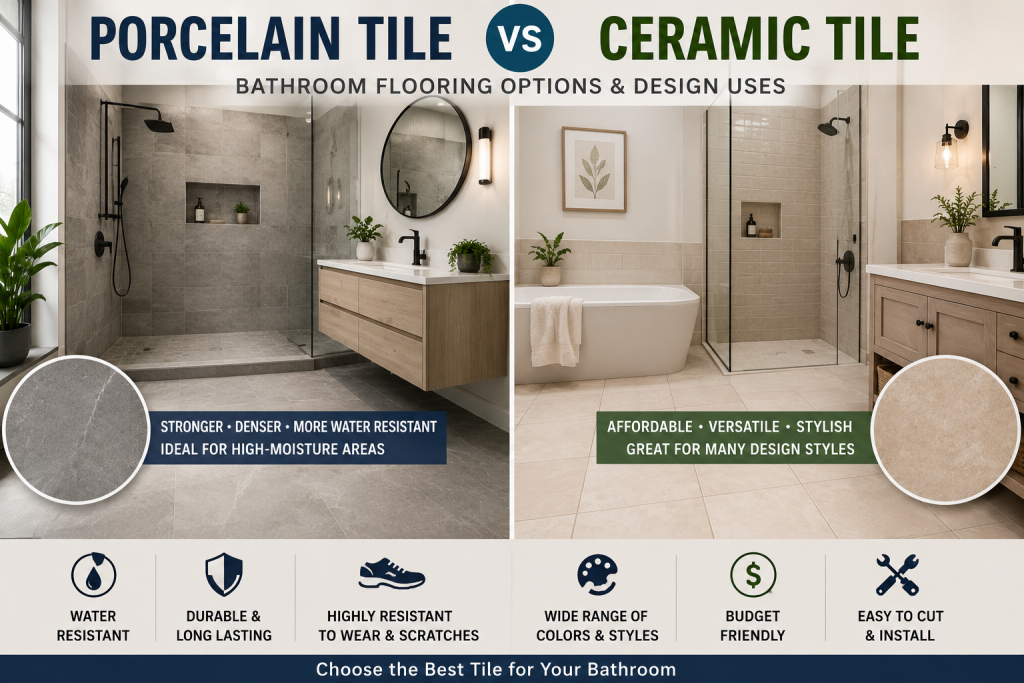
It is especially popular in shower wall tile ideas, where homeowners prioritize style, color variation, and visual appeal over heavy-duty performance. Together, porcelain and ceramic can be combined to create balanced bathroom designs that blend functionality and aesthetics. Understanding how each material is best used allows homeowners to maximize both durability and design flexibility in modern bathroom renovations.
Tile Maintenance Guide and Care Tips
Proper maintenance plays a key role in the long-term performance of both materials in the porcelain vs ceramic tile comparison. While both options are relatively easy to care for, porcelain generally requires less maintenance due to its low porosity and resistance to moisture absorption. Routine cleaning with mild, non-abrasive products is usually enough to keep it looking new for years. Ceramic tile also performs well in bathrooms but may require more attention to grout lines and sealed surfaces.
Regular sealing can help improve resistance to moisture and staining, especially in high-use areas. Consistent upkeep is an important part of any tile maintenance guide, helping preserve both appearance and durability over time. Regardless of material choice, proper cleaning habits and occasional grout maintenance are essential for all bathroom tile comparison scenarios. With the right care, both porcelain and ceramic tiles can maintain their appearance and performance for many years in residential bathrooms.
Conclusion
Choosing between porcelain vs ceramic tile comes down to balancing durability, budget, and design goals. Porcelain offers superior strength, lower water absorption, and long-term performance, making it ideal for high-moisture areas like bathroom floors and showers. Ceramic tile, on the other hand, provides excellent design flexibility and affordability, making it a smart choice for walls, decorative accents, and budget-conscious renovations. Both materials play an important role in modern bathroom tile comparison, and many homeowners choose to combine them for the best results—using porcelain for performance-driven surfaces and ceramic for visual appeal. Understanding the strengths of each option helps ensure your bathroom is both functional and stylish.m Ultimately, whether you prioritize porcelain tile durability or the design versatility of ceramic, selecting the right material will improve your bathroom’s longevity, maintenance, and overall value for years to come.
Frequently Asked Questions
Which is better: porcelain vs ceramic tile?
In the porcelain vs ceramic tile comparison, porcelain is generally better for durability and water resistance, while ceramic is more affordable and offers greater design flexibility. The best choice depends on your budget and where the tile will be installed.
Is porcelain tile waterproof?
Porcelain is not completely waterproof, but it is highly water-resistant due to its low porosity. This makes it one of the best options for wet areas in any bathroom tile comparison, especially floors and showers.
Can ceramic tile be used in bathrooms?
Yes, ceramic tile is commonly used in bathrooms for walls and low-moisture areas. When properly installed and sealed, it performs well in most residential bathroom settings.
What are the benefits of ceramic tile?
Key ceramic tile benefits include affordability, wide design variety, and easy installation. It is a popular choice for decorative surfaces and budget-friendly renovations.
Which tile lasts longer in bathrooms?
Porcelain typically lasts longer due to its higher density and improved porcelain tile durability, making it ideal for high-traffic and moisture-heavy bathroom areas.