

Quartz vs Granite Countertops: Which Is Better?
Choosing between quartz vs granite countertops is one of the most common decisions homeowners face during a kitchen remodel. Both materials are highly popular, offer excellent durability, and can significantly enhance the appearance and value of a home. However, they differ in maintenance requirements, composition, cost, and long-term performance.
Understanding the differences between quartz vs granite countertops can help homeowners select the surface that best matches their lifestyle, design preferences, and budget. While quartz is known for its low-maintenance convenience and consistent appearance, granite appeals to those who appreciate the unique beauty of natural stone. This guide compares both materials across key categories to help you make an informed decision.
Understanding Quartz vs Granite Countertops
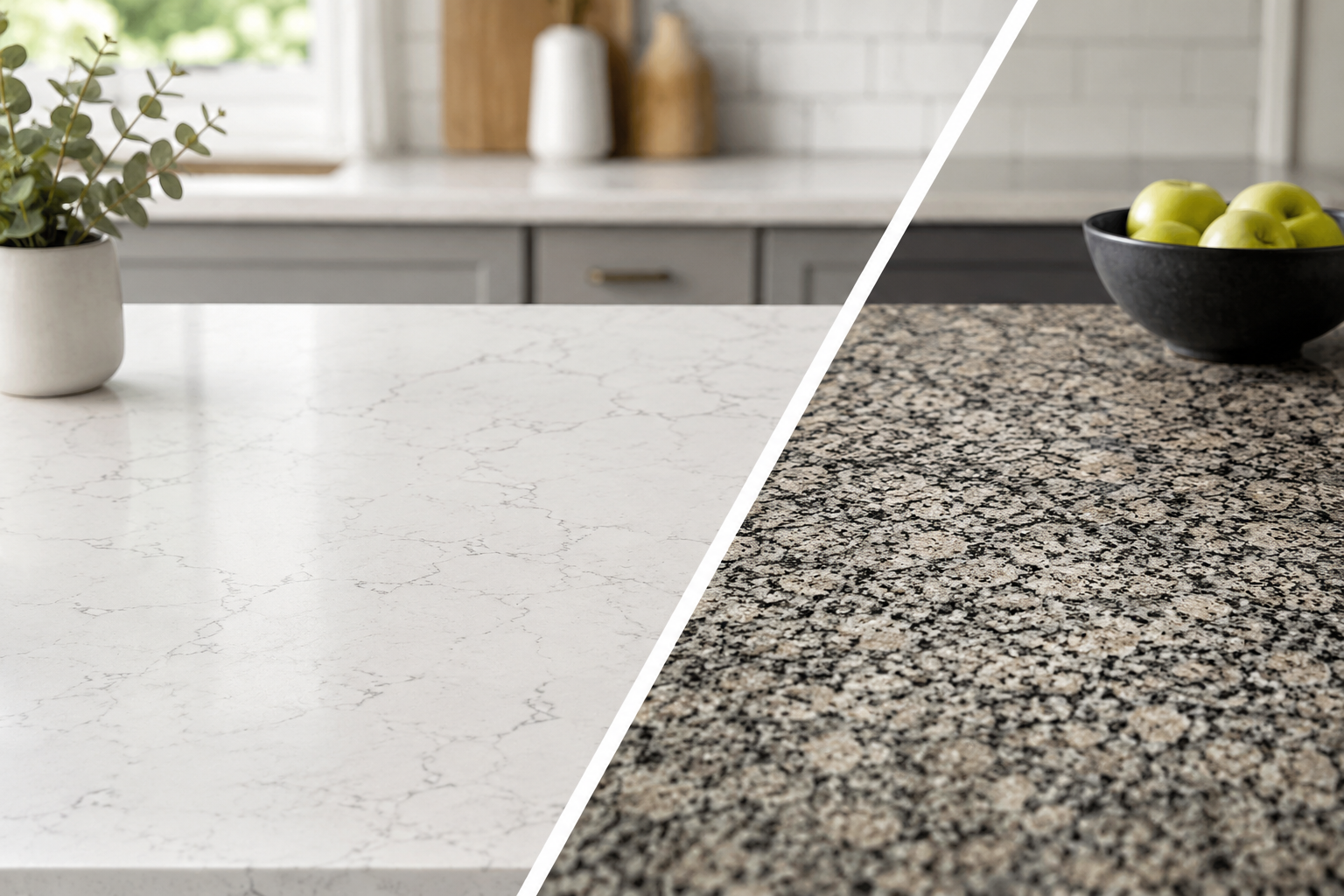
Before comparing performance, maintenance, and cost, it is important to understand what makes quartz and granite different. Although both are considered premium countertop materials, their composition and manufacturing processes vary significantly, which affects how they perform in everyday kitchens. Quartz countertops are engineered surfaces made from natural quartz particles combined with resins and pigments. This manufacturing process creates a non-porous surface with a consistent appearance and excellent resistance to stains.
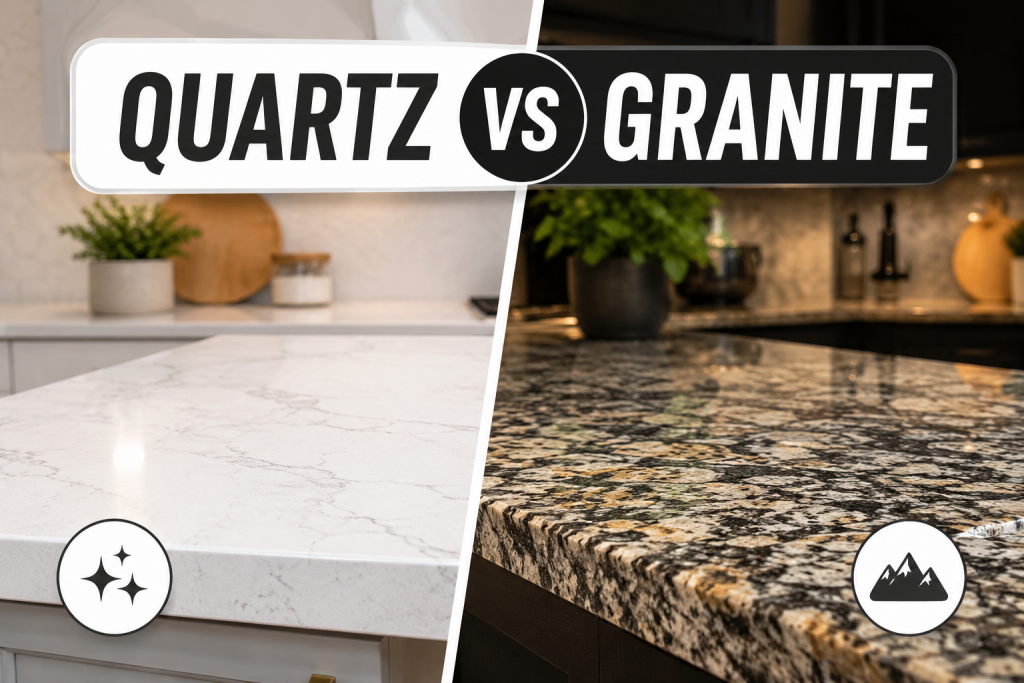
Granite countertops, on the other hand, are cut directly from natural stone slabs. Because granite is a natural material, each slab features unique colors, patterns, and veining. When evaluating quartz vs granite countertops, understanding these fundamental differences explains why the materials perform differently in areas such as maintenance, durability, and appearance. Both can be excellent choices, but their characteristics appeal to different homeowner preferences and renovation goals.
Quartz Countertop Advantages and Disadvantages
Understanding the quartz countertop pros and cons can help homeowners determine whether this engineered surface is the right fit for their kitchen. Quartz has become one of the most popular countertop materials because it combines durability, low maintenance, and modern design flexibility. One of the biggest advantages of quartz is its non-porous surface, which resists stains, moisture, and bacteria. It does not typically require sealing and is available in a wide range of colors and patterns.
Quartz also offers a consistent appearance that many homeowners appreciate in contemporary kitchen designs. However, quartz is not without drawbacks. It can be more expensive than some countertop options, and prolonged exposure to extreme heat may cause damage. Unlike natural stone, it may also lack the unique variations that some homeowners prefer. When comparing quartz vs granite countertops, quartz often appeals to homeowners who prioritize convenience, easy maintenance, and a clean, uniform appearance.
Stone Countertop Durability Explained
One of the biggest reasons homeowners choose granite is its reputation for strength and longevity. Understanding granite countertop durability is important when evaluating whether this natural stone is the right investment for a kitchen renovation. Granite has been used in residential construction for decades because of its ability to withstand everyday wear and tear. Granite is highly resistant to scratches and can handle hot cookware better than many countertop materials.
When properly sealed, it also offers good protection against stains and moisture. Its natural stone composition makes each slab unique, providing a distinctive appearance that many homeowners find appealing. Despite its durability, granite does require periodic sealing to maintain its protective barrier and preserve its appearance. Homeowners should also understand that natural stone can vary slightly from slab to slab. When comparing quartz vs granite countertops, granite often appeals to those who value natural beauty, heat resistance, and long-term durability.
Countertop Maintenance Evaluation
A thorough countertop maintenance comparison is essential because maintenance requirements can significantly affect long-term satisfaction and ownership costs. While both quartz and granite are durable materials, the amount of care they require differs considerably.
Quartz Maintenance Requirements
Quartz is generally considered one of the easiest countertop materials to maintain. Its non-porous surface resists stains and moisture, and it typically does not require sealing. Routine cleaning with mild soap and water is usually sufficient.
Granite Maintenance Requirements
Granite requires more ongoing maintenance because it is a natural stone. Most granite countertops need periodic sealing to help protect against stains and moisture penetration. Regular cleaning is also important to preserve the surface.
Quartz vs Granite Countertops for Easy Maintenance
When comparing quartz vs granite countertops, quartz often has the advantage for homeowners seeking a low-maintenance option. Granite remains highly durable, but its sealing requirements may be a consideration for homeowners who prefer a simpler maintenance routine.
Kitchen Worktop Costs: Quartz vs Granite
Comparing kitchen countertop costs is an important step for homeowners planning a kitchen renovation. While both quartz and granite are considered premium countertop materials, pricing can vary based on material quality, slab availability, edge profiles, installation complexity, and regional labor rates. Quartz countertops often have more predictable pricing because they are manufactured products with consistent availability. Granite costs can vary more significantly depending on the stone, slab size, and natural pattern characteristics.
Installation expenses should also be considered, as both materials generally require professional fabrication and installation. Although upfront costs are important, homeowners should also evaluate long-term value and maintenance expenses. Quartz may reduce maintenance-related costs because it typically does not require sealing, while granite may involve periodic upkeep. When assessing quartz vs granite countertops, considering both initial investment and long-term ownership costs can help homeowners make a more informed financial decision.
Engineered vs Natural Stone
The debate between engineered stone vs natural stone is at the heart of many countertop purchasing decisions. Quartz represents engineered stone, while granite is a natural stone extracted from quarries. Understanding the differences between these materials can help homeowners choose the option that best aligns with their priorities. Engineered stone offers consistency in color, pattern, and performance. Because quartz is manufactured, it can be produced in a wide variety of styles while maintaining a uniform appearance across the surface.
Natural stone, however, provides unique visual characteristics that cannot be replicated exactly. Every granite slab has its own distinctive veining, texture, and coloration. When comparing quartz vs granite countertops, the choice often comes down to personal preference. Homeowners who value consistency and low maintenance may prefer engineered stone, while those seeking natural beauty and one-of-a-kind character often gravitate toward granite. Both options can provide long-lasting performance and visual appeal.
Countertop Reselling Value and ROI
For many homeowners, countertop resale value is an important consideration when investing in a kitchen upgrade. High-quality countertops can improve a kitchen’s appearance, enhance buyer perception, and contribute to the overall marketability of a home. While countertops alone do not determine resale value, they often play a significant role in how potential buyers evaluate a property. Both quartz and granite are generally viewed as premium materials that can positively influence resale appeal.
Quartz is often appreciated for its modern appearance and low-maintenance characteristics, while granite continues to attract buyers who value natural stone and unique visual features. The best choice may depend on local market preferences and the overall style of the home. When comparing quartz vs granite countertops, both materials can provide strong long-term value. Homeowners should focus on selecting a countertop that complements the home’s design and meets practical needs, as functionality and appearance often work together to support resale potential.
Good Countertop for Kitchens Based on Lifestyle
Choosing the best countertop for kitchens often depends less on appearance and more on how the space is used every day. Different households have different priorities, so the ideal countertop material should align with maintenance preferences, cooking habits, and long-term goals.
Best for Busy Families
Quartz is often an excellent choice for busy households because it is highly durable, stain-resistant, and requires very little maintenance. Its non-porous surface makes cleanup quick and convenient.
Best for Natural Stone Enthusiasts
Granite appeals to homeowners who appreciate the authenticity and character of natural materials. Its unique patterns and heat resistance make it a favorite among those seeking a premium natural stone surface.
Quartz vs Granite Countertops for Your Lifestyle
When evaluating quartz vs granite countertops, homeowners should consider how much maintenance they are willing to perform, how frequently they cook, and the overall style they want to achieve. The best choice is the one that fits both practical needs and personal preferences.
Common Mistakes When Choosing Quartz or Granite
Selecting the wrong countertop can lead to unnecessary maintenance, unexpected costs, and long-term dissatisfaction. Avoiding these common mistakes can help homeowners make a smarter investment.
- Choosing a countertop based solely on appearance.
- Ignoring maintenance requirements before making a purchase.
- Failing to compare long-term ownership costs.
- Overlooking heat, stain, and scratch resistance.
- Selecting a material that does not fit the household’s lifestyle.
- Not requesting multiple fabrication and installation estimates.
- Assuming all quartz or granite products perform the same way.
- Forgetting to evaluate warranty coverage and manufacturer reputation.
- Prioritizing short-term trends over long-term value.
- Deciding without viewing full slab samples when possible.
By carefully comparing materials and considering both functionality and aesthetics, homeowners can avoid costly mistakes and choose a countertop that delivers lasting value and performance.
How to Choose Between Quartz vs Granite Countertops?
Choosing between quartz vs granite countertops comes down to balancing maintenance preferences, design goals, durability expectations, and budget. Both materials offer excellent performance, but each appeals to different homeowner priorities. If you prefer a low-maintenance surface that resists stains and does not require sealing, quartz may be the better option. Its consistent appearance and wide range of colors make it particularly attractive for modern kitchen designs.
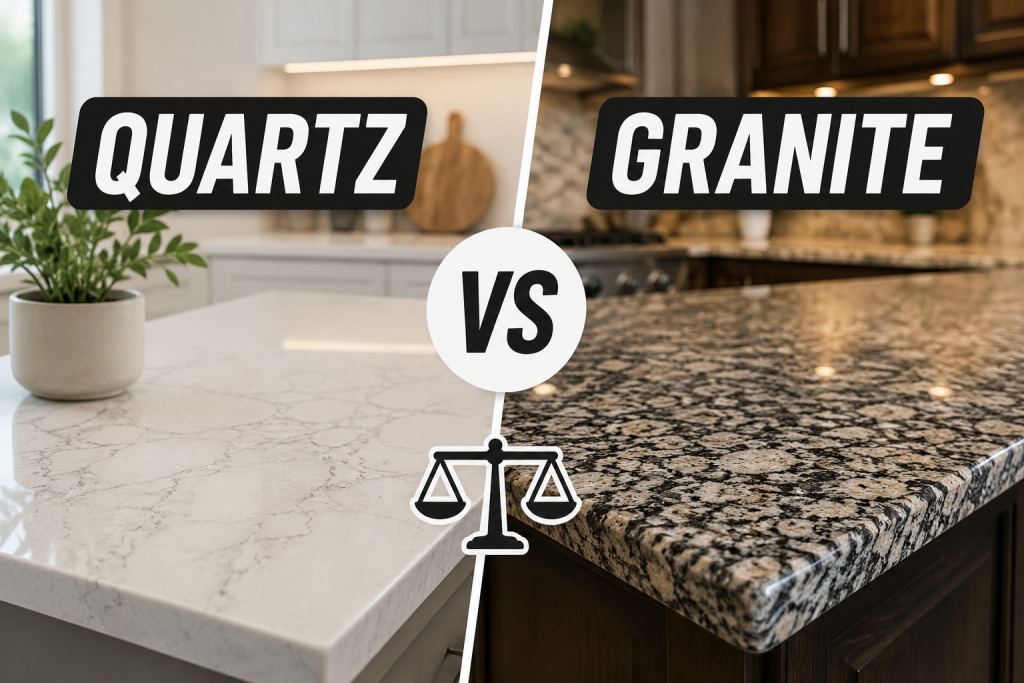
Granite, on the other hand, is ideal for homeowners who appreciate the natural beauty of stone and want a countertop with unique patterns and strong heat resistance. It is also important to consider long-term ownership. Think about how much maintenance you are willing to perform, how frequently the kitchen is used, and the overall style of your home. By evaluating these factors carefully, homeowners can confidently select the countertop material that best fits their needs and lifestyle.
Conclusion
The decision between quartz vs granite countertops ultimately depends on your lifestyle, maintenance preferences, design goals, and budget. Quartz offers exceptional convenience, consistent appearance, and low-maintenance performance, while granite provides the timeless beauty and uniqueness of natural stone. Both materials are durable, attractive, and capable of enhancing the value and functionality of a kitchen. By comparing factors such as maintenance, durability, cost, and resale potential, homeowners can make a confident choice that aligns with their long-term needs. The best countertop is the one that delivers the right balance of performance, aesthetics, and value for your home.
Frequently Asked Questions
Which is more durable, quartz vs granite countertops?
Both materials are highly durable. However, granite countertops are often praised for their natural strength and excellent resistance to heat and scratches.
Do quartz countertops need to be sealed?
No. Quartz countertops are non-porous and typically do not require sealing, making them easier to maintain than many natural stone surfaces.
Are granite countertops more expensive than quartz?
Costs vary based on the material, slab quality, and installation requirements. Depending on the project, either option may be more expensive.
Which countertop is better for busy families?
Quartz is preferred by busy households because it requires minimal maintenance and offers strong resistance to stains and moisture.
Do quartz and granite countertops increase home value?
Yes. Both materials are considered premium countertop options and can enhance kitchen appeal, which may positively influence resale value.