

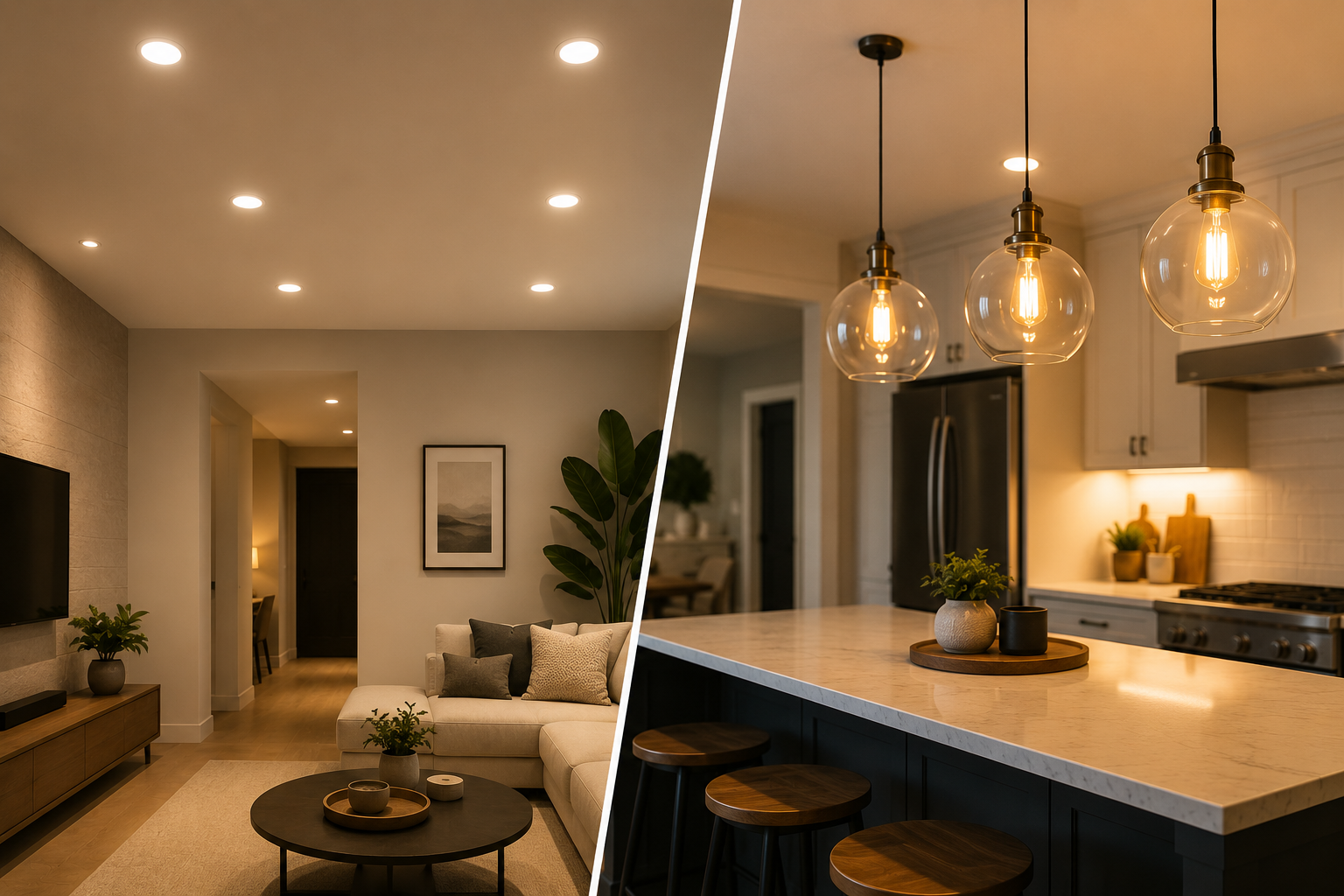
Recessed Lighting vs Pendant Lighting: Which Is Right for Your Home?
When comparing recessed lighting vs pendant lighting, homeowners often struggle to determine which option best fits their space, style, and functional needs. Both lighting solutions are popular in modern homes, but they serve different purposes and create distinct visual effects. Choosing the right fixture can significantly influence a room’s appearance, comfort, and overall usability.
Whether you’re remodeling a kitchen, updating a living room, or designing a new home, understanding the differences between recessed lighting vs pendant lighting is essential. Recessed lights offer a clean and streamlined appearance, while pendant fixtures provide decorative appeal and focused illumination. In this guide, we’ll compare both options, explore their advantages and disadvantages, and help you decide which lighting solution is the best choice for your home.
Understanding Recessed and Pendant Lighting
Before choosing a lighting fixture, it’s important to understand how recessed and pendant lighting function within a space. While both can improve illumination and enhance a room’s design, they serve different purposes and create distinct visual effects. Recessed lighting, often called can lighting, is installed directly into the ceiling, creating a clean and unobtrusive appearance. Because the fixtures are hidden within the ceiling, they provide broad, even illumination without drawing attention to themselves.
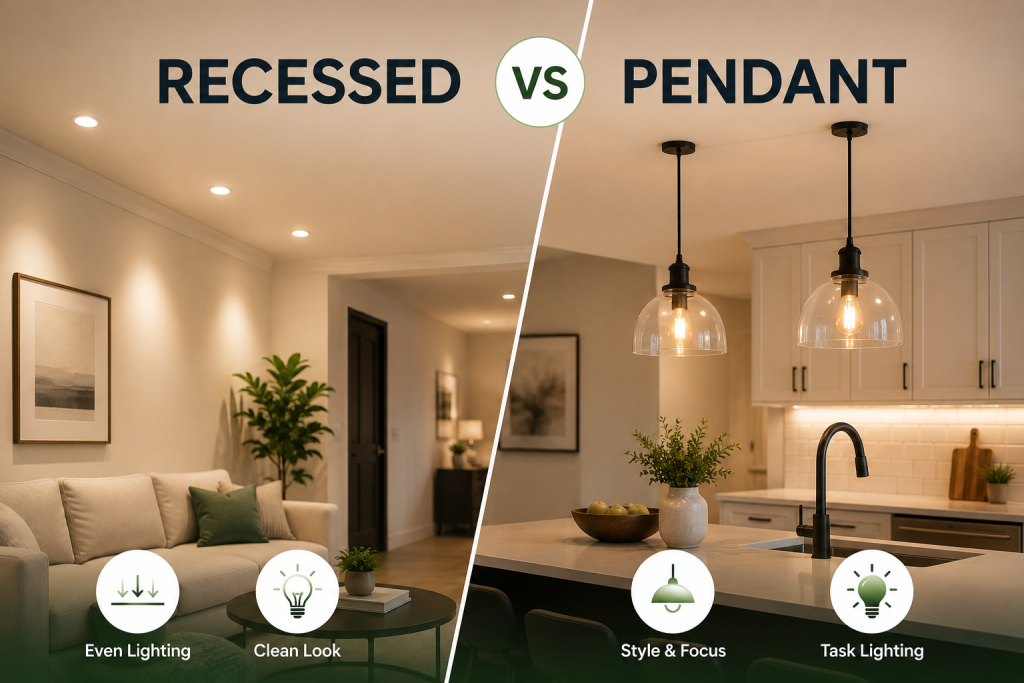
This makes recessed lighting a popular choice for modern, minimalist, and open-concept homes. Pendant lighting, on the other hand, hangs from the ceiling and serves as both a light source and a decorative feature. Available in countless shapes, sizes, and finishes, pendant fixtures can become focal points in kitchens, dining areas, entryways, and living spaces. Understanding these differences is the first step in determining whether recessed lighting vs pendant lighting is the better solution for your home’s style and lighting needs.
Recessed Lighting vs Pendant Lighting: Key Differences
When evaluating recessed lighting vs pendant lighting, homeowners should consider factors such as appearance, functionality, installation requirements, and lighting performance. While both options can improve a room’s illumination, they create very different design experiences.
Appearance and Design Impact
Recessed lights blend seamlessly into the ceiling, making them ideal for homeowners who prefer a clean and minimalist look. Pendant fixtures, by contrast, act as decorative elements that add personality, texture, and visual interest to a space.
Lighting Coverage
Recessed lighting provides broad and even illumination across a room, making it effective for general lighting needs. Pendant lights typically focus light downward, making them better suited for task-oriented areas such as kitchen islands and dining tables.
Ceiling Lighting Evaluation
In a practical ceiling lighting comparison, recessed fixtures excel at delivering unobtrusive ambient lighting, while pendant lights offer both illumination and decorative value. The best choice often depends on the room’s purpose, ceiling height, and overall design goals.
Benefits of Recessed Lighting
Recessed lighting remains one of the most popular choices for homeowners because of its versatility, clean appearance, and ability to provide consistent illumination. Some of the key advantages include:
- Clean, minimalist design that blends seamlessly into the ceiling.
- Even light distribution across large spaces without creating visual clutter.
- Ideal for open-concept floor plans where unobstructed sightlines are important.
- Works well in living rooms, kitchens, hallways, bathrooms, and basements.
- Helps make smaller rooms feel larger by eliminating bulky fixtures.
- Compatible with LED technology and dimmer switches for improved energy efficiency.
- Can be used as ambient, task, or accent lighting depending on placement.
- Excellent choice for homes with lower ceilings where hanging fixtures may feel intrusive.
- Supports modern and contemporary interior design styles.
- Can increase perceived spaciousness while maintaining a streamlined appearance.
For homeowners prioritizing functionality and a clutter-free aesthetic, recessed lighting offers a practical solution that works well in a wide variety of residential spaces.
Benefits of Pendant Lighting
Pendant lighting is a popular choice for homeowners who want to combine functionality with visual appeal. Unlike recessed fixtures that remain hidden within the ceiling, pendant lights serve as decorative design elements while providing focused illumination. They can instantly enhance a room’s character and create a strong focal point. One of the biggest advantages of pendant lighting is its versatility. There are countless pendant light ideas available, ranging from sleek modern designs and industrial-inspired fixtures to farmhouse and traditional styles.
This variety allows homeowners to match lighting choices with their existing décor and personal preferences. Pendant lights are especially effective over kitchen islands, dining tables, breakfast bars, and entryways where targeted illumination is needed. They can also help define specific areas within open-concept layouts. When comparing recessed lighting vs pendant lighting, pendant fixtures often stand out for their decorative impact, customization options, and ability to add depth and personality to a space.
Kitchen Lighting Choices: Which Fixture Works Best?
Choosing the right kitchen lighting options is essential for creating a functional and visually appealing space. Kitchens require a balance of ambient and task lighting to support food preparation, dining, and everyday activities. Both recessed and pendant lighting can perform well, but each offers unique advantages depending on the layout and design goals.
Best Uses for Recessed Lighting
Recessed fixtures provide broad, even illumination throughout the kitchen, making them ideal for general lighting. They work especially well in smaller kitchens or spaces where homeowners prefer a clean, uncluttered ceiling design.
Recessed Lighting vs Pendant Lighting for Kitchen Islands
When evaluating recessed lighting vs pendant lighting above a kitchen island, pendant fixtures often have the advantage. They provide focused task lighting while adding decorative appeal and helping define the island as a focal point. Many homeowners choose a combination of both fixture types to achieve the best balance of style and functionality.
Task vs Ambient Lighting Explained
Understanding the difference between task lighting vs ambient lighting is essential when planning a well-balanced lighting design. While both types of lighting serve important functions, they are designed to meet different needs within a space. Ambient lighting provides general illumination for an entire room. Its purpose is to create a comfortable level of brightness that allows people to move around safely and perform everyday activities. Recessed lighting is commonly used as ambient lighting because it distributes light evenly throughout a space without creating visual distractions.
Task lighting, on the other hand, is designed to illuminate specific areas where focused visibility is needed. Pendant lights are often used for task lighting above kitchen islands, dining tables, workstations, and reading areas. Their concentrated light output helps improve functionality while adding visual interest. When comparing recessed lighting vs pendant lighting, understanding the role of each lighting type can help homeowners create a layered lighting plan that balances comfort, efficiency, and design.
Can vs. Pendant Lights: Design and Function Comparison
When comparing can lights vs pendants, the decision often comes down to whether functionality or visual impact is the top priority. Both fixture types can enhance a room’s lighting, but they contribute to the space in very different ways. Can lights, also known as recessed lights, are designed to remain hidden within the ceiling. Their primary advantage is providing clean, uniform illumination without drawing attention to the fixture itself. This makes them an excellent choice for homeowners who prefer a minimalist design or want to highlight other architectural features in the room.
Pendant lights are more decorative by nature. They hang below the ceiling and can serve as statement pieces that complement a room’s style. Available in countless shapes, materials, and finishes, pendants often become focal points while also delivering targeted illumination. In the ongoing debate of recessed lighting vs pendant lighting, can lights excel at subtle functionality, while pendant fixtures offer a stronger combination of style and focused lighting performance.
Trendy Lighting Fixtures for Today’s Homes
Today’s homeowners are increasingly choosing modern lighting solutions that combine aesthetics, functionality, and energy efficiency. Contemporary lighting trends emphasize clean lines, minimalist designs, and versatile solutions that complement a wide range of interior styles. Both recessed and pendant lighting continue to play important roles in modern home design. Recessed lighting is particularly popular in contemporary and open-concept homes because it creates a streamlined appearance without adding visual clutter.
Many homeowners pair recessed fixtures with LED technology and smart lighting controls to improve efficiency and convenience. Pendant lights, meanwhile, are available in a variety of modern styles, including geometric designs, glass globes, and matte black finishes that make a strong visual statement. When evaluating recessed lighting vs pendant lighting, modern homeowners often choose a combination of both. This approach provides the clean illumination of recessed fixtures while incorporating decorative pendant lights that add character, depth, and personality to key areas of the home.
Popular Lighting Fixture Techniques for Different Rooms
Selecting the right lighting fixture styles can significantly influence the appearance and functionality of a home. Different rooms often benefit from different fixture types, making it important to consider both design preferences and practical lighting needs. In living rooms, homeowners frequently combine recessed lighting with decorative pendants or chandeliers to create a balanced and inviting atmosphere. Kitchens often feature pendant lights above islands paired with recessed fixtures for general illumination.
Dining rooms typically benefit from statement pendants that serve as focal points while providing adequate lighting for meals and gatherings. Bedrooms often use softer lighting solutions, including flush-mount fixtures, bedside lamps, and accent lighting. Entryways and foyers can showcase larger pendant fixtures that create a memorable first impression. Regardless of the room, the best lighting strategy combines style and functionality to support everyday activities while enhancing the home’s overall design aesthetic.
Can You Use Recessed and Pendant Lighting Together?
Yes, combining recessed vs pendant lighting is often one of the most effective ways to create a balanced and visually appealing lighting design. Rather than choosing one fixture type exclusively, many homeowners use both to take advantage of their unique strengths. This layered approach improves functionality while adding depth and character to a space. Recessed lighting can provide broad ambient illumination throughout a room, ensuring consistent brightness and eliminating dark areas.
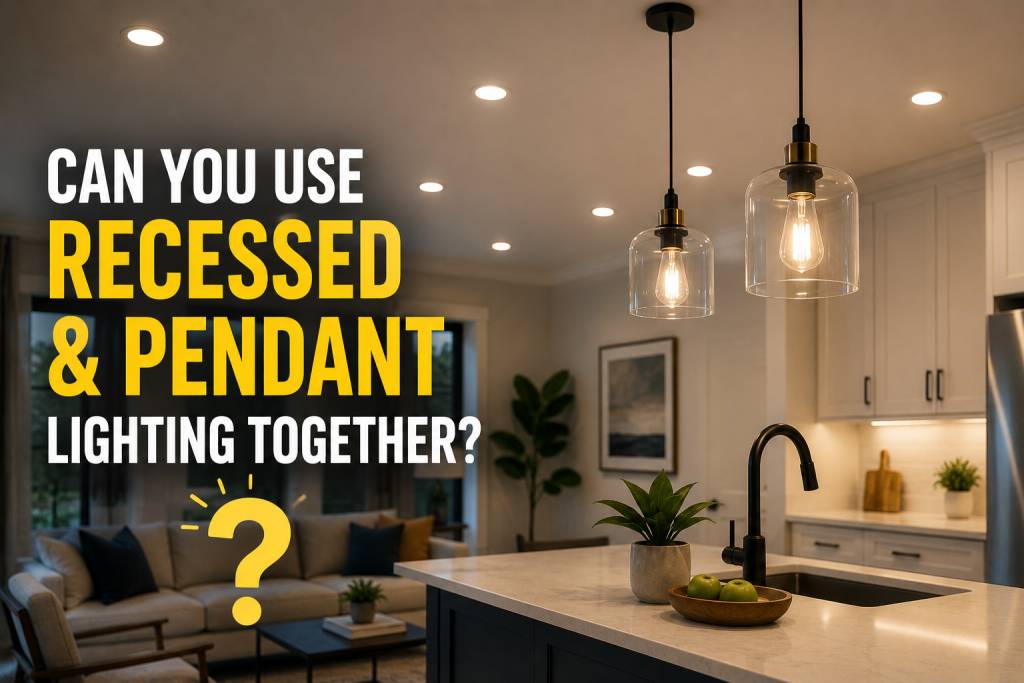
Pendant fixtures can then be used to highlight specific zones, such as kitchen islands, dining tables, breakfast bars, or seating areas. The combination creates a more flexible lighting plan that supports both everyday activities and decorative goals. For homeowners debating recessed lighting vs pendant lighting, the answer may not be choosing one over the other. In many cases, the best solution is integrating both fixture types to achieve the ideal balance of style, task lighting, and overall room illumination.
How to Choose Between Recessed Lighting vs Pendant Lighting?
Choosing the right lighting solution depends on your room’s size, ceiling height, design preferences, and functional requirements. Homeowners who prefer a clean, modern appearance often gravitate toward recessed lighting because it blends seamlessly into the ceiling and provides even illumination. This makes it particularly effective in open-concept layouts, hallways, and rooms with lower ceilings.
Pendant lighting is often the better choice when decorative impact is a priority. These fixtures can add personality, define specific areas, and create visual focal points in kitchens, dining rooms, and entryways. They are especially useful when focused task lighting is needed over work surfaces or gathering spaces. When deciding between recessed lighting vs pendant lighting, it’s important to evaluate how the room will be used daily. Many homeowners ultimately find that combining both fixture types delivers the best balance of style, functionality, and overall lighting performance.
Conclusion
When comparing recessed lighting vs pendant lighting, there is no one-size-fits-all answer. Recessed lighting offers clean, unobtrusive illumination that works well for ambient lighting, while pendant fixtures provide decorative appeal and focused task lighting. The right choice depends on your home’s layout, design preferences, and functional needs. In many cases, combining both fixture types creates the most effective lighting plan by balancing style, flexibility, and performance. By understanding the strengths of each option, homeowners can make informed decisions that enhance comfort, improve functionality, and elevate the overall appearance of their living spaces.
Frequently Asked Questions
Which is better, recessed lighting vs pendant lighting?
The best option depends on your goals. Recessed lighting provides clean, even illumination, while pendant lighting adds decorative appeal and focused task lighting. Many homeowners use both for a balanced design.
Are pendant lights good for kitchens?
Yes. Pendant lights are especially popular above kitchen islands and breakfast bars because they provide targeted illumination while enhancing the room’s overall style.
Do recessed lights make a room look bigger?
Recessed lights can make a room feel larger because they are installed flush with the ceiling and do not take up visual space. This creates a more open and uncluttered appearance.
Can recessed and pendant lighting be used together?
Absolutely. Combining both fixture types allows homeowners to create layered lighting that includes ambient, task, and decorative illumination.
Which lighting option is more modern?
Both are considered modern lighting fixtures. Recessed fixtures offer a minimalist look, while pendant lights provide contemporary design opportunities in a variety of styles and finishes.
Are LED recessed and pendant lights energy-efficient?
Yes. Most modern recessed and pendant fixtures are compatible with LED technology, helping homeowners reduce energy consumption and lower long-term operating costs. Which Is Right for Your Home?