


Early Roof Leak Signs Every Homeowner Should Recognize
A roof leak rarely starts as a major problem. In many cases, homeowners notice subtle warning signs weeks or even months before water begins dripping from the ceiling. Unfortunately, those early indicators are often overlooked, allowing moisture to spread into insulation, drywall, framing, and other critical parts of the home. Recognizing roof leak signs early can help prevent expensive repairs and protect your home’s structural integrity. Whether you live in a hurricane-prone state like Florida, experience heavy snowfall in Minnesota, or deal with intense summer storms in Texas, water intrusion can quickly escalate into a costly issue.
Many homeowners assume a roof leak will always be obvious, but that is not always the case. Some leaks remain hidden behind walls or inside attic spaces, causing gradual damage before visible symptoms appear indoors. Understanding the most common warning signs can help you act before a minor issue turns into extensive water damage. In this guide, we’ll cover the most important roof leak signs, how to identify them, and when it’s time to schedule a professional roof inspection.
10 Roof Leak Signs Every Homeowner Should Know
Spotting roof leak signs early can save thousands of dollars in repair costs and help homeowners avoid major structural issues. While some leaks are easy to identify, others develop slowly and remain hidden until significant damage has already occurred. The key is knowing what to look for before moisture spreads throughout your home. One of the most recognizable indicators is ceiling water stains. Brown, yellow, or copper-colored spots on ceilings often suggest that water is entering through damaged roofing materials or deteriorated flashing. These stains may appear small at first but can expand after every rainstorm.
Another common warning sign is unexplained musty odors. Persistent damp smells inside bedrooms, hallways, or upper-floor living spaces may indicate trapped moisture behind walls or above ceilings. Homeowners should also watch for peeling paint, bubbling drywall, warped trim, or unexplained discoloration around rooflines. In severe cases, active leaks may cause water to drip indoors during heavy rain. Whenever these roof leak signs appear, prompt action can help minimize repair costs and prevent further damage.
Ceiling Water Stains and Discoloration
Among the earliest and most visible roof leak signs are stains that develop on interior ceilings. These marks often appear as yellow, brown, or rust-colored rings and usually indicate that water has been entering the home over an extended period. While some stains may seem cosmetic at first, they can signal a hidden roofing problem that requires immediate attention.
Homeowners should pay close attention to ceiling water stains, especially after heavy rain, snowmelt, or severe storms. Water can travel along rafters and framing before reaching the ceiling surface, making the source of the leak difficult to locate without a thorough inspection. In addition to discoloration, you may notice peeling paint, sagging drywall, or soft spots around the affected area. These symptoms suggest that moisture is accumulating above the ceiling and could eventually compromise insulation, framing, and interior finishes if left untreated.
Damp or Musty Odors Indoors
Not all roof leak signs are visible. In many homes, the first indication of a problem is a persistent musty smell that seems to linger despite regular cleaning and ventilation. These odors typically develop when moisture becomes trapped inside ceilings, wall cavities, insulation, or attic spaces, creating conditions that encourage mold and mildew growth. A damp smell is especially concerning when it appears in upper-floor bedrooms, hallways, or areas directly beneath the roof.
Even a small amount of water intrusion can create enough moisture to affect indoor air quality over time. Because the leak itself may remain hidden, homeowners often notice the odor long before they see stains or dripping water. If musty smells become stronger after rainstorms or periods of high humidity, they should not be ignored. Combined with other roof leak signs, unusual indoor odors can indicate an active leak that requires further investigation before more extensive damage occurs.
Dripping Water During Rainstorms
Few warning signals are more obvious than water actively entering your home during a storm. When homeowners notice dripping water from ceilings, light fixtures, vents, or wall corners, the roof system has likely already experienced significant moisture intrusion. At this stage, immediate action is essential to limit interior damage. Unlike subtle roof leak signs that develop gradually, active dripping usually indicates that water has found a direct path through damaged roofing materials, deteriorated underlayment, or compromised roof penetrations. The problem may worsen during periods of heavy rainfall, strong winds, or rapid snowmelt.
Homeowners should place containers beneath the leak, move valuable belongings away from the affected area, and document the damage for insurance purposes when applicable. While temporary measures can reduce immediate risks, a professional assessment is often necessary to identify the source of the leak and prevent recurring water intrusion that could impact structural components.
Peeling Paint Near Rooflines
Peeling, cracking, or bubbling paint near ceilings and upper walls can be an overlooked indicator of moisture intrusion. While homeowners may assume the issue is caused by age or poor paint quality, it is often linked to water entering through the roof system. When moisture becomes trapped behind painted surfaces, it weakens adhesion and causes the finish to separate from the wall. These conditions frequently appear around ceiling corners, exterior-facing walls, and areas located directly beneath roof valleys or penetrations.
Over time, repeated exposure to moisture can lead to warped drywall, damaged trim, and even mold growth behind finished surfaces. Although peeling paint alone does not confirm a leak, it should be evaluated alongside other roof leak signs such as discoloration, musty odors, or attic moisture. Addressing the source of the water intrusion promptly can prevent cosmetic damage from developing into a more expensive repair involving drywall replacement and structural restoration.
Roof Leak Signs Found in the Attic
Many homeowners focus on interior ceilings when looking for leaks, but the attic is often the best place to identify problems before they become visible inside the living space. Some of the most important roof leak signs develop above the ceiling, where water first enters the home and begins affecting insulation, wood framing, and ventilation systems. A routine attic inspection can reveal moisture-related issues that might otherwise go unnoticed for months. Dark stains on roof decking, damp insulation, mold growth, and visible water trails along rafters are all indicators that the roof may be allowing water to penetrate the building envelope.
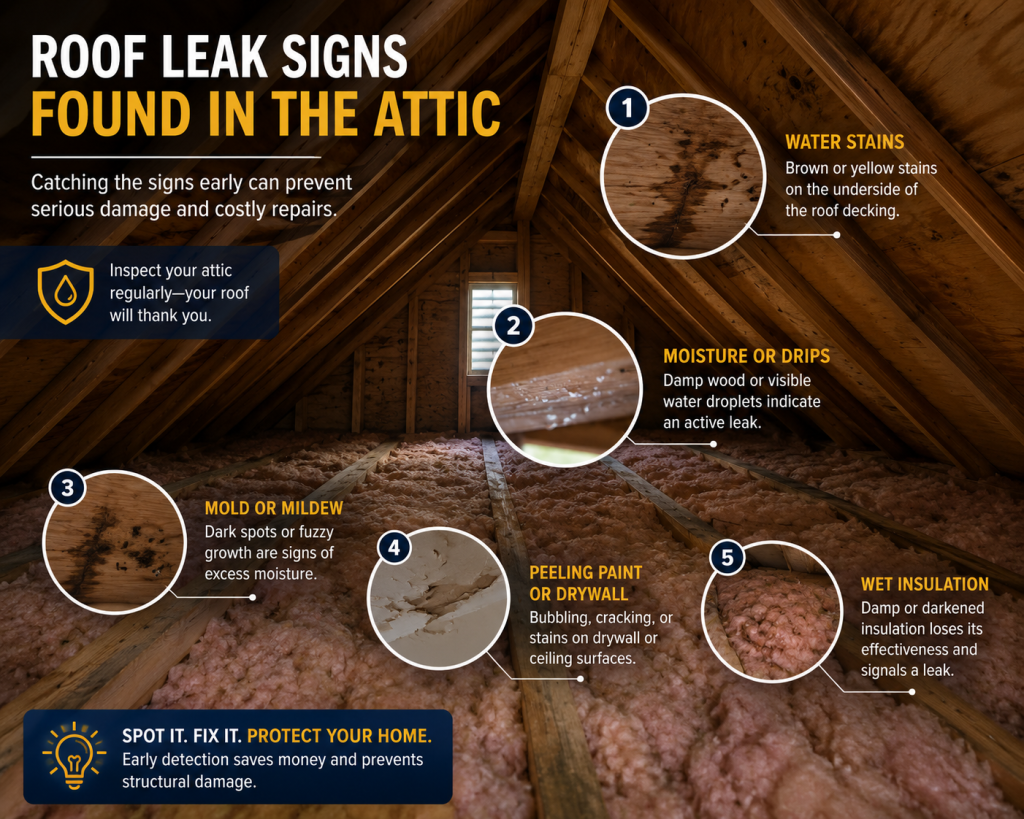
Because attic conditions are hidden from daily view, small leaks can continue causing damage long before homeowners discover them. Regular inspections are especially important after severe storms, heavy snowfall, or periods of prolonged rainfall. Identifying roof leak signs in the attic early can help prevent extensive repairs and protect the long-term health of your home.
Wet Insulation and Attic Moisture Problems
Insulation is designed to remain dry in order to perform efficiently. When water enters the attic, insulation can quickly absorb moisture, reducing its effectiveness and increasing energy costs throughout the year. Damp insulation is often one of the earliest indicators that a roof leak has been developing behind the scenes. Homeowners inspecting their attics should look for compressed insulation, dark patches, or areas that feel damp to the touch. These conditions are commonly associated with attic moisture problems and may signal that water is entering through damaged shingles, flashing, or roof penetrations.
Beyond energy loss, wet insulation can contribute to mold growth and wood deterioration if the moisture remains trapped for an extended period. In colder climates, excessive attic moisture may also increase the risk of ice dam formation during winter months. Addressing the source of the leak promptly helps protect both the roof system and the home’s overall energy efficiency.
Daylight Visible Through Roof Boards
If you can see daylight coming through the roof deck while standing in the attic, the roofing system may have openings that allow water to enter during rainstorms. Even small gaps can become pathways for moisture, especially when wind-driven rain pushes water beneath shingles and other protective materials. During an attic inspection, look carefully around roof penetrations, valleys, ridge areas, and sections where roofing materials meet walls or chimneys. Light shining through these locations often indicates damaged decking, missing shingles, deteriorated sealants, or aging roof components that no longer provide adequate protection.
While not every opening will immediately cause a leak, visible gaps should be addressed as soon as possible. Combined with other roof leak signs, daylight penetration is a strong indication that the roof’s weather-resistant barrier has been compromised. Early repairs can help prevent moisture intrusion, insulation damage, and costly structural problems that may develop over time.
Mold Growth on Wood Framing
Mold growth on attic rafters, trusses, or roof decking is often a sign that excess moisture has been present for an extended period. While poor ventilation can sometimes contribute to mold development, persistent moisture from a roof leak is a common underlying cause that should not be overlooked. During attic inspections, homeowners should look for black, green, or white discoloration on wooden surfaces. Mold may appear in isolated patches at first, but it can spread quickly when moisture remains trapped in the attic environment.
In addition to damaging wood components, mold can affect indoor air quality and create health concerns for occupants. When mold is discovered alongside other roof leak signs, further investigation is necessary to determine where water is entering the roof system. Addressing both the moisture source and the mold problem is essential. Ignoring the issue can lead to ongoing deterioration of structural materials and significantly higher repair costs in the future.
Exterior Roof Leak Signs You Should Never Ignore
Not all leak indicators appear inside the home. In many cases, homeowners can spot potential problems from the ground before water ever reaches the attic or living space. Regular visual inspections of the roof’s exterior can help identify vulnerable areas and reduce the risk of costly repairs. Some of the most common roof leak signs include missing shingles, damaged flashing, sagging roof sections, exposed fasteners, and debris accumulation in roof valleys. These issues can weaken the roof’s ability to shed water effectively, increasing the likelihood of moisture intrusion during storms.
Weather conditions also play a major role in roof performance. Homes in Florida may experience damage from hurricanes and heavy rain, while properties in Colorado and Minnesota often face challenges related to snow, ice, and freeze-thaw cycles. By recognizing exterior roof leak signs early, homeowners can address minor roofing issues before they develop into significant structural and water-related damage.
Missing or Damaged Shingles
Shingles serve as the roof’s first line of defense against rain, wind, and other weather conditions. When shingles become cracked, curled, loose, or completely detached, the underlying roofing materials are left vulnerable to water intrusion. Even a single missing shingle can create an entry point for moisture under the right conditions. Homeowners should periodically inspect their roofs from the ground, especially after severe storms or high-wind events. Signs of damage may include exposed roof decking, uneven shingle lines, granule loss, or shingles that appear lifted from the roof surface.
Aging asphalt roofs are particularly susceptible to these problems as materials deteriorate over time. Although damaged shingles do not always result in immediate leaks, they significantly increase the risk of developing roof leak signs in the future. Prompt repairs can help maintain the roof’s protective barrier, extend its lifespan, and prevent moisture from reaching critical structural components beneath the roofing system.
Flashing Leak Issues Around Chimneys and Vents
Roof leaks frequently occur around areas where the roof surface is interrupted by chimneys, plumbing vents, skylights, and other penetrations. These locations rely on metal flashing to create a watertight seal and direct water away from vulnerable joints. When flashing becomes loose, rusted, cracked, or improperly installed, moisture can find its way beneath the roofing system. Many homeowners are unaware of flashing leak issues until interior damage becomes visible.
Because flashing is constantly exposed to temperature changes, wind, and precipitation, it can deteriorate over time and lose its ability to protect the surrounding materials. A visual inspection may reveal lifted flashing, missing sealant, corrosion, or gaps where water could enter. These defects should be addressed promptly, as even minor failures can allow repeated moisture intrusion. Regular maintenance and timely repairs around roof penetrations can help prevent water damage and preserve the overall integrity of the roofing system.
Sagging Roof Areas
A sagging roof is one of the most serious warning signs a homeowner can encounter. Unlike cosmetic roofing issues, visible dips or uneven sections often indicate that moisture has been affecting the roof structure for an extended period. When water repeatedly infiltrates the roofing system, it can weaken decking, framing, and other load-bearing components. From the ground, a sagging roof may appear as a low spot along the roofline or an area that looks uneven compared to the surrounding surface. In some cases, standing water may collect in these depressed sections, creating additional stress and accelerating deterioration.
When sagging is accompanied by other roof leak signs, homeowners should seek a professional evaluation as soon as possible. Structural damage can worsen over time and may eventually compromise the roof’s ability to support normal loads, including heavy rain, snow accumulation, and high winds. Early intervention is critical to preventing extensive repairs and protecting the home’s overall structural integrity.
Why Early Roof Leak Detection Saves Thousands
The financial impact of a roof leak often extends far beyond the cost of repairing the damaged area. What begins as a minor opening in the roofing system can eventually lead to ruined insulation, damaged drywall, mold growth, compromised framing, and expensive interior restoration work. This is why early roof leak detection is one of the most effective ways to reduce long-term home maintenance costs. When leaks are identified quickly, repairs are typically limited to a smaller section of the roof. Delayed action, however, allows moisture to spread into surrounding materials, increasing both labor and material expenses.
In severe situations, homeowners may face partial roof replacement, mold remediation, or structural repairs. Early intervention can also help preserve property value and simplify future home sales. Buyers are often cautious about homes with a history of water intrusion, making proactive maintenance an important investment. Addressing roof leak signs promptly helps protect both the condition of the home and its long-term marketability.
Roof Inspection Tips for Homeowners
Routine inspections can help homeowners identify roofing issues before they become major problems. Following a few practical roof inspection tips throughout the year can significantly reduce the risk of unexpected leaks and costly repairs. Start by performing a visual inspection from the ground using binoculars if necessary. Look for missing shingles, damaged flashing, sagging sections, clogged gutters, and other visible signs of wear. After major storms, check the roof for debris, fallen branches, or areas that may have sustained wind damage.

Inside the home, pay attention to ceilings, walls, and attic spaces for indications of moisture intrusion. Inspecting the attic after heavy rainfall can be particularly helpful because water stains and damp areas are often easier to detect before interior damage becomes obvious. While homeowner inspections are valuable, professional roof evaluations remain important, especially for older roofs. Consistently monitoring roof leak signs can help catch developing problems before they require extensive repairs.
When Roof Water Damage Requires Professional Help
While some roofing concerns can be monitored or addressed through routine maintenance, certain situations require immediate attention from a qualified contractor. Delaying professional repairs can allow moisture to spread deeper into the home’s structure, resulting in higher repair costs and increased safety risks. Homeowners should seek expert assistance when they notice active leaks, widespread staining, mold growth, sagging roof sections, damaged flashing, or recurring moisture problems that continue after previous repairs. These conditions often indicate underlying issues that cannot be fully evaluated from a simple visual inspection.
Professional roofers have the tools and experience necessary to identify hidden sources of roof water damage, assess the condition of roofing materials, and recommend appropriate repair solutions. They can also determine whether structural components, insulation, or ventilation systems have been affected by prolonged moisture exposure. If multiple roof leak signs appear at the same time, scheduling a professional inspection as soon as possible is the most effective way to prevent further deterioration and protect your investment.
Conclusion
Identifying roof leak signs early is one of the most effective ways to protect your home from costly repairs and long-term structural damage. What may begin as a small stain, a musty odor, or a few damaged shingles can quickly develop into a much larger problem if moisture is allowed to spread unchecked. Regular roof and attic inspections can help homeowners catch issues before they affect insulation, drywall, framing, and other critical components. Paying attention to subtle warning signs and addressing them promptly can extend the life of your roof, improve energy efficiency, and preserve your home’s value.
Whether you live in a region prone to heavy rain, snow, high winds, or extreme temperature changes, proactive roof maintenance remains essential. If you notice any warning signs discussed in this guide, scheduling a professional inspection is often the best next step. Taking action early can save thousands of dollars and help ensure your home remains safe, dry, and protected for years to come.
Frequently Asked Questions
What is the first sign of a roof leak?
In many homes, the first indication of a leak is a water stain on the ceiling or a musty odor in the attic. However, early warning signs can vary depending on where the leak originates and how long moisture has been entering the home. Regular inspections help identify issues before significant damage occurs.
Can a small roof leak become a major problem?
Yes. Even a minor leak can allow moisture to spread into insulation, drywall, and structural framing. Over time, this can lead to mold growth, wood rot, and costly repairs that extend far beyond the original roofing issue.
Are ceiling stains always caused by a roof leak?
Not necessarily. Ceiling stains can also result from plumbing leaks, condensation problems, or HVAC system issues. However, stains that worsen after rainfall often suggest a roofing-related problem that should be investigated.
How often should homeowners inspect their roofs?
Most experts recommend inspecting the roof at least twice per year, typically in the spring and fall. Additional inspections should be performed after severe weather events such as hailstorms, hurricanes, or high-wind storms.
When should I call a roofing professional for roof leak signs?
A professional inspection is recommended if you notice active leaks, mold growth, sagging roof sections, damaged flashing, recurring moisture issues, or multiple roof leak signs appearing at the same time. Early evaluation can help prevent more extensive damage, protect your home’s structure, and reduce long-term repair costs.