


Roof Lifespan: How Long Do Roofs Last?
A roof is one of the most important investments in any home, protecting the structure from rain, wind, snow, heat, and other environmental conditions. While homeowners often focus on curb appeal and energy efficiency, understanding the expected roof lifespan is just as important for long-term planning and budgeting. In the United States, a roof can last anywhere from 15 years to well over 100 years depending on the material, installation quality, climate, and maintenance practices. Homes in areas such as Florida may face hurricane exposure, while properties in states like Minnesota or Colorado must withstand heavy snow loads and freeze-thaw cycles. These regional factors can significantly affect the overall roof lifespan of any roofing system.
Regular inspections, proper attic ventilation, and timely repairs can help maximize performance and delay costly replacements. However, every roofing system eventually reaches the end of its service life. Understanding what influences durability allows homeowners to make smarter decisions when choosing materials, planning maintenance, and preparing for future replacement costs. In this guide, we’ll break down average lifespan expectations for different roofing materials, explain the factors that impact durability, and help you determine when it may be time to replace your roof.
Understanding Roof Lifespan: What Homeowners Should Expect
The average roof lifespan varies widely depending on the roofing material, local climate, installation quality, and ongoing maintenance. While some roofing systems may need replacement after 20 years, others can continue protecting a home for several decades with proper care. For most homeowners, knowing the expected service life of a roof helps with budgeting, maintenance planning, and avoiding unexpected repair costs.
Average Roof Lifespans by Material
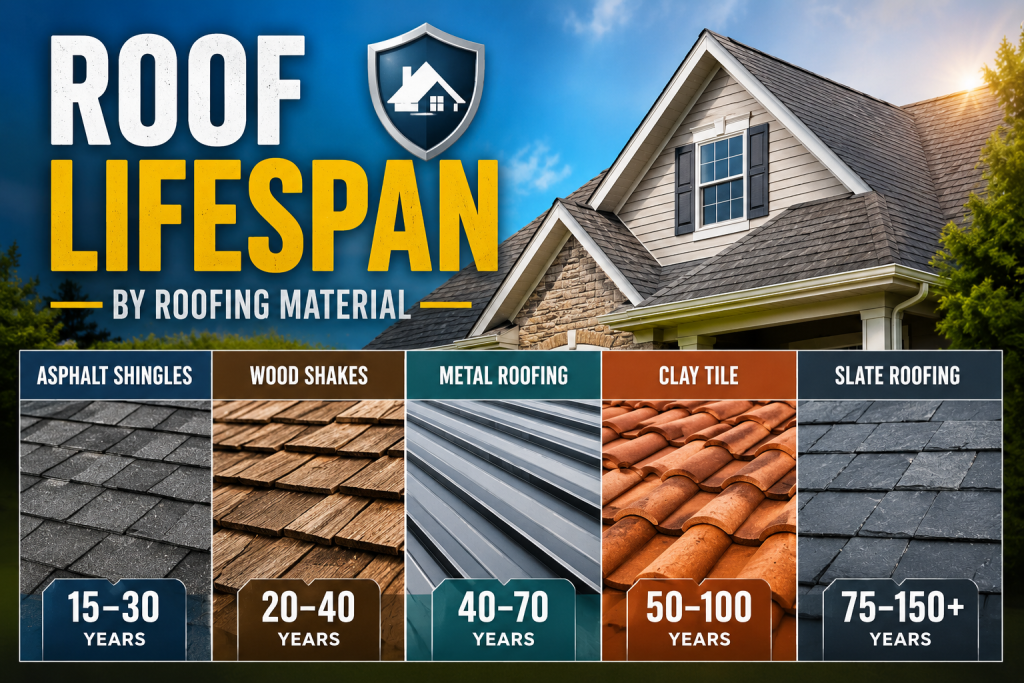
Different roofing materials are designed to perform for different lengths of time. Traditional asphalt shingles typically offer 15 to 30 years of service, while metal roofing can often last 40 to 70 years. Clay and concrete tiles may remain functional for 50 years or more, and natural slate is widely recognized for exceptional longevity. However, these estimates assume professional installation and routine maintenance.
Why Roof Lifespan Varies Between Homes
Even homes built in the same neighborhood may experience different outcomes. Exposure to severe storms, poor attic ventilation, improper installation, and neglected maintenance can shorten the expected roof lifespan considerably. On the other hand, regular inspections, prompt repairs, and adequate airflow throughout the attic can help a roofing system reach or even exceed its projected service life. Understanding these variables provides a more realistic expectation than relying solely on manufacturer estimates.
Roof Lifespan by Roofing Material
Choosing the right roofing material has a major impact on long-term performance, maintenance requirements, and replacement costs. While appearance and budget often influence purchasing decisions, homeowners should also consider how each material performs under local weather conditions and how it contributes to the overall roof lifespan of the home.
Asphalt Shingle Roof Lifespan
The asphalt shingle roof lifespan typically ranges from 15 to 30 years, making it one of the most popular roofing options in the United States. Asphalt shingles are affordable, widely available, and suitable for many climates. However, prolonged exposure to intense sunlight, strong winds, and severe storms can accelerate wear and reduce their expected service life.
Metal Roof Lifespan
A properly installed metal roof lifespan can extend between 40 and 70 years or more. Metal roofing is valued for its resistance to fire, wind, and moisture, making it a common choice in regions prone to extreme weather. Although the upfront cost is higher than asphalt shingles, many homeowners appreciate the long-term value and reduced maintenance requirements.
Tile Roof Lifespan and Slate Roof Durability
The tile roof lifespan often exceeds 50 years when installed correctly and maintained regularly. Clay and concrete tiles perform particularly well in hot climates such as Arizona, Texas, and Southern California. Similarly, slate roof durability is among the highest of any roofing material, with some slate roofs lasting more than a century. While both options require a larger initial investment, they are often selected by homeowners seeking exceptional longevity and premium curb appeal. Ultimately, the material you choose plays a significant role in determining your home’s long-term roofing performance and expected service life.
Factors That Affect Roof Lifespan
Even the highest-quality roofing system can fail prematurely if key factors are overlooked. While roofing materials are designed to last for decades, real-world performance depends on weather exposure, installation practices, ventilation, and routine maintenance. Understanding these influences can help homeowners protect their investment and improve overall roof lifespan expectations.
Climate and Weather Conditions
Climate is one of the biggest factors affecting roof performance. Homes in Florida often face hurricanes, high humidity, and intense UV exposure, while northern states such as Minnesota and Michigan experience heavy snow loads and freeze-thaw cycles. Coastal regions must also contend with salt-laden air that can accelerate material deterioration. These environmental conditions directly influence roofing material longevity and may shorten expected service life if the roof is not designed for local conditions.
Installation and Ventilation Quality
A roof is only as good as its installation. Poor workmanship can lead to leaks, premature aging, and structural issues that reduce the overall roof lifespan. Proper attic ventilation is equally important because it helps regulate temperature and moisture levels. Without adequate airflow, trapped heat and humidity can damage shingles, underlayment, and roof decking over time. Hiring experienced contractors and ensuring proper ventilation can significantly improve long-term roofing performance. By accounting for climate challenges and installation quality, homeowners can help their roofs achieve their full expected lifespan.
Signs Your Roof Is Near the End of Its Roof Lifespan
No roofing system lasts forever. As materials age, they begin to show visible and structural signs of deterioration. Recognizing these warning signals early can help homeowners avoid costly interior damage and make informed decisions about repairs or replacement. Monitoring the condition of your roof regularly is one of the best ways to protect its remaining roof lifespan.
Exterior Warning Signs
Many indicators of roof aging can be spotted from the ground. Curling, cracking, or missing shingles often suggest that roofing materials are nearing the end of their useful life. Granule loss on asphalt shingles, sagging roof sections, damaged flashing, and recurring leaks may also point to significant wear. After severe storms, homeowners should inspect for wind damage and impact-related issues that can shorten the overall roof lifespan.
Interior Warning Signs
Problems inside the home can also signal roofing failure. Water stains on ceilings, peeling paint, mold growth in the attic, and unexplained moisture around insulation often indicate that the roofing system is no longer providing adequate protection. Rising energy bills may also result from ventilation problems or roof-related air leaks. When multiple warning signs appear simultaneously, it is often a strong indication that professional inspection is needed to assess the roof’s condition and remaining service life. Addressing these issues early can prevent more extensive structural damage and help homeowners plan future roofing investments more effectively.
Extending Roof Lifespan Through Proper Maintenance
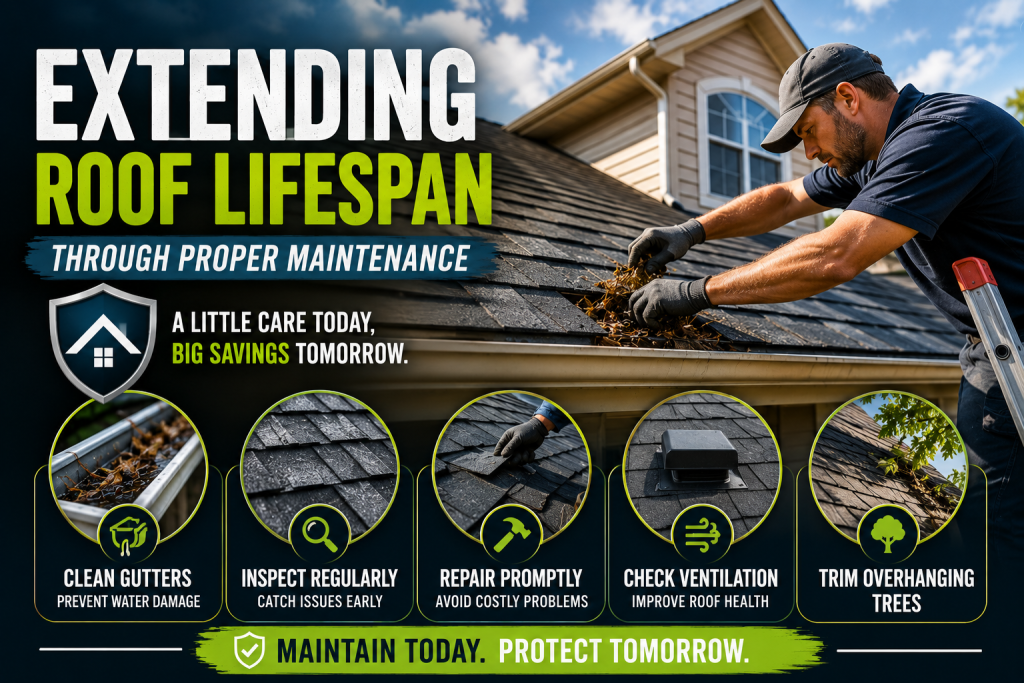
Routine maintenance is one of the most effective ways to maximize the value of a roofing investment. Even the most durable roofing materials require regular inspections and minor repairs to perform as intended. By taking a proactive approach, homeowners can often extend the overall roof lifespan and reduce the likelihood of unexpected repair expenses.
Annual Inspection Checklist
A professional roof inspection should be scheduled at least once a year and after major storms. During an inspection, contractors typically look for damaged shingles, deteriorated flashing, clogged gutters, signs of moisture intrusion, and ventilation issues. Homeowners can also perform basic visual checks from the ground to identify obvious concerns before they become larger problems.
Preventive Repairs and Cleaning
Small issues can quickly develop into major roofing problems when ignored. Replacing damaged shingles, sealing vulnerable areas around roof penetrations, and keeping gutters free of debris help prevent water-related damage. Tree branches that hang over the roof should also be trimmed to reduce wear caused by falling debris and excessive shade. Consistent maintenance not only helps preserve the condition of roofing materials but also allows homeowners to get the maximum performance and service life from their roofing system.
Roof Replacement Timeline: When Should You Replace Your Roof?
Knowing when to replace a roof can be challenging, especially when repairs seem like a less expensive solution. However, there comes a point when ongoing maintenance costs begin to outweigh the benefits of extending the existing system. Understanding a realistic roof replacement timeline can help homeowners plan ahead and avoid emergency replacements caused by sudden failure.
Repair vs. Replacement
Minor issues such as a few missing shingles or localized flashing damage can often be repaired effectively. However, widespread leaks, recurring storm damage, significant structural concerns, or extensive material deterioration may indicate that replacement is the more practical option. If repair costs continue to increase year after year, investing in a new roofing system may provide better long-term value.
Insurance and Resale Considerations
The age and condition of a roof can influence both homeowners insurance premiums and property value. Some insurance providers may limit coverage for older roofs, particularly in regions exposed to severe weather. In competitive real estate markets, a newer roof can also improve buyer confidence and increase curb appeal. Evaluating the remaining roof lifespan of an aging roof can help homeowners make informed decisions before listing their property or renewing insurance coverage. Replacing a roof at the right time can protect the home, improve energy efficiency, and reduce the risk of costly damage in the future.
Conclusion
The expected roof lifespan of a home depends on several factors, including the roofing material, local climate, installation quality, and ongoing maintenance. While some roofing systems may require replacement after only a few decades, others can provide reliable protection for generations when properly maintained. For homeowners, understanding the factors that influence roof lifespan makes it easier to budget for future expenses, schedule inspections, and choose materials that match regional weather conditions. Regular maintenance, prompt repairs, and professional evaluations can significantly improve long-term performance and help prevent costly structural damage. Whether you’re maintaining an existing roof or planning a future replacement, taking a proactive approach can help maximize value, improve energy efficiency, and protect your home for years to come.
Frequently Asked Questions
How long does a roof typically last?
The average roof lifespan can range from 15 to more than 100 years depending on the roofing material, climate conditions, installation quality, and maintenance practices.
What roofing material lasts the longest?
Natural slate is generally considered one of the longest-lasting roofing materials available. When installed correctly and maintained properly, some slate roofs can last more than a century.
Can maintenance increase roof lifespan?
Yes. Regular inspections, gutter cleaning, prompt repairs, and proper attic ventilation can help extend roof lifespan and reduce the risk of premature deterioration.
When should homeowners replace an aging roof?
Replacement is often recommended when repair costs become frequent, leaks are widespread, or the roofing system has reached the end of its expected service life.
Does climate affect roof performance?
Absolutely. Factors such as intense sunlight, hurricanes, heavy snowfall, high humidity, and freeze-thaw cycles can significantly influence durability and long-term roofing performance.