


Best Ways to Save Money on Home Renovations
Home remodeling costs in the United States continue to rise due to labor shortages, material inflation, and increased demand for skilled contractors. For many homeowners, learning how to save money on home renovations has become just as important as the renovation itself. Whether you’re updating a kitchen, remodeling a bathroom, or planning a full home upgrade, costs can escalate quickly without a clear financial strategy.
The challenge is that most renovation budgets fail not because of poor planning, but because of unexpected decisions during construction. Small upgrades, design changes, and material substitutions can significantly increase the final bill. Understanding where costs can be reduced, and where they should never be compromised, is essential for achieving budget-friendly renovations that still improve home value and long-term durability.
Why Home Renovation Costs Keep Rising in the US
Home renovation prices across the United States have steadily increased over the past several years, making it harder for homeowners to save money on home renovations without careful planning. One of the biggest drivers is labor scarcity. Skilled trades such as electricians, plumbers, and carpenters are in high demand, and wages have risen accordingly, especially in urban markets like Los Angeles, New York, and Seattle.
Material costs have also surged due to supply chain disruptions and higher manufacturing expenses. Items like lumber, roofing, and insulation fluctuate frequently, directly impacting remodeling on a budget plans. In addition, stricter building codes under the International Residential Code (IRC) and energy efficiency standards recommended by ENERGY STAR and the EPA often require upgraded materials or systems that increase upfront costs. Together, these factors create a higher baseline for nearly all home renovation pricing, forcing homeowners to become more strategic with budgeting decisions.

Start With a Smart Renovation Budget Strategy
The foundation of any effort to save money on home renovations begins with a disciplined budgeting strategy. Without a clear plan, costs tend to expand during construction through upgrades, scope changes, and unexpected issues. A smart renovation budget starts by defining a fixed total spend, then breaking it into categories such as structural work, systems (electrical, plumbing, HVAC), and finishes.
Homeowners should also include a contingency buffer of 10–20% to handle unexpected renovation expenses without disrupting the entire project. This is especially important in older US homes where hidden issues are more likely to appear once work begins. Prioritization is equally important. Structural integrity and essential systems should always come first, while cosmetic upgrades can be adjusted based on remaining funds. This approach ensures that budget-friendly renovations stay financially controlled while still delivering meaningful improvements to the home’s function and value.
Focus on High-ROI Affordable Remodeling Ideas
One of the most effective ways to save money on home renovations is to prioritize upgrades that deliver strong visual impact and measurable return on investment. Not every project needs to be expensive to feel transformative. In fact, many affordable remodeling ideas focus on improving high-visibility areas that buyers and homeowners notice immediately.
Kitchen and bathroom updates often provide the best balance of cost and value, even when done in phases. Simple improvements like cabinet refacing, updated countertops, or modern fixtures can significantly enhance appearance without requiring full replacement. Similarly, fresh paint, new flooring in key rooms, and updated lighting can completely change the feel of a home at a relatively low cost. In US housing markets where resale value matters, focusing on these high-impact areas ensures that budget-friendly renovations improve both livability and long-term property value without overspending on low-return upgrades.
Budget-Friendly Renovations That Look Expensive
A smart way to save money on home renovations is to focus on upgrades that deliver a high-end appearance without high-end pricing. Many budget-friendly renovations rely on visual impact rather than structural changes, allowing homeowners to transform a space on a controlled budget. Fresh interior paint is one of the most powerful low-cost upgrades, especially when using modern neutral tones that align with current US design trends. Lighting upgrades also make a major difference, replacing outdated fixtures with layered lighting or LED solutions can instantly modernize a home’s feel while staying cost-efficient.
Other effective cheap home upgrades include replacing cabinet hardware, updating faucets, installing new baseboards or trim, and refinishing rather than replacing flooring. These small changes create a cohesive, updated look that can rival much more expensive remodels when done thoughtfully. By focusing on aesthetics-driven improvements, homeowners can achieve a premium appearance without exceeding their remodeling on a budget goals.
DIY Remodeling Savings vs Hiring Professionals
One of the most debated strategies to save money on home renovations is deciding what to do yourself versus hiring professionals. DIY work can significantly reduce labor costs, which often make up a large portion of overall home renovation pricing. Tasks like painting, landscaping, installing fixtures, or simple flooring projects can offer meaningful DIY remodeling savings when done correctly.
However, not all work should be handled independently. Electrical, plumbing, structural, and HVAC systems require licensed professionals in most US states due to safety risks and compliance with the International Residential Code (IRC). Mistakes in these areas can lead to costly repairs, inspection failures, or long-term damage that outweigh any initial savings. The most effective approach is a hybrid model: homeowners handle cosmetic, low-risk tasks while professionals manage technical systems. This balance allows for remodeling on a budget without compromising safety, quality, or long-term durability.
Smart Material Choices That Reduce Costs
Material selection plays a major role in how effectively you can save money on home renovations without sacrificing durability or design. In many US remodels, homeowners overspend simply because they choose premium finishes where mid-range alternatives would perform just as well. Making intentional substitutions is one of the most practical renovation cost-saving tips available.
For example, stock cabinetry instead of custom-built units can dramatically reduce kitchen costs while still delivering a clean, modern look. Similarly, laminate or engineered flooring can achieve the appearance of hardwood at a fraction of the price, making it a popular option for remodeling on a budget projects. Even in exterior upgrades, selecting durable mid-tier materials instead of luxury finishes can control expenses while maintaining long-term performance. The key is balancing aesthetics, lifespan, and maintenance needs so homeowners achieve budget-friendly renovations that remain functional and visually appealing over time.
Renovation Cost-Saving Tips Contractors Don’t Always Mention
Many of the most effective ways to save money on home renovations come from understanding how contractors structure pricing and schedules. One of the simplest renovation cost-saving tips is timing your project strategically. Off-season scheduling, often late fall or winter in many US regions, can sometimes reduce labor demand and improve contractor availability.
Another overlooked strategy is bundling work. Hiring one contractor to handle multiple phases (for example, flooring plus trim work) can reduce mobilization costs and coordination fees. Homeowners can also reduce expenses by avoiding mid-project design changes, which frequently lead to change orders and increased home renovation pricing. Getting at least three detailed bids is also essential. Not only does this help identify fair pricing, but it also reveals inconsistencies in scope. Contractors may include or exclude different elements, which heavily impacts the final cost. Understanding these details is key to achieving budget-friendly renovations without compromising quality.
Phased Remodeling to Control Budget Over Time
One of the most practical strategies to save money on home renovations is to break the project into phases instead of attempting a full upgrade all at once. This approach allows homeowners to spread costs over time while still making steady improvements to the property. It’s especially useful for large-scale projects where home renovation pricing would otherwise exceed available cash flow or financing limits.
A typical phased plan starts with structural and safety-related work, such as roofing, electrical systems, or plumbing upgrades. The second phase focuses on functional improvements like kitchens, bathrooms, and flooring. Final phases address cosmetic enhancements such as paint, lighting, and exterior finishes. This method not only improves budget control but also reduces financial pressure and minimizes the risk of renovation overruns. By prioritizing essential systems first, homeowners can ensure their investment is stable while gradually moving toward more aesthetic budget-friendly renovations over time.
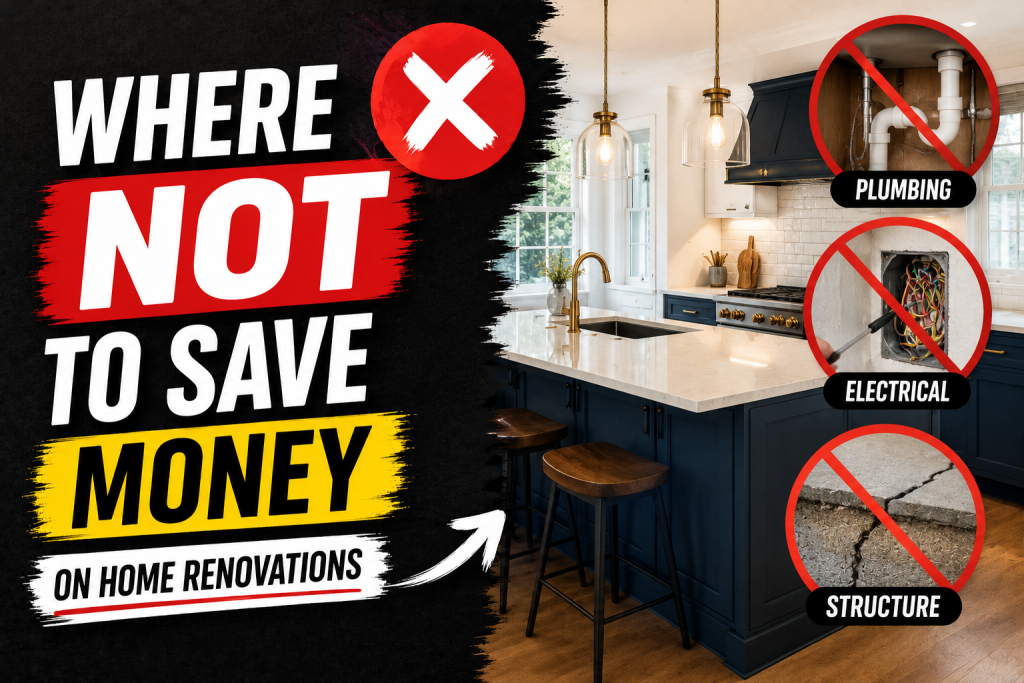
Where NOT to Save Money on Home Renovations
While the goal is to save money on home renovations, cutting costs in the wrong areas can lead to far more expensive problems later. Certain parts of a home should always be treated as non-negotiable investments because they directly impact safety, durability, and long-term value. Roofing is one of the most important systems to avoid cheap shortcuts. A poorly installed or low-quality roof can lead to leaks, structural damage, and insulation issues that multiply repair costs over time. Electrical systems are another critical area, cutting corners here can create serious safety hazards and violate the International Residential Code (IRC).
Plumbing and insulation also fall into this category. Poor plumbing work can cause hidden leaks and water damage, while inadequate insulation increases long-term energy bills and reduces comfort. In these areas, spending more upfront often prevents costly unexpected renovation expenses later and ensures your budget-friendly renovations remain structurally sound and efficient.
Conclusion
The best way to save money on home renovations is not simply to cut costs, it’s to spend strategically. Homeowners who succeed with budget-friendly renovations focus on planning, prioritization, and understanding where money actually creates value versus where it is easily wasted. From choosing the right materials to phasing projects over time, every decision affects overall home renovation pricing. Smart homeowners avoid unnecessary upgrades, use DIY where it’s safe, and always protect critical systems like roofing, plumbing, and electrical work. Ultimately, effective remodeling on a budget is about balance. When you invest in the right areas and control scope creep, you can improve your home’s comfort, function, and resale value without overspending or falling into common renovation traps.
FAQs
What is the cheapest way to renovate a house?
The cheapest way to save money on home renovations is to focus on cosmetic updates like paint, lighting, fixtures, and flooring instead of structural changes. These low-cost home improvements can significantly improve appearance without major construction work.
How can I reduce remodeling costs overall?
Start with a strict budget, avoid mid-project design changes, compare multiple contractor bids, and prioritize essential repairs first. Using a phased approach is one of the most effective renovation cost-saving tips for controlling total spending.
Is DIY renovation worth it?
DIY can offer meaningful DIY remodeling savings for tasks like painting, landscaping, or simple installations. However, electrical, plumbing, and structural work should always be handled by licensed professionals for safety and compliance.
What renovations increase value the most?
Kitchen updates, bathroom remodels, and energy-efficient upgrades typically provide the highest return on investment while still supporting budget-friendly renovations goals.