

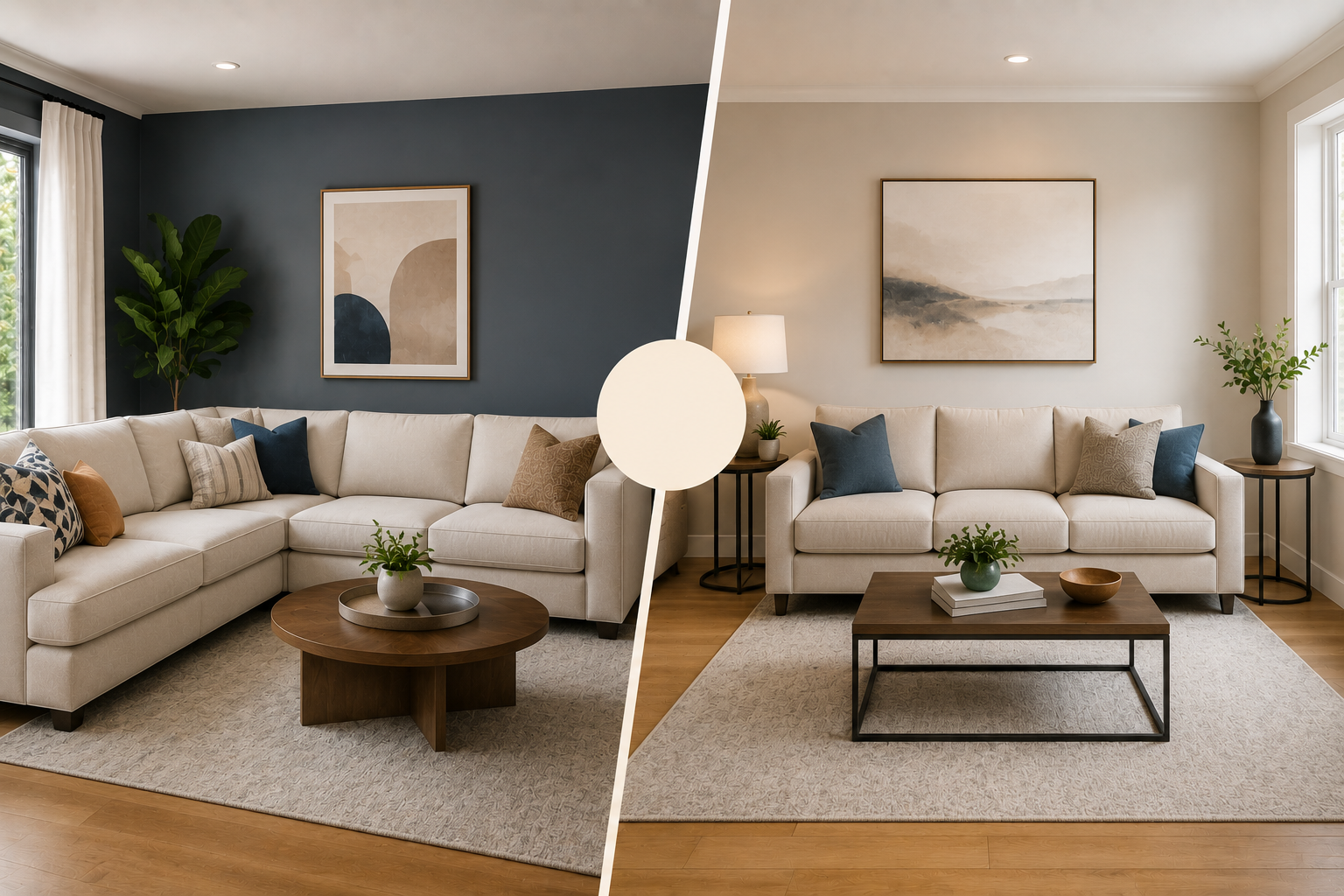
Sectional vs Sofa: Which Is Better for Your Living Room?
Choosing the right seating is one of the most important decisions when designing a living room. For many homeowners, the debate between a sectional and a traditional sofa comes down to space, comfort, functionality, and personal style. Understanding the differences between sectional vs sofa options can help you select furniture that better suits your lifestyle and the way you use your living space.
Both sectionals and sofas offer unique advantages. Sectionals are known for maximizing seating capacity and creating a relaxed, family-friendly environment, while traditional sofas often provide greater flexibility and work well in a wider range of room sizes. The best choice depends on factors such as room dimensions, household size, entertaining needs, and future furniture plans. This guide compares sectional vs sofa options in detail, helping homeowners determine which seating solution delivers the best combination of comfort, practicality, and long-term value.
Sectional vs Sofa: Understanding the Difference
Before deciding between a sectional and a traditional sofa, it’s important to understand how each option functions within a living room. The sectional vs sofa debate often comes down to seating capacity, layout flexibility, and the amount of available space. A sectional consists of multiple connected seating pieces that form an L-shape, U-shape, or modular configuration. These designs are ideal for larger living rooms and open-concept spaces because they provide ample seating while helping define different areas of the room.
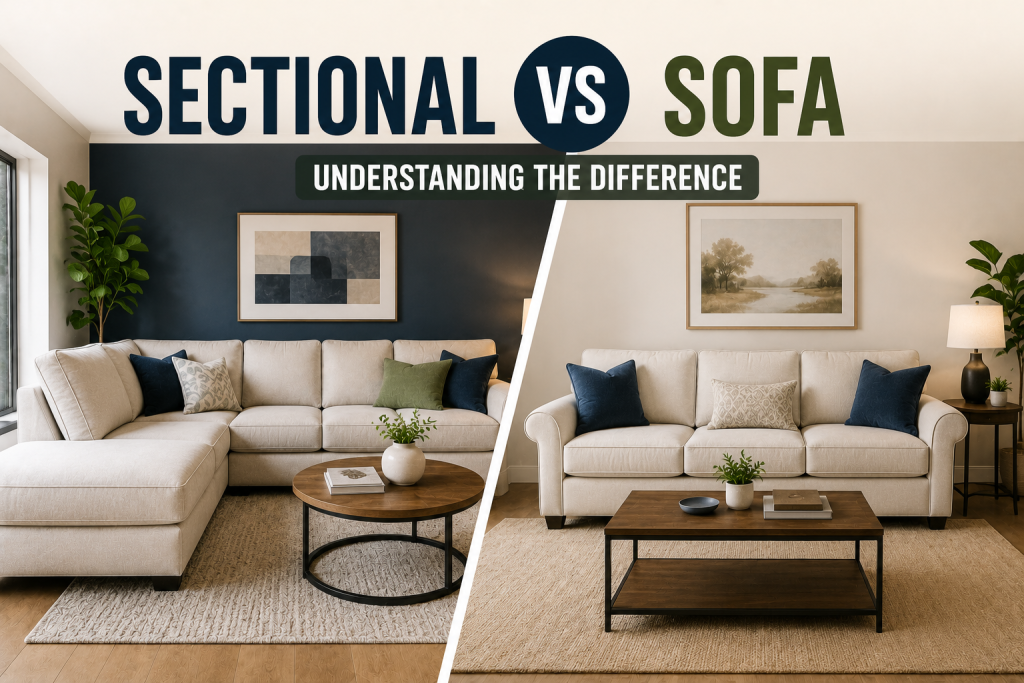
Many homeowners appreciate sectionals for their comfort and ability to accommodate larger families. A traditional sofa, on the other hand, is a single seating piece that can easily be paired with accent chairs, loveseats, or ottomans. Sofas offer greater flexibility when rearranging furniture and often fit better in smaller rooms. Understanding these differences is the first step toward determining which option is best suited to your home’s layout and lifestyle needs.
Benefits of Choosing a Sectional
For homeowners who prioritize comfort and seating capacity, a sectional can be an excellent investment. One of the main advantages highlighted in many sectional vs couch comparisons is the ability of a sectional to provide significantly more seating without requiring multiple furniture pieces. Among the most notable sectional couch benefits is its ability to create a natural gathering space for family members and guests. Large sectionals work especially well in open-concept homes, where they can help define the living area while maintaining an inviting atmosphere.
Many models also include chaise lounges, recliners, or built-in storage features that enhance functionality. Another advantage is versatility. Modern sectionals are available in a wide range of sizes and configurations, making it easier to find a layout that fits specific room dimensions. For households that frequently entertain or need ample seating for everyday use, a sectional often provides a practical and comfortable solution.
Benefits of Choosing a Traditional Sofa
A traditional sofa remains one of the most versatile furniture choices for living rooms of all sizes. In many sectional vs sofa discussions, homeowners favor sofas because they offer greater flexibility when arranging or updating a room. Unlike sectionals, sofas can easily be paired with accent chairs, ottomans, or loveseats to create a customized seating arrangement.
One of the biggest advantages of a sofa for small living room spaces is its compact footprint. Sofas generally take up less floor space, making them a practical choice for apartments, condos, and narrower living rooms. They also allow homeowners to reconfigure furniture layouts more easily as needs change over time. Traditional sofas are available in a wide variety of styles, fabrics, and sizes, making it easier to match existing décor. For homeowners who value flexibility and future design options, a sofa often provides a balanced combination of comfort and functionality.
Sectional vs Sofa for Tiny Living Rooms
Choosing the right seating for a compact space requires careful planning. The sectional vs sofa decision becomes even more important when square footage is limited, as the wrong furniture choice can make a room feel crowded and difficult to navigate.
When a Sectional Makes Sense
A compact sectional can work well in smaller living rooms when it replaces the need for multiple seating pieces. Many homeowners use L-shaped sectionals to maximize corner space while maintaining adequate seating for family and guests.
When a Sofa Is the Better Choice
A sofa for tiny living room layouts often provides greater flexibility. Because sofas take up less visual and physical space, they can help create a more open appearance while leaving room for accent chairs or storage furniture.
Consider Traffic Flow
Regardless of which option you choose, maintaining clear walkways is essential. Furniture should support movement throughout the room rather than block natural traffic patterns.
Measure Before You Buy
One of the most important lessons from any sectional vs sofa comparison is that proper measurements matter. Always evaluate room dimensions, doorways, and furniture placement before making a purchase decision.
Sectional vs Sofa for Family Rooms
When furnishing a family room, comfort and seating capacity often become top priorities. This is where the sectional vs sofa decision can have a significant impact on how the space functions for everyday living. Families that regularly gather for movie nights, conversations, or entertaining guests may benefit from furniture that accommodates multiple people comfortably. Sectionals are often considered some of the best furniture for family rooms because they provide generous seating in a single piece.
Their design encourages interaction and creates a relaxed atmosphere that works well for larger households. Many sectionals also include chaise lounges and reclining features that increase comfort. Traditional sofas, however, offer flexibility and can be combined with additional seating to create a customized arrangement. Homeowners who frequently update their layouts or anticipate future design changes may appreciate this adaptability. Ultimately, the right choice depends on the size of the family room, seating needs, and long-term lifestyle preferences.
Modular Sectional Tips for Modern Homes
Modern homeowners increasingly value flexibility, which is one reason modular sectionals have become so popular. Unlike traditional sectionals, modular designs consist of separate pieces that can be rearranged to suit different room layouts and lifestyle needs. These adaptable configurations are often highlighted in sectional vs sofa discussions because they combine the seating capacity of a sectional with added versatility.
Many modular sectional ideas focus on creating seating arrangements that can evolve. Homeowners can add or remove sections, create L-shaped or U-shaped layouts, or separate pieces to accommodate changing needs. This flexibility makes modular sectionals particularly appealing for growing families and open-concept homes. Another advantage is the ability to customize the layout for specific occasions. Whether hosting guests, creating a conversation area, or maximizing floor space, modular sectionals provide options that traditional fixed furniture often cannot match. Their adaptability makes them a strong contender for modern living room designs.
Bedroom Seating Options Compared
Homeowners today have more bedroom seating options than ever before. While the sectional vs sofa debate often receives the most attention, other furniture combinations can also provide comfort, flexibility, and style depending on the room’s layout and intended use. A sectional is often the best choice for maximizing seating in a single furniture piece, making it ideal for larger families and open-concept spaces. Traditional sofas offer greater flexibility and can be paired with accent chairs, ottomans, or loveseats to create a customized arrangement.
Reclining sofas provide additional comfort, while modular seating systems offer adaptability for changing needs. When evaluating seating options, homeowners should consider room size, traffic flow, seating capacity, and long-term functionality. The most effective layouts balance comfort with practicality, ensuring that the furniture supports both everyday living and occasional entertaining without overwhelming the space.
Factors to Consider Before Buying
Selecting the right seating requires more than choosing a style you like. Homeowners can use this couch buying guide to evaluate several practical factors and ensure their furniture fits both the room and their lifestyle.

Sectional vs Sofa: Start With Room Size
Before making a purchase, measure the room carefully. The available floor space, wall dimensions, and traffic flow patterns should all influence your decision. A large sectional may overwhelm a compact room, while a smaller sofa may look undersized in a spacious living area.
Consider Your Seating Needs
Think about how many people regularly use the room. Larger households may benefit from the additional seating offered by a sectional, while smaller households may find a sofa provides sufficient comfort and flexibility.
Evaluate Lifestyle and Daily Use
Families with children, frequent guests, or pets often have different furniture requirements than individuals or couples. Durability, stain resistance, and comfort should all be considered during the selection process.
Plan for Future Flexibility
Furniture is a long-term investment. Homeowners who frequently rearrange rooms or anticipate moving in the future may appreciate furniture that can adapt to changing layouts and living situations.
Which Option Offers Better Long-Term Value?
When comparing furniture investments, long-term value depends on how well the seating meets your needs over time. The sectional vs sofa decision should consider factors such as durability, flexibility, comfort, and the ability to adapt to future lifestyle changes. A sectional often provides excellent value for larger families because it maximizes seating and can eliminate the need for additional furniture pieces. Many homeowners appreciate the convenience of having a single seating solution that accommodates everyday use as well as entertaining guests.
High-quality sectionals can also remain functional for many years when properly maintained. Traditional sofas, however, may offer greater flexibility in the long run. They are easier to move, reconfigure, and pair with new furniture as design preferences evolve. For homeowners who frequently update their interiors or anticipate relocating, this adaptability can be a significant advantage. Ultimately, the better investment depends on your room size, household needs, and long-term plans for the space.
Conclusion
The choice between a sectional and a traditional sofa ultimately depends on your living room size, seating requirements, and lifestyle preferences. Throughout this sectional vs sofa comparison, both options have demonstrated unique advantages. Sectionals excel in maximizing seating and creating a family-friendly environment, while sofas offer greater flexibility and work well in a wider variety of spaces. Before making a purchase, consider factors such as room dimensions, traffic flow, future furniture plans, and daily usage needs. By evaluating these elements carefully, homeowners can select seating that enhances both comfort and functionality. The right choice will help create a living room that feels inviting, practical, and well-suited to everyday living.
Frequently Asked Questions
Which is better: sectional vs sofa?
The answer depends on your room size, seating needs, and lifestyle. In the sectional vs sofa debate, sectionals typically offer more seating, while sofas provide greater flexibility.
Is a sofa better for a small living room?
Yes, a sofa for tiny living room layouts is often a practical choice because it takes up less space and allows for more flexible furniture arrangements.
What are the main sectional couch advantages?
Some of the most important couch advantages include increased seating capacity, improved comfort, and the ability to define living spaces in open-concept homes.
Are modular sectionals worth buying?
Yes. Many homeowners prefer modular sectional tips because they allow furniture configurations to change as needs and room layouts evolve.
What are the best room seating options for families?
Popular living room seating options for families include sectionals, reclining sofas, and sofa-and-chair combinations that provide comfort and accommodate multiple people.