


Best Furniture Placement Ideas for Small Living Rooms
Designing a comfortable and functional living room can be challenging when square footage is limited. Effective small living room furniture placement allows homeowners to maximize space, improve traffic flow, and create a room that feels larger than it actually is. Even small layout changes can make a noticeable difference in everyday comfort and usability.
Many homeowners struggle with oversized furniture, cluttered layouts, and inefficient use of available space. A thoughtful approach to small room furniture placement helps solve these common problems while maintaining style and comfort. Whether you live in an apartment, condo, or compact home, the right arrangement can transform a small living room into a welcoming and highly functional space.
Why Does Small Living Room Furniture Placement Matter?
The way furniture is arranged has a major impact on how a room looks and functions. Proper tiny living room furniture placement helps maximize usable space, improve traffic flow, and create a more comfortable environment for everyday activities. In compact rooms, even minor layout mistakes can make the space feel cramped and difficult to use. Strategic furniture placement also helps define conversation areas, preserve open pathways, and enhance the room’s visual balance.
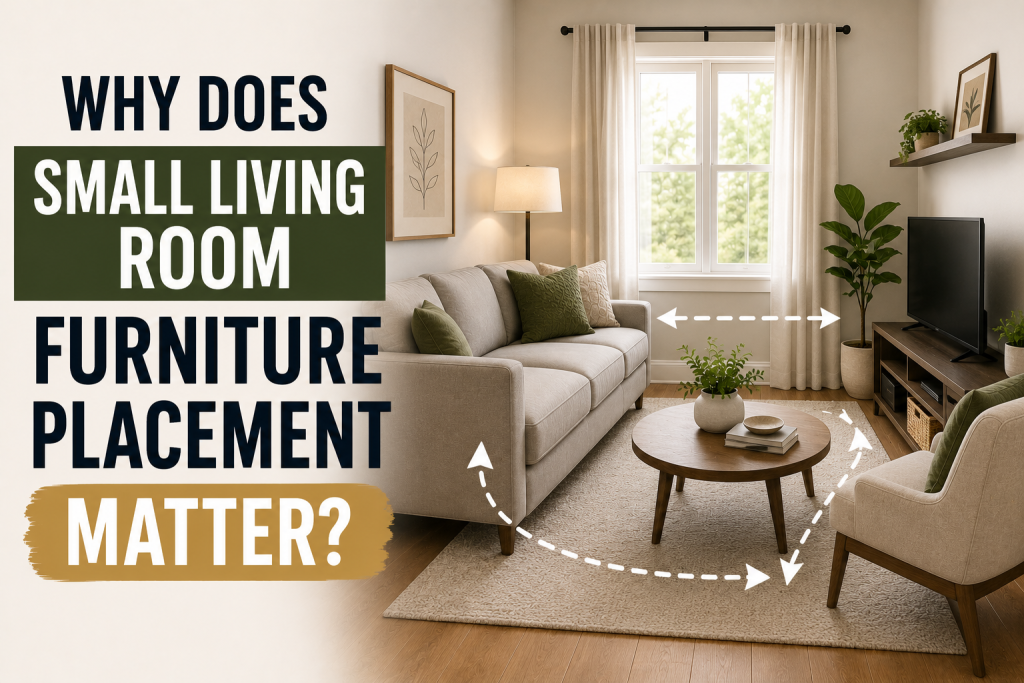
Choosing the right furniture size and positioning pieces thoughtfully can make a small room appear larger and more inviting. Natural light, focal points, and storage opportunities can all be used more effectively when the layout is carefully planned. Understanding the principles of small living room furniture placement allows homeowners to create a space that balances comfort, functionality, and style. The goal is to make every square foot work efficiently while maintaining an open and welcoming atmosphere.
Small Bedroom Layout Ideas That Maximize Space
Smart small living room layout strategies can make a compact space feel more open and functional without requiring expensive renovations. The key is to arrange furniture that supports daily activities while preserving as much floor space as possible. One effective approach is to establish a focal point, such as a fireplace, television, or large window, and organize seating around it. Using fewer but more purposeful furniture pieces can reduce clutter and improve visual balance.
Floating furniture slightly away from the walls may also create a more spacious feel and encourage better traffic flow. Successful small living room furniture placement focuses on both comfort and practicality. Homeowners should prioritize layouts that provide adequate seating, maintain clear pathways, and maximize natural light. Even simple adjustments can help a small living room feel larger, more inviting, and easier to use daily.
Apartment Furniture Tips for Compact Spaces
Practical apartment furniture ideas can help homeowners and renters make better use of limited square footage. In small living rooms, selecting the right furniture is just as important as arranging it properly. Pieces that combine comfort, storage, and versatility often provide the greatest value. Multifunctional furniture such as storage ottomans, nesting tables, sleeper sofas, and lift-top coffee tables can add functionality without creating clutter.
Furniture with exposed legs and slim profiles can also help a room feel more open by allowing light to flow underneath. Choosing pieces that are appropriately scaled for the room prevents overcrowding and improves overall balance. Effective small living room furniture placement works best when paired with smart furniture choices. By focusing on versatility and proportion, homeowners can create a compact living space that feels organized, comfortable, and visually appealing while maximizing every available inch.
Space-Saving Furniture Placement Strategies
A thoughtful space-saving furniture arrangement can help homeowners maximize functionality without making a small living room feel crowded. A strategic layout allows the room to remain comfortable while preserving valuable floor space.
Prioritize Essential Furniture
Start with the most important pieces, such as a sofa and coffee table, before adding accent furniture. Limiting unnecessary items helps maintain a clean and open appearance.
Incorporate Vertical Storage
Floating shelves, bookcases, and wall-mounted cabinets can provide storage without taking up additional floor space, making them ideal for compact living rooms.
Small Living Room Furniture Placement for Better Flow
Effective small living room furniture placement focuses on maintaining clear pathways and reducing visual clutter. By arranging furniture to support traffic flow and keeping adequate spacing between pieces, homeowners can create a room that feels larger, more organized, and easier to navigate.
Compact Living Room Tips for Better Functionality
Creative compact living room ideas can help homeowners make the most of limited space while maintaining comfort and style. The goal is to create a room that supports everyday activities without feeling crowded or cluttered. One effective strategy is to divide the room into functional zones. A dedicated seating area, reading corner, or small workspace can help maximize usability without sacrificing openness. Furniture with built-in storage can further reduce clutter and improve organization.
Mirrors, light colors, and layered lighting can also help make the room appear larger and brighter. Successful small living room furniture placement plays a key role in improving functionality. By arranging furniture to support movement and accessibility, homeowners can create a living room that feels more spacious and practical. Thoughtful layouts allow compact spaces to remain comfortable and efficient while accommodating the needs of daily life.
Small Room Furniture Setup Tips
Designing an efficient tiny room furniture setup requires careful planning and attention to scale. In very small living rooms, oversized furniture can quickly overwhelm the space and limit functionality. Choosing the right pieces and arranging them strategically can make a noticeable difference. Slim-profile sofas, armless chairs, and compact coffee tables are often better suited for tiny rooms than bulky furniture. Homeowners should also consider multifunctional pieces that provide storage or serve multiple purposes.
Keeping furniture proportional to the room helps preserve open floor space and improves traffic flow. Proper small living room furniture placement is especially important in tiny spaces because every inch matters. Maintaining clear pathways and avoiding unnecessary furniture can help create a room that feels larger and more organized. With thoughtful planning, even the smallest living rooms can feel comfortable, stylish, and highly functional.
Sectional Sofa Arrangement in Small Living Rooms
Smart sectional sofa arrangement can provide ample seating without overwhelming a compact living room. While many homeowners assume sectionals only work in large spaces, the right configuration can actually improve functionality and define the seating area more effectively. L-shaped sectionals are especially popular because they maximize seating while using corner space efficiently. Positioning the sectional against a wall or in a corner can help preserve open floor space and improve traffic flow.
In open-concept homes, a sectional can also act as a subtle divider between the living room and adjacent areas. Successful small living room furniture placement requires balancing seating capacity with room proportions. Oversized sectionals should be avoided, as they can dominate the space and restrict movement. Choosing a sectional that fits the room properly helps create a comfortable, organized, and inviting living area.
Cozy Living Room Themes That Feel Larger
Well-designed cozy living room layouts can make even the smallest spaces feel warm, inviting, and surprisingly spacious. The key is to balance comfort with openness while avoiding unnecessary clutter. Creating a central seating area around a focal point helps establish visual order and encourages conversation. Layering textures through rugs, throw pillows, and soft furnishings adds warmth without requiring additional furniture. Maintaining open sightlines and maximizing natural light can also make the room feel larger than its size.
In some cases, fewer furniture pieces arranged thoughtfully create a better result than trying to fill every corner. Strategic small living room furniture placement is essential for achieving this balance. By combining comfortable seating with smart spacing and functional layouts, homeowners can create a room that feels both cozy and spacious while supporting everyday activities and entertaining needs.
Common Small Living Room Furniture Placement Mistakes
Even well-designed rooms can feel cramped when furniture is arranged improperly. Avoiding these common mistakes can help homeowners maximize comfort and make better use of limited space.
- Choosing oversized furniture that overwhelms the room.
- Pushing every furniture piece directly against the walls.
- Blocking natural traffic pathways.
- Using too many decorative items and accent tables.
- Ignoring the room’s focal point when arranging seating.
- Selecting coffee tables that are too large for the available space.
- Failing to incorporate multifunctional furniture.
- Overcrowding corners with unnecessary pieces.
- Using rugs that are too small for the seating arrangement.
- Prioritizing appearance over comfort and functionality.
By recognizing these mistakes, homeowners can create layouts that feel more spacious, organized, and practical. Small adjustments often have a significant impact on how comfortable and functional a compact living room becomes.
How to Improve Small Living Room Furniture Placement?
Improving small living room furniture placement starts with understanding how the room is used every day. A layout that supports traffic flow, seating needs, and storage requirements will feel more comfortable and functional over time. Small changes can often produce dramatic results. Begin by removing unnecessary furniture and focusing on pieces that serve a clear purpose. Choose furniture that fits the scale of the room and position it to encourage conversation while maintaining open pathways.
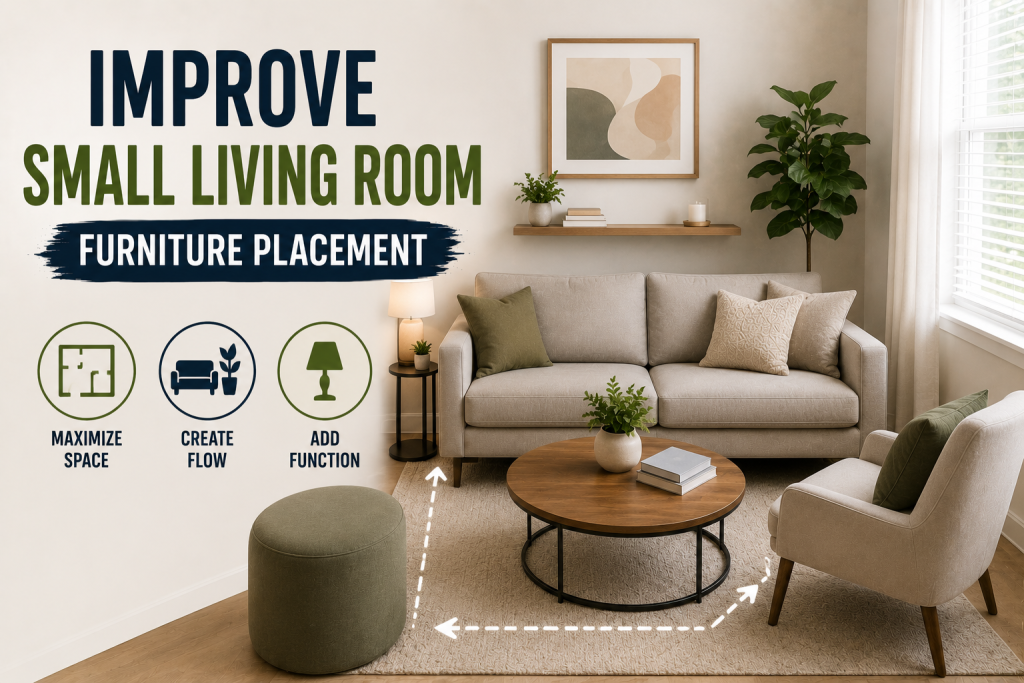
Multifunctional pieces, such as storage ottomans and nesting tables, can help maximize space without adding clutter. Rearranging furniture periodically can also reveal more efficient layouts. By prioritizing functionality over excess decoration, homeowners can create a living room that feels larger and more inviting. Thoughtful planning and strategic furniture placement help transform compact spaces into comfortable areas that support everyday living and entertaining.
Conclusion
Effective small living room furniture placement can completely transform a compact space by improving comfort, functionality, and visual appeal. With the right layout, even a small room can feel open, organized, and welcoming. Choosing appropriately sized furniture, maintaining clear traffic flow, and incorporating multifunctional pieces are some of the most effective ways to maximize available space. Avoiding common arrangement mistakes and focusing on practical design principles can make everyday living more enjoyable. Whether you live in an apartment, condo, or smaller home, thoughtful furniture placement allows you to create a living room that feels larger, cozier, and perfectly suited to your lifestyle.
Frequently Asked Questions
What is the best small living room furniture placement strategy?
The best small living room furniture placement strategy is to use appropriately sized furniture, maintain clear walkways, and create a layout that balances comfort with functionality.
How do I make a small living room look bigger?
Light colors, mirrors, multifunctional furniture, and good lighting can help create the illusion of a larger and brighter room.
Can a sectional sofa work in a small living room?
Yes. Proper sectional sofa placement can maximize seating while maintaining good traffic flow and efficient use of floor space.
What type of furniture works best in compact spaces?
Furniture with built-in storage, slim profiles, and multiple functions is often ideal for smaller living rooms.
Should furniture always be placed against the walls?
No. Pulling furniture slightly away from the walls can sometimes improve balance and make the room feel more inviting.