


Solar vs Wired Landscape Lighting: Which Outdoor Lighting Option Makes More Sense?
Choosing landscape lighting seems simple until you realize the decision affects more than nighttime visibility. The right setup influences curb appeal, maintenance requirements, energy use, and even long-term property value. When homeowners compare solar vs wired landscape lighting, the biggest misconception is assuming one option is universally better. In reality, performance depends on your climate, yard size, lighting goals, and how permanent you want the installation to be.
Solar fixtures appeal to homeowners looking for easier upgrades with minimal operating costs. Wired systems are often selected for stronger illumination, greater consistency, and long-term outdoor design plans. Both can improve how a home looks after sunset—but they deliver results differently. In this guide, we’ll compare upfront cost, brightness, maintenance, durability, installation complexity, and regional performance so you can choose the lighting solution that fits your home—not just current trends.
Solar vs Wired Landscape Lighting at a Glance
For most homeowners, the decision comes down to one question: do you want convenience today or performance over the long term? This quick landscape lighting comparison highlights where each option stands before we explore the details.
| Factor | Solar Lighting | Wired Lighting |
| Upfront Cost | Lower | Higher |
| Installation | Simple DIY | Professional or advanced DIY |
| Brightness | Moderate | High and consistent |
| Energy Source | Sunlight | Household electricity |
| Operating Cost | Minimal | Low with LED fixtures |
| Maintenance | Battery replacement | Occasional fixture upkeep |
| Lifespan | Moderate | Longer overall |
| Weather Reliability | Varies by sunlight | More dependable |
| Best For | Small pathways and accent areas | Whole-yard illumination |
| Long-Term Value | Good for basic upgrades | Better for permanent improvements |
Solar options are often attractive for homeowners who want fast installation and flexibility. Many people choose solar pathway lights to improve walkways, gardens, and entry areas without trenching or electrical work. By comparison, wired outdoor lighting typically delivers stronger output, more consistent coverage, and better performance across larger properties. Homes focused on evening entertaining, layered lighting design, or premium curb appeal often benefit from a permanent system. The right choice depends less on trends and more on how you plan to use your outdoor space over the next several years.
How Solar Landscape Lighting Works
Solar landscape lighting operates independently from your home’s electrical system. Each fixture typically includes a small photovoltaic panel, a rechargeable battery, a controller, and an LED light source. During daylight hours, the panel collects sunlight and stores energy for nighttime operation. This setup makes solar lighting especially attractive for homeowners who want faster upgrades without digging trenches or extending electrical lines. However, when comparing solar vs wired landscape lighting, performance depends heavily on placement and available sun exposure. Trees, covered porches, fences, and seasonal weather can reduce charging efficiency and shorten runtime, which is one of the key considerations homeowners should evaluate during a solar vs wired landscape lighting decision.
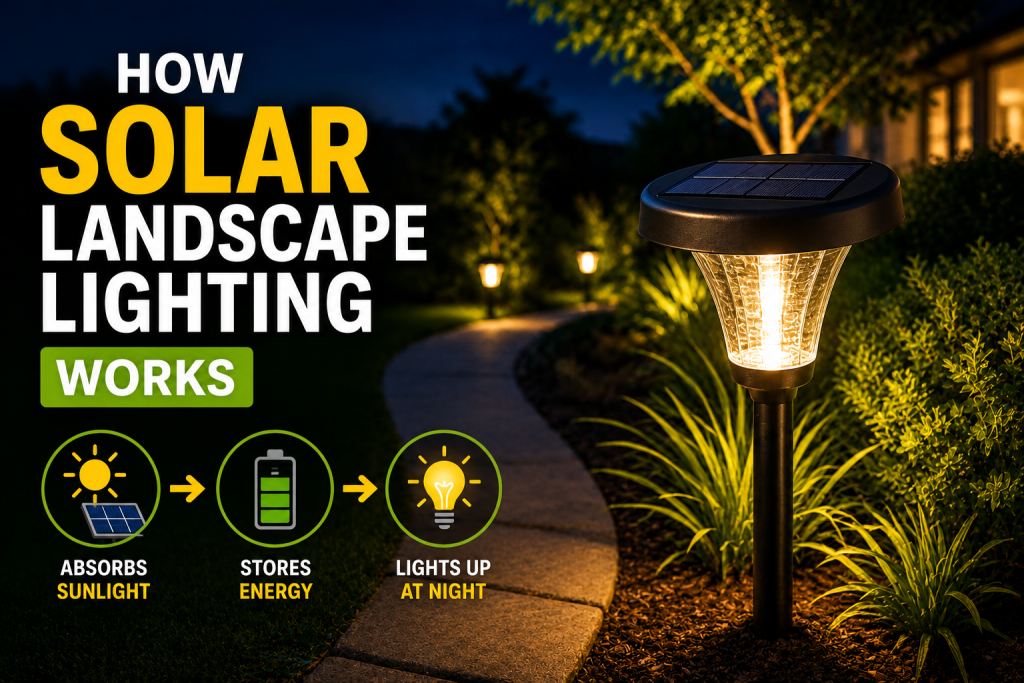
Understanding the solar landscape lighting pros and cons starts with recognizing where these fixtures perform best. Homes in sunny regions such as Arizona and Texas often see stronger results than properties in cloudier parts of the Pacific Northwest or areas with long winter seasons. Solar systems tend to work well for accent zones, garden beds, and smaller walkways where moderate brightness is enough. For homeowners prioritizing convenience and lower upfront investment, they can be a practical starting point for outdoor upgrades.
How Wired Landscape Lighting Systems Work
Unlike solar fixtures, wired systems connect to your home’s electrical supply through a transformer and underground cabling. Most residential setups use low voltage lighting systems, which reduce energy consumption while providing dependable illumination across the property. A standard layout includes a transformer, buried wiring, LED fixtures, and planned lighting zones. This approach allows homeowners to control brightness levels, placement, and operating schedules more precisely than stand-alone fixtures.
One reason homeowners invest in permanent lighting is consistency. Wired systems continue performing through cloudy weather, shaded areas, and shorter winter days. They also support larger layouts that include driveways, patios, retaining walls, architectural accents, and layered landscape designs. The biggest consideration is installation. A professional wired lighting installation can require planning for cable routing, fixture spacing, and electrical access. Although the upfront investment is usually higher, many homeowners view wired lighting as a long-term exterior improvement that supports curb appeal and everyday usability.
Solar vs Wired Landscape Lighting — Side-by-Side Evaluation
Once homeowners understand how each system works, the next step is evaluating real ownership costs and day-to-day performance. This is where the differences become more noticeable.
Installation Cost
Solar fixtures usually cost less upfront and are easier for DIY projects. There is no trenching, transformer setup, or electrical planning. Wired systems require a larger initial investment, but they often deliver better long-term coverage and design flexibility.
Energy and Operating Costs
Solar lights operate using stored sunlight, while modern outdoor lighting systems powered by LED technology generally keep electricity usage relatively low. Energy savings alone rarely determine the best option.
Maintenance Requirements
Solar setups typically require occasional battery replacement and panel cleaning. Wired systems need less frequent maintenance once installed correctly.
Light Output and Long-Term Value
Brightness remains one of the biggest deciding factors in solar vs wired landscape lighting. Wired layouts usually create stronger illumination and more consistent visual impact across larger yards, while solar options work better for targeted decorative areas. For homeowners thinking beyond immediate costs, the long-term value often comes down to reliability, property appearance, and how frequently the lighting will actually be used.
Which Option Performs Better by Climate?
Climate plays a bigger role in landscape lighting performance than many homeowners expect. A system that works well in one region may produce very different results elsewhere.
Sunny and Dry Regions
States such as Arizona and parts of Texas generally create ideal conditions for solar lighting. Longer daylight hours and stronger sun exposure help batteries charge more consistently and maintain longer evening runtime.
Humid and Coastal Areas
In places like Florida and Gulf Coast regions, moisture resistance becomes more important than energy source alone. Salt air, humidity, and frequent storms can affect fixture longevity, making material quality a major consideration.
Cold and Snow-Prone Climates
Homeowners across the Midwest and Northeast often experience shorter winter days and snow accumulation that limit solar charging. In these conditions, wired outdoor lighting tends to provide more dependable performance throughout the season.
Cloudy and Shaded Locations
Properties with mature trees or frequent overcast weather may struggle to maximize solar output. This is where many homeowners revisit the solar landscape lighting pros and cons and compare solar vs wired landscape lighting before committing to a permanent solution. Matching lighting to regional conditions often produces better long-term results than choosing based on upfront cost alone, especially when evaluating solar vs wired landscape lighting for year-round performance.
Best Use Cases for Solar Lighting
Solar lighting is not necessarily the best choice for every property, but it can be highly effective in the right situations. Homeowners who prioritize quick installation, lower upfront costs, and flexible placement often get the most value from solar solutions. One of the strongest use cases is pathway illumination. Solar pathway lights work well along front walks, garden borders, and backyard paths where moderate brightness is enough for visibility and visual appeal. Because they do not require wiring, layouts can also be adjusted as landscaping changes over time.
Solar lighting is also popular for renters, smaller suburban lots, and homeowners testing outdoor design ideas before making larger upgrades. Accent areas such as flower beds, decorative trees, and seating spaces are common applications. For homeowners comparing solar vs wired landscape lighting, solar can be an appealing entry point because it requires less commitment and lower upfront investment. For homes with strong sun exposure and modest nighttime lighting needs, solar fixtures can deliver noticeable curb appeal improvements without becoming a major remodeling project, making them a practical option in the solar vs wired landscape lighting decision process.
Best Use Cases for Wired Lighting
Wired lighting is usually the better fit for homeowners planning a permanent exterior upgrade. It works especially well on larger properties where consistent brightness and layered design matter more than installation speed. Homes with extended walkways, outdoor kitchens, patios, retaining walls, or detailed landscaping often benefit from professionally designed layouts. Many of these projects rely on low voltage lighting systems because they balance energy efficiency with stronger and more reliable illumination. A permanent setup also creates more opportunities for zoning and automation. Homeowners can highlight architectural features, improve nighttime visibility, and maintain a polished appearance throughout the year.
Because of the planning involved, a professional wired lighting installation often makes sense for larger projects. The result is usually better fixture placement, cleaner cable management, and more consistent long-term performance. If your goal is maximum curb appeal, dependable operation, and a finished outdoor living experience, wired lighting typically provides greater flexibility over time.
Cost Example for a Typical American Home
To put the decision into context, consider a typical 2,500-square-foot suburban home with a front walkway, foundation planting beds, and a small backyard seating area. When comparing solar vs wired landscape lighting, a solar setup may involve purchasing individual fixtures and placing them directly into the landscape. Initial costs are usually lower, making solar attractive for homeowners who want visible improvements without a larger remodeling budget. Expansion is also straightforward because additional fixtures can be added over time, which is one reason many homeowners evaluating solar vs wired landscape lighting start with solar before investing in a permanent system.
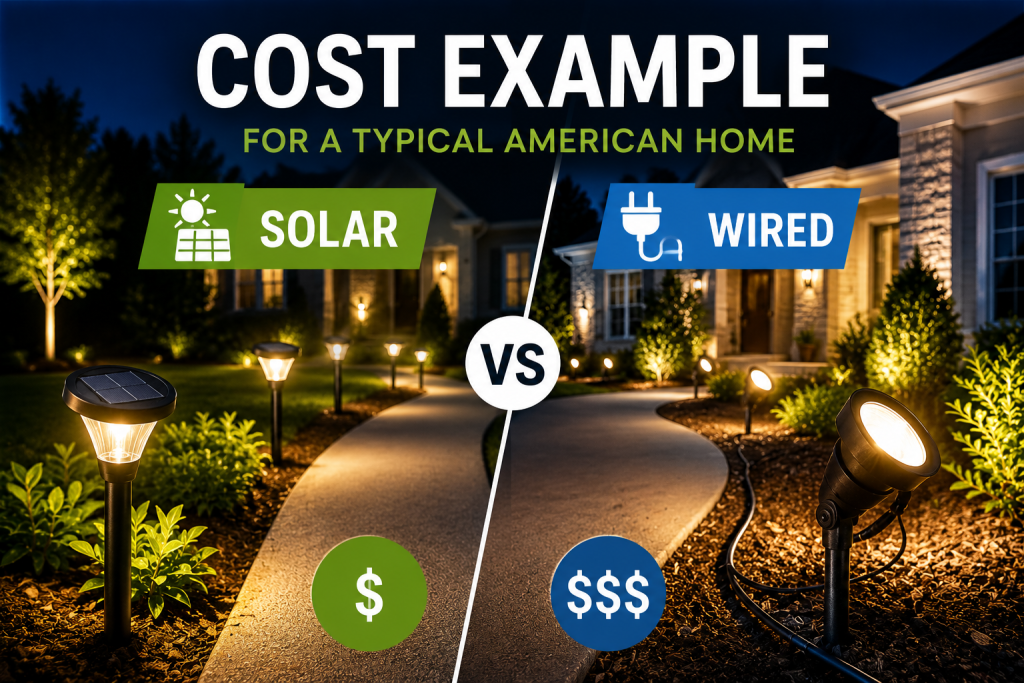
A wired setup generally requires higher upfront spending due to labor, materials, and system planning. However, many modern outdoor lighting systems are designed to operate efficiently with LED fixtures and can provide broader coverage with fewer compromises in brightness. Over a five-year ownership period, total value often depends less on utility savings and more on maintenance, fixture replacement frequency, and long-term performance. Homeowners focused on permanent curb appeal improvements frequently find the higher initial investment easier to justify.
Final Verdict — Should You Choose Solar or Wired?
There is no universal winner in the solar vs wired landscape lighting debate because the best choice depends on how you use your outdoor space and what you expect long term.
Choose solar if you:
- Want lower upfront costs
- Prefer simple DIY upgrades
- Need lighting for pathways, gardens, or accent areas
- Live in regions with reliable sunlight
- Expect flexibility as landscaping changes
Choose wired if you:
- Want stronger and more consistent illumination
- Plan to stay in the home long term
- Prioritize curb appeal and nighttime usability
- Need broad coverage across larger yards
- Prefer a more permanent lighting investment
As a general rule, solar works best for convenience and smaller-scale projects, while wired lighting delivers greater reliability and design control. For most homeowners, the smartest decision is choosing the system that matches property size, climate conditions, maintenance expectations, and the overall role lighting plays in outdoor living.
Frequently Asked Questions
Is solar vs wired landscape lighting worth it if you choose solar landscape lights?
When evaluating solar vs wired landscape lighting, solar landscape lights can be worth it for homeowners who want easier installation, lower upfront costs, and minimal operating expenses. In the solar vs wired landscape lighting comparison, solar performs best in areas with strong sun exposure and is commonly used for pathways, gardens, and decorative lighting rather than full-property illumination.
Is wired landscape lighting expensive to run?
Not usually. Most modern residential systems use LED fixtures that consume relatively little electricity. Operating costs are often lower than homeowners expect, especially when timers and efficient fixture layouts are included.
Does landscape lighting increase home value?
Landscape lighting can improve perceived home value by increasing curb appeal, highlighting architectural features, and creating a more usable outdoor environment. While returns vary by market, exterior upgrades often contribute to stronger buyer impressions.
What lasts longer, solar or wired lights?
Wired systems generally last longer because they are not dependent on rechargeable batteries and changing sunlight conditions. Fixture quality, installation quality, and ongoing maintenance also affect lifespan.
Can solar and wired lighting be combined?
Yes. Many homeowners use a hybrid approach by combining decorative solar fixtures with permanent wired lighting for key areas. This strategy can balance installation costs while maintaining strong nighttime visibility and outdoor aesthetics.