


Storm Damage Roof Inspection and Tips for US Homes
Severe weather can leave behind more than fallen branches and scattered debris. High winds, hail, heavy rain, and hurricanes often cause roof damage that may not be visible from the ground. Even a small crack in flashing or a few lifted shingles can allow water to enter the home, leading to costly repairs over time. A timely storm damage roof inspection helps homeowners identify hidden issues before they become major structural problems. Whether you live in hurricane-prone Florida, hail-heavy Texas, or a region that experiences strong Midwest windstorms, inspecting your roof after severe weather is one of the most important steps in protecting your property.
Many roofing problems develop gradually after a storm. Moisture intrusion, damaged underlayment, and weakened roofing materials can reduce energy efficiency, affect home value, and create insurance claim complications. By understanding what to look for and when to call a professional, homeowners can make informed decisions that protect both their homes and their budgets. In this guide, you’ll learn how to assess storm-related roof damage, recognize warning signs, and determine when professional assistance is necessary.
When Do You Need a Storm Damage Roof Inspection?
Not every storm causes visible roof damage, but that does not mean your roof escaped unharmed. After any severe weather event, homeowners should evaluate their property for signs of impact. Scheduling a storm damage roof inspection is especially important after hailstorms, tornadoes, hurricanes, straight-line winds, or prolonged periods of heavy rain. Some warning signs appear immediately. Missing shingles, dented gutters, fallen tree limbs, and water stains on ceilings often indicate that the roof has been compromised. Other issues may take weeks or months to become noticeable. Small punctures, loosened flashing, and damaged sealants can allow moisture to enter the roofing system gradually.
Regions such as Texas, Oklahoma, Colorado, and Florida experience weather conditions that frequently lead to roof-related insurance claims. Homeowners in these areas should be particularly proactive after major storms. A professional evaluation can help determine whether repairs are needed before minor damage develops into a more expensive problem. If your neighborhood experienced strong winds or hail and nearby homes show signs of damage, it is wise to arrange a storm damage roof inspection even if your roof appears intact from the ground.
How to Perform a Basic Storm Damage Roof Inspection Safely
A storm damage roof inspection does not always require climbing onto the roof. In fact, homeowners should avoid walking on potentially damaged roofing materials, especially after severe weather. Safety should always come first. Start by inspecting your property from ground level. Walk around the home and look for missing shingles, displaced flashing, damaged soffits, and debris accumulation. Check driveways, patios, and landscaping for roofing granules, which may indicate shingle deterioration. Damaged gutters and downspouts can also signal that the roof absorbed significant storm impact.
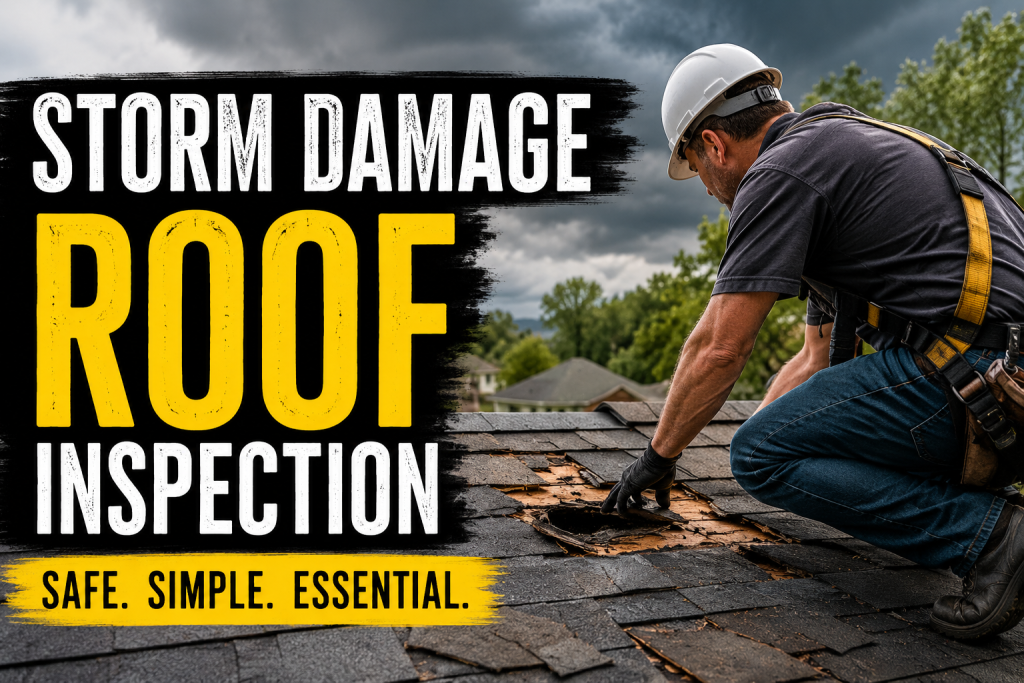
Next, inspect your attic if it is safely accessible. Look for water stains, damp insulation, mold growth, or sunlight entering through unexpected openings. These signs often indicate damage that may not be visible from the exterior. Taking photos of any suspicious areas can be helpful for future documentation and repair planning. While a visual review can identify obvious concerns, homeowners should remember that many roofing problems remain hidden beneath shingles or underlayment. If you notice any signs of damage, a professional evaluation is often the safest and most reliable next step.
Inspecting Your Roof From the Ground
One of the safest ways to begin evaluating storm-related damage is by conducting a visual inspection from ground level. Using binoculars can help you identify potential issues without exposing yourself to the risks associated with climbing onto a roof. Pay close attention to shingle condition. Look for missing, curled, cracked, or lifted shingles, particularly along roof edges and ridgelines where wind pressure is often strongest. Dark patches may indicate granule loss, while exposed roofing materials can accelerate deterioration and increase the likelihood of leaks.
You should also examine roof penetrations such as vents, skylights, and chimneys. Storms can loosen flashing around these areas, creating pathways for water intrusion. In addition, check for sagging sections that could indicate structural stress caused by excessive moisture or impact damage. As part of your roof inspection checklist, document any visible concerns with photographs. Detailed records can be valuable when discussing repair options with contractors or preparing documentation for insurance purposes. Even if damage appears minor, early detection can help prevent more extensive and costly repairs later.
Checking Gutters, Flashing, and Exterior Components
While shingles receive most of the attention after severe weather, gutters, flashing, and other exterior components can reveal important clues during a storm damage roof inspection. Damage to these areas often indicates that the roofing system experienced significant stress during a storm. Begin by examining gutters and downspouts for dents, cracks, loose fasteners, or sections that have pulled away from the home. Hail impacts frequently leave visible marks on metal surfaces, making gutters one of the easiest places to spot storm-related damage. Accumulated roofing granules inside gutters may also signal premature shingle wear and should be documented during a storm damage roof inspection.
Next, inspect flashing around chimneys, skylights, roof valleys, and vent penetrations. Bent, lifted, or separated flashing can allow water to enter vulnerable areas of the roof structure. Exterior siding, fascia boards, and soffits should also be checked for signs of impact damage or moisture intrusion. Although these components may seem minor, they play a critical role in directing water away from the home. Addressing damage promptly can help preserve the integrity of the entire roofing system and reduce the risk of future leaks.
Storm Damage Roof Inspection Checklist for Homeowners
A thorough storm damage roof inspection involves more than a quick glance at missing shingles. Homeowners should evaluate multiple parts of the roofing system to identify visible and hidden damage that could affect long-term performance.
Use the following checklist after a major weather event:
- Check for missing, cracked, curled, or lifted shingles.
- Look for exposed roofing underlayment.
- Inspect gutters for dents, debris, and shingle granules.
- Examine flashing around chimneys, vents, and skylights.
- Search for water stains on ceilings and interior walls.
- Check attic insulation for moisture or mold growth.
- Inspect soffits and fascia for signs of impact damage.
- Look for fallen branches or debris resting on the roof.
- Monitor for active leaks during rainfall.
- Document all visible damage with photographs.
Completing this inspection can help homeowners identify issues early and gather useful information before contacting a roofing professional. Detailed records are also valuable when discussing repair recommendations or filing a storm-related insurance claim.
Hail Damage vs. Wind Damage: What Inspectors Look For
Although storms can damage roofs in many ways, hail and wind create different patterns that trained professionals know how to identify during a storm damage roof inspection. Understanding these differences can help homeowners recognize potential problems and communicate more effectively with contractors and insurance representatives. Hail typically causes impact-related damage. Depending on the size and velocity of the hailstones, roofing materials may develop dents, bruises, cracks, or granule loss. Asphalt shingles are particularly vulnerable to repeated impacts, which can shorten their service life and reduce their ability to shed water effectively.
Wind damage, on the other hand, often affects how roofing materials are attached to the structure. Strong gusts can lift shingles, break adhesive seals, expose underlayment, and even remove roofing sections entirely. Homes located in coastal regions or hurricane-prone states such as Florida frequently experience wind-related roofing issues. Because both forms of damage may appear similar to an untrained eye, a professional storm damage roof inspection is often necessary to determine the extent of repairs required and whether the damage qualifies for insurance coverage.
Signs Found During a Hail Damage Roof Inspection
During a hail damage roof inspection, professionals look for evidence of impact that may not be obvious from the ground. As part of a comprehensive storm damage roof inspection, the severity of damage often depends on hail size, wind speed, roof age, and the type of roofing material installed. One of the most common indicators is granule loss on asphalt shingles. When hail strikes the roof surface, it can dislodge protective granules that shield shingles from ultraviolet exposure and weathering. Inspectors also look for circular bruising, soft spots, cracks, and punctures that may compromise the roof’s ability to repel water.
Metal components such as gutters, flashing, vents, and downspouts frequently show dents after a hailstorm. These impact marks help inspectors determine the direction and intensity of the storm. In severe cases, hail can damage skylights, roof vents, and exterior siding as well. Because hail damage is not always visible to homeowners, a professional storm damage roof inspection can help uncover hidden issues before they lead to leaks, premature aging, or more extensive structural concerns.
Signs Found During a Wind Damage Roof Inspection
A wind damage roof inspection focuses on identifying areas where strong gusts have weakened or displaced roofing materials. Unlike hail damage, which typically leaves impact marks, wind-related damage often affects the roof’s structural integrity and weather resistance. Inspectors begin by checking for missing shingles and lifted edges. Even shingles that remain attached may have broken seal strips, making them more vulnerable to future storms. Roof ridges, corners, and perimeter sections are often the first areas to experience wind uplift because they are exposed to the highest pressure forces.
Professionals also examine flashing, roof vents, and chimney connections for signs of separation or movement. Strong winds can loosen fasteners and create openings that allow water to penetrate beneath the roofing system. In severe storms, debris carried by the wind may cause additional punctures and surface damage. If left unaddressed, wind-related roofing problems can worsen with every rainstorm. Early detection helps homeowners reduce repair costs and maintain the long-term performance of their roof.
When to Schedule an Emergency Roof Inspection
Not all storm damage can wait for a routine assessment. In some situations, homeowners should arrange an emergency roof inspection as soon as conditions are safe. Prompt action can help prevent additional property damage and reduce the risk of costly repairs. One of the clearest warning signs is an active roof leak. Water entering the home can quickly damage insulation, drywall, flooring, and electrical systems. Large sections of missing shingles, fallen tree limbs, sagging roof decking, or visible structural movement also require immediate attention.
Homes affected by hurricanes, tornadoes, severe hailstorms, or straight-line wind events may have hidden structural damage that is not apparent from the ground. Delaying an inspection can allow moisture intrusion to spread, increasing the likelihood of mold growth and wood rot. If you suspect serious storm-related damage, avoid climbing onto the roof yourself. Contact a qualified roofing professional who can safely evaluate the condition of the structure and recommend temporary protective measures if necessary.
How an Insurance Roof Inspection Supports Your Claim
After a major storm, documentation is often just as important as identifying the damage itself. An insurance roof inspection provides the evidence needed to support a claim and helps homeowners demonstrate that storm-related issues occurred as a direct result of a covered weather event. During an insurance roof inspection, professionals typically photograph damaged shingles, flashing, gutters, vents, and other affected components. As part of a storm damage roof inspection, detailed reports may include measurements, observations, and recommendations that help insurance adjusters evaluate the extent of the loss. This documentation can be especially valuable when damage is subtle or difficult to identify from the ground.
Many insurance providers require policyholders to report storm damage within specific timeframes. Acting quickly after a storm damage roof inspection can help prevent disputes and ensure that important evidence is preserved before temporary repairs or additional weather exposure alter the condition of the roof. Maintaining organized records, photographs, repair estimates, and inspection reports can simplify the claims process and improve communication between homeowners, contractors, and insurance representatives.
Why a Professional Roofing Contractor Inspection Is Worth It
While homeowners can identify obvious signs of storm damage, a professional roofing contractor inspection often reveals problems that are difficult to detect without specialized training and equipment. Experienced roofing professionals understand how different weather events affect roofing systems and know where hidden damage is most likely to occur. Contractors evaluate the condition of shingles, underlayment, flashing, ventilation components, and structural elements. They can identify issues such as compromised sealants, moisture intrusion, and weakened decking that may not produce immediate symptoms. Early detection helps prevent minor damage from developing into more extensive and expensive repairs.
Professional inspections also improve safety. Climbing onto a storm-damaged roof can be dangerous, particularly when surfaces are wet, unstable, or partially compromised. Qualified inspectors have the tools and experience needed to assess conditions safely. In addition to identifying damage, contractors can provide repair recommendations, replacement options, and maintenance guidance that help homeowners protect their investment and extend the life of their roofing system.
Post-Storm Roofing Guide: Next Steps After Inspection
This post-storm roofing guide focuses on what homeowners should do after damage has been identified. Once an inspection is complete, the priority should be preventing further deterioration while developing a plan for repairs or replacement. Begin by addressing any immediate threats to the home. Temporary protective measures such as tarping exposed areas can help minimize water intrusion until permanent repairs are completed. If leaks are present, document affected interior areas and keep records of any emergency mitigation work.
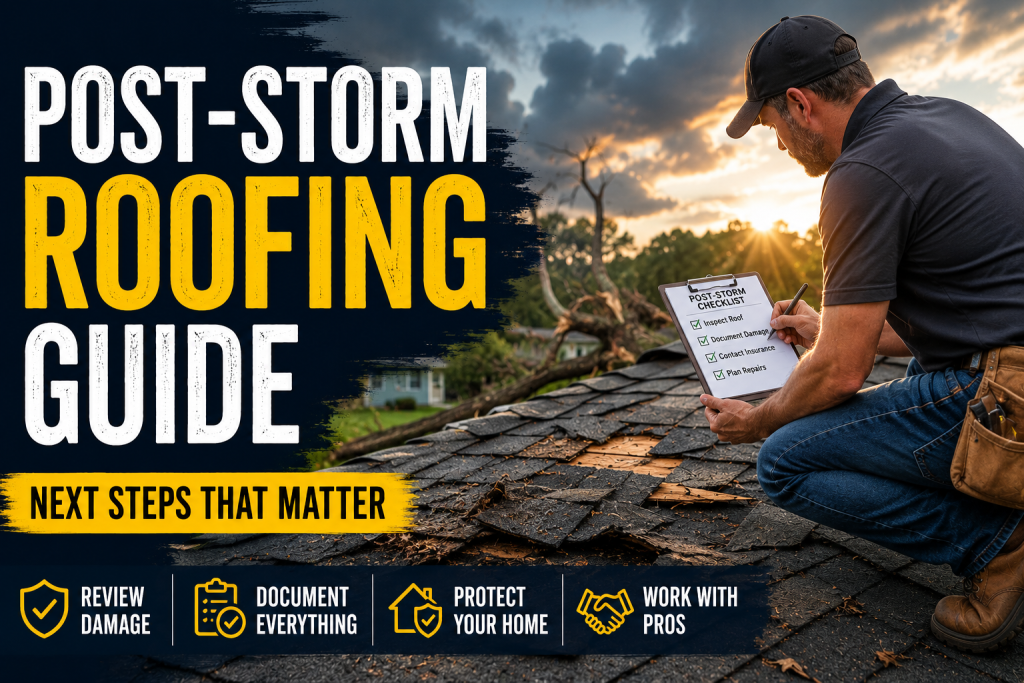
Next, review the inspection findings carefully. Compare repair recommendations, estimate costs, and determine whether the damage warrants a repair or a full roof replacement. Factors such as roof age, material condition, and the extent of storm damage should all be considered during this decision-making process. Finally, schedule any necessary repairs as soon as practical. Prompt action can help preserve structural integrity, maintain energy efficiency, and reduce the likelihood of additional damage from future weather events.
Conclusion
A timely storm damage roof inspection is one of the most effective ways to protect your home after severe weather. Whether your property has been exposed to hail, high winds, heavy rain, or hurricane conditions, identifying damage early can help prevent costly repairs and long-term structural issues. Many roofing problems are not immediately visible, which is why homeowners should never assume their roof is undamaged simply because no leaks are present. Regular evaluations after major storms can reveal hidden issues affecting shingles, flashing, underlayment, and other critical roofing components. If you notice signs of damage or your area recently experienced significant weather activity, scheduling a professional storm damage roof inspection can provide peace of mind and help you make informed decisions about repairs, maintenance, or insurance claims. Acting quickly not only protects your investment but also helps maintain your home’s safety, energy efficiency, and long-term value.
Frequently Asked Questions
How soon should a roof be inspected after a storm?
Homeowners should schedule a storm damage roof inspection as soon as weather conditions are safe. Early inspections help identify hidden damage before leaks, mold growth, or structural deterioration become more serious and expensive to repair.
Can a storm damage roof inspection reveal hidden damage even if the roof looks fine?
Yes. A professional storm damage roof inspection can uncover issues that are not visible from the ground. Many forms of storm-related damage occur beneath shingles or around flashing and roof penetrations. A roof may appear intact, while moisture intrusion, broken seals, or underlayment damage continues to develop out of sight.
Will homeowners insurance cover storm-related roof damage?
Coverage depends on the terms of your policy and the cause of the damage. Most policies cover sudden and accidental weather-related events, but documentation and timely reporting are typically required to support a claim.
What are the most common signs of roof damage after a storm?
Common indicators include missing shingles, granule loss, dented gutters, water stains on ceilings, damaged flashing, and active leaks. Homeowners should also watch for debris impacts and signs of moisture inside the attic.
Can I perform a roof inspection myself?
A visual assessment from the ground is generally safe and can help identify obvious concerns. However, climbing onto a storm-damaged roof is not recommended. Professional inspections provide a more accurate evaluation while reducing safety risks.