

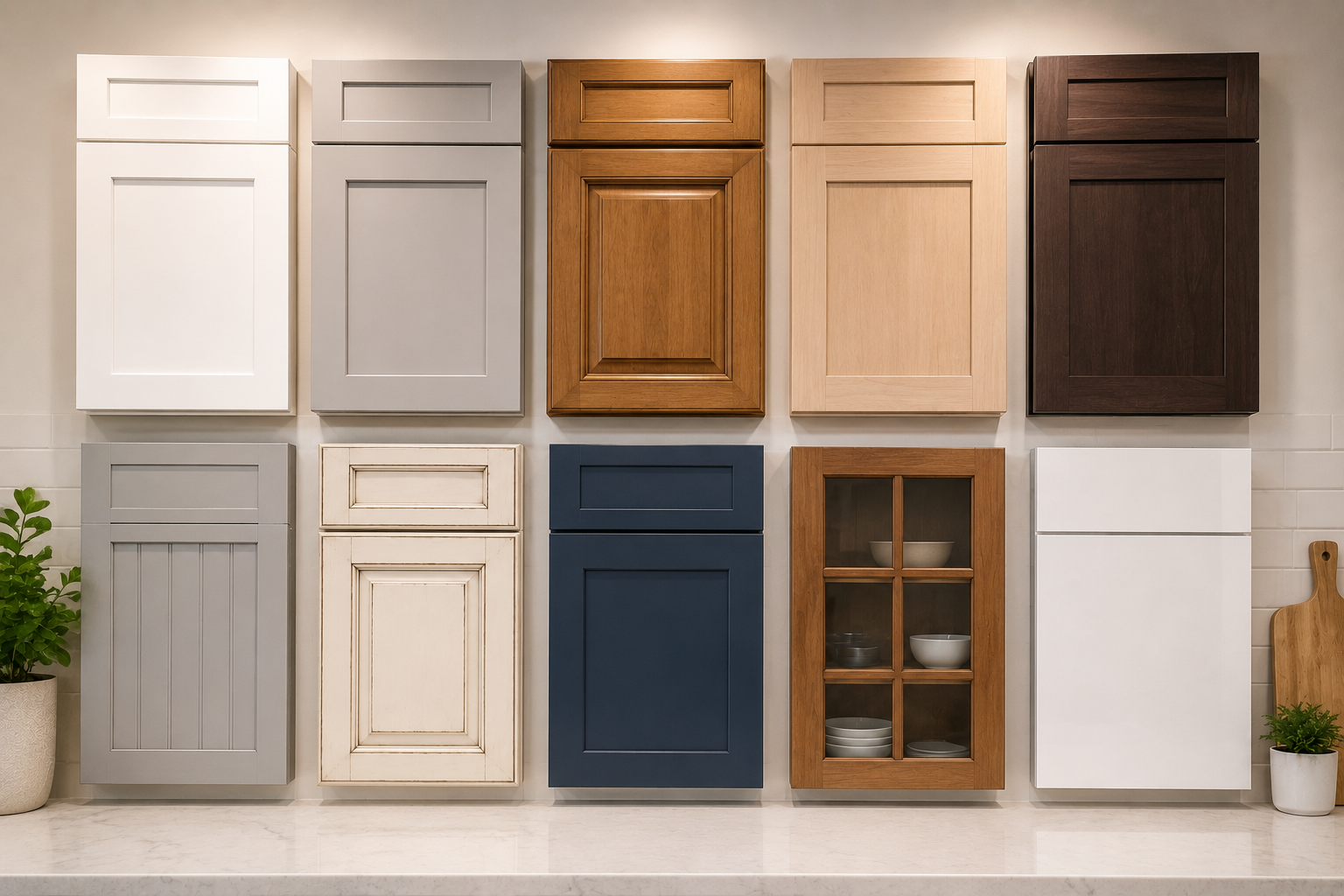
Types of Kitchen Cabinets Explained
Understanding the various kinds of kitchen cabinets is an important step when planning a kitchen renovation or building a new home. Cabinets influence not only the appearance of the kitchen but also its storage capacity, functionality, and long-term value. With numerous styles, materials, and construction methods available, homeowners often find it challenging to determine which option best suits their needs.
The different types of kitchen cabinets offer unique benefits ranging from modern simplicity to traditional craftsmanship. Factors such as budget, design preferences, storage requirements, and maintenance expectations all play a role in the selection process. This guide explores the most popular cabinet styles and materials to help homeowners make informed decisions that support both everyday functionality and overall kitchen aesthetics.
Understanding Types of Kitchen Cabinets Categories
Before selecting a cabinet style, it is helpful to understand the major categories available to homeowners. Kitchen cabinets can be classified based on construction method, door design, customization, and material composition. Each category offers different advantages in terms of appearance, storage functionality, durability, and cost. Some cabinets are designed for affordability and quick installation, while others prioritize customization and premium craftsmanship.
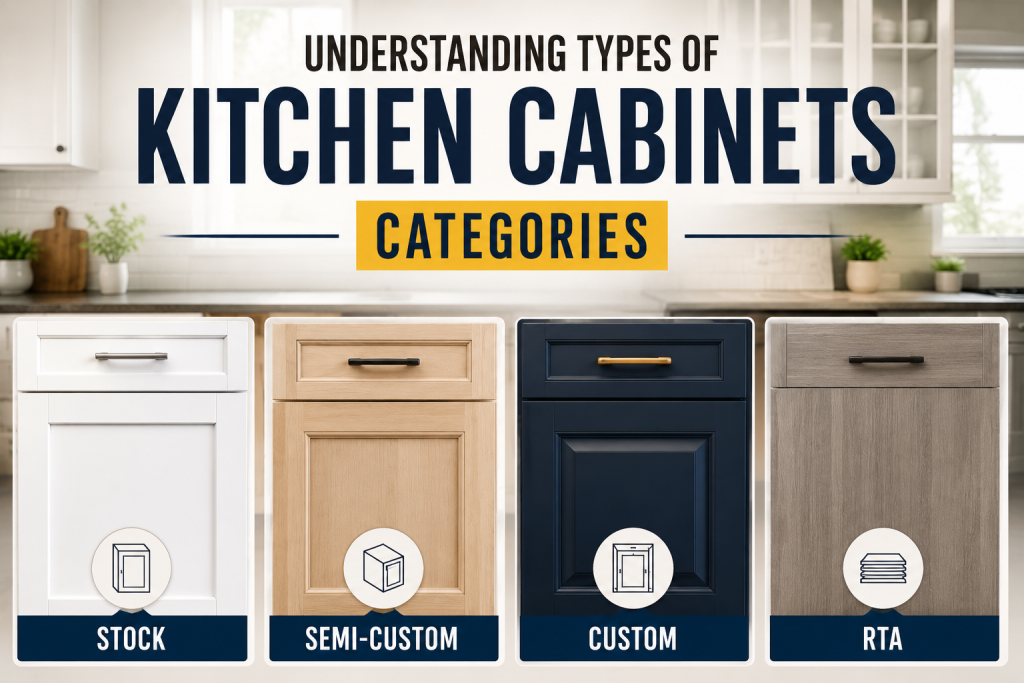
Homeowners can choose from stock, semi-custom, or fully custom cabinetry depending on their budget and design goals. Cabinet door styles also vary significantly, ranging from simple contemporary designs to more detailed traditional options. Learning about the different types of kitchen cabinets helps homeowners evaluate which features matter most for their project. Whether the priority is maximizing storage, achieving a specific design aesthetic, or increasing home value, understanding cabinet categories provides a strong foundation for making informed renovation decisions.
Shaker-style Cabinets: The Most Popular Style
Shaker-style cabinets are widely considered one of the most popular cabinet styles in American homes. Known for their clean lines, simple frame-and-panel construction, and timeless appearance, shaker-style cabinets work well in a variety of kitchen designs, including traditional, transitional, farmhouse, and modern spaces. One of the main reasons shaker-style cabinets remain so popular is their versatility. They can be painted or stained in numerous colors and pair easily with different countertop materials, backsplashes, and hardware finishes.
Their understated design also allows homeowners to update other kitchen elements over time without replacing the cabinets. Among the various types of kitchen cabinets, shaker-style cabinets are often recommended because they offer broad design flexibility and long-term appeal. Homeowners looking for a cabinet style that balances simplicity, functionality, and resale value frequently choose shaker cabinetry as a reliable and attractive option.
Flat-front Cabinets for Modern Kitchens
Flat panel cabinets, sometimes called slab cabinets, are a popular choice for homeowners seeking a sleek and contemporary kitchen design. Unlike shaker-style cabinets, flat-panel styles feature smooth surfaces without decorative frames or detailing, creating a clean and minimalist appearance that works particularly well in modern and Scandinavian-inspired kitchens. One of the biggest advantages of flat-panel cabinets is their simplicity.
The streamlined design makes them easy to clean and maintain while providing a sophisticated look that complements modern appliances and minimalist décor. They are available in a variety of finishes, including painted wood, laminate, veneer, and high-gloss materials. Among the many types of kitchen cabinets, flat-panel designs appeal to homeowners who prefer uncluttered aesthetics and contemporary styling. Their versatility and modern appearance make them a common choice in new construction projects and kitchen remodels for achieving a sleek, updated look.
Inside-frame Cabinets: Premium Craftsmanship
Inset cabinets are often considered one of the most refined and high-end cabinet options available. Unlike standard cabinet designs where doors sit on top of the cabinet frame, inset cabinet doors fit precisely inside the frame opening. This construction method creates a clean, tailored appearance that showcases exceptional craftsmanship.
What Makes Inside-frame cabinets Unique?
The defining feature of inset cabinetry is the precise fit between the cabinet frame and door. This detailed construction creates a distinctive look that many homeowners associate with luxury and custom-built kitchens.
Advantages of Inset Cabinetry
Inside-frame cabinets offer timeless visual appeal, strong craftsmanship, and a premium appearance. They are especially popular in traditional, transitional, and custom kitchen designs.
Types of Kitchen Cabinets for High-End Kitchens
Among the various types of kitchen cabinets, Inside-frame cabinets are often selected by homeowners seeking upscale aesthetics and custom-quality construction. While they typically cost more than other cabinet styles, many consider the investment worthwhile for the craftsmanship and long-term visual appeal they provide.
Standard Kitchen Cabinets vs Custom Options
Choosing between stock kitchen cabinets and custom kitchen cabinets is one of the most important decisions homeowners make during a kitchen renovation. Both options offer distinct advantages, and the right choice depends on budget, design goals, and the level of customization required. Stock cabinets are pre-manufactured in standard sizes and styles, making them a cost-effective solution for many remodeling projects. They are often readily available and can help reduce renovation timelines. However, customization options are typically limited compared to custom cabinetry.
Custom cabinets are built specifically for a home’s layout and design preferences. They offer greater flexibility in dimensions, materials, finishes, and storage features, allowing homeowners to create a highly personalized kitchen. The tradeoff is a higher investment and longer production time. Among the many types of kitchen cabinets, stock and custom options represent two very different approaches to balancing affordability, functionality, and design flexibility.
Cabinet Door Designs and Choices
The variety of cabinet door designs available today gives homeowners significant flexibility when designing a kitchen. Door style plays a major role in defining the overall appearance of cabinetry and can influence whether a kitchen feels traditional, transitional, farmhouse-inspired, or modern. Popular options include shaker doors, flat-panel doors, raised-panel doors, beadboard styles, and inset designs. Each style offers a unique visual character and pairs differently with countertops, hardware, backsplashes, and flooring materials.
Homeowners should consider how cabinet doors complement the overall design theme of the home rather than focusing solely on current trends. When evaluating the different types of kitchen cabinets, door style is often one of the most noticeable design elements. Selecting a style that aligns with both personal preferences and long-term design goals can help ensure the kitchen remains attractive and functional for many years.
Kitchen Construction Materials Explained
Understanding kitchen cabinet materials is essential because material selection affects durability, appearance, maintenance requirements, and overall cabinet performance. Homeowners should evaluate both aesthetics and long-term functionality when choosing cabinet materials for a renovation project. Solid wood remains one of the most popular options because of its durability and timeless appeal. Plywood is also widely used due to its strength and resistance to warping.
Medium-density fiberboard (MDF) provides a smooth surface that works well for painted finishes, while laminate materials offer an affordable and easy-to-maintain alternative. Each material has its own advantages, costs, and maintenance considerations. The types of kitchen cabinets can be constructed using different materials depending on the desired style and budget. By understanding the strengths and limitations of each material, homeowners can select cabinetry that meets both their design goals and long-term performance expectations.
How Cabinet Types Affect Functionality and Value?
The cabinet style chosen for a kitchen can have a significant impact on both everyday functionality and long-term home value. While appearance is important, factors such as storage efficiency, accessibility, durability, and organization often play an even larger role in homeowner satisfaction. Well-designed cabinets can maximize storage capacity through features such as pull-out shelves, deep drawers, corner organizers, and built-in storage systems.
Custom and semi-custom options often provide greater flexibility for optimizing kitchen workflow and making better use of available space. Functional cabinetry can also improve convenience by keeping frequently used items easily accessible. When comparing different types of kitchen cabinets, homeowners should consider how each option supports their lifestyle and future goals. Attractive, durable, and functional cabinetry can enhance the overall appeal of a kitchen while potentially contributing to stronger resale value and buyer interest when it comes time to sell the home.
Common Cabinet Selection Mistakes to Avoid
Choosing the wrong cabinets can affect both the appearance and functionality of a kitchen for years. Avoiding these common mistakes can help homeowners make a more informed investment.
- Selecting cabinets based solely on appearance without considering storage needs.
- Ignoring cabinet material quality and long-term durability.
- Choosing a style that conflicts with the overall design of the home.
- Focusing only on upfront costs rather than long-term value.
- Overlooking maintenance requirements for certain materials and finishes.
- Failing to measure the space accurately before ordering cabinets.
- Not planning for future storage and organization needs.
- Choosing trendy designs that may quickly go out of style.
- Underestimating the importance of hardware and cabinet accessories.
- Purchasing cabinets without comparing multiple options and estimates.
By carefully evaluating functionality, quality, and design compatibility, homeowners can avoid costly mistakes and select cabinetry that delivers lasting performance and value.
How to Choose the Right Types of Kitchen Cabinets?
Selecting the right types of kitchen cabinets requires balancing style, functionality, budget, and long-term goals. While appearance is often the first consideration, homeowners should also evaluate storage needs, durability, maintenance requirements, and how the cabinets will support daily kitchen activities. Start by determining your preferred design style and available budget. Then consider whether stock, semi-custom, or custom cabinetry best fits your project.
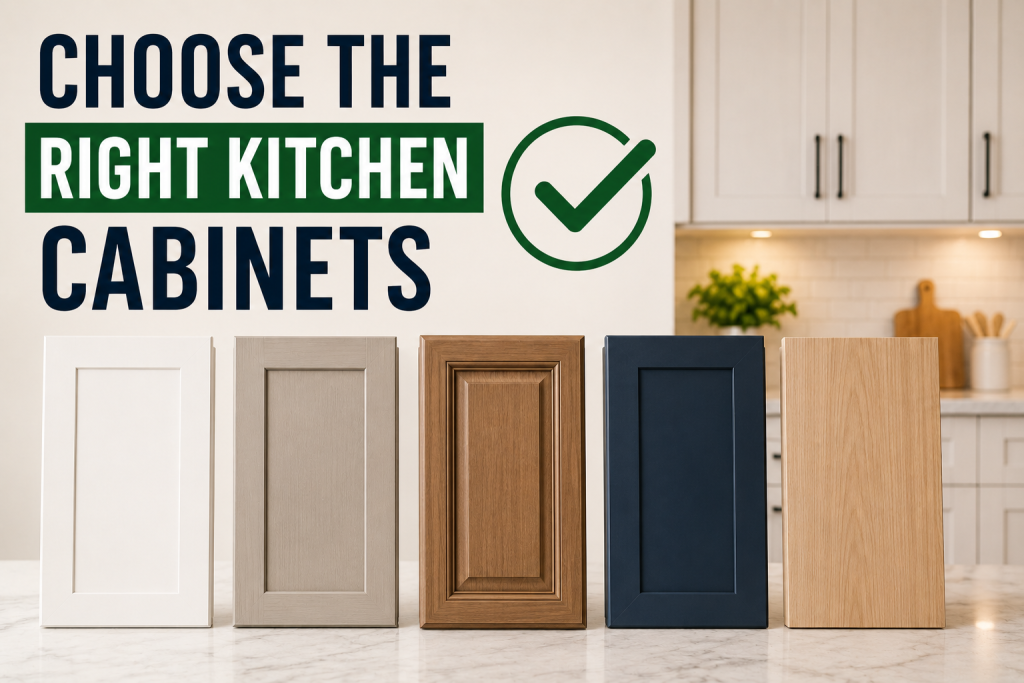
Homeowners should also think about cabinet materials, door styles, and storage features that can improve organization and workflow. Choosing cabinets that complement the overall design of the home can help create a cohesive and timeless look. The best cabinet choice is one that meets both practical and aesthetic needs. By carefully comparing options and planning for future use, homeowners can invest in cabinetry that enhances functionality, improves kitchen appeal, and delivers long-term value.
Conclusion
Understanding the different types of kitchen cabinets is essential for creating a kitchen that balances style, storage, functionality, and long-term value. From the timeless appeal of shaker-style cabinets and the sleek look of flat-panel designs to the craftsmanship of inset cabinetry and the flexibility of custom options, each cabinet type offers unique advantages. Material selection, door style, and storage features also play important roles in overall performance and homeowner satisfaction. By carefully evaluating your budget, design preferences, and functional needs, you can choose cabinetry that enhances your kitchen’s appearance while providing reliable performance for years to come.
Frequently Asked Questions
What are the most popular types of kitchen cabinets?
Shaker, flat-panel, inset, stock, and custom cabinets are among the most popular options used in modern kitchen designs.
Are shaker-style cabinets still in style?
Yes. Shaker cabinets remain one of the most popular cabinet styles because of their timeless appearance and versatility across different kitchen designs.
What is the difference between stock and custom cabinets?
Stock cabinets come in standard sizes and designs, while custom cabinets are built specifically for a home’s layout and design requirements.
Which cabinet material is the most durable?
Solid wood and high-quality plywood are often considered among the most durable materials used in kitchen cabinet construction.
Do kitchen cabinets affect home value?
Yes. Attractive, functional, and well-built cabinetry can enhance kitchen appeal and may contribute positively to overall home value and buyer interest.