

Types of Outdoor Lighting Explained: How to Choose the Right Fixtures
Outdoor lighting does more than make a home visible after sunset. The right setup improves safety, increases curb appeal, extends usable outdoor living space, and helps create a more polished exterior appearance. Understanding the types of outdoor lighting becomes important because not every fixture serves the same purpose. Some lights improve navigation and visibility, while others emphasize architectural details or create atmosphere for patios and entertaining areas.
Modern homeowners increasingly approach lighting as a layered design decision rather than installing a single bright fixture near the front door. Combining functional and decorative lighting can make outdoor spaces feel larger, more inviting, and easier to use throughout the year. In this guide, we’ll break down the most common outdoor lighting categories, explain where each works best, and help you build a lighting plan that fits your home and lifestyle.
Why Types of Outdoor Lighting Matter for Modern Homes
A well-planned lighting layout can change how a home looks and functions after dark. Beyond aesthetics, outdoor lighting improves visibility, supports safety, and helps homeowners get more use from exterior spaces throughout the year. One of the biggest advantages of understanding the types of outdoor lighting is creating a layered approach instead of relying on a single fixture. Different lighting zones can guide movement, highlight landscaping, and make outdoor areas feel more intentional.
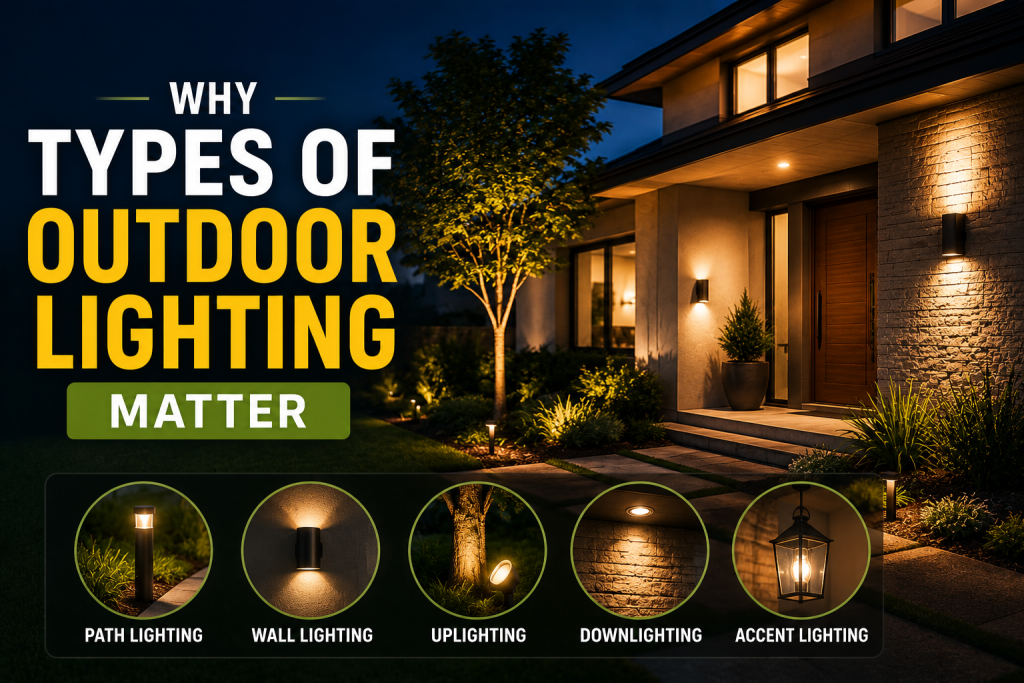
For example, entry lighting improves accessibility, while pathway lighting helps connect driveways, sidewalks, and garden routes. Decorative illumination can also emphasize architectural details and increase perceived property value. Outdoor lighting has become especially popular in regions where homeowners prioritize entertaining, outdoor dining, and evening curb appeal. When designed correctly, lighting can improve both everyday functionality and the overall appearance of the property without requiring a major renovation.
Path Lighting: Improving Visibility and Flow
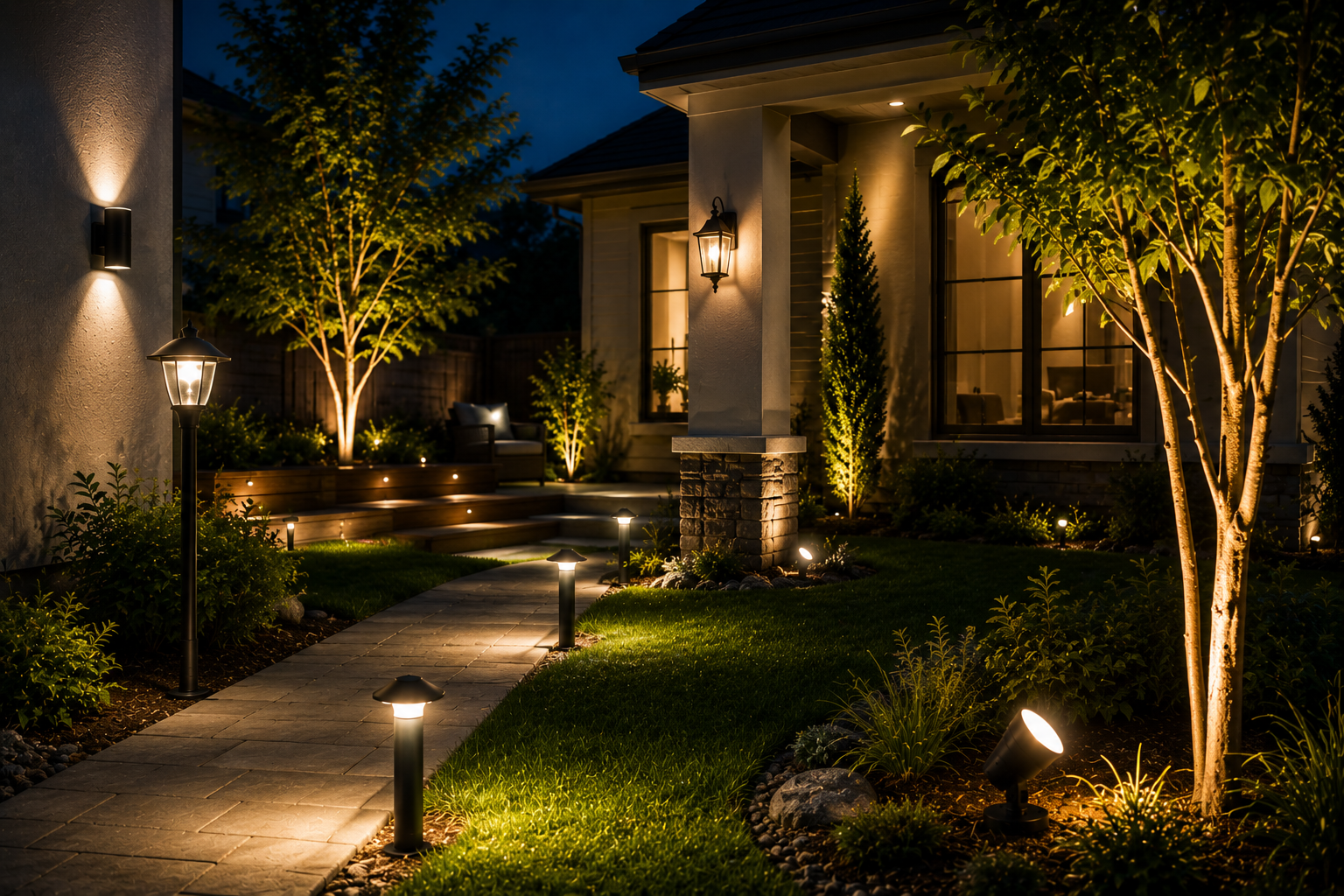
Path lighting is one of the most practical outdoor upgrades because it improves both safety and visual appeal. These fixtures are commonly installed along walkways, driveways, garden borders, and entry routes to create a clear and welcoming transition across the property. Effective pathway lighting should provide enough illumination for visibility without overwhelming the landscape. Low-profile fixtures spaced evenly along the route usually create the most balanced appearance while reducing harsh shadows.
For homeowners exploring different types of outdoor lighting, path lighting is often the easiest place to start. It requires minimal planning compared with larger lighting systems and can immediately improve nighttime usability. Path lighting also works well when combined with landscape and architectural lighting layers. Whether the goal is improving curb appeal or making evening movement easier, this lighting category delivers both functional and decorative benefits.
Accent Lighting: Highlighting Landscape Features
Accent lighting is designed to draw attention to specific areas rather than illuminate an entire space. It is commonly used to highlight trees, stone features, architectural details, water elements, and decorative planting areas. Unlike general illumination, accent lighting focuses on creating depth and visual interest. Strategic placement can make landscaping appear more layered and add dimension to the exterior after sunset. This approach is especially popular for front-yard focal points and outdoor entertaining areas.
Homeowners exploring the types of outdoor lighting often use accent fixtures to create contrast between bright functional zones and softer decorative areas. Narrow-beam fixtures and carefully positioned landscape spotlights can emphasize textures and showcase important design elements without overwhelming the overall lighting plan. When used correctly, accent lighting improves curb appeal and creates a more intentional exterior appearance while maintaining a comfortable nighttime environment.
Flood Lighting: Security and Wide Coverage
Flood lighting is built to illuminate larger outdoor areas with broad and powerful coverage. These fixtures are commonly installed near garages, driveways, side yards, and rear entry points where visibility and security are priorities. Compared with decorative lighting, flood lighting focuses more on functionality. Wide beam angles help reduce dark areas and improve movement around the property after sunset. Many homeowners also pair flood fixtures with motion sensors to improve convenience and reduce unnecessary energy use.
Among the different types of outdoor lighting, flood lights are often selected for homes with larger lots or properties that require stronger nighttime visibility. Placement matters because excessive brightness can create glare instead of improving usability. The most effective approach is balancing security with appearance so outdoor spaces remain welcoming rather than overly illuminated.
Deck and Patio Lighting for Outdoor Living
Outdoor living spaces continue to become a bigger priority for homeowners, making deck and patio lighting one of the most valuable exterior upgrades. Well-designed lighting extends usability after sunset and helps create a more comfortable environment for relaxing and entertaining. When planning deck lighting ideas, homeowners should think beyond overhead illumination. Layering step lights, railing lights, and subtle ambient fixtures usually creates a more balanced result while reducing glare.
Among the many types of outdoor lighting, deck lighting focuses on comfort and atmosphere as much as functionality. Soft illumination around seating areas can make outdoor spaces feel more connected to the rest of the home. This category also works well alongside landscape and architectural lighting, allowing homeowners to create distinct zones without overwhelming the space with excessive brightness.
Wall and Mounted Fixture Options
Mounted lighting plays an important role in both appearance and everyday usability. These fixtures are commonly installed around front entries, garages, patios, and exterior walls to provide targeted illumination where homeowners need it most. One of the most popular choices is wall-mounted outdoor lights, which create consistent lighting while helping define architectural features. Placement should support visibility without creating excessive brightness near doors or windows.
For homeowners exploring different types of outdoor lighting, mounted fixtures often serve as the foundation of an exterior lighting plan. They provide reliable illumination while complementing decorative and landscape lighting layers. Today’s exterior lighting fixtures are available in a wide range of styles and weather-resistant finishes, making it easier to match lighting with the overall architecture of the home. Choosing the right scale and placement can significantly improve both function and curb appeal.
Spotlights vs Floodlights: Understanding the Difference Between Types of Outdoor Lighting
Although spotlights and floodlights are often grouped together, they serve different purposes in an outdoor lighting plan. Understanding how each works helps homeowners create better balance between visual impact and overall coverage. Spotlights use a narrower beam to direct attention toward a specific area. They are commonly used to highlight trees, architectural features, textured surfaces, and focal points throughout the yard. Carefully positioned landscape spotlights can create depth and make outdoor spaces feel more refined after dark.
By comparison, flood lighting distributes illumination across a wider area and is better suited for driveways, backyards, and security-focused applications. When comparing these types of outdoor lighting, the decision usually comes down to intent: spotlighting emphasizes details, while floodlighting improves broad visibility. Many homeowners combine both approaches to achieve a more balanced and functional exterior design.
How to Combine Multiple Outdoor Lighting Types
The most effective outdoor lighting plans rarely rely on a single fixture category. Instead, homeowners create layers that improve functionality, visual balance, and nighttime usability across the property. A practical example is a 2,500-square-foot suburban home. Mounted fixtures can illuminate entry areas, path lights can guide movement, and focused landscape lighting can emphasize key exterior features. Layering different lighting zones creates a more natural result than depending on one bright source.
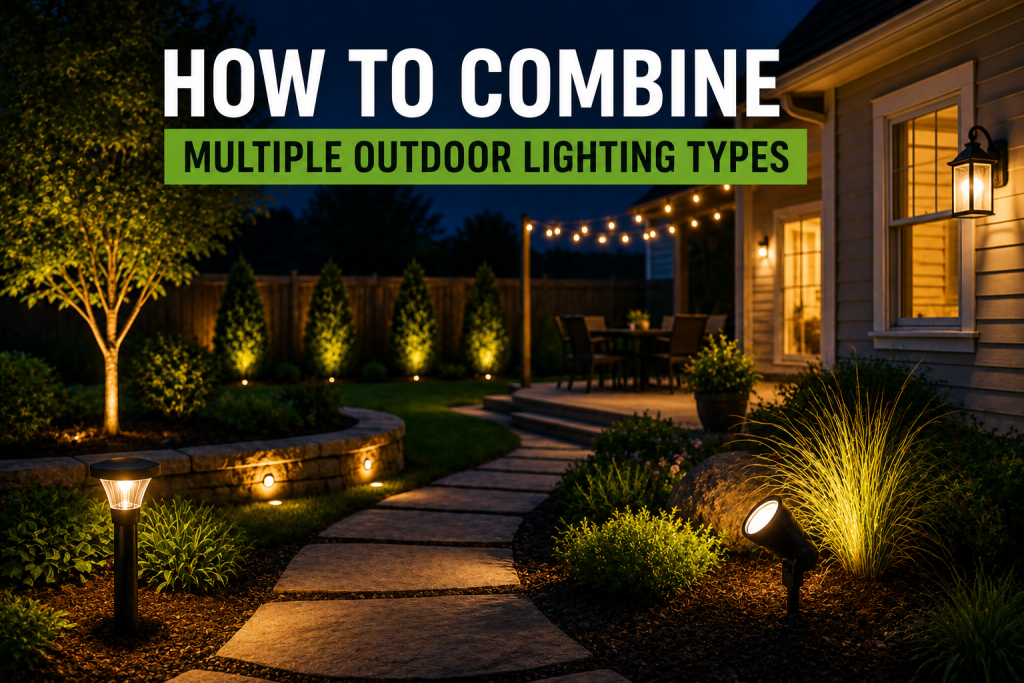
When combining the types of outdoor lighting, start with essential visibility areas first and then add decorative elements where needed. This approach helps maintain consistent illumination while avoiding excessive brightness. Selecting compatible exterior lighting fixtures also improves long-term design consistency. Matching fixture style, finish, and brightness levels can make the entire outdoor environment feel more intentional and increase overall curb appeal.
Final Thoughts
Choosing the right outdoor lighting is less about selecting a single fixture and more about creating a system that supports how you use your home. Safety, curb appeal, usability, and visual balance should all influence the final decision. Understanding the types of outdoor lighting makes it easier to prioritize lighting based on specific goals. Some homeowners may focus on visibility and security, while others want to highlight landscaping or improve outdoor entertaining spaces.
The most successful lighting plans usually begin with functional areas and expand into decorative layers over time. This approach helps avoid overlighting while creating a more comfortable and polished exterior environment. Whether you are upgrading a front entry, redesigning a backyard, or planning a complete exterior refresh, selecting the right lighting combination can make outdoor spaces feel more useful, inviting, and visually connected to the home.
Frequently Asked Questions
What type of outdoor lighting is best for different types of outdoor lighting needs?
The best option depends on the area being illuminated and your overall goals. When choosing among different types of outdoor lighting, entry lighting, landscape lighting, security lighting, and entertainment lighting all serve different purposes. Most homeowners get better results by combining multiple layers of the types of outdoor lighting instead of relying on a single fixture type.
How many outdoor lights does a home need?
There is no universal number because lighting needs vary by property size and layout. A typical suburban home may use lighting across entry points, walkways, gathering areas, and landscaping while maintaining balanced brightness throughout the exterior.
Are LED outdoor lights worth it?
Yes. LED lighting is popular because it uses less energy, produces long-lasting performance, and requires less maintenance than traditional bulbs. Many homeowners choose LED systems for long-term efficiency and consistent nighttime illumination.
Do outdoor lights increase home value?
Outdoor lighting can improve perceived property value by increasing curb appeal, improving usability, and creating a more polished appearance. While returns vary, exterior improvements often make homes more attractive to potential buyers.
What lighting works best for landscapes?
Landscape lighting works best when it combines visibility with visual depth. Highlighting focal areas, improving movement, and maintaining balanced illumination usually produces the most natural-looking result.