


Vinyl Siding vs Fiber Cement: Which One Is Better?
Choosing new siding is one of the biggest exterior decisions a homeowner can make. The right material affects curb appeal, maintenance costs, long-term durability, energy performance, and even resale value. For many homeowners across the United States, the decision usually comes down to two leading options: vinyl siding and fiber cement siding. When comparing vinyl siding vs fiber cement, the answer is rarely universal. Climate, budget, maintenance expectations, neighborhood standards, and installation costs all influence which option makes more sense. This guide compares both siding types from a real homeowner perspective—not just upfront pricing, but ownership experience over the next 20–30 years. We’ll evaluate appearance, weather performance, upkeep, efficiency, and long-term value so you can choose the material that aligns with your home and goals.
Quick Comparison: Vinyl Siding vs Fiber Cement at a Glance (Including Siding Maintenance Comparison)
Before diving into installation, lifespan, and maintenance, it helps to look at the major differences side by side. While both materials are widely used across the U.S., they solve different homeowner priorities.
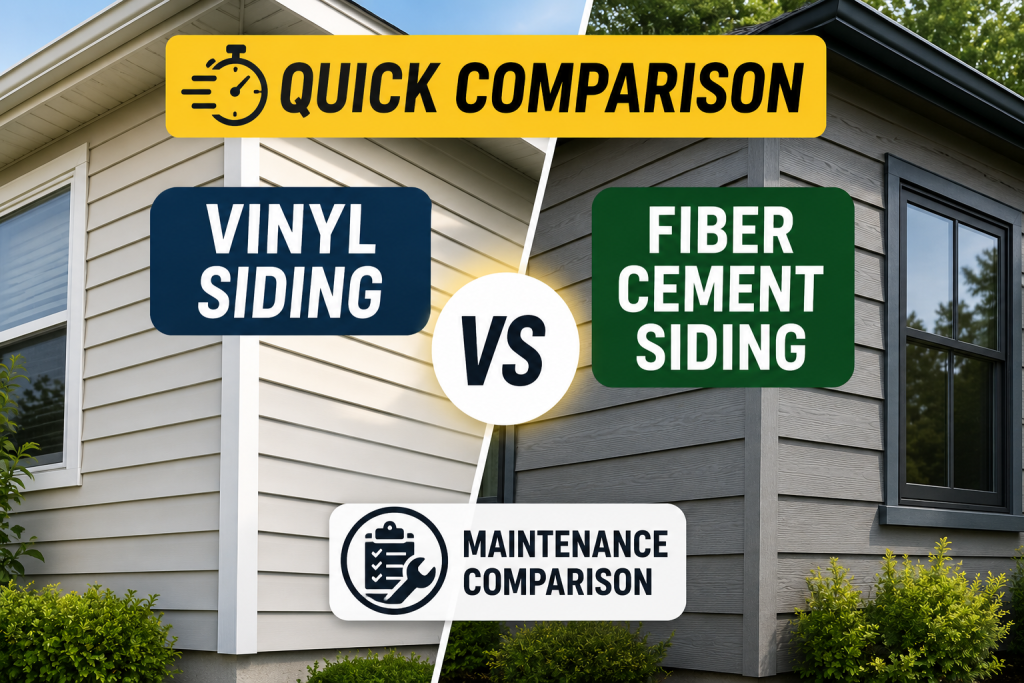
| Factor | Vinyl Siding | Fiber Cement Siding |
| Upfront Cost | Lower | Higher |
| Appearance | Wide style selection | Premium, wood-like finish |
| Lifespan | 20–40 years | 30–50+ years |
| Maintenance | Low | Moderate |
| Moisture Resistance | Good | Excellent |
| Fire Resistance | Limited | Strong |
| Installation | Faster | More labor-intensive |
| Resale Perception | Good | Often premium |
In a practical siding durability comparison, when evaluating vinyl siding vs fiber cement, fiber cement generally performs better under impact, heat exposure, and long-term weather conditions. Vinyl, however, remains attractive for homeowners focused on lower initial investment and easier upkeep. There is no universal winner. Homes in humid Southern regions, snow-prone states, and high-heat climates often prioritize different performance categories when selecting exterior materials.
What Is Vinyl Siding and How Does It Perform?
Vinyl siding is a PVC-based exterior cladding material designed to provide weather protection with minimal upkeep. It became popular in the U.S. because of its lower installation cost, broad color availability, and ability to fit many architectural styles—from suburban developments to renovation projects. For homeowners evaluating vinyl siding vs fiber cement, vinyl is usually the budget-friendly option with faster installation timelines and lower labor costs. Modern products also include insulated versions that can improve overall wall performance and reduce seasonal energy loss.
Among the most discussed vinyl siding pros and cons, the biggest advantages are affordability, low maintenance, and resistance to moisture and insects. The tradeoffs typically include lower impact resistance and a less premium appearance compared with higher-end cladding materials. Brands such as CertainTeed, Ply Gem, and Alside offer product lines aimed at different performance and budget levels.
Major Advantages of Vinyl Siding
One of the biggest reasons homeowners choose vinyl siding is predictable ownership costs. Unlike some exterior materials that require periodic repainting or surface treatments, vinyl generally needs only occasional washing to maintain appearance. For homeowners researching affordable siding options, vinyl consistently ranks among the most accessible choices because both material and installation costs are typically lower than premium alternatives. This can be especially attractive during full exterior renovations where roofing, windows, and landscaping are also part of the budget.
Another advantage is design flexibility. Modern vinyl products are available in multiple profiles, textures, and color selections that work across traditional, farmhouse, and contemporary home styles. When comparing vinyl siding vs fiber cement, vinyl can also support better thermal performance when paired with insulated wall systems, making it a practical choice for homeowners looking to manage long-term utility expenses without increasing exterior maintenance demands.
Where Vinyl Siding Falls Short
Although vinyl performs well for many households, it is not the ideal solution in every environment. Extended UV exposure, severe hail, and strong impacts can sometimes cause cracking, fading, or panel movement over time—especially in regions with intense seasonal weather. When homeowners compare vinyl siding vs fiber cement, appearance retention and structural toughness are often major decision points. Fiber cement generally creates a more substantial architectural finish and may hold visual appeal longer in demanding climates.
Another consideration is long-term ownership expectations. While vinyl is low effort, it can be harder to repair invisibly if sections become damaged years later and original colors are discontinued. Homeowners focused on premium curb appeal, long replacement cycles, or higher-end exterior upgrades may decide that the lower upfront cost does not outweigh those long-term priorities.
What Is Fiber Cement Siding and Is It Worth It?
Fiber cement siding is manufactured using a blend of cement, sand, and cellulose fibers to create a durable exterior surface built for long-term performance. It is widely selected by homeowners seeking a more premium appearance and stronger resistance to weather exposure. In the vinyl siding vs fiber cement discussion, fiber cement typically stands out for its dimensional look and ability to mimic painted wood without the same level of upkeep. It is especially common in regions exposed to humidity, storms, and significant temperature swings.
When evaluating fiber cement siding pros and cons, the advantages usually include durability, fire resistance, and strong curb appeal. The tradeoffs are higher installation costs, greater material weight, and longer project timelines. Manufacturers such as James Hardie have helped increase adoption by offering products designed for multiple U.S. climate conditions and regional performance needs.
Key Benefits of Fiber Cement
Fiber cement is often chosen by homeowners who prioritize longevity, architectural appearance, and stronger exterior performance. Unlike lightweight cladding systems, it creates a more substantial finish that can complement both modern and traditional home designs. One of its biggest advantages is resilience in challenging environments. Homes located in coastal areas, humid Southern states, and freeze–thaw regions often benefit from a material designed to tolerate moisture and seasonal movement more effectively over time.
Another major advantage is reduced repaint frequency compared with traditional wood exteriors. Many homeowners also view fiber cement as a premium upgrade that can contribute to resale appeal and long-term property perception. For homeowners comparing appearance, weather resistance, and ownership horizon, fiber cement is often selected as a long-term investment rather than a lowest-cost exterior decision.
Potential Drawbacks Homeowners Should Know
Fiber cement offers strong long-term performance, but it comes with tradeoffs homeowners should understand before committing. In the vinyl siding vs fiber cement comparison, the biggest consideration is often cost. Material pricing is typically higher than vinyl, and installation often requires more labor, specialized cutting tools, and experienced crews. Weight is another factor. Because fiber cement panels are heavier, installation timelines may extend compared with lighter exterior systems. This can influence overall project budgets during full exterior remodels.
Maintenance expectations should also be considered. While fiber cement is known for durability, it may still require repainting over time depending on exposure conditions and product selection. Homeowners planning renovations should weigh upfront investment against expected ownership length, climate demands, curb appeal goals, and future resale expectations rather than focusing only on initial installation savings.
Vinyl Siding vs Fiber Cement: Durability, Weather Resistance, and Lifespan
Durability is often the deciding factor for homeowners planning to stay in their property for decades. While both materials are designed to protect the home envelope, they perform differently under changing weather conditions and long-term exposure. In most climates, fiber cement delivers stronger resistance to heat, impact, and environmental wear. It performs particularly well in areas that experience humidity, seasonal storms, or repeated freeze–thaw cycles. Vinyl remains highly practical but can become more vulnerable to cracking, warping, or visible aging under certain conditions.
From a lifespan perspective, quality installation and regular upkeep matter as much as material selection. For homeowners comparing vinyl siding vs fiber cement and doing a complete exterior cladding comparison, the better choice depends on whether lower ownership effort or maximum long-term resilience matters more for the home and local climate.
Which Siding Is More Energy Efficient?
Siding alone does not determine utility bills, but it can influence overall exterior performance when paired with insulation, air sealing, and proper wall assembly. Homeowners often expect siding materials to create major energy savings, but installation quality and insulation strategy usually matter more. Vinyl products with insulated backing can improve thermal performance and help reduce heat transfer through exterior walls. This makes them attractive in colder regions and areas with seasonal temperature swings.
Fiber cement does not provide the same insulation effect by itself, but in the vinyl siding vs fiber cement comparison, it performs well as part of a complete exterior system designed for durability and weather protection. For homeowners prioritizing energy-efficient siding, the better option depends on whether the goal is maximizing insulation potential or building a more robust exterior assembly with long-term weather resilience.
Cost Breakdown: Which Option Delivers Better Value?
Cost is usually where homeowners make their first comparison, but focusing only on installation pricing can lead to the wrong decision. Total ownership value includes lifespan, maintenance requirements, repair expectations, and potential resale impact. Vinyl generally wins on upfront affordability. Lower material costs and faster installation make it attractive for homeowners managing renovation budgets or upgrading multiple exterior components at once.
Fiber cement requires a larger initial investment, but some homeowners justify the added expense through stronger long-term appearance retention and perceived premium value. When evaluating vinyl siding vs fiber cement, think in ownership timelines rather than project invoices. Homeowners planning to stay in the home for decades may prioritize durability and appearance, while shorter ownership horizons often favor lower initial costs and reduced maintenance obligations. The best value is rarely the cheapest option—it is the material that aligns with how long you expect to own and maintain the property.
Best Choice by US Climate Region
Climate has a bigger impact on siding performance than many homeowners expect. A material that performs well in one region may not deliver the same results in another. In hot and humid states such as Florida and parts of the Gulf Coast, fiber cement is often favored for long-term resistance to moisture and demanding weather conditions. In areas exposed to hurricanes or prolonged humidity, durability tends to carry more weight than upfront savings.
Cold northern climates and parts of the Midwest create a different set of priorities. Freeze–thaw cycles, insulation goals, and seasonal utility costs may influence homeowners toward insulated exterior systems and lower maintenance expectations. In high-heat regions such as Arizona and parts of Texas, UV exposure and long-term appearance retention become more important. When evaluating vinyl siding vs fiber cement, matching the material to regional conditions usually produces better results than choosing based on price alone.
Who Should Choose Vinyl Siding?
Vinyl siding is often the better fit for homeowners who want dependable exterior protection without increasing project complexity or long-term upkeep. It works especially well for budget-conscious renovations, first-time exterior replacements, and properties where maintenance simplicity matters. Homeowners planning to sell within the next several years may appreciate the balance between appearance improvement and controlled renovation costs. Vinyl can also make sense for rental properties and larger exterior projects where installation speed affects overall budgeting.
Regions with moderate weather conditions often allow homeowners to capture the greatest value from vinyl’s lower ownership demands. For homeowners comparing vinyl siding vs fiber cement, vinyl is usually the stronger choice when the priority is affordability, easier maintenance, and practical long-term ownership rather than achieving a premium exterior finish.
Who Should Choose Fiber Cement?
Fiber cement is usually the better fit for homeowners who view exterior remodeling as a long-term investment rather than a short-term upgrade. It appeals to those prioritizing architectural appearance, stronger weather performance, and a more premium finished look. Homes in coastal environments, storm-prone regions, and areas with large seasonal temperature changes often benefit from a more durable exterior strategy. Fiber cement can also appeal to homeowners focused on resale positioning and long ownership timelines.
This material may be especially attractive when curb appeal plays a major role in renovation goals or when neighboring properties feature higher-end exterior finishes. For homeowners deciding between vinyl siding vs fiber cement, fiber cement often makes the most sense when the goal is maximizing long-term exterior value instead of minimizing upfront project costs.
Final Verdict
There is no universal winner because the right siding depends on homeowner priorities, regional climate, and ownership goals. When comparing vinyl siding vs fiber cement, choose vinyl siding if your focus is lower upfront investment, faster installation, and minimal ongoing maintenance. It remains a practical solution for many homeowners who want reliable exterior protection without stretching renovation budgets. Choose fiber cement if long-term durability, stronger architectural character, and premium curb appeal matter more than initial project cost. It can be especially attractive for homeowners planning to stay in their property for many years or investing in higher-end exterior upgrades. When making the final decision in the vinyl siding vs fiber cement debate, compare more than material pricing. Consider climate exposure, maintenance expectations, utility goals, neighborhood standards, insurance considerations, and expected ownership timeline. The best siding choice is the one that fits how you actually live—not simply the one with the strongest marketing claims.
Frequently Asked Questions
In the vinyl siding vs fiber cement debate, is fiber cement siding worth the extra cost?
In the vinyl siding vs fiber cement comparison, fiber cement can be worth the additional investment for homeowners who prioritize long-term durability, stronger weather resistance, and a more premium exterior appearance. It is commonly selected for homes in demanding climates and for projects where curb appeal and long ownership timelines matter more than minimizing upfront expenses.
Does vinyl siding increase home value?
Vinyl siding can improve perceived curb appeal and refresh an aging exterior, which may support resale appeal. While the value increase depends on local market conditions, many homeowners choose vinyl because it balances visual improvement with lower renovation costs.
Which siding lasts longer?
Fiber cement generally has a longer expected service life when professionally installed and properly maintained. Vinyl also delivers long-term performance but may show wear earlier depending on climate exposure, UV conditions, and impact events.
Is vinyl siding or fiber cement easier to maintain?
Vinyl is typically easier to maintain because it usually requires only periodic cleaning. Fiber cement may need occasional repainting and more long-term exterior upkeep depending on exposure conditions and finish quality.
Does siding affect homeowners insurance?
It can. Insurance considerations vary by carrier and region, but materials with stronger fire resistance, weather performance, or reduced risk profiles may influence coverage evaluation and premiums in certain markets.
What should homeowners prioritize when choosing siding?
Start with climate, ownership timeline, budget, maintenance expectations, and desired appearance. The best siding decision balances upfront investment with long-term performance rather than focusing on a single factor.