


Wood Wall Panels vs. Shiplap: Which Is Better for US Home?
Choosing between wood panels and shiplap has become a common decision for homeowners looking to upgrade interior walls. Both materials add texture, depth, and architectural character, but they differ in appearance, installation, and overall design style. The wood wall panels vs shiplap comparison has become more important as feature walls continue growing in popularity across American homes.
Modern interiors now use both finishes to transform builder-grade spaces into more customized environments. Homes in Dallas often combine warm textures with contemporary designs, while farmhouse interiors around Nashville continue embracing traditional shiplap aesthetics. Today’s homeowners compare wood accent walls, maintenance needs, and long-term design flexibility before choosing between shiplap and wall panel systems.
Wood Wall Panels vs Shiplap Difference
The wood wall panels and shiplap comparison starts with understanding how these materials differ in structure and appearance. Although both add texture and architectural detail, they create very different interior styles. Wood wall panels refer to a broad category that includes slat systems, decorative boards, MDF wall cladding, geometric layouts, and other forms of modern wall paneling. These products are commonly used to create feature walls and contemporary interiors because they offer greater design flexibility.
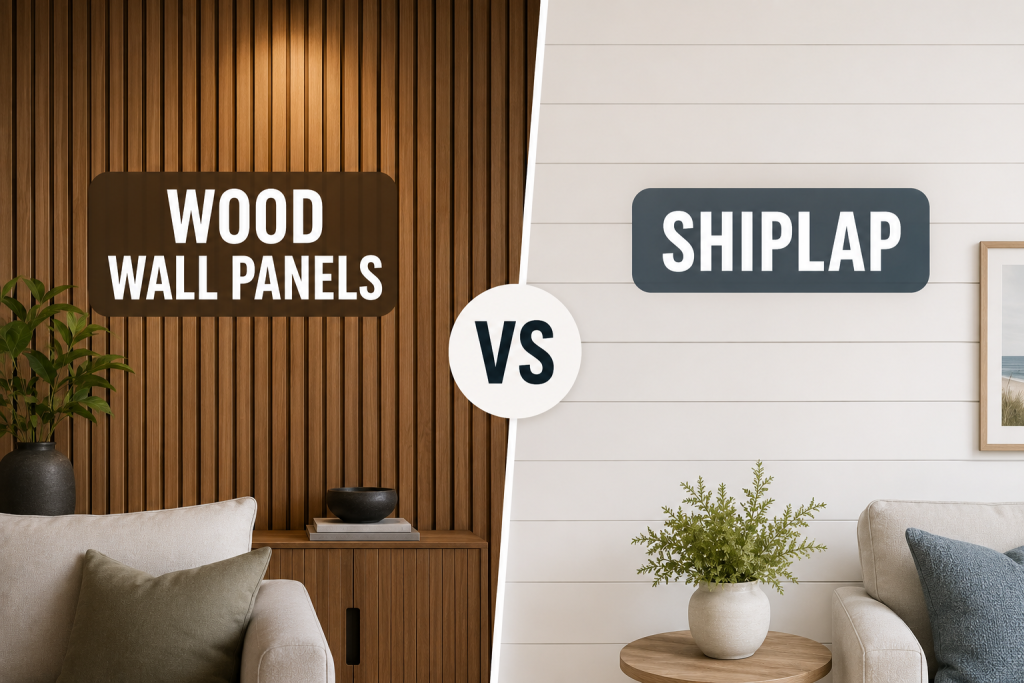
Shiplap is more specific. It traditionally uses horizontal boards with overlapping edges that create visible shadow lines. Today, many homeowners use shiplap to support rustic wall decor and rustic interiors. Modern homes also use tongue-and-groove walls as an alternative because they provide cleaner seams and a more refined appearance. Understanding these differences helps homeowners choose the right wall treatment based on style, maintenance, and renovation goals.
Wood Wall Panels and Shiplap for Style and Design
Style plays a major role in the wood wall panels vs shiplap decision because both materials create different visual effects and support different interior themes.
Shiplap Wall Techniques for Farmhouse Interiors
Traditional shiplap wall techniques are connected to farmhouse wall decor because horizontal boards create warmth and rustic character. Many homeowners use shiplap in living rooms, entryways, and bedrooms to create cozy interiors. It also pairs well with natural textures, neutral colors, and other rustic wall finishes.
Trendy Wall Paneling Styles
Modern wooden accent walls often move beyond farmhouse aesthetics by using vertical slats, geometric layouts, and decorative systems. Contemporary trendy wall paneling works especially well in open-concept homes because it creates clean focal points while adding depth. Many homeowners also choose MDF wall cladding because they provide a modern appearance while remaining more budget-friendly than natural wood.
Installation and Material Differences
Installation complexity is another important part of the wood wall panels vs shiplap comparison because material type affects labor, tools, and project difficulty. Shiplap generally uses horizontal boards installed side by side to create visible spacing and shadow lines. Many traditional systems use wood planks, although modern products also include engineered materials and MDF wall cladding.
Wood panels include slat walls, decorative boards, and tongue-and-groove walls with different layouts and finishes. Shiplap installation is often considered more DIY-friendly because patterns remain consistent across the wall. Modern wooden accent walls, however, may require more planning due to spacing, alignment, and custom layouts. Retailers such as The Home Depot and Lowe’s offer both materials, giving homeowners multiple options for interior upgrades and trendy wall paneling projects.
Durability and Maintenance Comparison
Maintenance and long-term performance are important factors in the wood wall panels vs shiplap decision because upkeep requirements vary by material and finish type.
Wood Wall Panels vs Shiplap Maintenance and Longevity
Traditional shiplap performs well in many interiors, but grooves and seams may collect dust over time. Painted shiplap often requires touch-ups, especially in busy areas such as hallways and family rooms. Many homeowners using rustic wall decor prefer painted finishes because they preserve the classic appearance while simplifying maintenance.
Wood Wall Panels and Shiplap Wood Wall Panel Durability
Modern wooden accent walls and MDF wall cladding vary in durability depending on material quality and installation method. Natural wood generally offers longer lifespan potential, while engineered products may require less maintenance. Decorative systems and tongue-and-groove walls also provide stronger seam alignment and cleaner finishes for modern interiors. Proper sealing and finishing help extend the lifespan of both rustic wall finishes and contemporary panel systems.
Best Rooms for Wood Wall Panels and Shiplap
Room selection can significantly influence the wood wall panels vs shiplap decision because each material creates a different visual effect depending on the space. Shiplap works especially well in bedrooms, entryways, and family rooms where homeowners want softer rustic wall decor and warm textures. Many traditional interiors also use shiplap to support a cozy rustic wall finish. Modern wooden accent walls often perform better in living rooms, home offices, and entertainment areas because they create stronger focal points and fit contemporary layouts.
Open-concept homes frequently use modern fence paneling behind fireplaces, media walls, and dining spaces to add depth without overwhelming the room. Many homeowners also choose tongue-and-groove walls for transitional interiors because they blend farmhouse and modern styles more easily. Matching wall treatments with room function helps create more cohesive interiors and better long-term design results.
Pros and Cons of Wood Wall Panels vs Shiplap
Choosing between wood wall panels and shiplap often comes down to design preference, maintenance expectations, and renovation goals.
Wood wall panel advantages
- Support modern and contemporary interiors
- Offer flexible, trendy wall paneling layouts
- Create bold wooden accent walls and feature spaces
- Available in natural wood and MDF wall panel options
- Works well in open-concept homes
Wood wall panels limitations
- Custom layouts may require more labor
- Premium wood products increase costs
- Complex designs can be less DIY-friendly
Shiplap advantages
- Complements rustic wall decor styles
- Creates warm and cozy interiors
- Supports classic shiplap wall ideas
- Often easier for DIY installation
Shiplap limitations
- Rustic appearance may not fit every interior
- Visible seams may require more maintenance
- Fewer modern design variations compared with panel systems.
DIY and Renovation Considerations
DIY potential is another major factor in the wood wall panels vs shiplap comparison because installation complexity affects both project cost and renovation planning. Shiplap is often considered more beginner-friendly because board layouts remain consistent and installation patterns are relatively straightforward. Many homeowners choose shiplap for DIY feature walls and rustic wall decor upgrades.
Modern wooden accent walls, however, may require more planning because slat spacing, alignment, and custom layouts influence the final appearance. Budget also plays a role. MDF wall panels often provide a lower-cost alternative for homeowners wanting the look of trendy wall paneling without premium wood pricing. Homeowners planning resale-focused renovations frequently balance aesthetics and maintenance by combining traditional rustic wall finishes with more contemporary wall features in open living spaces.
Wood Wall Panels and Shiplap for Resale Value and Interior Appeal
Resale considerations can also influence the wood wall panels vs shiplap decision because wall finishes affect buyer perception and overall presentation. Shiplap remains popular in homes that emphasize rustic wall decor because it creates warmth and character. In markets with rustic and transitional design preferences, traditional shiplap wall techniques can improve visual appeal and make interiors feel more customized.
Modern wooden accent walls often appeal to homeowners looking for contemporary interiors. Vertical slats, geometric layouts, and clean, trendy wall paneling designs frequently photograph well for listings and create stronger focal points. Many homeowners also choose MDF wall cladding because they offer a premium appearance while helping control renovation budgets. Balancing style with long-term flexibility helps homeowners create interiors that support both personal preferences and future resale goals.
Cost Comparison: Wood Wall Panels vs Shiplap
Budget planning is another important part of the wood wall panels and shiplap comparison because material selection can significantly affect renovation costs. Shiplap is often more affordable because installation methods are simpler and layouts remain consistent across the wall. Engineered products and MDF wall cladding can reduce costs further while maintaining the appearance of traditional shiplap.
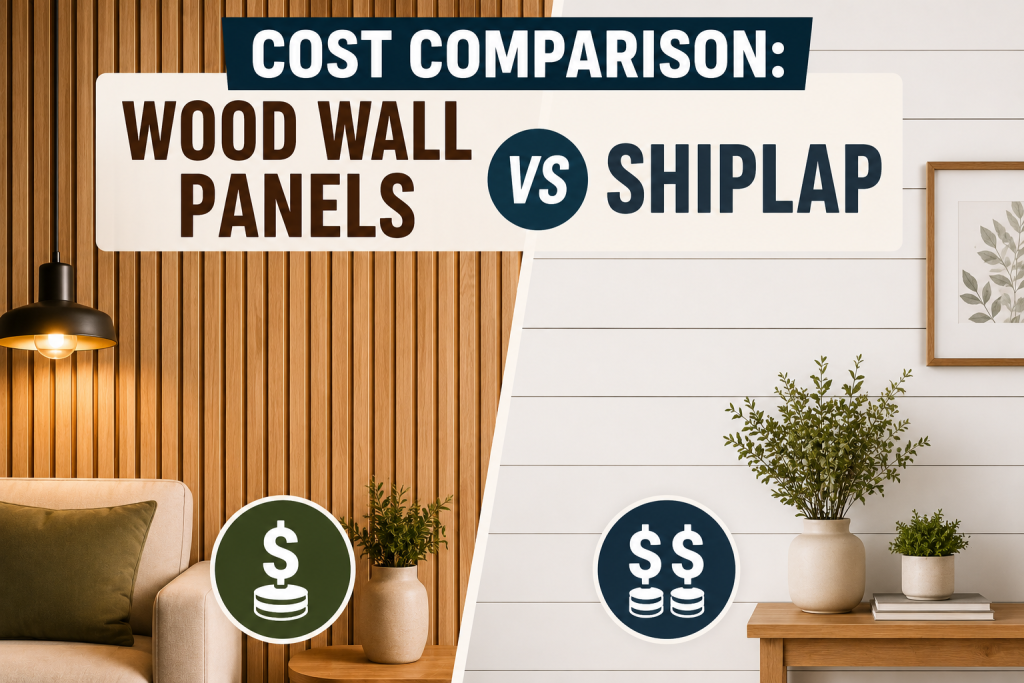
Modern wooden accent walls vary more in pricing because materials range from basic panels to premium hardwood slat systems. Custom layouts, decorative patterns, and advanced, trendy wall paneling designs generally increase labor and installation expenses. Natural wood products usually cost more than engineered materials but provide a higher-end finish. Homeowners seeking budget-friendly rustic wall treatments often choose shiplap, while those creating contemporary feature walls may invest more in custom panel systems and tongue-and-groove walls for added visual impact.
Conclusion
The wood wall panels vs shiplap decision ultimately depends on interior style, budget, maintenance preferences, and renovation goals. Shiplap remains a strong choice for homeowners who prefer warm rustic wall decor, classic textures, and traditional rustic wall finishes. Modern wooden accent walls, however, provide greater design flexibility through slat systems, decorative layouts, and contemporary, trendy wall paneling styles. Options such as MDF wall cladding and tongue-and-groove walls also give homeowners more flexibility when balancing cost and aesthetics. Whether creating a rustic feature wall or a modern focal point, selecting the right material can improve interior character, support resale appeal, and create a more personalized living space.
FAQs
What is the difference between wood wall panels and shiplap?
The main difference in wood wall panels vs shiplap is design flexibility. Wood panels include slat walls, decorative systems, and MDF wall cladding, while shiplap uses horizontal boards with visible seams.
Wood wall panels vs shiplap, which is more modern?
In many cases, yes. Contemporary wooden accent walls and trendy wall paneling styles often fit modern interiors better than traditional shiplap.
Is shiplap still in style?
Yes. Shiplap wall techniques remain popular, especially in homes featuring rustic wall decor and cozy interior designs.
What are tongue-and-groove walls?
Tongue and groove walls use interlocking boards that create cleaner seams and a more refined appearance than standard shiplap.
Is MDF wall cladding good for feature walls?
Yes. MDF wall cladding remains popular because they are affordable, versatile, and works well for modern accent wall projects.