

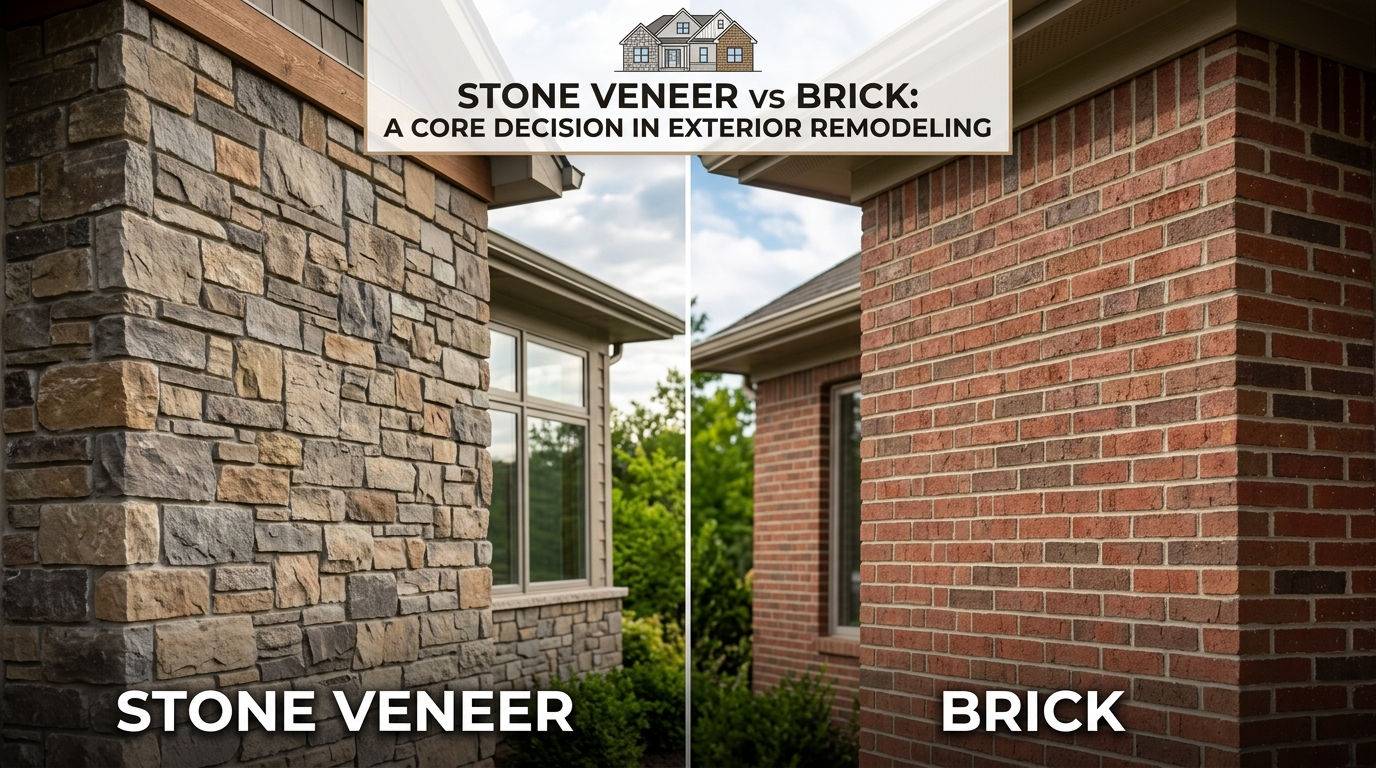
Stone Veneer vs Brick: A Core Decision in Exterior Remodeling
Choosing between stone veneer and brick is one of the most important decisions in exterior design and remodeling. Both materials are widely used across the United States for their durability, curb appeal, and long-term value, but they differ significantly in cost, installation, maintenance, and overall performance. In U.S. housing markets like Dallas, Chicago, and Denver, homeowners often evaluate these materials as part of broader home exterior materials planning. The choice directly impacts not only aesthetics but also long-term curb appeal, exterior options, and resale value. Brick has long been associated with traditional American masonry design has long been associated with strength and longevity. Meanwhile, manufactured stone veneer has gained popularity as a lighter, more flexible exterior material option that can mimic natural stone at a lower cost. According to industry insights from NAHB, exterior material selection plays a significant role in buyer perception and long-term property value, especially in competitive resale markets. This guide breaks down both materials across cost, durability, maintenance, and aesthetics to help homeowners make a confident masonry siding comparison decision.
Brick Exterior: Durability, Cost, and Long-Term Value
When evaluating stone veneer vs brick, traditional brick remains one of the most trusted home exterior materials in American construction. Full brick construction is known for its strength, fire resistance, and ability to last for decades with minimal structural maintenance. In many U.S. regions like Chicago and Baltimore, brick homes are especially common due to their performance in freeze-thaw climates and long-term durability in harsh weather conditions. From a structural perspective, brick is a true structural material rather than a decorative layer. This means it provides both exterior protection and long-term stability. Homeowners often choose brick for its reputation as a low-maintenance exterior option, since it does not require repainting and resists pests, rot, and fire damage.
However, brick also comes with higher upfront installation costs and less flexibility in design changes. Once installed, modifying or expanding a brick exterior can be more complex and expensive compared to other exterior cladding options. In terms of exterior appearance, brick is often associated with traditional, upscale, and timeless home styles. It performs particularly well in neighborhoods where long-term resale value and architectural consistency are important factors, making it a strong choice for homeowners focused on durability and stability over design flexibility.
Stone Veneer Exterior: Cost, Flexibility, and Modern Appeal
When comparing stone veneer vs brick, stone veneer has become a popular choice for homeowners who want a high-end look without the weight and cost of full masonry. Stone veneer is designed to replicate natural stone while being significantly lighter, making it easier and more affordable to install as part of modern exterior renovation projects. In fast-growing suburban markets like Phoenix and Atlanta, stone veneer is often used to upgrade partial façades, entryways, and accent walls. It performs especially well for enhancing curb appeal because it creates a strong visual contrast against siding, stucco, or fiber cement materials.
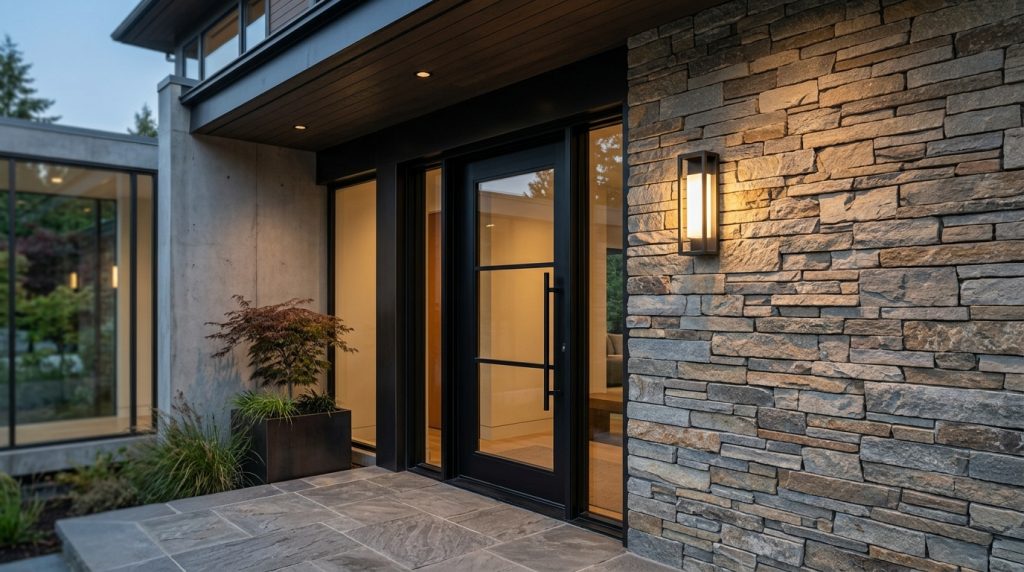
From a material selection standpoint, stone veneer is typically installed as a decorative surface rather than a full structural system. This allows homeowners to strategically enhance key visual areas, such as front porch columns or garage exteriors, without committing to a full masonry build. One of the biggest advantages of stone veneer is design flexibility. It supports a wide range of architectural styles, from modern farmhouse to contemporary builds, and integrates easily into broader exterior renovation planning. This makes it especially appealing for remodels focused on curb appeal improvements rather than structural reconstruction. However, while stone veneer offers strong aesthetic value, it generally does not match the long-term durability and structural strength of full brick construction. Homeowners typically choose it when prioritizing design impact, budget efficiency, and faster installation timelines over maximum longevity.
Cost Comparison: Stone Veneer vs Brick Installation
Cost is often the deciding factor in the stone veneer vs brick debate, especially for homeowners planning a full exterior upgrade. While both materials are considered premium exterior options, their installation requirements and labor intensity create a significant price gap. In general, full brick construction is one of the more expensive exterior finish choices due to the need for skilled labor, structural support, and longer installation timelines. Brick is heavy, time-intensive to install, and often requires a reinforced foundation. In high-demand housing areas like Denver and Boston, brick homes are often associated with higher construction budgets and long-term investment properties. By contrast, stone veneer is typically less expensive to install because it is lighter and does not require the same structural reinforcement.
It can often be applied over existing siding systems as part of broader exterior remodeling materials upgrades, reducing demolition and labor costs. From a material comparison standpoint, stone veneer offers a more budget-friendly path to achieving a high-end aesthetic. This makes it especially attractive for homeowners focused on improving curb appeal without committing to full masonry construction. However, while stone veneer usually wins on upfront affordability, brick often delivers stronger long-term value due to durability and lower maintenance requirements. This tradeoff is central to most renovation decisions, especially when balancing short-term budget constraints with long-term resale expectations.
Stone Veneer vs Brick: Durability and Maintenance Comparison
When evaluating stone veneer vs brick, durability is one of the most important long-term factors to consider. Both materials are designed to improve exterior protection, but they perform differently over decades of exposure to weather, moisture, and temperature changes. Traditional brick construction is widely regarded as one of the most durable exterior solutions in residential construction. Brick performs exceptionally well in harsh climates, including freeze-thaw cycles common in Minneapolis and wet coastal conditions found in Seattle. It resists fire, pests, and rot, and typically requires very little maintenance beyond occasional mortar repair and cleaning.
In contrast, stone veneer offers good durability but depends heavily on proper installation and moisture management. Because it is typically applied as a surface layer, it is more vulnerable to water intrusion issues if flashing and drainage systems are not installed correctly. However, when installed properly, it performs well as a long-lasting exterior material option. From a maintenance perspective, brick generally requires less ongoing attention over time. Stone veneer may need periodic inspections, especially around joints and exterior transitions, to ensure it remains sealed and protected. This difference becomes important for homeowners prioritizing low-maintenance exterior solutions. Ultimately, brick is often favored for long-term structural reliability, while stone veneer is chosen for its design versatility and strong visual impact, especially in renovation-focused projects where visual transformation is the priority.
Curb Appeal Impact: Which Exterior Material Looks Better?
When it comes to stone veneer vs brick, both materials deliver strong visual appeal, but they achieve it in different ways. The choice often depends on whether a homeowner wants a timeless tradition or a more modern, design-flexible upgrade. Full brick construction is associated with classic American architecture and long-term prestige. In established neighborhoods like Philadelphia and St. Louis, brick is often seen as a symbol of permanence and historical value. Its uniform texture and natural color variations create a consistent, grounded appearance that tends to age well over time.
On the other hand, stone veneer offers more visual variety and customization. It can replicate limestone, river rock, or stacked stone, allowing homeowners to create accent features that stand out in modern exterior material designs. This flexibility makes it especially popular in newer suburban developments where curb appeal differentiation is important. From a design standpoint, stone veneer is often used to highlight specific architectural elements such as entryways, garage surrounds, or porch columns. This targeted application enhances exterior layering and creates depth that flat surfaces sometimes lack. Brick, however, excels in overall uniformity and long-term aesthetic stability. It rarely feels “outdated,” which makes it a safe choice for homeowners focused on resale consistency and lower design risk. Ultimately, the better-looking option depends on style goals: brick for timeless uniformity, or stone veneer for customizable visual impact and modern curb appeal enhancement.
Installation Differences: Labor, Process, and Project Complexity
The installation process is one of the biggest dividing factors in the stone veneer vs brick decision, and it directly impacts both cost and project timeline. While both are used in masonry-style construction, their structural requirements are significantly different. Full brick construction requires skilled masons, a strong foundation, and a methodical, time-intensive installation process. Each brick is laid individually, and structural alignment must be precise to ensure long-term stability. In markets like Detroit and Milwaukee, where older housing stock is common, brick installations are often part of large-scale rebuilds or major exterior remodeling materials upgrades rather than quick renovations.
In contrast, stone veneer is generally faster and less structurally demanding to install. It is typically applied over existing surfaces such as wood framing or cement board, making it a popular option for renovation projects focused on visual improvement rather than full structural reconstruction. From a design and installation perspective, stone veneer offers more flexibility in application and can often be used for partial upgrades like accent walls or entry features. This makes it attractive for homeowners who want a visible transformation without committing to a full masonry build. However, the brick’s installation complexity is also part of its long-term value. Because it is structurally integrated, it tends to offer superior stability and durability over decades, which is a key reason it remains a preferred choice in the stone veneer vs brick decision for homeowners focused on permanence and strength.
Cost Comparison and ROI: Which Material Pays Off Better?
When evaluating stone veneer vs brick, cost and return on investment (ROI) are often the deciding factors for homeowners planning a major exterior upgrade. Both materials are considered premium exterior options, but they differ significantly in upfront cost, long-term maintenance, and resale impact. Full brick construction typically requires a higher initial investment due to labor-intensive installation and structural requirements. However, brick often delivers strong long-term value in stable housing markets like Chicago and Washington, where buyers consistently associate masonry homes with durability and low maintenance. Over time, brick’s minimal upkeep requirements can help offset its higher installation cost. On the other hand, stone veneer provides a more budget-friendly entry point into high-end exterior aesthetics. It is frequently used in renovation-focused projects where homeowners want a visible transformation without full structural investment.
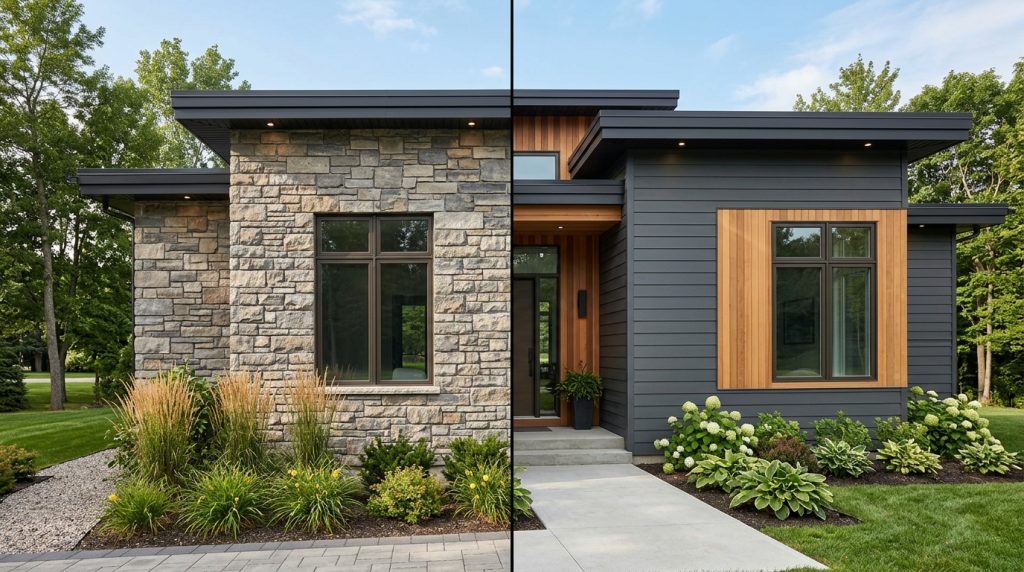
From an ROI perspective, the stone veneer vs brick decision often comes down to investment horizon. Brick generally performs better in long-term ROI stability, while stone veneer often wins in short-term visual impact per dollar spent. Buyers tend to respond strongly to stone veneer accents, especially when paired with siding or modern trim, which can elevate perceived value at a lower cost. Ultimately, ROI depends on project goals. Brick is a long-term investment in durability and prestige, while stone veneer is a cost-efficient way to maximize curb appeal and improve resale presentation without a full-scale rebuild.
Best Use Cases: When to Choose Brick vs Stone Veneer
Understanding stone veneer vs brick is less about which material is “better” and more about which one fits the specific project, budget, and long-term goals of the homeowner. Each option performs best in different renovation and design scenarios. Full brick construction is often the preferred choice for new construction or long-term ownership properties. In established markets like Boston and Baltimore, brick is commonly selected for homes where durability, fire resistance, and resale stability are top priorities. It works especially well in neighborhoods where architectural consistency and long-term value preservation matter more than rapid design updates.
In contrast, stone veneer is ideal for renovation-focused projects and targeted upgrades. Homeowners frequently use it to refresh outdated façades without fully rebuilding the exterior structure. It is especially effective for enhancing entryways, garage fronts, and porch columns, making it a strong option for improving exterior appearance and overall curb appeal. From a practical application standpoint, stone veneer is better suited for partial upgrades and aesthetic enhancement projects, while brick is better suited for full-envelope construction where structural integration is required. For homeowners making exterior material decisions, the key distinction in the stone veneer vs brick debate is scope: brick is a long-term structural commitment, while stone veneer is a flexible design upgrade tool. Choosing the right option depends on whether the goal is maximum durability or maximum visual transformation within a controlled budget.
Final Thoughts: Choosing the Right Exterior Material for Long-Term Value
Deciding between stone veneer vs brick ultimately comes down to how you balance cost, durability, and design goals within your overall exterior renovation strategy. Both options can significantly enhance curb appeal, but they serve different homeowner priorities and project scopes. In long-established U.S. markets like Indianapolis and Pittsburgh, full brick construction is often seen as the “forever” choice. It delivers strong structural performance, low maintenance requirements, and long-term resale stability. For homeowners focused on permanence and durability, brick remains one of the most trusted exterior material options available.Meanwhile, stone veneer continues to grow in popularity for renovation-driven projects and targeted upgrades. It plays a powerful role in exterior renovation planning, especially when the goal is to modernize a home’s appearance quickly without the cost of full masonry construction. Its strength lies in flexibility and visual transformation rather than structural permanence.
From a long-term value standpoint, the stone veneer vs brick decision comes down to priorities: brick is the investment in longevity, while stone veneer is the investment in style efficiency. Many modern homes now combine both approaches, using brick for structure and stone veneer for accents, to achieve a balanced, high-end exterior. The most successful projects are not defined by a single material choice but by how well materials work together to create a cohesive, durable, and visually appealing façade. Ultimately, the best decision is the one that aligns with your budget, maintenance expectations, and long-term property goals, ensuring your exterior not only looks strong today but continues to hold value for years to come.
Final Verdict
When comparing stone veneer vs brick, there is no universal winner, only the right choice for the right project. Both materials are respected home exterior materials, but they serve different priorities in exterior design, durability, and budget planning. A brick house exterior remains the strongest option for homeowners prioritizing longevity, structural strength, and long-term stability. In cities like Milwaukee and Cleveland, brick continues to be favored for its ability to withstand harsh winters, resist damage, and maintain consistent resale value over decades. It is a true long-term investment in durability and low-maintenance ownership. On the other hand, manufactured stone veneer excels in design flexibility and cost-efficient transformation. It is widely used in renovation-focused exterior remodeling materials projects where homeowners want to upgrade curb appeal without committing to full masonry construction. Stone veneer performs especially well in curb appeal exterior options strategies because it delivers a high-end look at a lower installation cost. From an exterior cladding comparison perspective, brick is the more permanent and structurally integrated solution, while stone veneer is the more adaptable and design-driven option. Both can significantly improve curb appeal when used correctly, but they achieve value in different ways. According to broader masonry siding comparison trends, the best outcomes often come from hybrid approaches, using brick for structure and stone veneer for accent detailing. This combination balances durability with modern aesthetics, helping homeowners maximize both visual impact and long-term property value. Ultimately, the decision comes down to priorities: choose brick for strength and permanence, or stone veneer for flexibility, affordability, and fast curb appeal improvement.
Frequently Asked Questions (FAQ)
Is stone veneer vs brick cheaper?
Yes. In most stone veneer vs brick comparisons, manufactured stone veneer is more affordable than a full brick house exterior because it requires less labor, uses lighter materials, and can often be installed over existing surfaces as part of exterior remodeling materials projects.
Which lasts longer: stone veneer or brick?
Brick generally lasts longer. A brick house exterior is a structural system designed for multi-decade durability, while stone veneer depends more on installation quality and moisture management. In a long-term masonry siding comparison, brick typically wins on lifespan.
Does stone veneer add value to a home?
Yes, stone veneer can increase perceived value by improving curb appeal exterior options. It is especially effective in front-facing upgrades like entryways and accent walls, where visual impact influences buyer perception.
Is brick better for resale value?
Brick is often seen as a premium exterior material, which can support stable resale value. Buyers associate brick homes with durability and lower maintenance, especially in mature neighborhoods.
Can you combine stone veneer and brick?
Yes. Many modern designs use a hybrid approach in exterior cladding comparison projects, brick for structure, and stone veneer for accents. This combination can enhance architectural depth and curb appeal.
What requires more maintenance: brick or stone veneer?
Brick typically requires less maintenance. Stone veneer may need periodic inspections for sealing and moisture protection, while brick mainly requires occasional mortar repairs.
Which is better for curb appeal?
Both improve curb appeal, but in different ways. Brick offers timeless, consistent beauty, while stone veneer provides more flexible, high-contrast design options for a more modern exterior appearance.