

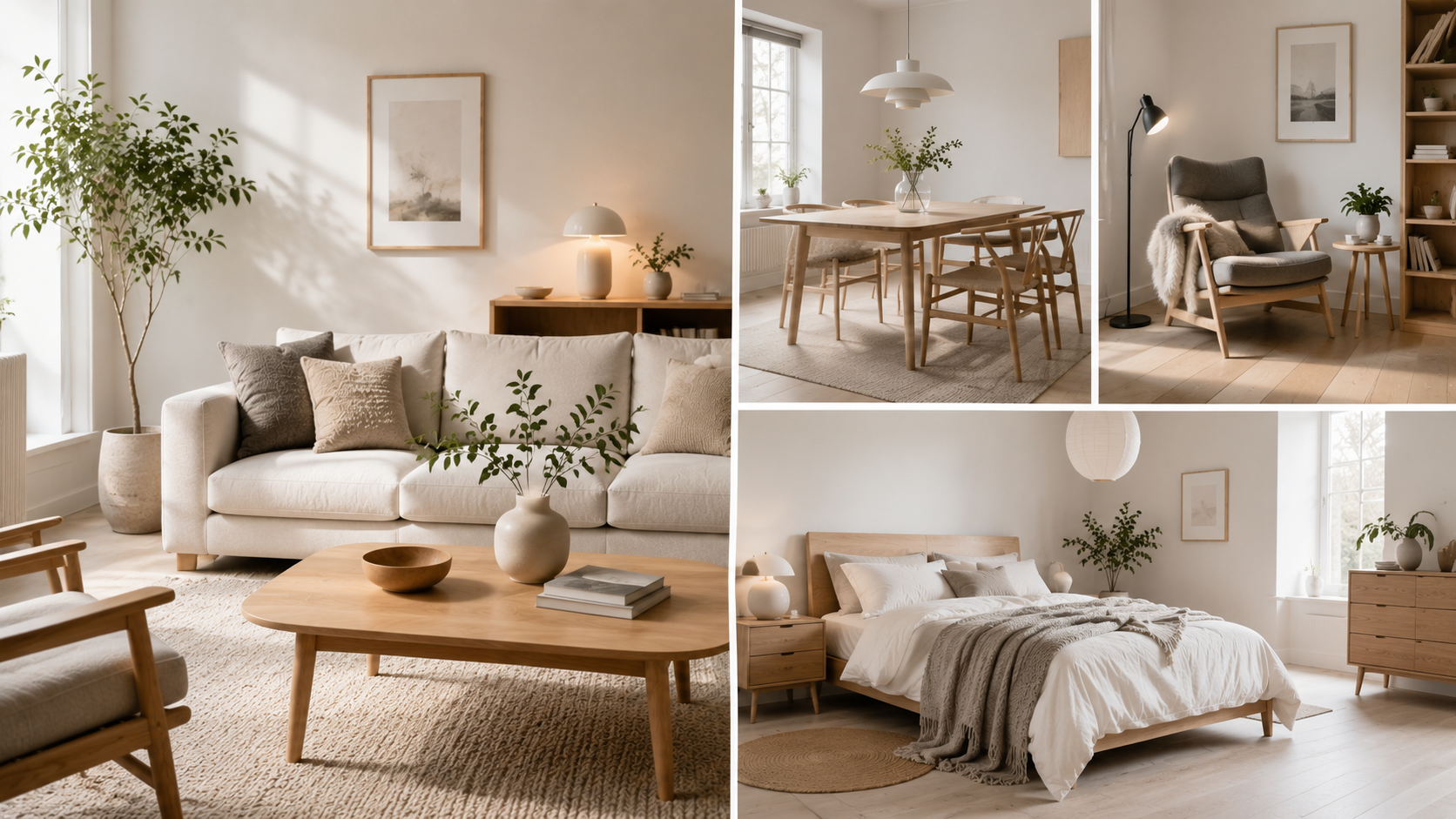
Scandinavian Design Styles Explained
Clean lines, functional layouts, and a strong connection to nature have helped Scandinavian interiors remain popular for decades. Originating in the Nordic countries of Denmark, Sweden, Norway, and Finland, this design approach focuses on creating comfortable, practical, and visually balanced living spaces. Today, homeowners and designers appreciate Scandinavian design for its ability to make rooms feel brighter, larger, and more inviting. Natural materials, neutral color palettes, and thoughtful furniture choices work together to create spaces that are both beautiful and highly livable. While many people think of Scandinavian design as a single aesthetic, there are actually several distinct Scandinavian design styles. Each variation shares core principles of simplicity and functionality while offering unique characteristics that suit different tastes and lifestyles. Understanding these differences can help homeowners choose the right approach for their space and create an interior that feels timeless rather than trend-driven. In this guide, we’ll explore the most popular Scandinavian design styles, their defining features, and practical ways to incorporate them into modern homes.
What Are Scandinavian Design Styles?
Scandinavian design styles are a collection of interior design approaches that originated across the Nordic region and share a common focus on simplicity, functionality, and comfort. Rather than emphasizing excessive decoration, these styles prioritize practical living while maintaining a warm and welcoming atmosphere. One of the defining characteristics of this design approach is the balance between aesthetics and usability. Every furniture piece, lighting fixture, and decorative element serves a purpose while contributing to the overall visual harmony of the space. This philosophy emerged from the Nordic lifestyle, where long winters and limited daylight encouraged the creation of bright, comfortable interiors. Although individual variations exist, most Scandinavian-inspired spaces feature neutral color palettes, natural wood finishes, layered textures, and uncluttered layouts. These elements work together to create homes that feel calm, organized, and connected to nature, making the style appealing to modern homeowners around the world.
The Origins of Scandinavian Design Styles
Scandinavian design originated in the early 20th century in the Nordic countries of Denmark, Sweden, Norway, Finland, and Iceland. It was influenced by modernism and focused on simplicity, functionality, and craftsmanship. Designers aimed to create beautiful yet practical products that were affordable for everyday people. The style reflects the region’s natural environment, using light colors, natural materials, and clean lines. After World War II, Scandinavian design gained international popularity for its minimalist and human-centered approach. Today, it remains a major influence on architecture, furniture, and interior design worldwide.
How Nordic Living Shaped Design Principles
The foundation of Scandinavian design styles can be traced to the everyday lifestyles of people living in Denmark, Sweden, Norway, and Finland. Historically, homes in these countries were designed to maximize comfort, efficiency, and practicality during long winters. As a result, interiors evolved around functional furniture, durable materials, and layouts that supported daily life without unnecessary complexity. Designers in the Nordic region believed that well-designed spaces should be accessible to everyone rather than reserved for the wealthy. This philosophy encouraged the development of furniture and interiors that were attractive, affordable, and highly functional. Over time, these ideas became central to many Nordic design styles, influencing everything from architecture to product design and helping establish the region’s global reputation for timeless interiors.
The Influence of Nature and Climate
Nature plays a significant role in shaping Scandinavian design styles. Because daylight can be limited during parts of the year, homes are often designed to feel bright and open. Large windows, light-colored walls, and reflective surfaces help maximize natural light and create a more uplifting environment. The surrounding landscape also influences material choices. Wood, wool, linen, leather, and stone are commonly used because they bring warmth and texture indoors while maintaining a connection to nature. Soft neutral tones often mirror Nordic forests, coastlines, and snowy landscapes. These natural influences contribute to interiors that feel calm, balanced, and inviting throughout the year, regardless of seasonal weather conditions.
Popular Scandinavian Design Styles for Modern Homes
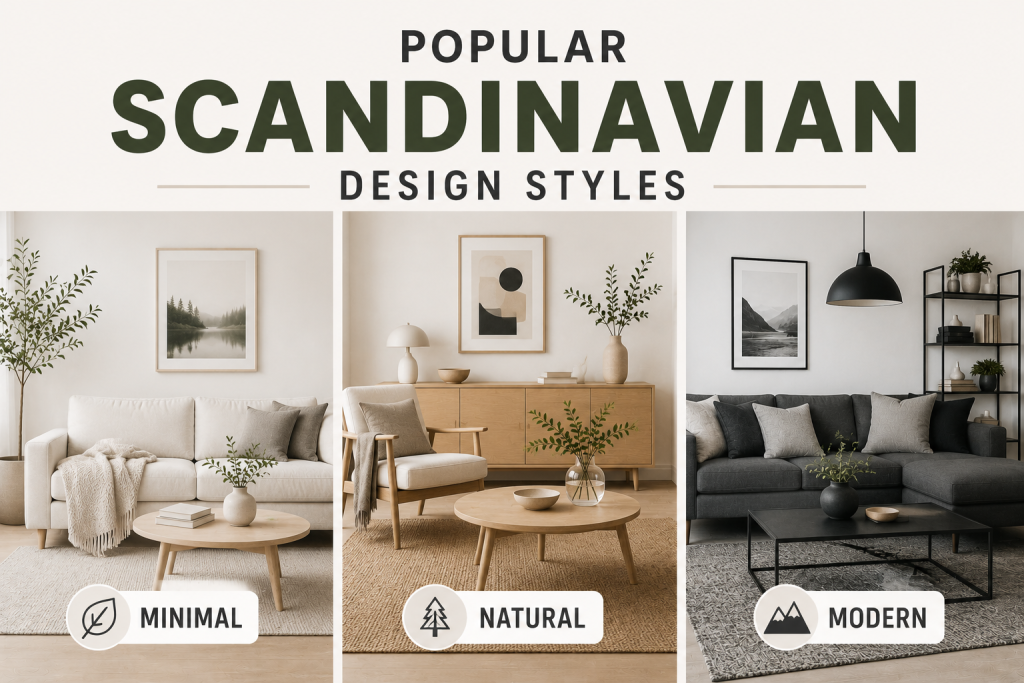
Scandinavian design styles have evolved over time, giving homeowners several interpretations to choose from. While each variation follows the core principles of simplicity, functionality, and comfort, the overall appearance can vary significantly depending on the materials, color palette, and decorative elements used.
Modern Scandinavian Interiors
Modern Scandinavian interiors focus on clean lines, open spaces, and a minimalist approach to decorating. Furniture often features sleek silhouettes, neutral finishes, and practical functionality. Light wood tones, soft textiles, and carefully selected accent pieces help maintain a warm atmosphere without creating visual clutter. This style works especially well in contemporary homes where homeowners want a balance between comfort and simplicity.
Traditional Scandinavian Design
Unlike contemporary interpretations, traditional Scandinavian design embraces classic craftsmanship and historical influences. Natural wood furniture, vintage-inspired details, and handcrafted accessories play a larger role in the overall aesthetic. While the spaces remain functional and uncluttered, they often feel warmer and more rustic than modern alternatives.
Minimalist Scandinavian Style
This interpretation strips interiors down to their essentials. Decorative elements are intentionally limited, allowing natural light, texture, and architectural features to become the focal points. The result is a peaceful environment that promotes clarity and organization.
Scandi-Boho Style
Scandi-Boho combines the structure of Scandinavian interiors with the relaxed character of bohemian decorating. Layered textiles, organic materials, and subtle patterns add personality while preserving the simplicity that defines this Nordic-inspired aesthetic.
Key Features Found Across Scandinavian Design Styles
Although individual interpretations may differ, several characteristics remain consistent across most Scandinavian design styles. These shared elements are responsible for the timeless appeal and practicality that homeowners value today. Natural materials are one of the most recognizable features. Light-toned wood, wool, linen, leather, and stone introduce warmth while reinforcing a connection to nature. Neutral color palettes are equally important, often featuring shades of white, gray, beige, and soft earth tones that help interiors feel bright and spacious. Functionality is another defining principle. Furniture and décor are selected with purpose, reducing clutter and improving everyday usability. Large windows and layered lighting are commonly used to maximize brightness and create a welcoming atmosphere throughout the year. Many Scandinavian decor styles also emphasize texture rather than excessive ornamentation. Soft textiles, woven accents, and natural finishes add visual interest while preserving the clean, uncluttered look that defines Nordic-inspired living spaces.
Choosing Furniture for Scandinavian Design Styles
Furniture plays a central role in Scandinavian design styles because it combines visual simplicity with everyday functionality. Rather than filling rooms with unnecessary pieces, the focus is on selecting high-quality furnishings that offer comfort, durability, and timeless appeal.
Scandinavian Furniture Styles That Define the Look
The best examples of Scandinavian furniture styles feature clean lines, gentle curves, and practical construction. Sofas, dining tables, chairs, and storage solutions are designed to be visually light while remaining highly functional. Light oak, ash, and birch are commonly used because they help create an open and airy feel. Furniture is often paired with soft textiles and subtle accents that enhance comfort without overwhelming the space.
Materials and Craftsmanship
Quality craftsmanship is a defining characteristic of Scandinavian design styles. Natural materials are preferred because they age gracefully and contribute to a warm, welcoming environment. Wood remains the dominant choice, but wool, linen, leather, and stone are also widely incorporated throughout the home. By investing in durable, thoughtfully designed furniture, homeowners can create interiors that remain stylish and functional for many years without following short-lived design trends.
How Scandinavian Design Styles Compare With Other Home Decor Styles
Homeowners often compare Scandinavian design styles with other popular decorating approaches before choosing a direction for their living space. While there are similarities between certain aesthetics, important differences exist in terms of materials, color palettes, and overall atmosphere.
| Style | Primary Focus | Color Palette | Overall Feel |
| Scandinavian | Functionality and simplicity | Light neutrals and natural tones | Bright, balanced, and comfortable |
| Modern | Clean architecture and minimal ornamentation | Neutral and bold contrasts | Sleek and refined |
| Minimalist | Reducing visual clutter | Limited color palette | Calm and highly simplified |
| Japandi | Scandinavian and Japanese influences | Soft earth tones | Warm, elegant, and peaceful |
Unlike many home decor styles, Scandinavian interiors place equal emphasis on comfort and practicality. Spaces are intentionally designed to support everyday living without sacrificing visual appeal. Many homeowners also appreciate how adaptable Scandinavian interior themes can be. They blend easily with contemporary, minimalist, and even rustic elements, making them suitable for a wide range of homes and personal preferences.
How to Use Scandinavian Design Styles in Every Room
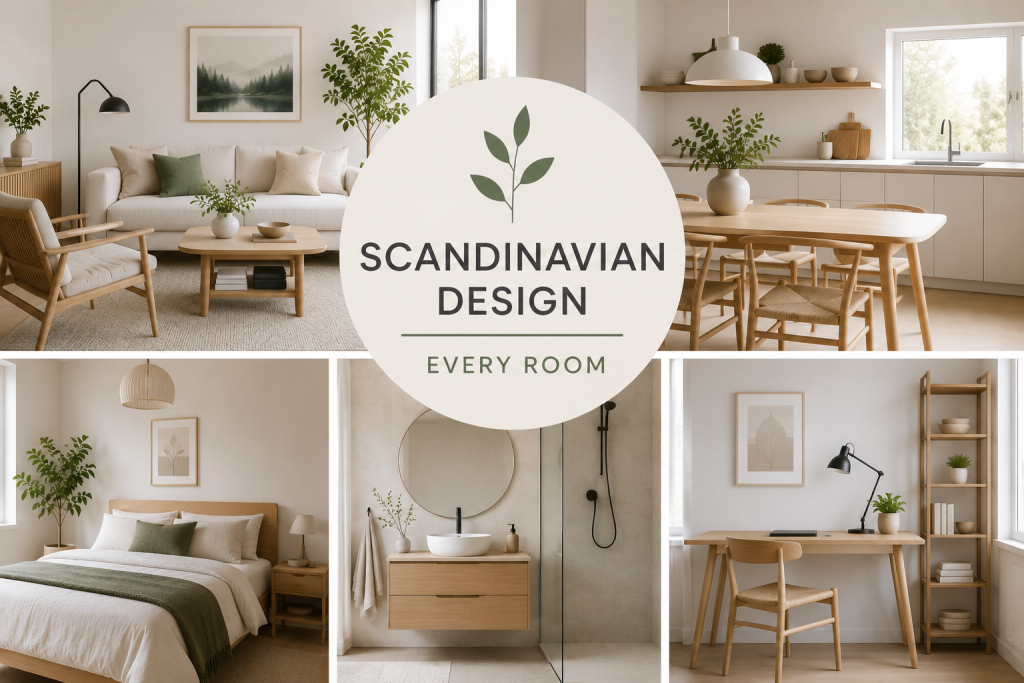
Scandinavian design styles can be adapted to virtually any area of the home. By focusing on functionality, comfort, and natural materials, homeowners can create cohesive spaces that feel both practical and inviting.
Living Rooms
In living rooms, prioritize comfortable seating, natural light, and uncluttered layouts. Choose neutral-colored sofas, wooden coffee tables, and soft textiles such as wool throws or linen cushions. Limiting decorative accessories helps maintain a clean appearance while allowing key design elements to stand out. Houseplants can also introduce texture and reinforce the connection to nature.
Bedrooms
Bedrooms should emphasize relaxation and simplicity. Light-colored bedding, natural wood furniture, and layered textures help create a calm atmosphere. Keeping surfaces clear and minimizing unnecessary furniture contributes to a more restful environment. Soft lighting from bedside lamps can further enhance comfort and warmth.
Kitchens
Scandinavian design styles work exceptionally well in kitchens because they combine efficiency with visual appeal. White cabinetry, light wood accents, and streamlined storage solutions help maximize both space and functionality. Open shelving can be used selectively to display everyday essentials while maintaining an organized and airy feel throughout the room.
Common Mistakes to Avoid When Decorating Scandinavian Spaces
Many homeowners assume that Scandinavian design styles are simply about removing decorative items and creating empty rooms. In reality, successful Scandinavian interiors balance simplicity with warmth, comfort, and functionality. Over-minimalizing a space can make it feel cold and uninviting rather than relaxing. Another common mistake is ignoring texture. Because Scandinavian spaces often rely on neutral color palettes, materials such as wool, linen, wood, and woven fabrics are essential for adding depth and visual interest. Without these elements, rooms can appear flat and unfinished. Poor lighting choices can also undermine the overall aesthetic. Layered lighting, including pendant fixtures, table lamps, and floor lamps, helps create a welcoming atmosphere throughout the day and evening. Finally, avoid purchasing furniture based solely on appearance. Scandinavian design styles prioritize functionality, so every piece should contribute to both comfort and everyday usability while maintaining a clean and cohesive look.
Are Scandinavian Design Styles Right for Your Home?
Scandinavian design styles are an excellent choice for homeowners who value simplicity, functionality, and timeless aesthetics. Rather than following short-lived trends, these interiors focus on practical design decisions that improve comfort and everyday living. Their emphasis on clean lines and uncluttered spaces can also make homes feel larger and more organized. This design approach works particularly well in apartments, suburban homes, and contemporary residences where natural light and efficient layouts are priorities. However, it can also be adapted for traditional properties by incorporating classic wood furniture, textured fabrics, and carefully selected decorative accents. One of the greatest advantages of this design approach is its flexibility. Homeowners can embrace the style fully or blend its principles with other influences to create a more personalized look. Whether your goal is a bright living room, a calming bedroom, or a functional kitchen, these design principles provide a proven framework for creating welcoming and enduring interiors.
Conclusion
Scandinavian interiors continue to influence modern homes because they combine beauty, functionality, and comfort in a way that feels timeless. Rooted in the traditions of the Nordic region, this design approach prioritizes natural materials, thoughtful furniture selection, and uncluttered living spaces that support everyday life. From contemporary interpretations to more classic influences, these interiors offer homeowners the flexibility to create spaces that reflect their personal preferences while maintaining a cohesive and welcoming atmosphere. Their focus on simplicity does not mean sacrificing warmth or character. Instead, it encourages intentional design choices that improve both aesthetics and practicality. Whether you are redesigning a single room or planning a whole-home transformation, the principles behind Nordic-inspired interiors can help you create bright, comfortable, and enduring living spaces. By emphasizing quality, functionality, and a strong connection to nature, this design philosophy remains one of the most versatile and widely appreciated approaches to modern living.
Frequently Asked Questions
What are Scandinavian design styles?
Scandinavian design styles are interior design approaches that originated in Denmark, Sweden, Norway, and Finland. They emphasize simplicity, functionality, natural materials, and comfortable living spaces while maintaining a clean and uncluttered appearance.
What colors are commonly used in Scandinavian interiors?
Most Scandinavian spaces rely on neutral color palettes, including white, beige, gray, and soft earth tones. These colors help reflect natural light and create bright, airy environments that feel calm and welcoming.
What materials are used in Scandinavian homes?
Natural materials play a major role in Scandinavian interiors. Wood, wool, linen, leather, and stone are frequently incorporated because they add warmth, texture, and durability while strengthening the connection to nature.
Is Scandinavian design suitable for small homes?
Yes. Scandinavian design styles are particularly effective in smaller homes and apartments because they prioritize efficient layouts, multifunctional furniture, and clutter-free spaces that help rooms feel larger and more open.
What is the difference between Scandinavian and minimalist design?
While both styles value simplicity, Scandinavian interiors place greater emphasis on comfort, texture, and warmth. Minimalist spaces often remove more decorative elements, whereas Scandinavian homes balance simplicity with coziness and practicality.
Why are Scandinavian design styles so popular?
Their popularity comes from their timeless appearance, practical functionality, and adaptability. Scandinavian design styles can work in a wide range of homes while providing a comfortable and visually balanced environment that remains attractive for years.