


Modern Living Room Remodel Cost Guide (2026 Pricing by Room Size)
What’s the average living room remodel cost in 2026? Angi data puts most projects at $2,500–$15,000, averaging around $8,000, though high-end renovations with custom built-ins can pass $35,000. This guide breaks down living room remodel costs by room size and per square foot, the factors that move your final bill, and how to build a realistic budget with a proper contingency.
Living Room Remodel Cost in 2026: National Average Pricing
The average living room remodel cost in 2026 ranges from approximately $5,000 for basic cosmetic updates to more than $35,000 for upscale renovations. Most U.S. homeowners spend between $12,000 and $22,000 to refresh a standard-sized living room with new flooring, paint, lighting, and upgraded finishes.

Several factors influence the final price, including square footage, material selections, contractor rates, and whether structural changes are involved. Homes in major metropolitan areas such as Houston, Denver, and Phoenix often face higher labor costs than smaller markets, which can increase the overall project budget.
Average Living Room Remodel Cost by Project Scope
Basic Remodel ($5,000–$10,000)
- Interior painting
- New light fixtures
- Minor trim updates
- Furniture replacement
Mid-Range Remodel ($10,000–$25,000)
- New flooring installation
- Recessed lighting
- Updated windows
- Custom storage solutions
High-End Remodel ($25,000–$50,000+)
- Built-in entertainment centers
- Premium hardwood flooring
- Smart home integration
- Designer finishes and custom millwork
Homeowners researching living room renovation cost estimates should remember that labor typically accounts for 30% to 50% of the total project expense. Material choices often determine whether a remodel remains within budget or moves into the luxury category. Before requesting contractor bids, it is helpful to define project goals and identify which upgrades will have the greatest impact on daily living and long-term resale value.
Remodel Cost by Room Size: Small, Medium, Large
Room size is one of the biggest factors affecting living room remodel cost. Larger spaces require more flooring, paint, trim, lighting fixtures, and labor hours, which naturally increases the total investment. While the quality of materials still plays a major role, square footage provides a useful starting point when estimating renovation expenses.
Small Living Room Remodel Cost (100–200 Square Feet)
A typical small living room remodel cost ranges from $5,000 to $12,000. Projects in this category often focus on cosmetic improvements such as painting, updated lighting, new flooring, and furniture upgrades. Because material quantities are lower, homeowners can sometimes invest in higher-quality finishes without dramatically increasing the overall budget.
Medium Living Rooms (200–350 Square Feet)
Medium-sized living rooms generally cost between $10,000 and $25,000 to renovate. At this size, homeowners often add recessed lighting, luxury vinyl plank flooring, custom shelving, or upgraded windows. These projects provide a balance between affordability and noticeable visual improvements.
Large Living Rooms (350+ Square Feet)
Large living rooms can cost anywhere from $20,000 to $50,000 or more depending on the project’s complexity. Open-concept layouts, custom built-ins, premium flooring, and architectural features often contribute to higher expenses. Larger spaces also require more labor, making contractor costs a significant portion of the final budget.
As room size increases, homeowners should expect both material and labor expenses to rise proportionally. Obtaining detailed estimates based on actual measurements remains the most reliable way to forecast renovation costs accurately.
Cost Per Square Foot: $25–$100 Explained
One of the most effective ways to estimate living room remodel cost is by evaluating expenses on a square-foot basis. While every project is unique, cost-per-square-foot calculations provide a useful benchmark for comparing renovation options and setting realistic expectations.
The average living room cost per square foot in 2026 typically falls between $25 and $100. Basic cosmetic upgrades usually remain at the lower end of that range, while premium materials, custom features, and structural modifications can push costs significantly higher.
| Remodel Level | Average Cost Per Square Foot |
| Basic Refresh | $25–$40 |
| Mid-Range Remodel | $40–$70 |
| High-End Renovation | $70–$100+ |
Labor Costs vs. Material Costs
For most remodeling projects, labor accounts for a substantial share of total expenses. Flooring installation, electrical work, trim carpentry, and painting all require skilled professionals, particularly when local building codes or permit requirements apply. Material selections also have a major impact on pricing. Standard flooring and builder-grade fixtures can help control costs, while custom cabinetry, designer lighting, and premium finishes increase the overall investment.
Products from manufacturers such as Andersen Corporation may raise upfront costs but can provide long-term value through improved durability and energy efficiency. Although square-foot estimates are useful for early planning, homeowners should always request detailed contractor proposals before finalizing a renovation budget.
6 Factors That Change Your Final Bill
No two renovation projects are identical, which is why living room remodel cost can vary significantly from one home to another. Beyond square footage, several factors influence how much homeowners ultimately spend on materials, labor, and finishing details.
Flooring Selection
Flooring is often one of the largest expenses in a remodel. Luxury vinyl plank, engineered hardwood, solid hardwood, and tile all come with different installation requirements and price points. Premium flooring materials can substantially increase project costs, especially in larger living rooms.
Lighting and Electrical Work
Modern lighting upgrades can transform a living space, but electrical improvements often require licensed professionals. Recessed lighting, smart switches, additional outlets, and upgraded wiring add both labor and material expenses to the project.
Wall Treatments and Paint
Fresh paint remains one of the most affordable upgrades, while custom wall treatments such as decorative molding, wood paneling, and accent walls require additional craftsmanship. High-quality products from brands like Sherwin-Williams and Benjamin Moore may cost more initially but often provide better coverage and durability.
Windows and Energy Efficiency
Window replacement can have a noticeable impact on both comfort and utility bills. Homeowners investing in energy-efficient products that meet standards from the ENERGY STAR program may benefit from improved insulation and lower heating and cooling costs over time. Understanding these cost drivers allows homeowners to prioritize upgrades that deliver the greatest value while keeping spending aligned with project goals.
Upgrades Worth the Money (and Ones That Aren’t)
When evaluating living room remodel cost, it is important to focus on upgrades that improve both everyday functionality and long-term home value. The most successful remodels balance aesthetics, comfort, and durability while reflecting current design preferences among U.S. homeowners.
- Updated flooring and fresh paint: biggest visual impact per dollar
- Recessed lighting and layered fixtures: transforms how the room feels
- Energy-efficient windows: comfort plus lower utility bills
- Built-in storage: adds function buyers actually notice
Popular Modern Living Room Trends
Many modern living room ideas emphasize clean lines, open layouts, and multifunctional spaces. Features such as built-in storage, floating shelves, large-format flooring, and minimalist color palettes continue to gain popularity in markets like Dallas, Phoenix, and Denver. Smart home technology, including automated lighting and voice-controlled devices, is also becoming a common addition during renovations.
High-ROI Upgrades
Certain improvements consistently provide stronger returns than others. Updated flooring, recessed lighting, fresh paint, and energy-efficient windows often deliver noticeable visual impact without requiring major structural changes. Built-in entertainment centers and custom shelving can also increase usability while creating a more polished appearance.
Homeowners planning a significant renovation should prioritize upgrades that align with both current lifestyle needs and future resale expectations. Selecting timeless finishes rather than short-lived design trends can help maximize the long-term value of the investment.
How to Build a Realistic Renovation Budget
Creating a clear financial plan is one of the best ways to control living room remodel cost and avoid unexpected expenses during construction. Before hiring contractors or purchasing materials, homeowners should establish a realistic living room renovation budget based on project goals, room size, and desired finishes.
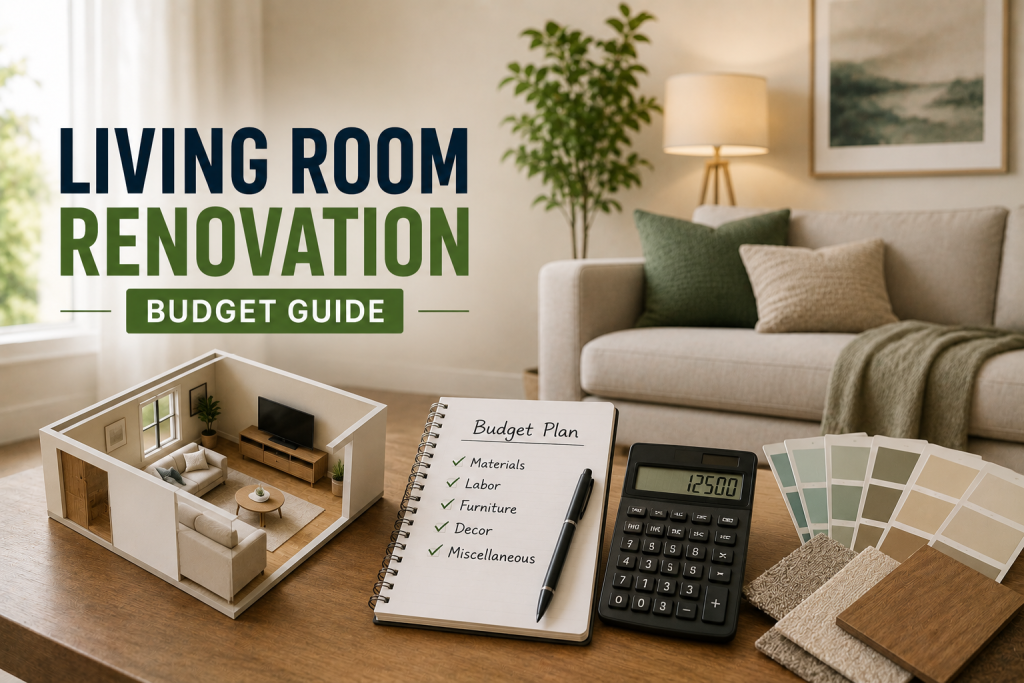
Sample Budget Breakdown
For a mid-range remodel costing approximately $18,000, homeowners might allocate funds as follows:
- Flooring: 25–30%
- Labor: 30–40%
- Lighting and electrical work: 10–15%
- Paint and wall finishes: 5–10%
- Furniture and décor: 10–15%
- Contingency reserve: 10–15%
Including a contingency fund is particularly important because hidden issues such as outdated wiring, wall damage, or subfloor repairs can increase costs once work begins.
Ways to Keep Costs Under Control
Homeowners can often reduce remodeling expenses by maintaining the existing layout, comparing multiple contractor bids, and selecting materials that offer a balance between quality and affordability. Scheduling projects during slower seasons may also help secure more competitive labor pricing. A well-planned budget not only helps prevent overspending but also allows homeowners to prioritize upgrades that provide the greatest improvement in comfort, appearance, and long-term value.
Living Room Renovation Cost by US Region
Regional labor rates, material availability, and local demand can all affect living room remodel cost. Homeowners across the United States often see noticeable price differences even when completing similar renovation projects.
Southern States
In markets such as Dallas, Houston, and Miami, labor costs can vary depending on population growth and contractor demand. Many homeowners in these areas invest in energy-efficient windows and cooling-focused upgrades due to hot, humid climates.
Midwest and Northern States
Cities such as Chicago and Denver often experience seasonal construction fluctuations. Homeowners may prioritize insulation improvements, window upgrades, and durable flooring capable of handling snow, moisture, and freeze-thaw conditions.
Western Markets
In locations such as Phoenix, renovation costs can be influenced by labor shortages and growing housing demand. Open-concept designs, modern lighting systems, and energy-efficient features remain popular choices among homeowners seeking long-term value.
Regardless of location, obtaining multiple contractor estimates remains the most reliable way to determine local pricing. Regional conditions can have a meaningful impact on both material costs and labor rates, making location-specific planning an essential part of any renovation project.
Is a Living Room Remodel Worth the Cost?
For many homeowners, the answer is yes. While living room remodel cost can represent a significant investment, the benefits often extend far beyond aesthetics. A thoughtfully renovated living room can improve daily comfort, enhance functionality, and increase overall buyer appeal when it comes time to sell.
Impact on Home Value
Not every renovation delivers the same return, but living room improvements are among the most visible upgrades in a home. Updated flooring, modern lighting, fresh paint, and energy-efficient features help create a positive first impression for potential buyers. When evaluating the overall living room upgrade cost, homeowners should consider both immediate enjoyment and long-term resale potential.
Comfort and Energy Savings
A remodeled living room can also improve how a home functions on a daily basis. Better lighting, improved storage, upgraded windows, and modern layouts make the space more enjoyable and practical. Energy-efficient improvements may also help reduce utility expenses over time, particularly in regions with extreme summer or winter temperatures.
Ultimately, the value of a remodel depends on project goals, budget, and local market conditions. Homeowners who focus on quality materials, timeless design choices, and functional improvements are often best positioned to maximize their return on investment.
Conclusion
Understanding living room remodel cost is essential for setting realistic expectations and making informed renovation decisions. While project expenses vary based on room size, labor rates, materials, and design preferences, most homeowners can benefit from careful planning before work begins. Whether you’re considering a simple refresh or a complete transformation, focusing on high-impact upgrades such as flooring, lighting, paint, and energy-efficient improvements can help maximize value. Comparing contractor estimates, establishing a detailed budget, and prioritizing long-term functionality are also important steps toward a successful remodel.
As remodeling costs continue to evolve in 2026, homeowners who take the time to research pricing, evaluate options, and invest in quality materials are more likely to achieve lasting results. By balancing design goals with financial considerations, you can create a living room that enhances comfort, supports everyday living, and adds value to your home for years to come.
Frequently Asked Questions
How much does a living room remodel cost in 2026?
The average living room remodel cost in 2026 ranges from approximately $5,000 to $35,000 or more. Smaller cosmetic updates typically fall at the lower end of the range, while luxury renovations with custom features, premium flooring, and smart home technology can exceed $50,000.
What is the average cost to remodel a 200-square-foot living room?
A 200-square-foot living room generally costs between $8,000 and $20,000 to remodel, depending on labor rates, material selections, and the complexity of the project. Upgrades such as flooring replacement, recessed lighting, and custom storage can increase overall expenses.
What factors have the biggest impact on remodeling costs?
The primary cost drivers include room size, flooring materials, labor rates, electrical work, window replacement, custom features, and finish quality. Structural modifications and layout changes can also significantly increase project costs.
Can I remodel a living room for under $10,000?
Yes. Homeowners who focus on painting, lighting upgrades, furniture replacement, and budget-friendly flooring options can often complete a remodel for less than $10,000. Maintaining the existing layout is one of the most effective ways to control expenses.
Does remodeling a living room increase home value?
In many cases, yes. Updated living rooms can improve buyer appeal, enhance functionality, and contribute to stronger resale value. High-visibility improvements such as flooring, lighting, and energy-efficient windows tend to offer the greatest return.
How long does a living room remodel take?
Most living room remodeling projects take between two and eight weeks. The timeline depends on project scope, material availability, contractor schedules, and whether structural or electrical modifications are required.
Should I hire a contractor or do the work myself?
DIY projects can help reduce costs for tasks such as painting and decorating. However, flooring installation, electrical work, window replacement, and structural modifications are typically best handled by licensed professionals to ensure quality and code compliance.