

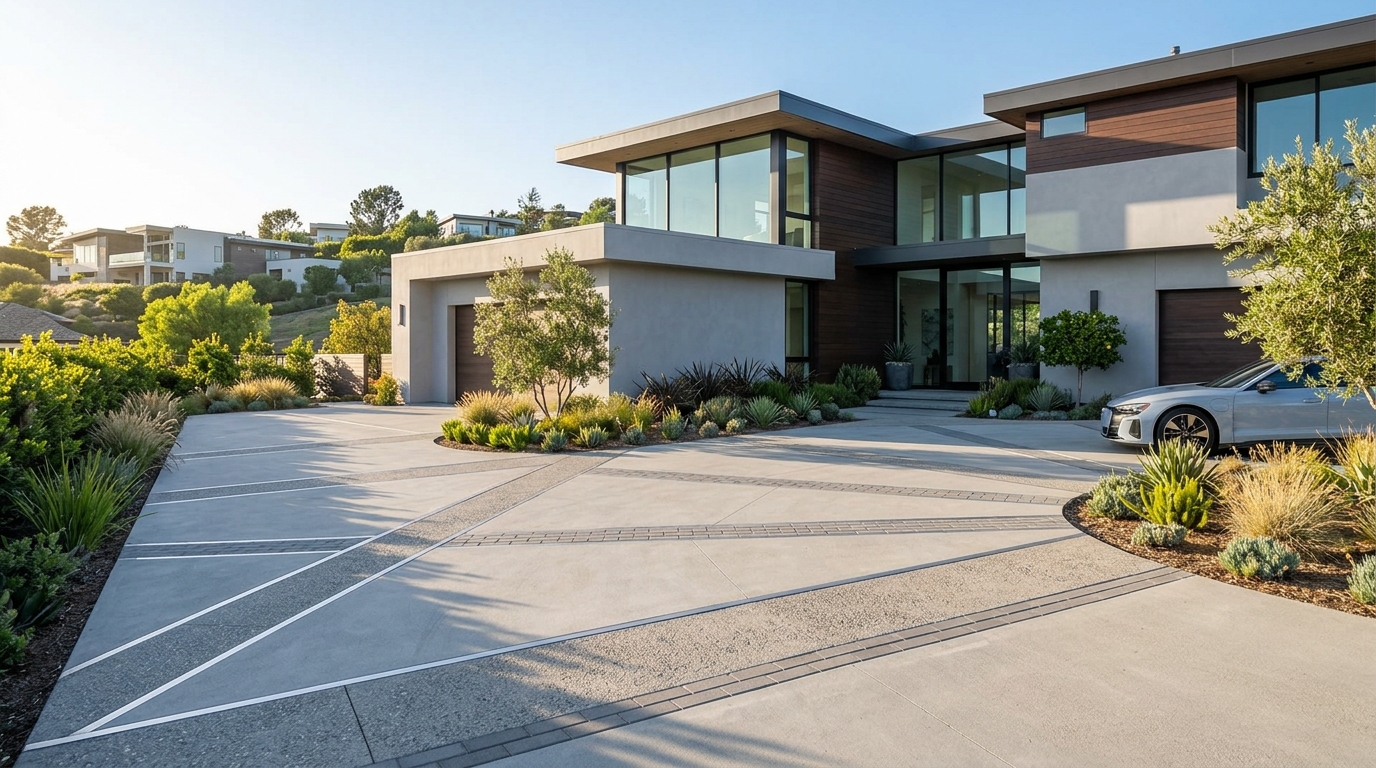
Concrete Driveway Cost Per Square Foot
Understanding the concrete driveway cost is essential for homeowners planning a new installation or replacement in 2026. Prices have continued to shift due to rising material costs, labor shortages, and regional construction demand across the United States. As a result, most homeowners now rely on square-foot pricing to estimate total project budgets more accurately. The concrete driveway cost is not a fixed number because every property has different requirements. Factors such as soil condition, driveway size, thickness of the slab, reinforcement materials, and finishing style all influence the final price. For example, a simple flat driveway in a suburban neighborhood will cost significantly less than a sloped or heavily reinforced installation.
In most U.S. regions, concrete remains a popular choice for residential driveways due to its durability, clean appearance, and long lifespan. It is especially favored in areas with moderate to cold climates because it performs well under freeze-thaw conditions when properly installed. This guide will break down the concrete driveway cost per square foot, explain key pricing factors, compare installation and replacement scenarios, and help homeowners understand what to expect when budgeting for a new driveway project in 2026.
Concrete Driveway Cost Per Square Foot Breakdown in 2026
The concrete driveway cost in 2026 is most commonly calculated using a per-square-foot pricing model, which helps homeowners estimate total project expenses more accurately based on driveway size. Across the United States, pricing varies depending on labor rates, site conditions, and the level of finishing required. Most residential projects fall into a predictable cost range per square foot, but this can shift significantly depending on preparation work and material quality. Flat, easily accessible driveways are typically more affordable, while sloped areas or properties requiring extensive grading will increase overall pricing.
Average Cost Per Square Foot Factors
The driveway cost per square foot is influenced by several key components. These include excavation depth, subgrade preparation, concrete thickness, reinforcement materials, and finishing style. Decorative finishes or stamped surfaces also increase per-square-foot pricing compared to standard broom-finished concrete. In many cases, homeowners underestimate the importance of base preparation. A properly compacted and leveled base ensures long-term durability and helps prevent cracking or sinking, even though it adds to the initial installation cost.
Concrete Driveway Installation Cost Considerations
The concrete driveway installation process also plays a major role in determining final pricing. Installation includes site clearing, forming, reinforcement placement, pouring, leveling, finishing, and curing. Each stage requires skilled labor and proper equipment, which contributes to overall project cost. Additionally, regional labor rates and seasonal demand can influence installation pricing. In peak construction months, contractors may charge slightly higher rates due to increased demand and scheduling constraints.
Concrete Driveway Cost: Key Factors That Affect Pricing
The concrete driveway cost in 2026 is influenced by several construction, material, and site-specific factors. While square-foot pricing provides a useful baseline, the final estimate depends heavily on real-world conditions that vary from one property to another. One of the most important cost drivers is site preparation. If the existing ground is unstable, uneven, or has poor drainage, additional excavation and grading will be required. This increases both labor time and equipment usage, which directly impacts overall project pricing.
Similarly, removing an old driveway or clearing vegetation adds extra steps to the process. Material quality also plays a major role. Standard concrete mixes are more affordable, while reinforced options with rebar or wire mesh increase durability but also raise costs. Decorative finishes, such as exposed aggregate or coloring, further increase pricing due to added labor and materials.
Concrete Paving Cost Breakdown
The overall concrete paving cost includes several components such as base preparation, forming, reinforcement, pouring, finishing, and curing. Each stage contributes to the total budget, and skipping any of these steps can significantly reduce long-term performance and durability. Proper base installation is especially important, as it supports the entire structure and prevents future settling or cracking. Although it adds to upfront expenses, it is essential for ensuring a long-lasting driveway.
Driveway Labor Costs Explained
A significant portion of total pricing comes from driveway labor costs. Skilled labor is required for excavation, forming, pouring, leveling, and finishing the concrete surface. Labor rates can vary based on region, contractor experience, and project complexity. Driveways with tight access points, slopes, or custom designs typically require more labor hours, which increases the overall cost. In contrast, simple flat driveways with easy site access tend to have lower labor expenses and faster installation times.
Stamped Concrete Driveway Cost vs Standard Finish
The concrete driveway cost can vary significantly depending on the type of finish homeowners choose. One of the biggest pricing differences comes from comparing standard concrete driveways with decorative options like stamped surfaces. While both use similar base materials, the finishing process has a major impact on labor time and overall project expense.
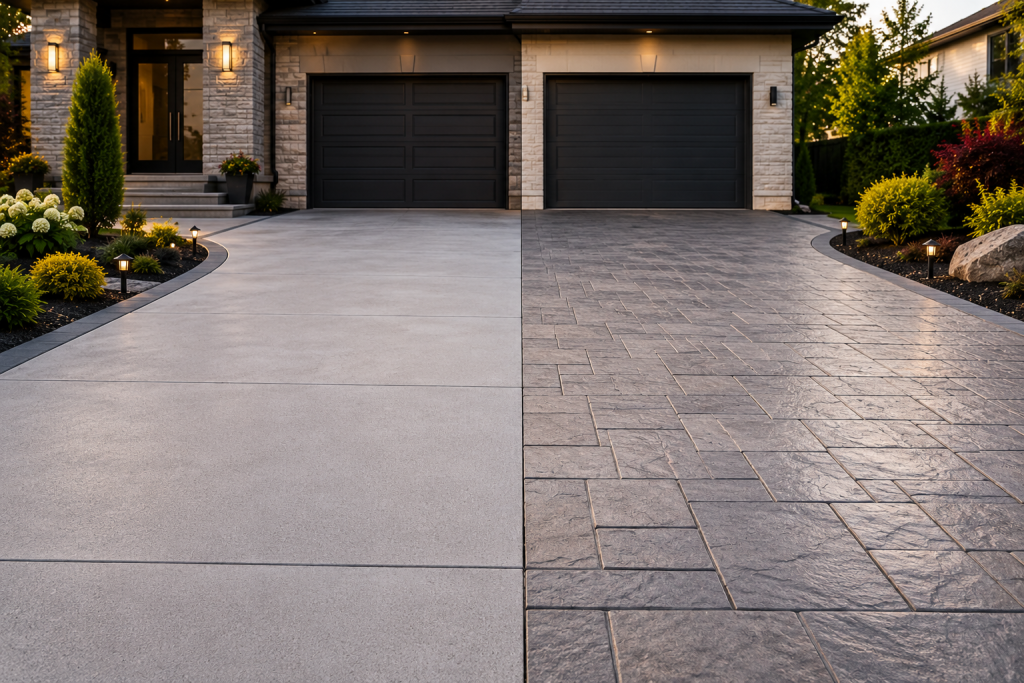
Standard concrete driveways typically feature a simple broom finish, which provides a clean, functional surface with minimal decorative detail. This option is widely used in residential properties because it balances durability and affordability. It is also faster to install, which helps keep labor costs lower.
Stamped Concrete Driveway Cost Considerations
The stamped concrete driveway cost is higher because it involves additional labor, specialized tools, and decorative techniques. Stamping requires pressing patterns into freshly poured concrete to mimic materials like stone, brick, or tile. This process adds both time and skill requirements to the installation. While stamped finishes increase upfront costs, they also enhance curb appeal and can significantly improve the visual value of a property. Many homeowners choose this option for front-facing driveways where aesthetics are a priority.
However, it is important to note that maintenance costs may also be slightly higher compared to standard finishes due to sealing requirements. In terms of durability, both stamped and standard concrete perform similarly when properly installed. The main difference lies in appearance and maintenance expectations rather than structural strength.
Driveway Replacement Pricing vs New Installation
The concrete driveway cost varies significantly depending on whether you are installing a brand-new driveway or replacing an existing one. While both projects use similar materials and construction methods, the condition of the existing surface plays a major role in overall pricing. New installations typically involve preparing bare ground, which includes excavation, grading, and base preparation. This allows contractors to build a stable foundation from scratch, resulting in a predictable construction process and cost structure.
Driveway Replacement Pricing Factors
The driveway replacement pricing is generally higher because it includes additional demolition and removal work. Contractors must first break up and haul away the old concrete, which requires extra labor, equipment, and disposal fees. Only after this step can the new base and concrete layer be installed. Replacement projects also carry more variability because underlying issues may exist beneath the old driveway. Problems such as poor drainage, soil instability, or uneven settlement often need to be corrected before new concrete can be poured.
These hidden conditions can increase both time and cost. Despite the higher upfront expense, replacement often delivers better long-term value when the existing driveway is severely damaged. A properly rebuilt surface can last decades with minimal maintenance, making it a strong investment for homeowners focused on durability and long-term performance.
Residential Driveway Prices and Budget Planning Tips
The concrete driveway cost can vary widely depending on project scope, but homeowners can still plan effectively by understanding average market ranges and key pricing drivers. Budgeting properly helps avoid unexpected expenses and ensures the final result aligns with both financial expectations and long-term property goals.
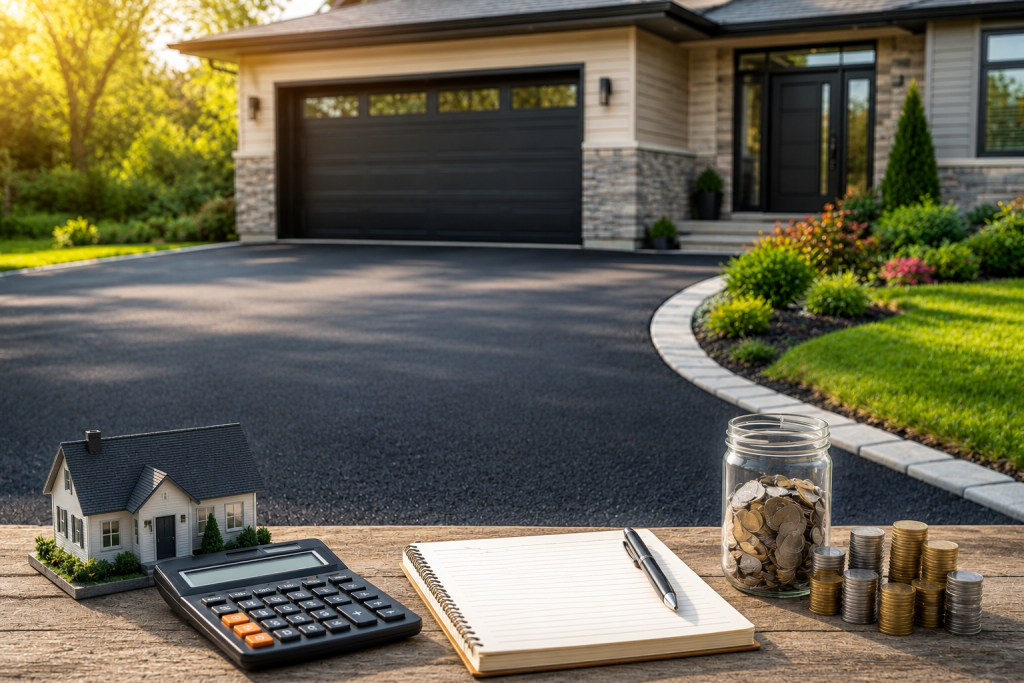
In most U.S. regions, residential driveway projects are priced based on square footage, material quality, and site complexity. Flat, easily accessible driveways tend to fall on the lower end of the pricing spectrum, while sloped properties or those requiring extensive preparation will increase overall costs.
Residential Driveway Prices Overview
The residential driveway prices homeowners encounter are influenced by factors such as labor rates, concrete thickness, reinforcement requirements, and finishing style. Decorative options like stamped or colored concrete will also raise total pricing compared to standard finishes. Regional differences also play a major role. For example, labor and material costs are typically higher in coastal and urban areas, while suburban and rural regions often offer more affordable pricing structures. Seasonal demand can also affect contractor availability and pricing fluctuations.
Homeowners should always request multiple quotes to compare value rather than focusing only on the lowest price. A detailed estimate should clearly break down materials, labor, preparation work, and finishing costs to avoid hidden charges and ensure transparency in the project scope.
Final Cost Summary and What Homeowners Should Expect in 2026
The overall concrete driveway cost in 2026 reflects a combination of material pricing, labor rates, site conditions, and design choices. While square-foot estimates provide a useful starting point, the final project cost is shaped by real-world factors such as soil preparation, reinforcement needs, and finishing requirements. Across the United States, concrete remains one of the most durable and long-lasting options for residential driveways. Its ability to withstand heavy loads and perform well in a wide range of climates makes it a preferred choice for many homeowners, especially in regions with seasonal temperature changes. When planning a budget, homeowners should account not only for installation but also for long-term value.
A properly installed driveway can last decades with minimal maintenance, making it a cost-effective investment over time. However, choosing the right contractor is just as important as selecting the right material, as poor installation can significantly reduce lifespan and increase future repair costs. Ultimately, understanding the concrete driveway cost in advance allows homeowners to make more informed decisions, compare contractor estimates effectively, and choose solutions that balance affordability with durability and curb appeal.
Frequently Asked Questions
What is the average concrete driveway cost per square foot in 2026?
The concrete driveway cost per square foot in 2026 typically varies based on location, labor rates, and site conditions. Most residential projects are priced using a per-square-foot model that includes materials, labor, and basic finishing. Properties requiring extra preparation or reinforcement will generally fall on the higher end of the pricing range.
What factors affect concrete driveway installation prices the most?
Several key factors influence overall pricing, including excavation needs, soil conditions, concrete thickness, reinforcement materials, and finishing type. The concrete driveway installation process also plays a major role, as more complex designs or difficult site access can increase labor time and total project cost.
Is stamped concrete worth the extra cost?
Stamped concrete is often chosen for its decorative appeal and ability to mimic higher-end materials like stone or brick. While it increases the total concrete driveway cost, many homeowners find it worthwhile for improving curb appeal and property value. However, it may also require slightly more maintenance over time.
How does driveway replacement differ in cost from new installation?
Driveway replacement is usually more expensive because it includes demolition and removal of the existing surface before new installation begins. The driveway replacement pricing also reflects additional labor and disposal costs, especially if underlying issues like drainage or soil instability must be corrected.
What is included in residential driveway pricing?
The residential driveway prices typically include excavation, base preparation, concrete pouring, reinforcement, finishing, and curing. Costs may vary depending on design complexity, thickness, and regional labor rates across the United States.
How long does a concrete driveway usually last?
A properly installed concrete driveway can last several decades with routine maintenance. Lifespan depends on installation quality, climate conditions, and usage load. Proper sealing and crack prevention can significantly extend durability and performance.