

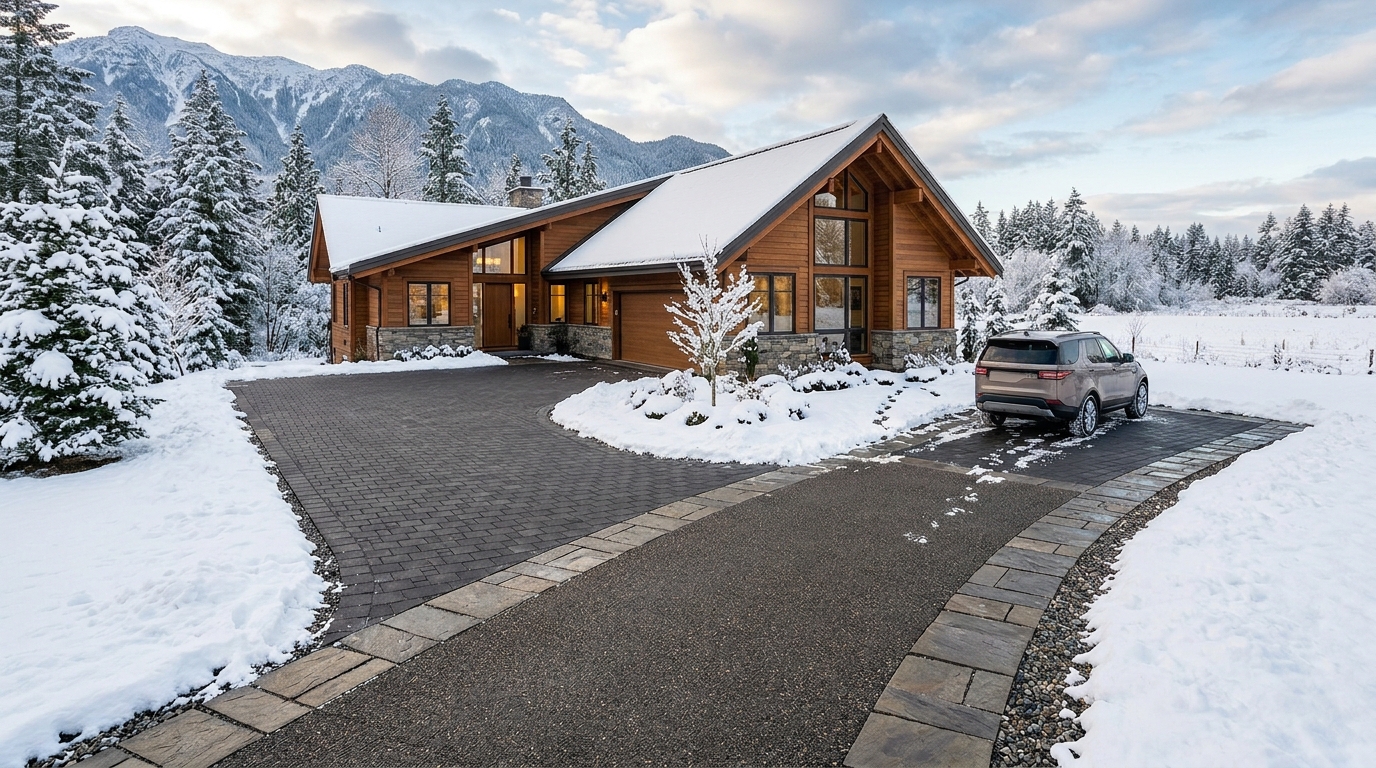
Best Driveway Materials for Snowy Climates
Choosing the best driveway materials for snow is one of the most important decisions for homeowners living in cold U.S. regions. Heavy snowfall, ice buildup, and repeated freeze-thaw cycles can quickly damage poorly selected driveway surfaces, leading to cracks, potholes, and long-term structural issues. The best driveway materials for snow are those that can withstand extreme temperature changes while maintaining surface stability and safe traction during winter months. In areas like the Midwest, Northeast, and Mountain states, driveways must handle constant snow removal, de-icing chemicals, and moisture expansion without rapid deterioration.
Unlike warmer climates, snowy regions require materials that balance durability, drainage, and resistance to surface shifting. The wrong choice can lead to costly repairs every few years, especially where winter conditions last several months. In this guide, we will explore top-performing driveway materials for snow, compare performance across different surfaces, and break down how factors like maintenance, heating systems, and freeze-thaw resistance impact long-term durability. This will help homeowners make a more informed decision before investing in a new driveway designed for harsh winter conditions.
Best driveway materials for snow Compared by Material Type
Selecting the best driveway materials for snow requires a clear understanding of how different surfaces perform under winter stress. Each material reacts differently to freeze-thaw cycles, snow removal equipment, and de-icing chemicals, which directly affects long-term durability and maintenance needs.
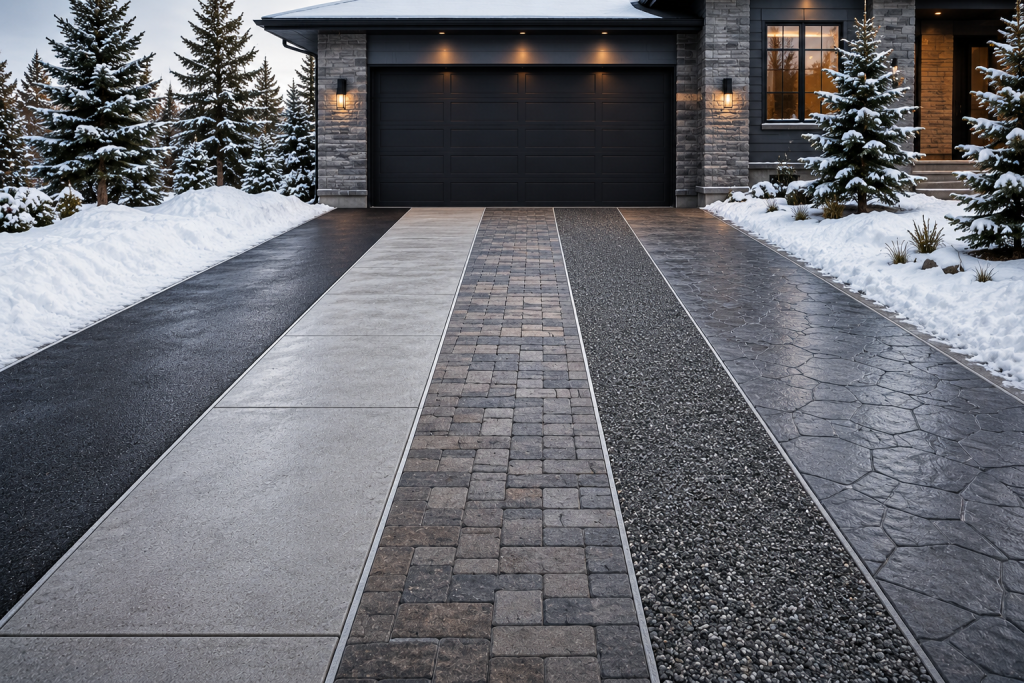
In colder U.S. regions, homeowners often compare asphalt, concrete, gravel, and paver systems to determine which option offers the best balance of performance and cost. The best driveway materials for snow are those that minimize cracking, manage moisture effectively, and maintain traction during icy conditions.
Asphalt vs Concrete Performance in Winter
A key comparison in cold climates is asphalt driveway durability versus concrete. Asphalt tends to perform well because of its flexible nature, allowing it to expand and contract with temperature changes. This flexibility reduces the risk of surface cracking in areas with frequent freeze-thaw cycles.
Concrete, on the other hand, offers high compressive strength but can be more vulnerable to cracking if not properly reinforced or installed with expansion joints. However, concrete driveway for cold climates remains a strong option when properly designed with air-entrained mixes and effective drainage systems that reduce water infiltration.
Gravel and Paver Winter Behavior
Gravel driveways offer excellent drainage, which helps reduce ice buildup, but they require frequent maintenance and snow management. Paver systems provide strong aesthetic value and can handle winter movement better than solid slabs when installed correctly with flexible jointing systems. However, both options depend heavily on installation quality to perform well in harsh winter conditions.
Heated Driveway Systems and Modern Snow Solutions
The best driveway materials for snow are not always limited to traditional surfaces, modern technology has introduced active snow-melting solutions that significantly improve winter safety and convenience. Among these, heated driveway systems are becoming increasingly popular in regions with heavy snowfall and persistent ice buildup.
These systems are designed to reduce or eliminate snow accumulation by generating heat beneath the driveway surface. When properly installed, they help prevent ice formation, reduce the need for manual snow removal, and improve traction during winter conditions. For homeowners in areas with frequent storms, this can be a major long-term convenience upgrade.
Types of Heated Driveway Systems
There are two primary types of heated systems used in residential applications: electric and hydronic. Electric systems use heating cables installed beneath the surface, while hydronic systems circulate heated liquid through tubing embedded in the driveway base. Both options can be integrated with asphalt or concrete surfaces, depending on design preferences and budget. Electric systems are typically easier to install in smaller driveways, while hydronic systems are more efficient for larger properties, though they require more complex installation and infrastructure.
Cost and Efficiency Considerations
While heated systems offer excellent performance, they come with higher installation and operating costs compared to traditional surfaces. Energy usage, system maintenance, and installation complexity should all be considered before making an investment. Despite the higher upfront expense, many homeowners in snowy regions view them as a premium upgrade that enhances comfort and reduces long-term snow removal effort. When evaluating the best driveway materials for snow, heated systems are often paired with durable surfaces to maximize effectiveness and ensure long-term winter reliability.
Freeze-Thaw Resistant Paving for Extreme Climates
When evaluating the best driveway materials for snow, one of the most important performance factors is how well a surface handles repeated freezing and thawing. In many northern U.S. regions, temperature fluctuations occur frequently throughout winter, causing moisture inside driveway materials to expand and contract. Over time, this process can lead to cracking, surface weakening, and structural failure if the material is not properly designed for cold conditions. nMaterials classified as freeze-thaw resistant paving are engineered to reduce water absorption and minimize internal stress caused by temperature changes. These systems are especially important in states with harsh winters such as Minnesota, Michigan, New York, and parts of the Rocky Mountain region, where snow and ice remain on the ground for extended periods.
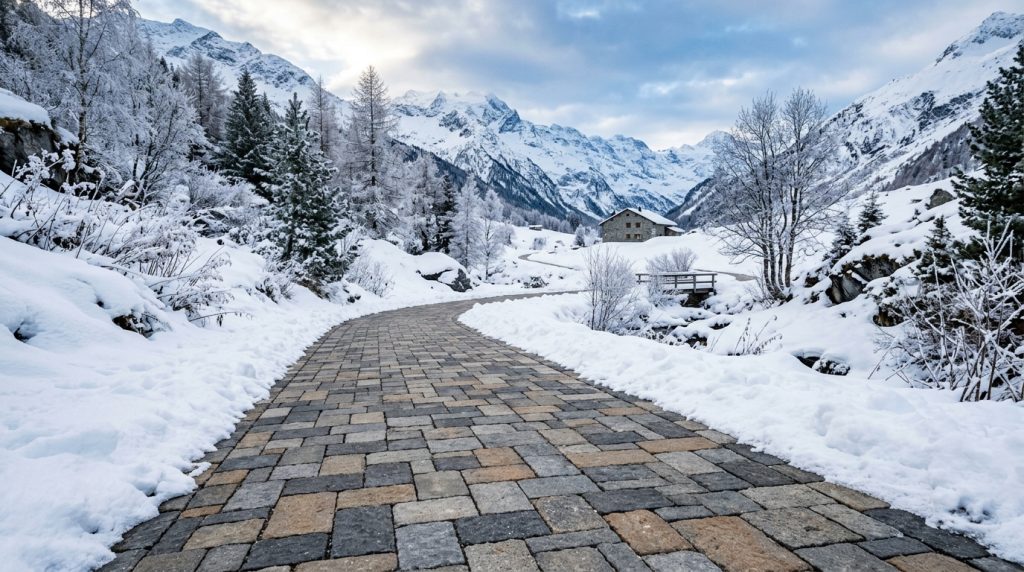
Proper installation plays a critical role in freeze-thaw resistance. Even high-quality materials can fail prematurely if the base layer is not properly compacted or if drainage is inadequate. Water management is essential because standing moisture is the primary cause of expansion damage during freezing cycles. Homeowners should prioritize paving systems that allow for slight movement without cracking while also maintaining surface integrity under heavy snow loads. When combined with proper maintenance practices, freeze-thaw resistant materials significantly extend driveway lifespan in extreme winter environments.
Best driveway materials for snow Ranked for Snowy Regions
Choosing the best driveway materials for snow ultimately comes down to long-term durability, maintenance needs, and performance under repeated winter stress. In snowy U.S. climates, not all surfaces perform equally, especially when exposed to snowplows, ice melt, and freeze-thaw cycles over many years. To help homeowners make a clear decision, it’s useful to rank materials based on their overall winter resilience, structural stability, and maintenance demands.
1. Asphalt Driveways
Asphalt is one of the most commonly used options in cold climates due to its flexibility. It performs well under temperature changes, making it a strong candidate for regions with frequent freezing and thawing. Its ability to absorb minor movement without immediate cracking makes it highly practical for winter conditions.
2. Reinforced Concrete Driveways
Concrete offers excellent strength and long service life, especially when properly reinforced and installed with expansion joints. In cold regions, air-entrained mixes help improve performance, making it a reliable option for homeowners seeking a rigid and long-lasting surface.
3. Paver Systems
Interlocking pavers provide moderate to high durability depending on installation quality. Their segmented structure allows for slight movement during freeze-thaw cycles, reducing the risk of major cracking. However, maintenance is slightly higher compared to solid surfaces.
4. Gravel Driveways
Gravel offers excellent drainage, which helps reduce ice buildup, but it ranks lower in durability due to displacement issues caused by snow removal and vehicle traffic. It is best suited for rural or low-traffic properties.
Final Winter Performance Insight
Across all options, the best driveway materials for snow are those that balance flexibility, drainage, and structural integrity. Homeowners in extreme winter regions should prioritize materials that reduce water infiltration and withstand repeated temperature changes without long-term surface damage.
Conclusion
Selecting the best driveway materials for snow is ultimately about balancing durability, safety, and long-term maintenance in harsh winter conditions. Homeowners in colder U.S. regions must consider how materials respond to freeze-thaw cycles, snow removal practices, and moisture exposure over time, as these factors directly impact driveway lifespan and performance. Each material offers distinct advantages. Flexible surfaces handle temperature changes more effectively, while rigid options provide strength and long-term stability when properly installed.
Add-on solutions like heating systems and improved drainage can further enhance winter performance, but the foundation still lies in choosing the right base material. The best driveway materials for snow are those that minimize cracking, resist water penetration, and maintain safe traction throughout the winter season. When combined with proper installation and consistent maintenance, these materials can significantly reduce repair costs and improve overall property value. For homeowners planning a new driveway, investing time in selecting the right material upfront ensures better performance, fewer winter-related issues, and a more reliable surface for years to come.
Frequently Asked Questions
What is the best driveway material for snowy climates?
The best driveway materials for snow typically include asphalt and reinforced concrete because they perform well under freeze-thaw cycles when properly installed. Asphalt offers flexibility, while concrete provides long-term strength and durability in cold regions.
Which driveway materials are most snow-resistant?
Some of the most snow-resistant driveways include asphalt, interlocking pavers, and properly reinforced concrete. These materials handle snow removal and temperature changes better than lower-density or unstable surfaces like loose gravel.
Are heated driveway systems worth it?
Heated driveway systems can be worth the investment in regions with heavy snowfall, as they reduce or eliminate the need for manual snow removal. However, they come with higher installation and operating costs, making them more suitable for premium residential properties.
Is concrete good for cold climates in the best driveway materials for snow?
A best driveway materials for snow solution like a concrete driveway for cold climates can perform very well if it is installed with air-entrained mixes and proper drainage. Without these features, it may be more vulnerable to cracking during repeated freeze-thaw cycles.
How does asphalt perform in winter?
Asphalt driveway durability is generally strong in winter because asphalt is more flexible than concrete. This flexibility allows it to expand and contract with temperature changes, reducing the risk of major cracking.
What maintenance is required in winter?
Regular winter driveway maintenance includes timely snow removal, avoiding excessive salt use, and sealing the surface when needed. Proper drainage is also important to prevent ice buildup and long-term surface damage.
What are the most durable driveway materials overall?
The most durable driveway materials for snowy regions include asphalt, reinforced concrete, and interlocking pavers. Each performs differently, but all can last many years when properly installed and maintained.