


Common Driveway Cracks and Driveway Crack Repair Solutions Guide
Maintaining a strong and visually clean driveway is essential for long-term property value and curb appeal. Over time, nearly every homeowner will encounter surface deterioration that requires driveway crack repair, especially in regions with fluctuating temperatures, heavy rainfall, or frequent freeze-thaw cycles. Small surface fractures may seem minor at first, but they can quickly expand into deeper structural issues if left untreated.
Water infiltration, vehicle weight, and soil movement all contribute to worsening damage, making early detection and timely repair a critical part of home maintenance. Understanding the causes and solutions behind driveway damage helps homeowners protect their investment and avoid costly full replacements. From minor surface cracks to more severe structural separation, knowing how and when to address these issues can significantly extend the life of any residential driveway.
Understanding Driveway Crack Repair and Why It Matters
Proper driveway crack repair is essential for maintaining both the appearance and structural integrity of a home’s exterior surface. When cracks begin to form, they allow moisture to seep beneath the pavement, which can weaken the base layer and accelerate further deterioration over time. In colder U.S. climates, repeated freeze-thaw cycles can make small cracks expand rapidly, turning minor issues into costly repairs.
Even in warmer regions, soil shifting and heavy vehicle loads contribute to surface stress that leads to visible damage. Timely repair helps preserve the lifespan of the driveway and reduces the likelihood of full replacement. Homeowners who address early signs of damage often avoid more expensive restoration work later, while also maintaining stronger curb appeal and safer vehicle access.
Common Causes of Driveway Damage
Understanding the root causes of surface deterioration is a key part of effective repair planning. Most driveway damage does not happen overnight—it develops gradually due to environmental stress, material fatigue, and improper installation conditions. One of the most common causes is water infiltration. When moisture enters small surface openings, it weakens the base layer and leads to expansion during temperature changes.
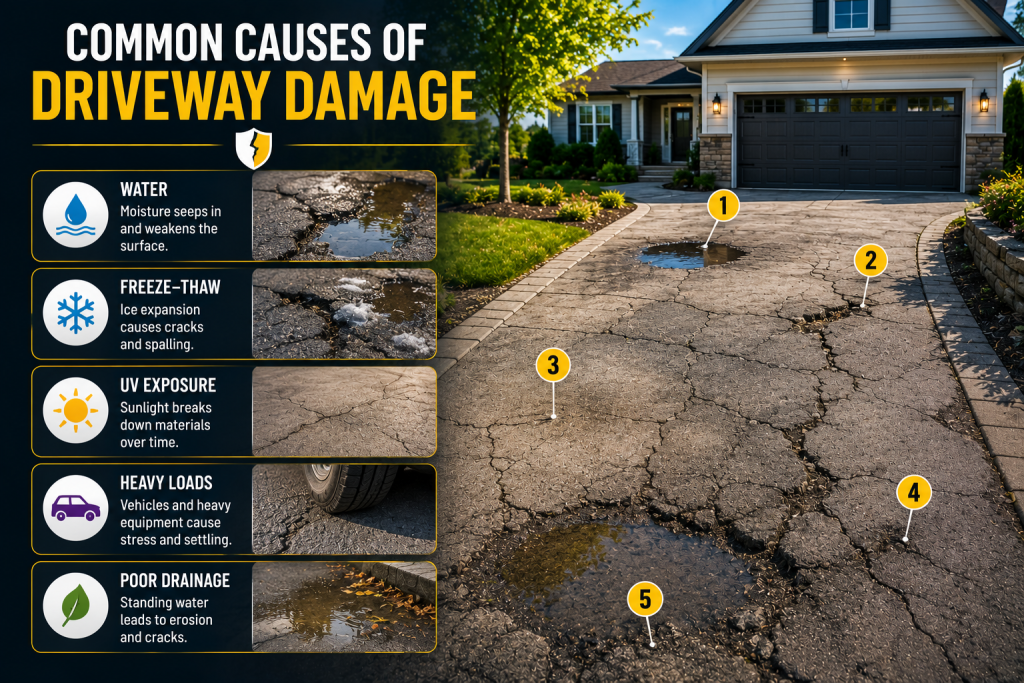
Heavy vehicle loads, especially from SUVs and trucks, also place continuous pressure on the surface, contributing to long-term wear. Soil movement beneath the driveway is another major factor. As the ground shifts due to rain, drought, or seasonal changes, the surface above begins to crack or settle unevenly. Poor drainage and lack of maintenance can further accelerate these issues, making early identification essential for preventing major repairs.
Concrete Driveway Cracks and Surface Issues
When it comes to long-term driveway crack repair, one of the most common problems homeowners face involves concrete driveway cracks. These typically appear as hairline fractures at first but can expand over time due to moisture penetration, temperature changes, and load stress from daily vehicle use. Concrete surfaces are strong, but they are not completely flexible. This means that when the ground beneath shifts or expands, the rigid surface is more likely to crack rather than adjust.
In colder U.S. regions, freeze-thaw cycles are a major contributor to surface separation, especially if small cracks are not sealed early. Addressing these issues quickly is important because untreated cracks can allow water to seep into the base layer, weakening the overall structure. Early maintenance helps preserve both appearance and long-term durability, reducing the need for major restoration work later.
Asphalt Driveway Repair Methods
Effective driveway crack repair often depends on the surface material, and asphalt requires a slightly different approach compared to concrete. asphalt driveway repair typically focuses on sealing cracks early, preventing water penetration, and maintaining surface flexibility. One of the main advantages of asphalt is its ability to expand and contract with temperature changes. However, over time, UV exposure and heavy traffic can dry out the surface, leading to visible cracking and small potholes. When this happens, timely sealing and patching can restore structural integrity and extend the driveway’s lifespan. Regular inspections are important because small cracks in asphalt can quickly widen if left untreated. Applying sealant or filler at the right time helps prevent deeper damage and reduces the need for costly resurfacing in the future.
Driveway Crack Repair Solutions and Restoration Options
Effective driveway crack repair depends on choosing the right solution based on the severity and type of damage. Small surface cracks can often be treated with simple sealing products, while deeper structural issues may require patching or partial resurfacing to restore strength and stability. Homeowners dealing with widespread surface wear may consider more comprehensive restoration methods that go beyond spot repairs.
These solutions not only improve appearance but also help reinforce the base layer, preventing future cracking and water infiltration. In many cases, combining multiple repair approaches delivers the best results. Addressing cracks early, sealing vulnerable areas, and maintaining proper drainage all work together to extend the lifespan of the driveway and reduce long-term maintenance costs.
Driveway Resurfacing vs Full Replacement
When dealing with advanced driveway crack repair, homeowners often face the decision between resurfacing and full replacement. driveway resurfacing is typically recommended when the base structure is still in good condition but the surface shows widespread cracking, fading, or minor deterioration. Resurfacing involves applying a new layer over the existing driveway, which restores appearance and improves surface strength without the higher cost of a complete rebuild.
This makes it a practical option for moderately damaged driveways where structural integrity is not compromised. However, if the underlying foundation has shifted or suffered severe damage, a full replacement may be the only long-term solution. Evaluating the extent of damage carefully helps homeowners choose the most cost-effective and durable repair strategy.
Driveway Sealing Tips for Long-Term Protection
Proper sealing is one of the most important steps in effective driveway crack repair, especially for homeowners looking to extend the lifespan of their pavement. Following the right driveway sealing tips can help protect the surface from moisture intrusion, UV damage, and everyday wear caused by vehicle traffic. Sealing works as a protective barrier that prevents water from entering small surface openings, which is one of the main causes of cracking and deterioration.
For best results, driveways should typically be sealed every few years depending on climate conditions and usage levels. Before applying sealant, the surface should be thoroughly cleaned and any existing cracks repaired to ensure proper adhesion. Consistent maintenance not only improves appearance but also reduces the likelihood of future structural issues, making sealing a key part of long-term driveway care.
Preventing Future Driveway Maintenance Problems
Long-term success with driveway crack repair depends not only on fixing existing damage but also on preventing new issues from forming. Many homeowners experience recurring surface damage because underlying causes are not fully addressed during repairs. One of the most common driveway maintenance problems is poor drainage. When water pools on or beneath the surface, it weakens the base layer and increases the likelihood of new cracks forming.
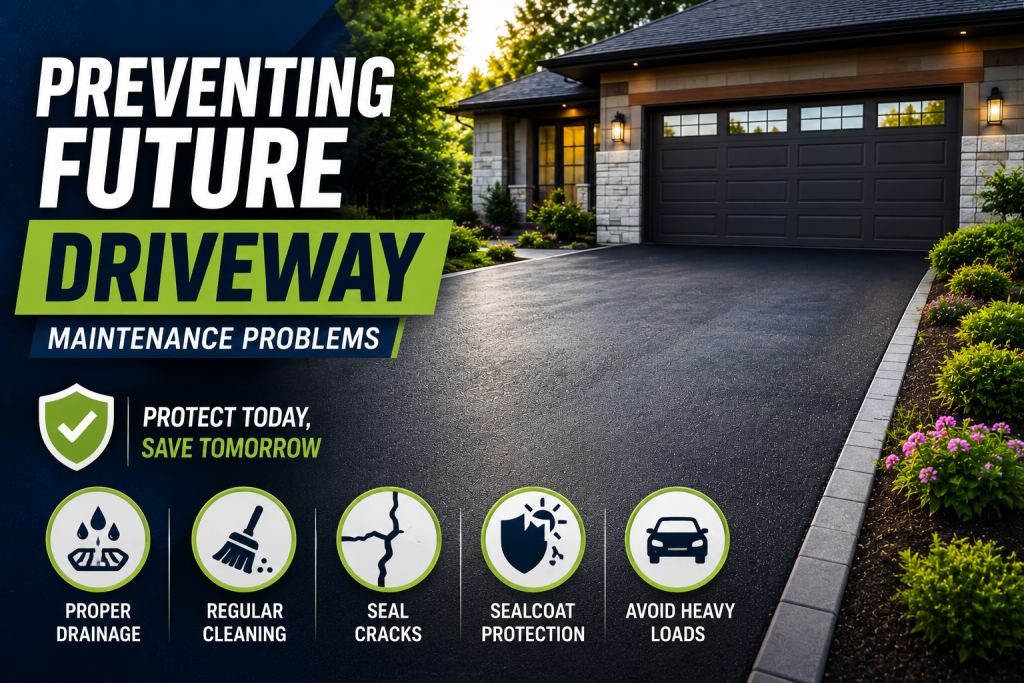
Regular inspection of gutters, slopes, and runoff paths can significantly reduce this risk, along with timely use of driveway patching solutions to address early surface damage before it spreads further. Another key factor is load management. Consistently parking heavy vehicles in the same spot can create uneven stress on the surface over time. Combined with seasonal weather changes, this can accelerate wear. Proactive maintenance and early intervention are essential for preserving long-term driveway durability and reducing repair frequency.
Final Thoughts on Driveway Crack Repair
Effective driveway crack repair is not just about fixing visible damage—it’s about protecting the long-term strength, safety, and appearance of your home’s exterior surface. Small cracks may seem minor at first, but addressing them early helps prevent deeper structural issues that can become expensive to resolve. A well-maintained driveway contributes to better curb appeal and supports overall property value, especially in competitive U.S. housing markets where exterior condition strongly influences buyer perception. Regular inspection, timely sealing, and understanding cracked driveway causes all play an important role in extending the life of the surface and choosing the right repair method. Ultimately, homeowners who take a proactive approach to maintenance can significantly reduce repair costs over time while keeping their driveway functional and visually clean for years to come.
Frequently Asked Questions
What causes cracks in a driveway that require driveway crack repair?
Cracks usually form due to weather changes, water infiltration, soil movement, and heavy vehicle loads over time. These factors gradually weaken the surface and require timely driveway crack repair to prevent further damage and maintain structural integrity.
Can small driveway cracks be repaired easily?
Yes, minor cracks can often be filled and sealed early, preventing them from expanding into more serious structural issues.
How often should a driveway be sealed?
Most driveways benefit from sealing every few years, depending on climate, traffic levels, and surface condition.
When should a driveway be replaced instead of repaired?
If damage is widespread or the base layer is compromised, replacement is often more cost-effective than repeated repairs.
Does repairing cracks improve curb appeal?
Yes, addressing visible damage improves appearance and helps maintain property value and buyer confidence.