


Modern Farmhouse vs Contemporary Paint Styles
Choosing between farmhouse and contemporary interiors has become a common decision for homeowners planning renovations, repaint projects, or style updates. The comparison between modern farmhouse vs contemporary paint often comes down to balancing warmth, personality, and long-term flexibility. Modern farmhouse interiors appeal to homeowners who prefer cozy spaces, natural textures, and rustic influences. Contemporary styles attract those looking for cleaner lines, minimalism, and a more streamlined appearance.
Open-concept homes have also increased interest in both styles because paint choices now affect larger connected spaces rather than single rooms. Homeowners want palettes that create flow while still reflecting personal style. Resale value is another factor influencing decisions. Many homeowners in markets such as Dallas and Denver compare these styles because both remain popular with buyers and align with current modern home paint thoughts and staging preferences.
What Defines Modern Farmhouse Paint Styles?
Modern farmhouse interiors blend traditional warmth with updated finishes, creating a style that feels comfortable yet refined. Within the discussion of modern farmhouse vs contemporary paint, farmhouse palettes are generally warmer, softer, and more rustic. Popular villa paint colors often include warm white, creamy beige, soft greige, and muted taupe. These shades create bright interiors while maintaining the welcoming atmosphere associated with farmhouse design.
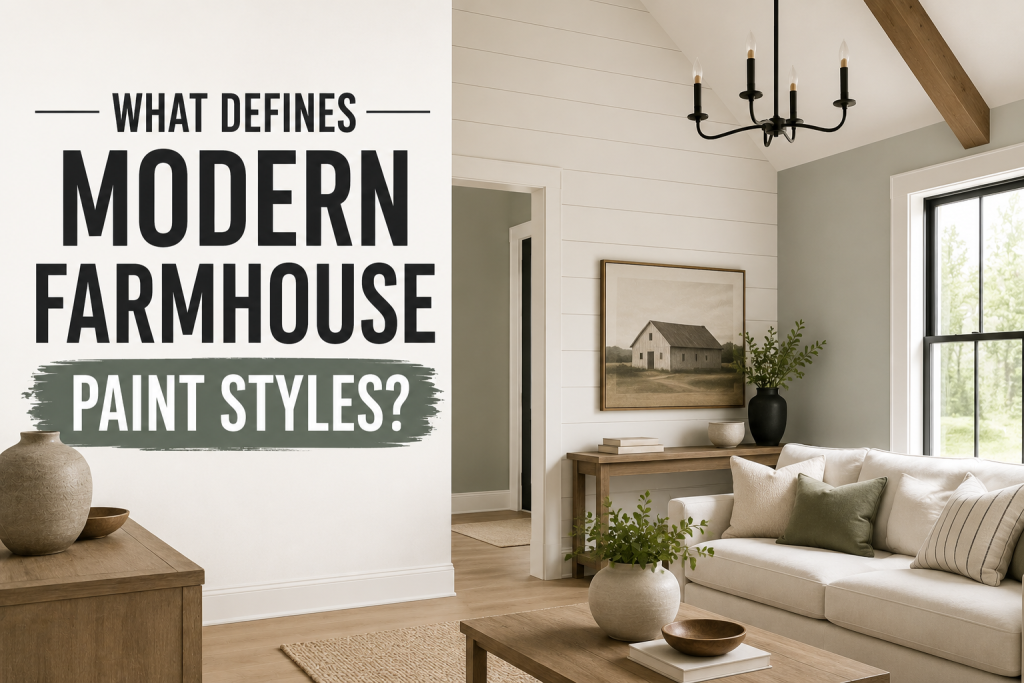
Black accents are another defining element. Matte black fixtures, window frames, hardware, and trim frequently pair with white walls to create contrast without overwhelming the space. Natural textures also shape farmhouse palettes. Wood beams, shiplap walls, stone surfaces, and rustic finishes work alongside the latest rustic colors to add depth and character. Many homeowners prefer farmhouse palettes because they balance style with resale flexibility. Their connection to neutral paint also helps these interiors remain relevant even as design trends evolve.
What Defines Contemporary Paint Styles?
Contemporary interiors focus on simplicity, clean lines, and intentional use of color. In the comparison of modern farmhouse vs contemporary paint, contemporary palettes generally feel more minimal and structured while still maintaining warmth. Popular current wall colors include warm white, soft greige, mushroom tones, muted beige, and charcoal accents. These shades support open spaces and pair naturally with modern materials such as glass, metal, stone, and matte finishes.
Contemporary design also favors restraint. Instead of heavy contrasts or rustic details, the style often relies on layered neutrals and subtle texture differences to create depth. Many current minimalist paint palettes reflect organic modern design by combining warm neutrals with nature-inspired tones. This softer approach has helped contemporary interiors move away from stark gray and pure white spaces. For homeowners exploring modern home paint thoughts, contemporary styles often provide strong flexibility because they adapt easily to changing décor while maintaining a clean, updated appearance.
black and white inner sides remain a Farmhouse Favorite
Among today’s villa paint colors, few combinations remain as recognizable as black and white inner sides. This palette continues to define modern farmhouse design because it balances warmth with strong visual contrast.
- White walls create a bright foundation that reflects natural light and makes rooms feel open. Black accents then add depth through window frames, doors, lighting fixtures, cabinetry, and hardware. The result feels clean while still maintaining farmhouse character.
- This contrast also works well with rustic materials such as reclaimed wood, shiplap, exposed beams, and stone finishes. These textures soften the palette and help prevent the space from feeling overly modern.
- Within the comparison of modern farmhouse vs contemporary paint, black-and-white farmhouse interiors generally appear warmer because natural materials play a larger role.
The popularity of modern rustic colors and organic textures continues to help this style remain relevant in both renovation projects and resale-focused home updates.
Neutral Paint Works on Both modern farmhouse vs contemporary paint
One of the biggest similarities in modern farmhouse and contemporary paint is the shared use of neutral paint. Although the styles create different moods, both rely heavily on soft neutrals to build flexible and inviting interiors. Warm white, creamy beige, greige, mushroom tones, and soft taupe remain popular because they pair well with a wide range of materials and finishes. These colors also help open-concept homes feel connected without becoming visually repetitive.
In farmhouse interiors, warm neutrals often support wood textures, shiplap, and rustic details. Contemporary homes use the same tones more minimally, pairing them with stone, matte finishes, and cleaner architectural lines. The popularity of minimalist paint spectrum and organic modern design has further strengthened demand for these shades. For homeowners exploring modern home paint thoughts, warm neutrals provide one of the safest choices because they support resale value, staging flexibility, and long-term adaptability across multiple design styles.
Minimalist paint spectrum, Shape Contemporary Homes
Modern contemporary interiors increasingly rely on a minimalist paint spectrum to create calm, uncluttered spaces. Rather than using strong contrast or decorative details, contemporary design focuses on subtle layering and restrained color choices. Warm white, soft greige, mushroom beige, oat tones, and muted taupe are common contemporary wall colors because they create depth while maintaining simplicity. These shades also help highlight natural light and architectural details. Organic minimalism has further influenced contemporary design by introducing warmer neutrals and textured materials. Stone surfaces, light wood finishes, and matte accents often work together with neutral palettes to create visual interest.
Within the discussion of modern farmhouse and contemporary paint, contemporary spaces usually appear more streamlined because they rely less on rustic features and more on balance and proportion. These softer modern home paint ideas continue replacing cooler gray interiors and helping homeowners achieve a clean yet comfortable aesthetic.
Latest rustic colors Bring Warmth to Farmhouse Interiors
The evolution of farmhouse design has introduced richer, more natural palettes, making latest rustic colors an important part of today’s farmhouse interiors. These tones help create warmth while moving beyond the bright white-only look that once defined the style. Clay beige, muted olive, warm brown, terracotta, sand tones, and earthy taupe are becoming increasingly common villa paint colors because they complement wood textures and natural materials. These shades work especially well with exposed beams, stone fireplaces, shiplap, and reclaimed wood accents. They add depth while preserving the cozy atmosphere associated with farmhouse interiors.
Within the comparison of modern farmhouse vs contemporary paint, farmhouse palettes often feel warmer because rustic textures play a larger role in shaping the design. Many homeowners are also pairing these colors with neutral paint to create updated farmhouse interiors that feel softer, more modern, and better aligned with current design trends.
Modern Home Paint Thoughts by Room Type
The choice between modern farmhouse and contemporary paint often changes depending on the room. Different spaces benefit from different color strategies based on function, lighting, and design goals.
Modern farmhouse vs contemporary paint: Living Rooms
Farmhouse living rooms often use warm neutral paint such as creamy white and greige paired with wood accents. Contemporary spaces tend to favor softer minimalist paint spectrum with layered neutrals.
Kitchens
Farmhouse kitchens commonly feature white cabinetry, black hardware, and rustic finishes. Contemporary kitchens often use warm beige, mushroom tones, and streamlined materials.
Bedrooms
Bedrooms allow more flexibility. Farmhouse spaces may use latest rustic colors, while contemporary rooms frequently adopt muted neutrals and organic textures.
Home Offices
Contemporary offices often use calm current wall colors such as soft greige and warm taupe, while farmhouse offices introduce wood tones and warmer accents.
Bathrooms
Both styles perform well with light neutrals, although farmhouse bathrooms typically add more texture and rustic details.
Which Style Is Better, modern farmhouse vs contemporary paint?
When comparing modern farmhouse and contemporary paint, both styles can support resale value, but the better option often depends on location, buyer preferences, and how the colors are used. Modern farmhouse interiors remain highly popular because they feel warm, welcoming, and broadly appealing. Neutral farmhouse paint colors, wood textures, and soft contrasts often perform well during staging because they create move-in-ready spaces.
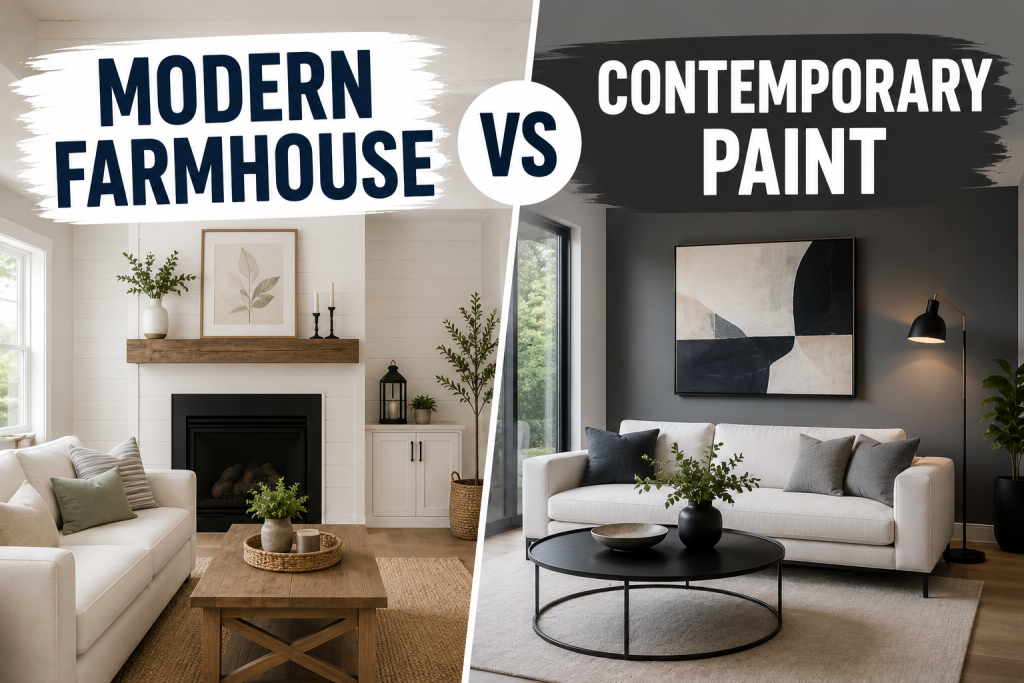
Contemporary interiors also offer strong resale potential, especially in newer developments and urban markets. Clean current wall colors and minimalist paint spectrum appeal to buyers looking for updated, low-maintenance aesthetics. The strongest resale results usually come from neutral foundations. Neutral paint works well across both styles because it provides flexibility while supporting staging and future décor changes. For homeowners preparing to sell, combining farmhouse warmth with contemporary simplicity often creates the broadest buyer appeal and long-term adaptability.
Final Thoughts
The choice between modern farmhouse vs contemporary paint ultimately depends on the atmosphere homeowners want to create. Both styles remain highly popular because they support modern living while offering different visual experiences. Modern farmhouse interiors emphasize warmth, texture, and comfort. Villa paint colors, black and white interiors, and latest rustic colors create welcoming spaces that feel timeless and familiar. Contemporary interiors focus more on simplicity and restraint. Current wall colors, layered neutrals, and minimalist paint spectrum help create clean, open environments with a modern aesthetic.
Despite their differences, both styles increasingly rely on neutral paint, showing how design preferences are shifting away from cooler gray interiors. For many homeowners, the strongest result comes from blending both approaches, combining farmhouse warmth with contemporary simplicity to create interiors that feel current, adaptable, and resale-friendly.
Frequently Asked Questions
What is the difference between modern farmhouse vs contemporary paint?
The main difference is the style direction. Villa paint colors focus on warmth, rustic textures, and natural materials, while current wall colors emphasize simplicity, layered neutrals, and cleaner lines.
Which villa paint colors are most popular?
Popular villa paint colors include warm white, creamy beige, greige, soft taupe, and earth-inspired neutrals paired with black accents and wood textures.
Are black and white inner sides still in style?
Yes. black and white inner sides remain a defining feature of modern farmhouse design because they create a strong contrast while maintaining timeless appeal.
What current wall colors work best?
Leading current wall colors include warm white, mushroom beige, soft greige, taupe, and layered neutrals commonly used in minimalist paint spectrum.
Is modern farmhouse good for resale?
Yes. Modern farmhouse remains popular because it combines warmth, flexibility, and broad buyer appeal, especially when paired with neutral palettes.