


Biggest Farmhouse Decorating Mistakes Homeowners Make
The popularity of farmhouse interiors has made them one of the most widely adopted styles in American homes, but it has also led to a rise in noticeable farmhouse decorating mistakes. While the aesthetic is known for its warmth, simplicity, and charm, improper execution can quickly make a space feel cluttered, inconsistent, or outdated. Many homeowners unintentionally fall into common traps such as overdecorating farmhouse style, misusing textures, or following modern farmhouse mistakes seen in social media inspiration without adapting them to real living spaces.
These issues can weaken the overall impact of the design and reduce the natural balance that farmhouse interiors are known for. Understanding what goes wrong is just as important as knowing what works. This guide breaks down the most frequent interior design mistakes, explains why they happen, and shows how to correct them for a more cohesive and timeless farmhouse look.
Overdecorating Farmhouse Style Spaces
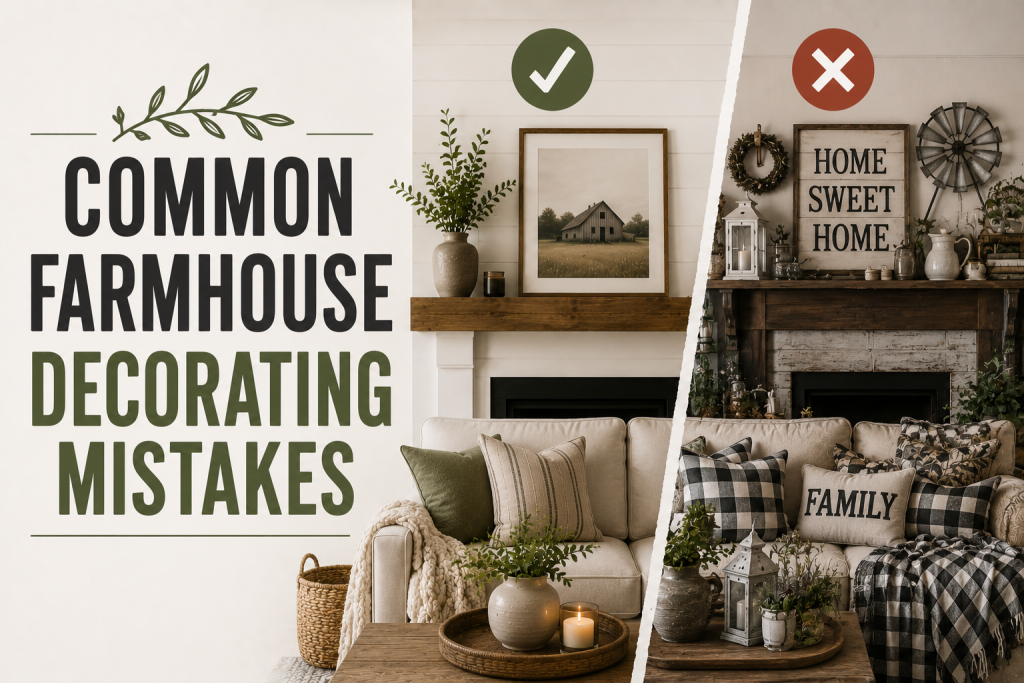
One of the most common farmhouse decorating mistakes homeowners make is overdecorating, especially in an effort to recreate Pinterest-inspired interiors. While farmhouse design is meant to feel warm and inviting, excessive décor can quickly lead to visual clutter and overwhelm the space. A major issue comes from overdecorating farmhouse style rooms with too many signs, layered accessories, and mixed rustic elements. Instead of enhancing charm, this creates a busy environment that loses the clean, balanced foundation that defines good farmhouse design. The simplicity that makes farmhouse interiors appealing gets buried under unnecessary detail.
In many cases, homeowners also combine too many textures and decorative objects without considering spacing or visual hierarchy. This disrupts flow and makes rooms feel smaller and less cohesive. To fix this, farmhouse interior tips recommend focusing on a few intentional statement pieces, using negative space effectively, and allowing natural materials like wood and neutral tones to carry the design.
Common Modern Farmhouse Decorating Mistakes
Many modern farmhouse mistakes happen when homeowners adopt trending design ideas without considering balance, scale, or long-term livability. While modern farmhouse interiors are known for their clean lines and neutral palettes, missteps can easily turn a cohesive look into something visually inconsistent or overly staged. One frequent issue is relying too heavily on all-white spaces. While white walls are a hallmark of modern farmhouse design, using them without texture or contrast can make rooms feel flat and sterile rather than warm and inviting. This is one of the most overlooked farmhouse decorating mistakes in new builds.
Another common problem is mixing too many competing finishes, such as combining multiple wood tones, metals, and industrial accents without a clear design direction. This disrupts the simplicity that defines modern farmhouse style. To avoid these interior design mistakes, homeowners should prioritize consistency, limit material variation, and introduce warmth through layered textures rather than excessive décor.
Rustic Decor Errors That Ruin the Look
Rustic farmhouse design can quickly lose its charm when certain farmhouse decorating mistakes are made, especially when homeowners overdo “rustic” elements without balance or intention. While rustic style is meant to feel natural and lived-in, too much of it can make a space feel heavy, outdated, or overly themed. One of the most common rustic decor errors is relying too heavily on distressed finishes and reclaimed wood in every surface of a room. When everything looks weathered, the design loses contrast and starts to feel visually exhausting rather than warm and inviting. A successful farmhouse interior needs a mix of textures, not repetition.
Another issue is using overly themed décor, such as excessive barn signage, faux antique props, or exaggerated country motifs. These choices often overwhelm the space and weaken the authenticity of rustic design. To correct these farmhouse interior tips, designers recommend balancing rustic elements with clean surfaces, neutral tones, and modern accents for visual relief and structure.
Farmhouse Color Mistakes to Avoid
Color plays a major role in farmhouse decorating mistakes, and incorrect palette choices are one of the fastest ways to weaken the overall design. While farmhouse interiors are known for neutral and calming tones, many homeowners either over-simplify or overcomplicate their color schemes. A common issue is relying exclusively on stark white without layering any supporting tones. This can make spaces feel cold and unfinished rather than warm and inviting. On the other hand, some homeowners introduce too many accent colors, which disrupts the consistency that defines effective farmhouse interiors.
These farmhouse color mistakes often happen when trends are copied without adapting them to natural light, room size, or existing architecture. For example, dark or overly saturated shades can overwhelm smaller spaces, while mismatched undertones can create visual imbalance. To avoid these interior design mistakes, farmhouse interior tips recommend sticking to soft neutrals, warm whites, and earthy accents that maintain cohesion while still adding depth and personality.
Mixing Too Many Home Decorating Trends
One of the more subtle but damaging farmhouse decorating mistakes is blending too many unrelated home decorating trends in a single space. While it may seem creative to combine farmhouse with industrial, boho, coastal, and minimalist elements, the result often becomes visually fragmented and confusing. Farmhouse design works best when it maintains a clear identity grounded in natural materials, neutral tones, and cohesive styling. When too many competing influences are introduced, the space loses that signature warmth and starts to feel inconsistent. This is one of the most common modern farmhouse mistakes seen in inspiration-driven remodels.
For example, mixing heavily ornate boho décor with sharp industrial accents and rustic farmhouse textures can create a lack of visual hierarchy. Instead of harmony, the room feels like multiple design ideas competing for attention. To avoid these interior design mistakes, it’s important to choose one primary style direction and use secondary influences only as subtle supporting accents.
Poor Furniture and Layout Choices
Poor furniture selection and layout planning are among the most overlooked farmhouse decorating mistakes, yet they have a major impact on how functional and visually balanced a space feels. Even well-decorated farmhouse interiors can fall apart if the furniture does not match the scale or layout of the room. A common issue is choosing oversized or mismatched furniture that disrupts flow and makes the space feel cramped. This often happens in open-concept homes where homeowners struggle to define functional zones. These interior design mistakes can break the natural balance that farmhouse interiors are known for.
Another frequent problem is pushing all furniture against the walls, which creates empty, disconnected spaces in the center of the room. This layout weakens the sense of warmth and conversation that farmhouse interior tips typically encourage. To correct these issues, designers recommend using properly scaled furniture, creating intentional seating groupings, and maintaining clear pathways to preserve openness and comfort.
Ignoring Balance and Negative Space
One of the most subtle yet impactful farmhouse decorating mistakes homeowners make is ignoring balance and negative space. While farmhouse interiors are known for their warmth and layered character, overcrowding a room can quickly destroy the calm, open feeling that defines the style. Negative space—the empty areas between furniture, walls, and décor—is essential for creating visual breathing room. When it’s neglected, rooms start to feel cluttered and visually heavy, even if the individual pieces are well-designed. This is a common issue in both rustic and modern farmhouse mistakes, especially when homeowners try to fill every corner with decorative accents.
A lack of balance can also occur when too many large or visually heavy elements are placed on one side of a room, making the layout feel uneven. This disrupts the natural flow that effective farmhouse interior tips aim to achieve. To fix this, designers recommend spacing out décor intentionally, simplifying accessory layers, and allowing natural materials and architecture to stand on their own.
How to Fix Farmhouse Decorating Mistakes
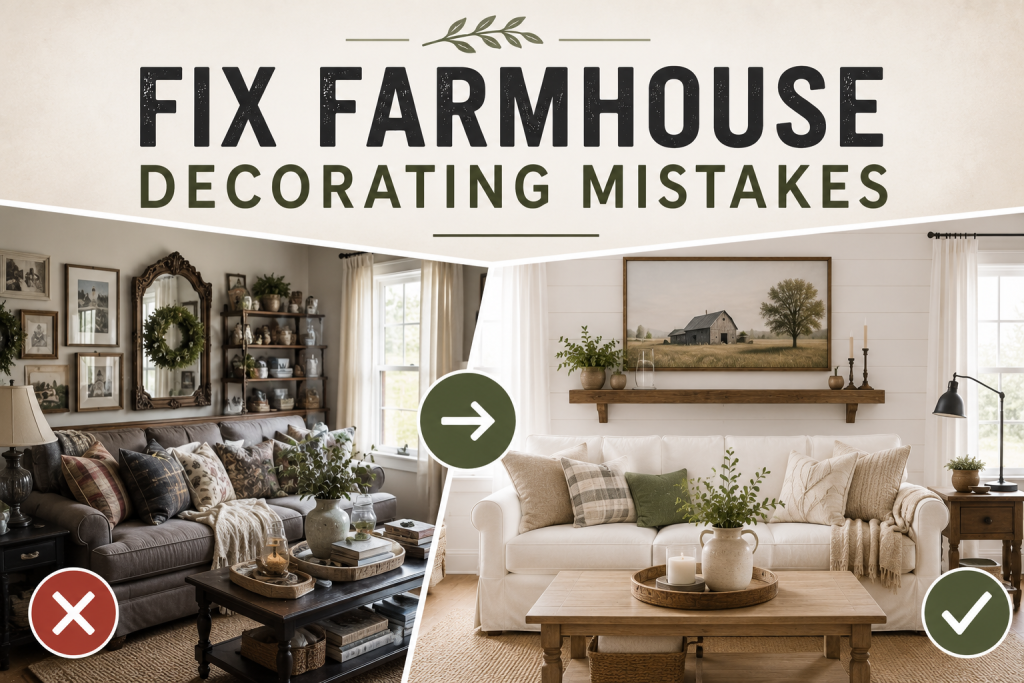
Fixing common farmhouse decorating mistakes starts with stepping back and evaluating the space as a whole rather than focusing on individual décor pieces. Most issues in farmhouse interiors come from imbalance, overcrowding, or a lack of clear design direction. A practical first step is to simplify. Remove unnecessary accessories and keep only items that support the overall style. This immediately reduces visual noise and helps restore the calm structure that defines effective farmhouse interiors. Many modern farmhouse mistakes can be corrected just by reducing clutter and improving spacing.
Next, reintroduce balance through scale and proportion. Ensure furniture fits the room properly and that no single area feels overloaded. Neutral tones and natural textures should guide the design instead of competing elements. Finally, reinforce consistency. Stick to one dominant farmhouse direction and avoid mixing too many home decorating trends. Cohesion is key to turning a cluttered space into a clean, intentional, and timeless farmhouse interior.
Expert Farmhouse Interior Tips
Applying the right farmhouse interior tips can help homeowners avoid common farmhouse decorating mistakes and create a more intentional, balanced space. The key is to focus on simplicity, consistency, and material quality rather than filling a room with décor. One of the most effective strategies is to build the room around a neutral foundation. Soft whites, warm grays, and natural wood tones provide the base for both rustic and modern farmhouse mistakes correction. From there, texture can be layered carefully using linen, wood, and metal accents without overwhelming the design.
Another important tip is to prioritize function over decoration. Every piece of furniture should serve a clear purpose while contributing to the overall aesthetic. This prevents clutter and supports the clean structure that farmhouse interiors are known for. Finally, allow negative space to work in your favor. Open areas between furniture and décor help maintain visual clarity and reinforce the timeless, breathable feel that defines successful farmhouse design.
Conclusion
Avoiding farmhouse decorating mistakes is essential for creating a cohesive, comfortable, and visually balanced home. By understanding issues like overdecorating farmhouse style, poor color choices, and inconsistent layouts, homeowners can refine their interiors into timeless, functional spaces. With the right farmhouse interior tips, even common modern farmhouse mistakes can be corrected to achieve a clean, inviting, and well-structured design.
FAQ – Farmhouse Decorating Mistakes
What are the most common farmhouse decorating mistakes?
The most common farmhouse decorating mistakes include overdecorating, mixing too many styles, poor furniture scaling, and using inconsistent color palettes that disrupt cohesion.
What is overdecorating farmhouse style?
Overdecorating farmhouse style happens when too many signs, accessories, or rustic elements are added, making the space feel cluttered instead of warm and balanced.
How do I avoid modern farmhouse mistakes?
To avoid modern farmhouse mistakes, stick to a consistent neutral palette, limit material variation, and focus on clean lines with intentional texture layering.
What are common farmhouse color mistakes?
Common farmhouse color mistakes include using overly stark whites without warmth or introducing too many accent colors that break visual harmony.
What is the best way to improve farmhouse interiors?
Following simple farmhouse interior tips like simplifying décor, balancing scale, and maintaining negative space can significantly improve the overall design.